Some argue that new data centers should be forced to drop offline during grid emergencies, to avoid burdening all other customers with the cost of building power plants to ensure service at those times. Others say data centers should be required to pay directly for the capacity resources needed to mitigate their burdens on overstressed grids.
The plan approved by PJM stakeholders in late June, which was put forward by utilities and the trade group Data Center Coalition, would enable that latter option.
Unlike PJM’s standard capacity auctions, which are aimed at meeting the needs of all the utilities and customers served by its grid, this reliability backstop procurement, or RBP, is meant to be a “one-time process to purchase new supply resources to serve new data centers and other large loads,” PJM explained in announcing the outcome of its stakeholder process.
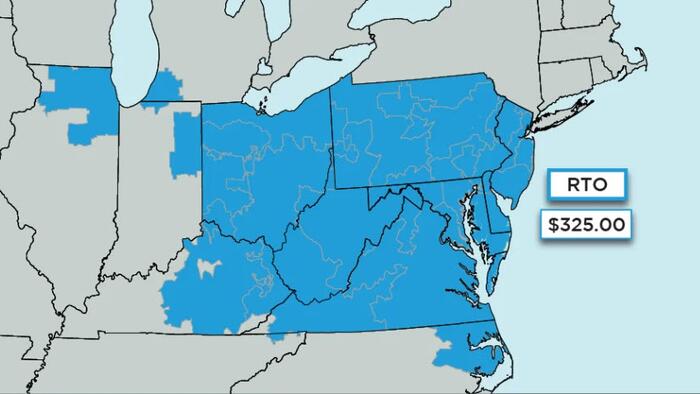
The proposed backstop procurement auction would come with a price cap of $555 per megawatt-day, much higher than the limit now set on PJM’s broader capacity market. In fact, the amount is pretty close to Aurora Energy Research’s calculation that about $500 to $600 per megawatt-day is what’s needed to finance new capacity resources trying to get built and interconnected to the grid, Hoos said.