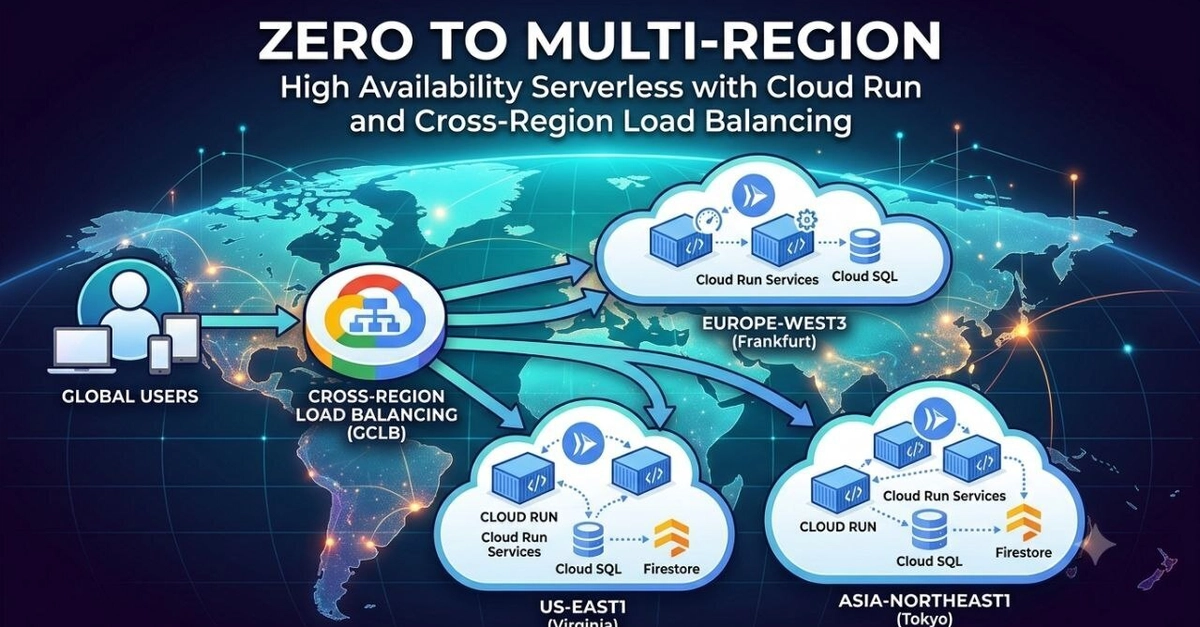
When you're building a real-time speech translation product, latency isn't a performance metric — it's the product itself. A 300ms round-trip to process an audio chunk is the difference between a conversation that feels natural and one that feels broken. That's the constraint that pushed us to design a multi-cluster, multi-region Kubernetes setup across 10 GCP regions.
This article walks through the full architecture: every layer, the decision behind each one, and the gotchas that will bite you if you're not careful. I'll use a fictional app called SpeakFlow — a real-time speech translation SaaS — to illustrate the patterns.
The Problem That Forces Multi-Region
SpeakFlow processes real-time audio in a tight loop: speech-to-text, translation, text-to-speech, under strict latency budgets. A user speaking in Tokyo, routed to a cluster in us-central1, adds ~150ms of pure network latency before any compute happens. For a real-time product, that's a broken experience.
The solution is obvious in theory: run the stack close to users. 10 GCP regions, covering every major market — North America, Europe (including a GDPR-dedicated Germany cluster), Asia Pacific, South America, Australia.