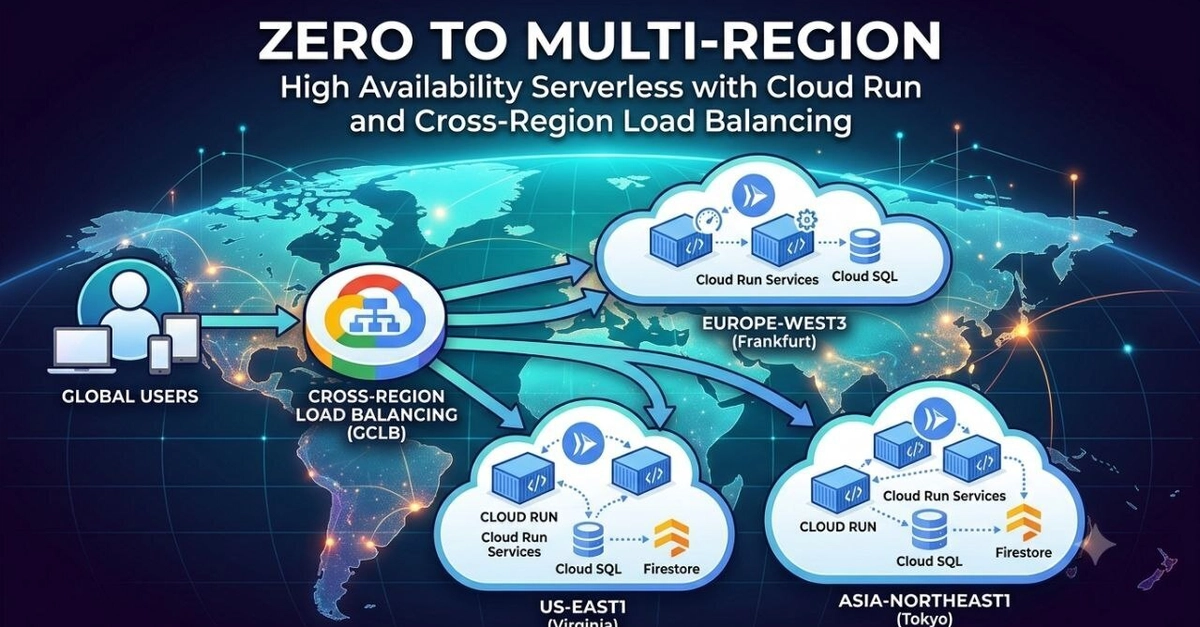
Google just made multi-region Cloud Run significantly easier. Here is the full picture; what changed, what it means in practice, and how to build it right.
Most teams discover they need multi-region architecture the hard way and sadly, during an outage. Whether you're running a global e-commerce platform, a real-time gaming API, or a financial services application, users expect your service to be available whenever they need it. There is a conversation that happens in almost every engineering team at some point. It usually starts with a post-mortem. A regional Google Cloud outage or a Cloud Run service that hit a cold start spike, or a single-region deployment that could not handle the latency demands of users spread across Lagos, Nairobi, and London simultaneously, caused enough pain that someone finally asked: why are we only deployed in one region?
The answer is usually one of three things: it felt complex, it felt expensive, or no one had prioritised it yet.
In July 2026, Google moved Cloud Run Service Health to General Availability and the timing was hard to miss. Six days earlier, a power cut at Google's Netherlands data centre had knocked three services offline. The GA release brings automatic cross-region failover to Cloud Run with what Google describes as a two-step setup: add a readiness probe, set minimum instances to at least 1. The load balancer does the rest.


 aws.amazon.com