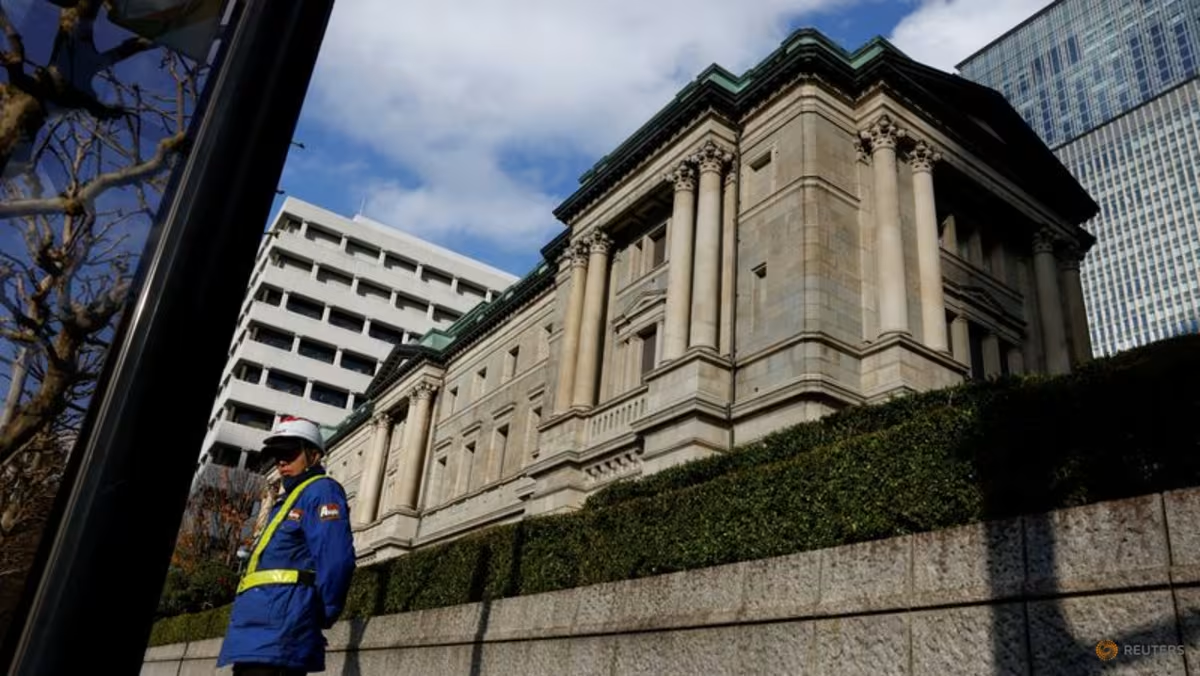
Japan’s government has finalized a revised economic blueprint that makes one thing crystal clear: the Bank of Japan calls the shots on monetary policy. The updated plan, completed in mid-July 2026, includes a pointed footnote reinforcing the BOJ’s independence as codified in the BOJ Act, a move designed to calm markets that were rattled when an earlier draft suggested the government might meddle in central bank decisions.
What happened with the first draft
The initial version of the economic plan, released in June 2026, contained language that markets interpreted as the government nudging the BOJ toward keeping policy aligned with growth objectives. Investors were not amused. Bond yields surged to their highest levels in decades as traders priced in the risk of political interference in Japan’s central bank. The yen weakened further, compounding existing pressures from the BOJ’s ongoing policy normalization.
The timing was particularly unfortunate. The BOJ had just raised its policy interest rate to 1% in mid-June 2026, the highest level since 1995, as part of its gradual exit from years of ultra-loose monetary policy driven by rising inflation. The revised blueprint effectively walks back that ambiguity. By explicitly stating that decisions on specific monetary policy tools belong to the BOJ alone, the government is drawing a line between fiscal ambitions and monetary independence.