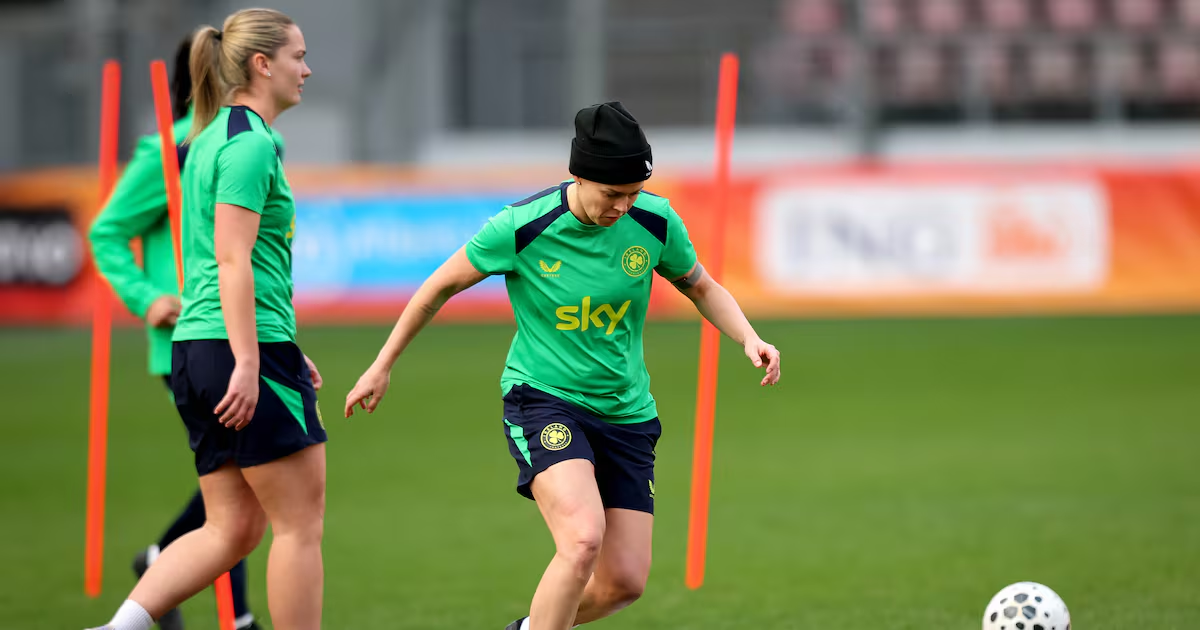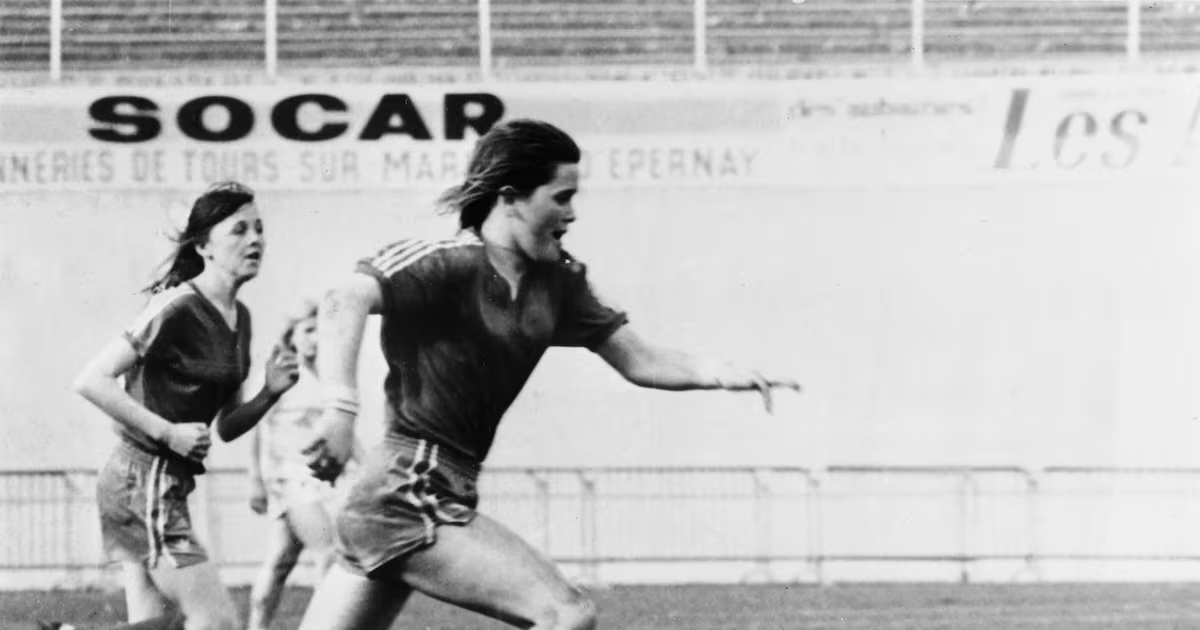
Although they have watched the World Cup in large numbers and turned Cape Verde’s Dublin-born defender Pico Lopes into a national treasure, Irish football fans have endured a difficult summer. After the ecstasy of Budapest and the agony of Prague, it has been tough not to think what might have been had Heimir Hallgrímsson’s team made it through the World Cup qualifier play-offs. And it has been equally impossible not to hark back to the Boys in Green’s wondrous first World Cup. From Kevin Sheedy’s daisy cutter against England to the sight of 500,000 people welcoming Jack Charlton and his players home, Italia 90’s significance for Ireland went beyond football and into the realm of nation-building. These memories merit their place in the national photo album.Still, we shouldn’t forget that 1990 was also a formative year for the women’s game, which is finally getting the recognition it deserves nearly four decades later.Domestic football was in disarray in 1990. The Ladies League of Ireland, which had been launched 17 years earlier, had tapped into strong interest in the women’s game in places such as Dublin, Cork, Limerick and Waterford. Despite this demand, the league suffered from a chronic lack of funding and administrative support and collapsed in 1979, just as it was trying to develop a girls’ section. The Women’s League of Ireland, which was renamed and revived in 1987 thanks to modest funding from Hotpoint, lasted only three seasons. By this stage, the Republic of Ireland Men’s National Team was generating more than £500,000 in gate receipts per home match, but the FAI was even less willing to invest in women’s football than it was in the men’s game.In spite of these headwinds, the Women’s National Team performed strongly in 1990. Having drawn against the Netherlands at Dalymount in April, the Girls in Green beat Northern Ireland at Belfield Park six months later. If midfield dynamo Anne O’Brien had been a regular starter, then the Republic of Ireland might have made it to Euro 91. The first Irish woman to play professional football in Europe, O’Brien had won Serie A with three Italian clubs by this point, but the cash-strapped Ladies Football Association of Ireland refused to cover the player’s travel costs. Although she made only four appearances for the Republic of Ireland, O’Brien’s glittering club career was inspirational and she was eventually inducted into the FAI Hall of Fame.Amateur football also had its heroines in 1990. No one was the subject of greater media attention than nine-year-old Audrey Dutton from Bray, Co Wicklow, who was banned from playing for Fassaroe Celtic. A talented left-back, Dutton had helped her team to win the Wicklow Cup and Shield before being informed by the league authority that she would be ineligible to play alongside boys once she turned 10. It was a bitter blow for Dutton, who dreamt of representing her country, but now found herself confined to kickabouts in the park. Fassaroe Celtic appealed the decision, which went all the way to the Labour Court. Although the club lost the case, public support for Dutton forced the FAI to lift its ban on girls’ participation in schoolboy football.Dutton’s experience wasn’t unusual. In 1990, the Council for the Status of Women drew attention to widespread inequality in sport. With the notable exceptions of hockey and camogie, Ireland’s sporting infrastructure had been built for boys and men. Such discrimination cost female athletes honours; it also denied women access to the informal sporting networks underpinning fields such as business, law and politics. Not even Mary Robinson’s election could crack the glass trophy cabinet, as evidenced by Portmarnock Golf Club’s refusal to extend honorary membership to the new president. At that point, and for many years to come, the club was men-only.Now that the 2026 World Cup is almost over, Irish fans should look ahead, beginning with the Women’s National Team’s World Cup play-off matches against Kazakhstan in October. If the Republic of Ireland win this round, the team will be two matches away from Brazil ’27. The road from 1990 has been a bumpy one and discrimination in sport remains a chronic problem. However, thanks to the foundations laid by Anne O’Brien, Audrey Dutton and others, the future looks green. Attendance at League of Ireland Women’s Premier Division matches is growing, and a new Women’s Development League is fostering the next generation of talent. The Women’s National Team can call on players from leading overseas clubs, and it is 21st in the world, its highest ranking. With a bit of luck, next summer will add a few more unforgettable images to the national photo album. Dermot Hodson is a professor of political economy at Loughborough University
Dermot Hodson: Italia ‘90 changed Ireland. But the untold story of that year was the women’s game
While the country partied, the Girls in Green overcame neglect and prejudice. Now they could be off to the World Cup
782 words~4 min read