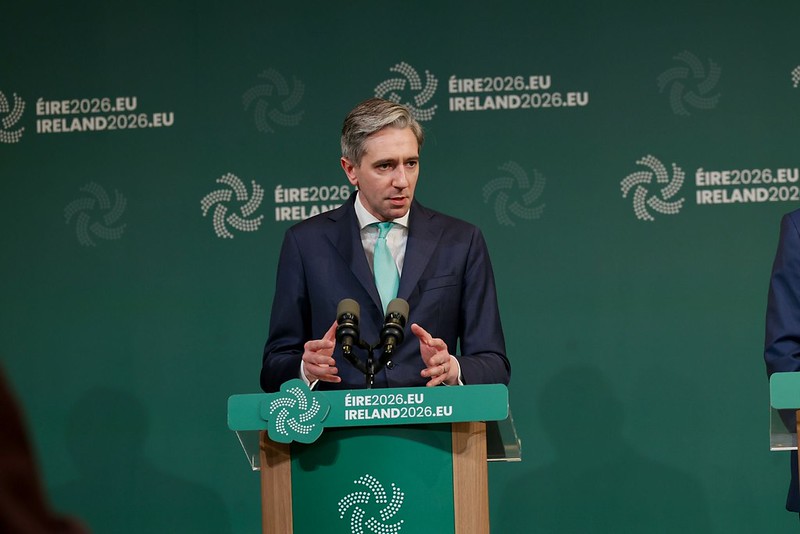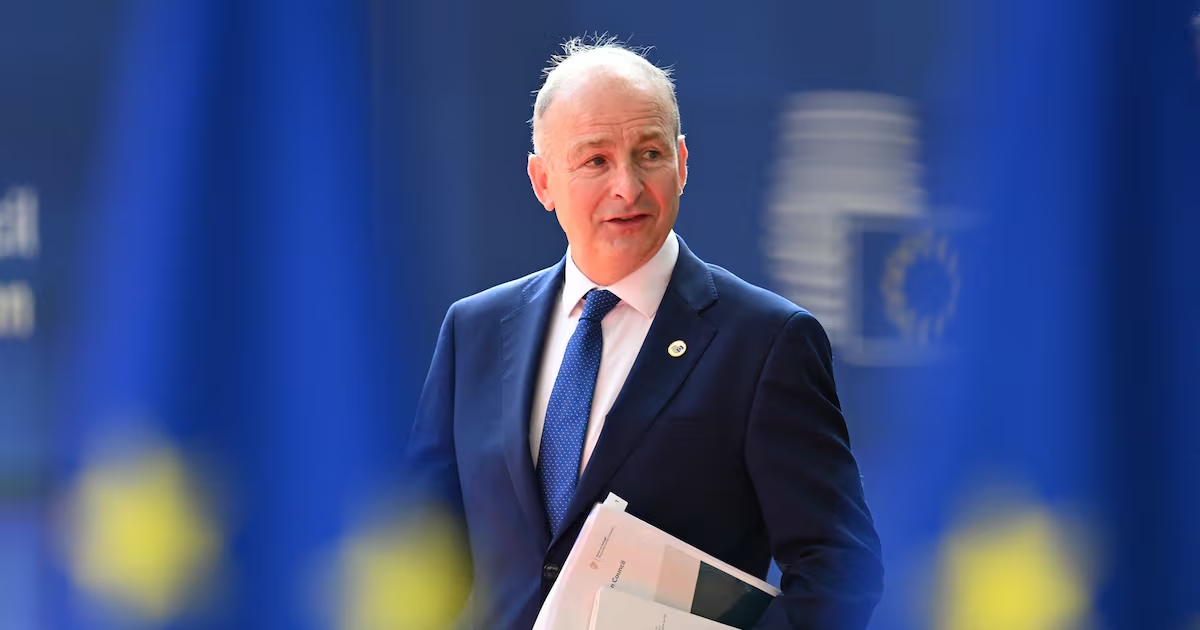
Ireland’s presidency of the Council of the European Union provides the State with a unique opportunity to shape the key reforms that could strengthen the institution in the years ahead. The lengthy agenda of work for Irish Ministers and civil servants in securing legislative and policy agreements between the bloc over the next six months is set against the background of rising global economic and geopolitical threats. With the stakes high, the Government has set out the three key pillars of competitiveness, values and security.Expectations of Ireland are high. This is our eighth presidency, and our membership since 1973 makes us one of the more experienced members of the EU. The enormous knowledge and corporate memory within our Civil Service, which is generally very well regarded in Europe, will be a key asset. Bobby McDonagh, a veteran senior Irish diplomat who has played a key role in previous presidencies, says Ireland’s compact size allows for easy communication across departments, and that Ministers being native English speakers aids “in humour, precise drafting and quick communication” with a wide range of stakeholders. “We’re flexible, we get on with people, which is essential in dealing with the Council secretariat and other member states.” While Ireland can’t overtly advance national interests in this term, we can legitimately decide when to table items for discussion, determine what issues meetings should focus on, frame what options to consider, and suggest where compromises may lie, he notes. “A successful presidency will enhance Ireland’s reputation well beyond the six-month term, benefiting the country for years in EU negotiations. Ireland can shape options and compromises that aren’t negative from an Irish point of view. The key is that advancing European interests and Irish interests aren’t contradictory – Irish interests include a strong European dimension.” Veteran Irish diplomat Bobby McDonagh: 'A successful presidency will enhance Ireland’s reputation well beyond the six-month term, benefiting the country for years in EU negotiations.' So, what does success look like? “It won’t be a mathematical calculation of the number of outcomes, it will be about how Ireland manages negotiations, how EU members view our performance, and how it is assessed by media both in Ireland and the rest of the EU. Clearly, however, the more compromises we can find, the more pieces of legislation we can put through, the better.” Ireland takes on the presidency at a moment when Europe cannot afford to be slow, notes Darren Maher, managing partner at law firm Matheson. Trade is being weaponised, supply chains are being redrawn, and competitive pressure from the United States and Asia has sharpened considerably. While the Government’s framing in terms of competitiveness is good, the harder question is whether this presidency can convert ambition into something businesses can actually feel, he says. Darren Maher, managing partner at law firm Matheson: Ireland takes on the presidency at a moment when Europe cannot afford to be slow. “For Irish business, and for the many international companies that use Ireland as their European base, the presidency matters beyond symbolism. When Irish Ministers chair Council meetings, Irish officials shape agendas, and the Taoiseach engages directly with counterparts across the EU, Ireland’s proximity to the centre of decision-making is real.“We are already seeing that in the questions clients are asking: where is regulatory direction heading, how will the multi-annual financial framework (MFF) negotiations unfold, and what does that mean for investment decisions being made now? The presidency does not give Ireland a veto or unlimited influence, but it does place Ireland closer to where compromises are struck, and that matters.” ‘The competitiveness agenda comes down to practical outcomes: whether businesses can scale more easily, whether capital moves efficiently, and whether Europe remains a credible place to build and invest’— Darren Maher, MathesonThe negotiations on the next MFF, covering 2028 to 2034, will be the hardest test, he says. The European Commission’s proposal, published in July 2025, reflects a shift in emphasis towards competitiveness, defence and security, while maintaining support for agriculture and cohesion. Two camps have already formed, Maher notes. A fiscally conservative group of Germany, Sweden, Austria and the Netherlands is pushing for a tighter envelope, while a larger coalition including Italy, Spain and Poland is resisting any reduction in ambition. “Ireland’s role is to sit between those positions as an honest broker. It has been clear about that – including declining invitations to align with net contributor groupings ahead of key negotiations. That instinct will need to hold.” There is general agreement, however, on the issue of improving the EU’s competitiveness and tackling excess bureaucracy – areas Ireland will be looking to make an impact on during its presidency. Emma Richardson, researcher at the Institute of International and European Affairs “If you had mentioned competitiveness and simplicity three years ago, you would have been received with blank faces, but that is a huge focus of the current Commission,” says Emma Richardson, researcher at the Institute of International and European Affairs (IIEA). She says there has been a tendency to conflate simplification with deregulation. “There’s an important distinction. We’re talking about reducing administrative burdens and making things more aligned across Europe,” she explains, noting the commitment by the Commission to reduce €37.5 billion in administrative burdens across the EU during their legislative period. This will involve consolidating overlapping regulations and reducing paperwork for business. Maher agrees this is area where Ireland can have a measurable impact during the presidency. “Ireland has committed to treating the One Europe, One Market Roadmap as a core priority,” he says. “The competitiveness agenda comes down to practical outcomes: whether businesses can scale more easily, whether capital moves efficiently, and whether Europe remains a credible place to build and invest.” Neil Willoughby, head of EU policy, Ibec: While there is broad agreement on the need to enhance competitiveness, implementation is not happening quickly enough. Neil Willoughby, head of EU policy at business lobby group Ibec, says while there is broad agreement on the need to enhance competitiveness, implementation is not happening quickly enough, with real impacts not being felt on the ground. Nonetheless, progress has been made in some areas, he acknowledges, including the Corporate Sustainability Reporting Directive (CSRD), where medium-sized companies were removed from scope. Businesses are now looking for similar progress on digital and environmental regulation. He also welcomes the fact that security and defence will play a major part in this presidency, and that Ireland is now increasingly part of this conversation, as rising energy costs and the risk of cyber-attacks are direct consequences for businesses and citizens. As many commentators readily acknowledge, Ireland has prepared well for its presidency and expectations are high – but even the best-laid plans can be derailed by unexpected events.
Ireland’s European moment: Council of EU presidency offers influence at key juncture
Expectations of Ireland are high. This is our eighth presidency, and membership since 1973 makes us one of the more experienced members of the bloc
1,117 words~5 min read