Story audio is generated using AI
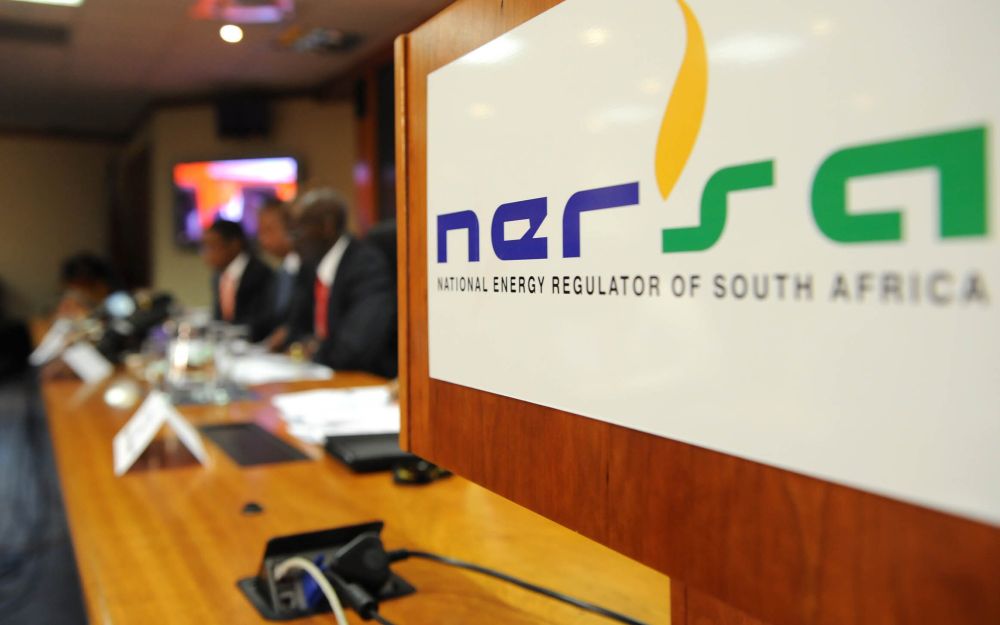
An economic impact study by the National Energy Regulator of South Africa (Nersa) shows that about 41,000 jobs will be lost and households will bleed nearly R10bn in the next two years after its decision to approve an additional tariff adjustment of more than R54bn for Eskom.The regulator is already facing a legal challenge from lobby group AfriForum, which this week applied to the high court in Pretoria for an urgent court order against Nersa to obtain answers to the R54bn Eskom revenue dispute.Nersa, in its reasons for why it granted Eskom the tariff, acknowledges that the decision will have a disproportionate impact on low-income households because electricity constitutes a larger share of their consumption basket. In the economic impact report, Nersa said it had to weigh two options on how to implement the decision. The first option was to liquidate the full R54.73bn over two financial years, 2026/27 and 2027/28, which will lead to electricity increases of 6.86% and 1.28% in the next two years.The second option, which Nersa opted for, is a reduced liquidation balance of R35bn over the next two financial years, with an impact of 3.40% and 2.64%, respectively.However, while the lesser devil, the second option will also lead to job losses and pain in households, particularly low-income households. “Under Option 2, electricity price increases of 3.40% to 2.64% in 2026/27 and 2027/28 are projected to result in approximately 22,790 job losses in 2026/27 and 22,604 in 2027/28, primarily among skilled and semiskilled workers,” Nersa said.“Household incomes are also expected to be negatively affected over the same period. Under Option 2, households could lose approximately R4.85bn in 2026/27 and R4.81bn in 2027/28. By contrast, Option 1 would result in greater losses, with households losing R8.75bn in 2026/27 and R3bn in 2027/28.“The disproportionate impact on low-income households arises because electricity constitutes a larger share of their consumption basket. Approximately 28-million South Africans rely on social grants, and many fall within this vulnerable category. Higher tariffs may therefore reduce affordability and potentially undermine access to electricity, unless mitigating measures such as increased free basic electricity allocations or expanded social grant support are introduced.”Of the estimated 41,104 job losses, 9,329 are expected among skilled workers, 17,019 among semiskilled workers and 14,756 among unskilled workers, according to the report.Eskom last year launched a legal bid to claw back R106bn, which it said was due to the miscalculation by Nersa.One of the gripes Eskom had with Nersa’s initial decision is that the regulator attached zero value to Koeberg, Grootvlei, Hendrina, Komati and Camden, arguing that this was a grave error, as “these stations continue to be used in Eskom generation and will continue to be used throughout the period of the determination”.Under Eskom’s internal 2035 strategy and associated shutdown plan, the utility had planned to shut down the remaining operating units at Camden, Hendrina and Grootvlei between January 2023 and September 2027.To avoid a bruising legal battle after internally recognising that it erred, Nersa resorted to entering into a settlement agreement with Eskom for R54bn.AfriForum successfully challenged the settlement, forcing Nersa to restart the process with the involvement of the public.Following that process, Nersa, three months ago, granted Eskom a tariff of R54bn, the exact amount it had months earlier settled for. Dalena Beyers, AfriForum’s adviser on local government affairs, said the entity questions the rationality and transparency of the tariff-setting process.“This increase affects all electricity consumers. Therefore, proper public participation and the disclosure of the reasons for the decision are essential and in the interest of consumers,” Beyers said. “The process was clearly questionable from the outset, pointing to irrational decision-making and a lack of transparency, and the court will now have to provide clarity, in the interest of all electricity consumers, regarding the lawfulness of this decision and Nersa’s withholding of information about it.”Business Day