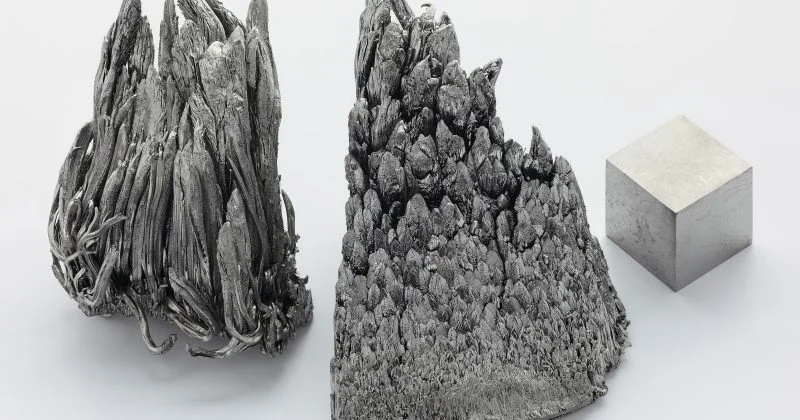
Artificial intelligence may be driving headlines, but one of its biggest vulnerabilities is an obscure metal that few people have ever heard of. Yttrium, a rare earth element first identified more than two centuries ago, has quietly become an essential ingredient in advanced semiconductor manufacturing, according to the Financial Times. As demand for AI chips accelerates, securing reliable access to the metal has become a growing strategic concern."We're in the middle of a sea change in terms of how the global economy works."
— Daniel Yergin, vice-chair of S&P Global, describing the shift away from purely efficiency-driven global supply chains.That concern stems from a simple reality: China dominates the processing and supply of yttrium, along with many other niche metals that modern industries depend on. Over the past several years, Beijing has tightened export restrictions on a number of critical minerals, giving it increasing leverage over global supply chains at a time when geopolitical tensions with the United States remain elevated.FT writes that while gallium and germanium have received much of the public attention because of their roles in defense systems and electronics, industry executives increasingly argue that yttrium may represent the bigger long-term problem. One semiconductor supplier called it "the killer chokepoint," warning that the industry faces "an existential risk" until alternative supply chains are fully established.The uncertainty has triggered a rush among manufacturers to secure inventory wherever they can find it. Companies involved in defense, automotive production and semiconductor manufacturing have reportedly been scrambling for supply, with some executives warning that production could begin slowing or even halting before the end of the year if shortages worsen.Ironically, the West helped create today's imbalance. Decades ago, many countries were happy to outsource mineral processing because it was expensive, environmentally challenging and labor intensive. China invested heavily instead, building refining capacity and subsidizing production while much of the rest of the world allowed those industries to disappear.The warning signs were visible long before today's trade disputes. Beijing demonstrated its willingness to use rare earth exports as geopolitical leverage during a dispute with Japan in 2010, but many manufacturers continued relying on Chinese suppliers because the economics remained difficult to match elsewhere. Cheap Chinese production became deeply embedded throughout global manufacturing."Thirty years ago, [the west] wanted China to do all the processing of these minerals. We didn't want it because it was too polluting. The west handed over the opportunity."