AI systems are only as reliable as the information they receive
| Photo Credit:
Anucha Tiemsom
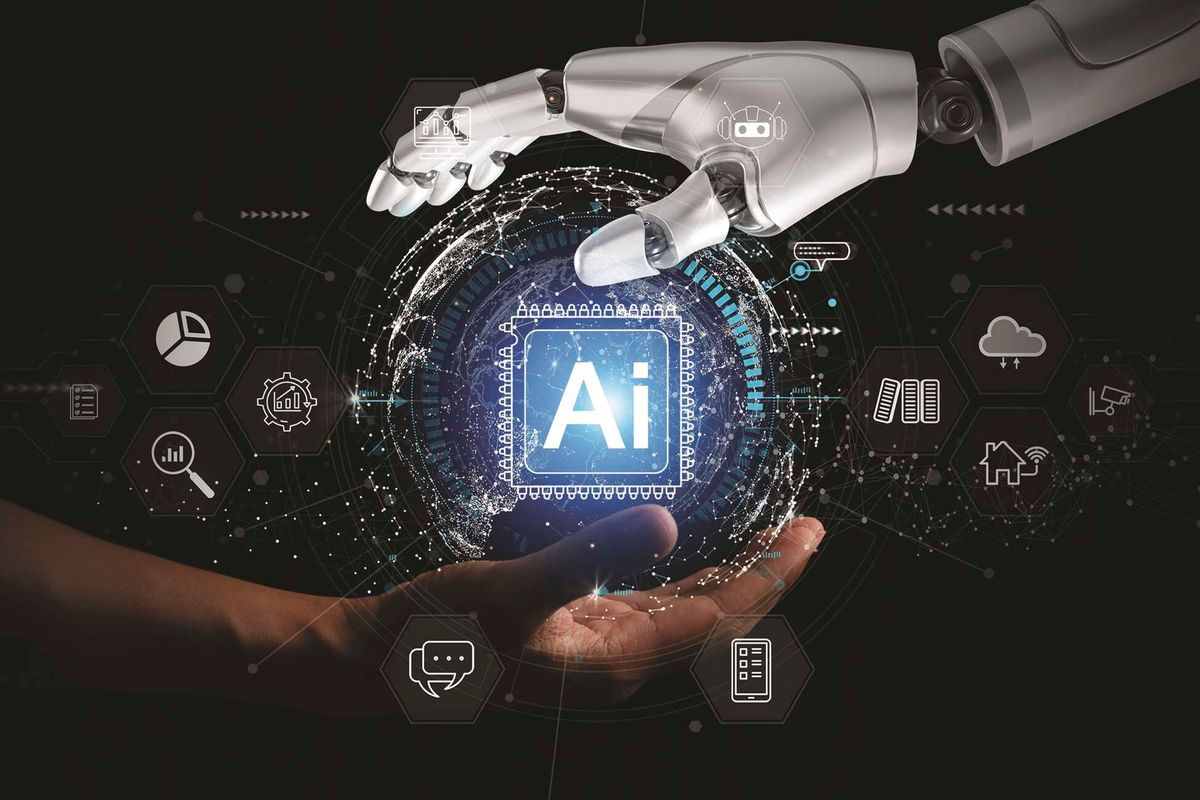
Artificial intelligence has moved from being a technology story to an economic one. Global tech companies are investing hundreds of billions in AI infrastructure, while governments unveil national AI strategies. The IMF’s World Economic Outlook 2026 has identified AI as one of the most significant forces shaping future productivity, labour markets and long-term growth. The excitement is understandable. Yet, economic history suggests technological revolutions rarely translate into immediate productivity gains.Productivity growthEconomists have seen this before. In 1987, Nobel laureate Robert Solow famously remarked that computers were visible everywhere except in the productivity statistics. Despite rapid advances in computing, productivity growth stayed weak for years — a disconnect economists dubbed the productivity paradox.The paradox was eventually resolved, not because computers became more powerful, but because businesses changed how they worked. They redesigned processes, reorganised supply chains, invested in training and adopted better management practices. Technology created the opportunity; organisations unlocked its value.Artificial intelligence is likely to follow the same path. Today, organisations have introduced chatbots, coding assistants and intelligent search tools, yet relatively few report meaningful productivity gains. In many firms, AI has simply been bolted onto existing workflows instead of prompting a redesign. Employees still work across disconnected systems, verify AI outputs manually, and spend valuable time hunting for information. The result is automation without transformation.Productivity depends on more than technology investment — it also depends on organisational capital, management quality, business processes, governance structures and a firm’s ability to adapt. Two companies can deploy the same AI model and get very different outcomes, because one has transformed its operations while the other has merely added another piece of software.Data poses another challenge. AI systems are only as reliable as the information they receive, and many organisations still struggle with fragmented databases, inconsistent definitions and duplicate records. AI can process information fast, but it cannot compensate for poor data quality — faster decisions built on flawed information are still flawed decisions.This matters for the broader economy. If businesses keep treating AI as a technology project rather than an organisational transformation, productivity growth may disappoint despite record investment. Weak productivity remains one of the principal constraints on long-term growth across advanced and emerging economies alike, and sustainable gains in living standards depend not just on innovation but on how widely it spreads across firms.The countries that benefit most from AI may not be those that build the largest models — they’re more likely to be those that help thousands of ordinary businesses use AI effectively. India has built world-class digital public infrastructure through Aadhaar, UPI and the Account Aggregator framework, and the India AI Mission reflects similar ambition in artificial intelligence. Combined with a large tech workforce and a vibrant startup ecosystem, these position India well in the global AI economy.But India’s greatest opportunity may not lie in building the next frontier model. It lies in lifting productivity across manufacturing, logistics, healthcare, financial services, agriculture and public administration. India’s productivity challenge is less about access to technology than about its diffusion across businesses. While leading enterprises have embraced digital transformation, millions of small and medium enterprises still rely on manual processes, fragmented information and limited digital integration. Since MSMEs contribute roughly 30 per cent of India’s GDP and employ over 110 million people, even modest productivity gains across this sector could generate economic value far exceeding that of a handful of high-profile AI breakthroughs.Investment in AI infrastructure must be matched by investment in enterprise digitisation, data governance, managerial capability and workforce skills.Muneesh is an IRS officer. Sunita is AI expert, KKR & Co. Views are personalPublished on July 17, 2026