view more
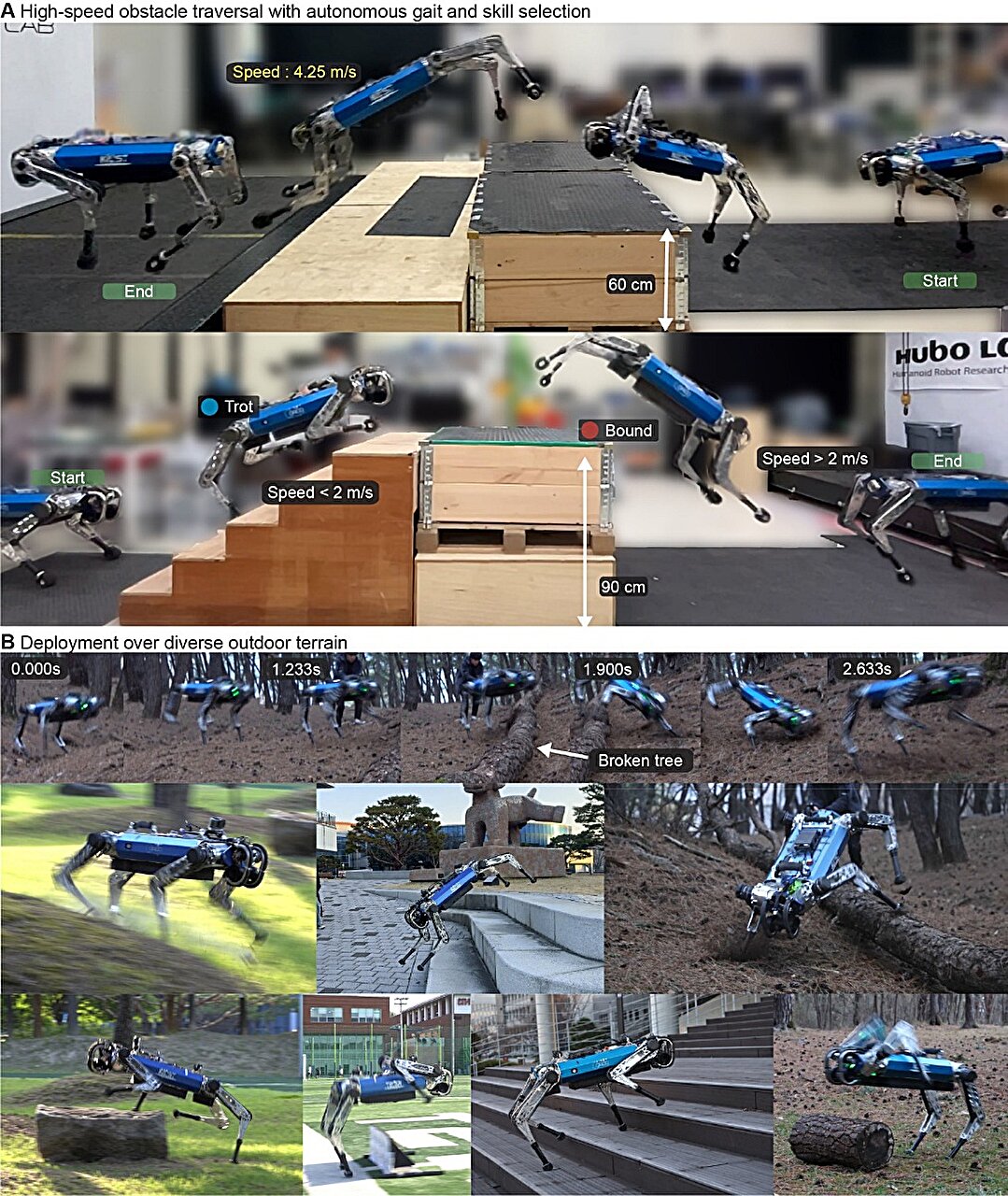
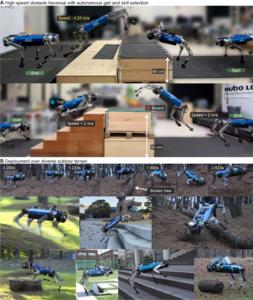
An era in which robots decide "how to walk" on their own has arrived. A four-legged robot has been developed that, much like a person or an animal, autonomously chooses the appropriate gait strategy for its surroundings — changing its gait on stairs, leaping over gaps, and keeping its balance on forest trails.
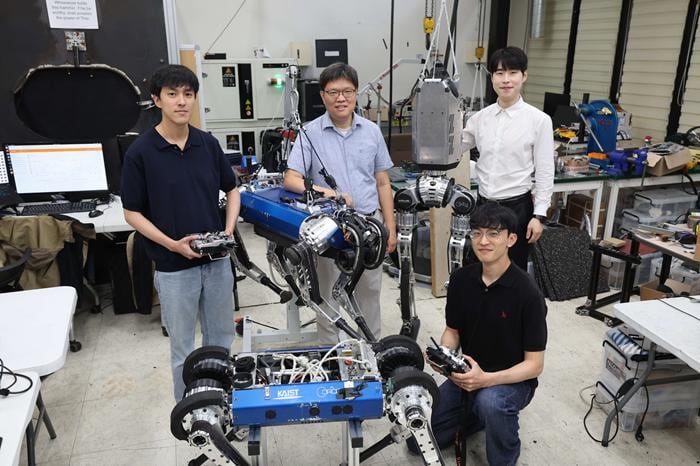
KAIST (President Choongsik Bae) announced on the 16th of July that a research team led by Professor Hae-Won Park from the Department of Mechanical Engineering has developed a core control technology for four-legged robots that lets a single controller select and switch in real time among walking, running, jumping, and other locomotion skills, allowing the robot to move quickly and stably, even in real outdoor environments.
Four-legged robots move on four legs, giving them an advantage over wheeled robots on rough terrain. But in real outdoor settings, obstacles such as stairs, ledges, stepping stones, gaps, and tree branches appear one after another in different forms, meaning the ability to simply walk and run fast is not enough.
Existing four-legged robots have excelled at running quickly across flat ground or clearing simple obstacles, but they have struggled to maintain both speed and stability in real-world environments where obstacles combine in complex ways. Because walking, running, jumping, and other gaits had to be controlled individually, the robots were also limited in how naturally they could switch between them as conditions changed.