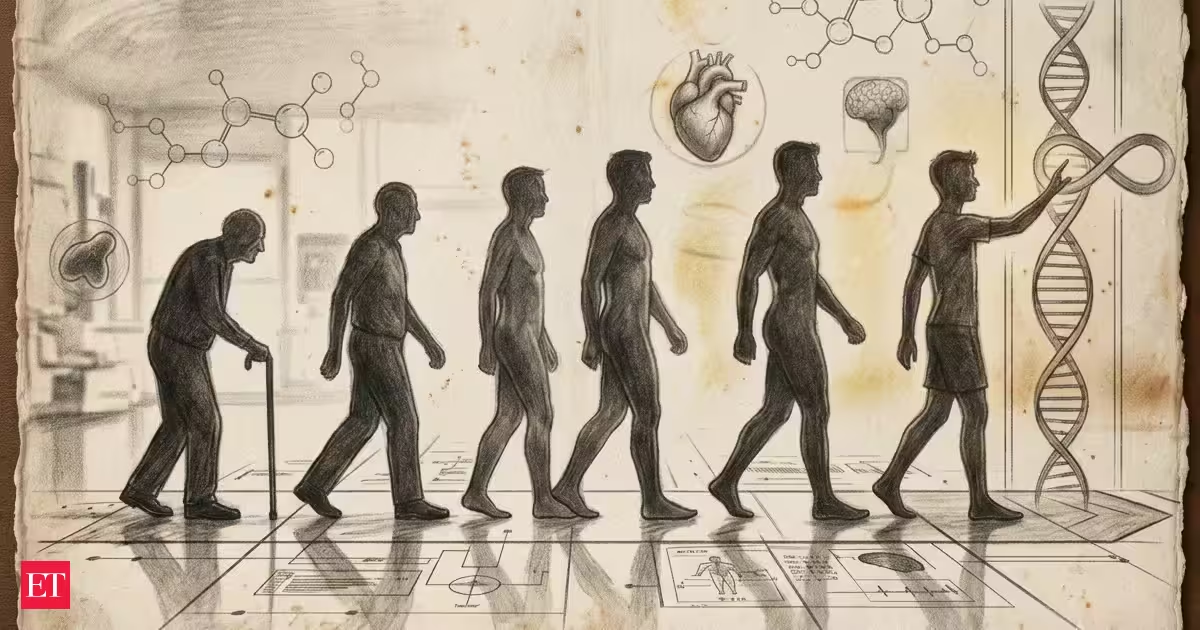
Setting aside a few early attempts, the longevity industry started in earnest in the mid-2010s. It had the feel of a hype cycle, a land rush, in the context of a broader bull market. A lot of those companies no longer exist; there are disadvantages in being first into a space. One of those disadvantages is that the first cohort in any venture has the privilege of mapping the novel pitfalls by falling into them. That is done now, and we're into the next stage, which is, quite honestly, a lot more complex, messy, diverse, and hard to explain. We know how this story ends: at some point there will be no distinct longevity industry, because the goal of slowing or reversing the aging process by addressing the underlying causes of aging directly will merge into the ordinary, day to day cut and thrust of pharmaceutical and biotech development. It will be become unremarkable to attempt to treat aging as a medical condition.
We are not there yet! From the extremely conservative point of view of those who steer large pharmaceutical industry companies, treating aging remains a distinct, unproven proposition. That will continue to be the case until novel anti-aging drugs are approved by the FDA and EMA, used by hundreds of thousands of patients, produce undeniable results, and, most importantly, generate a large amount of revenue. The number of such approved drugs is somewhat less important than the collective revenue generated. You might look at the opinion of the powers that be on weight loss drugs and how that has shifted across the advent of GLP-1 receptor agonists as an example of how this shift in will take place for the first very successful anti-aging drugs.