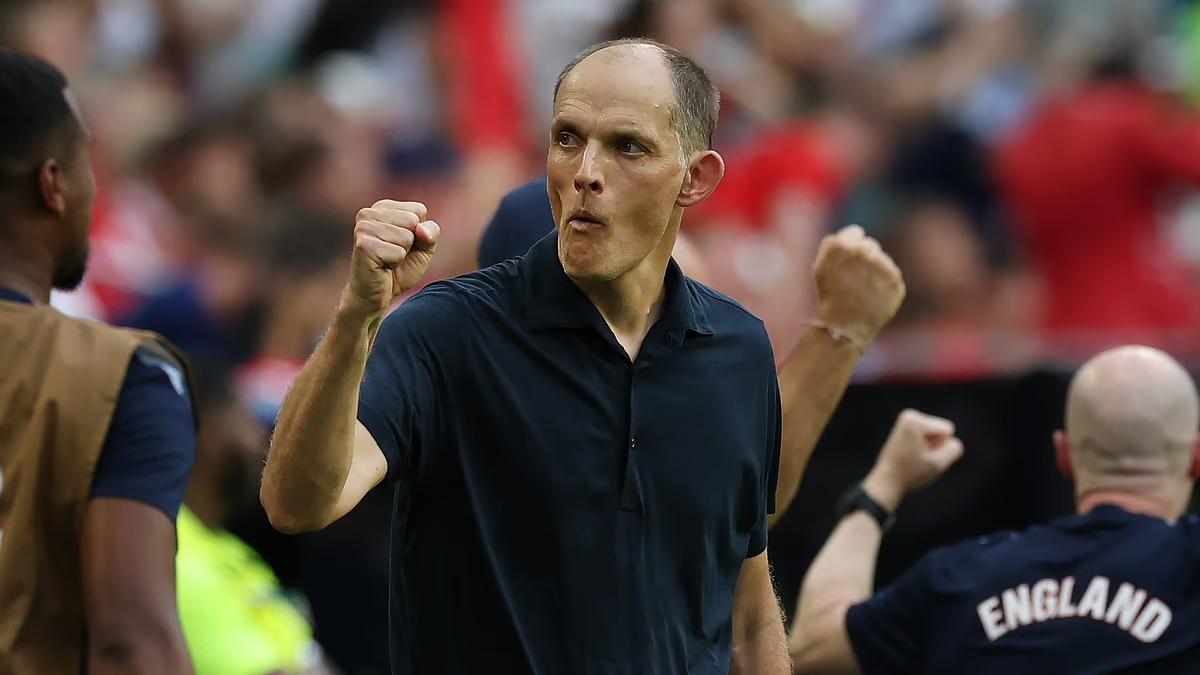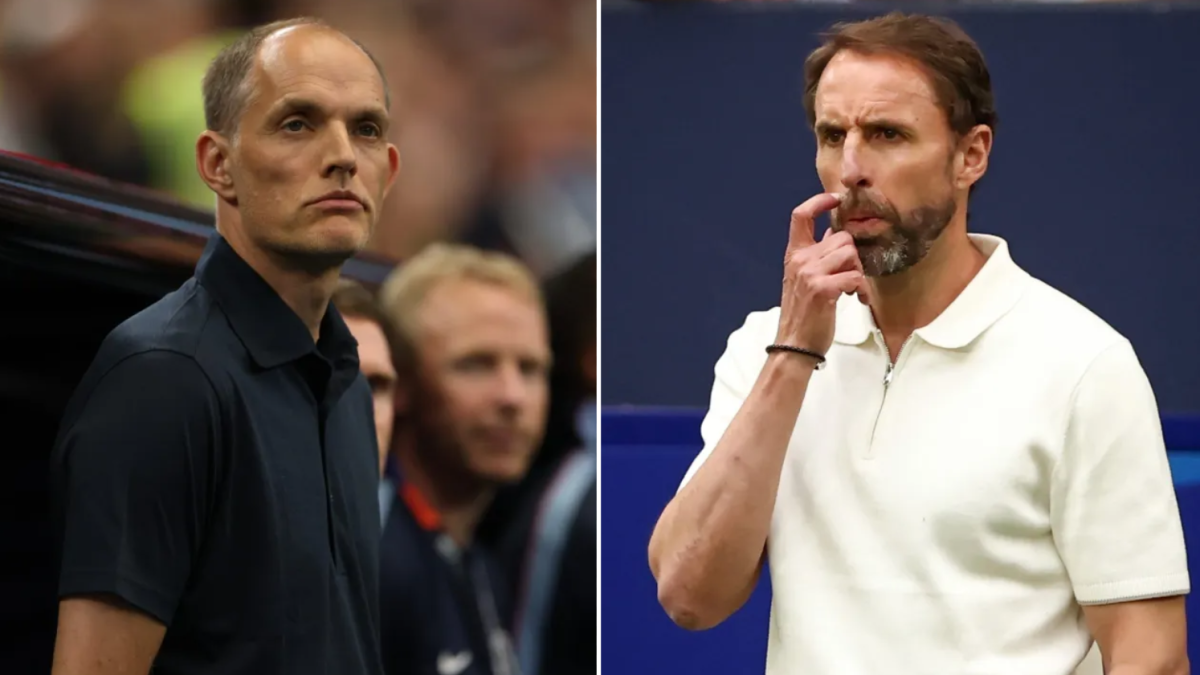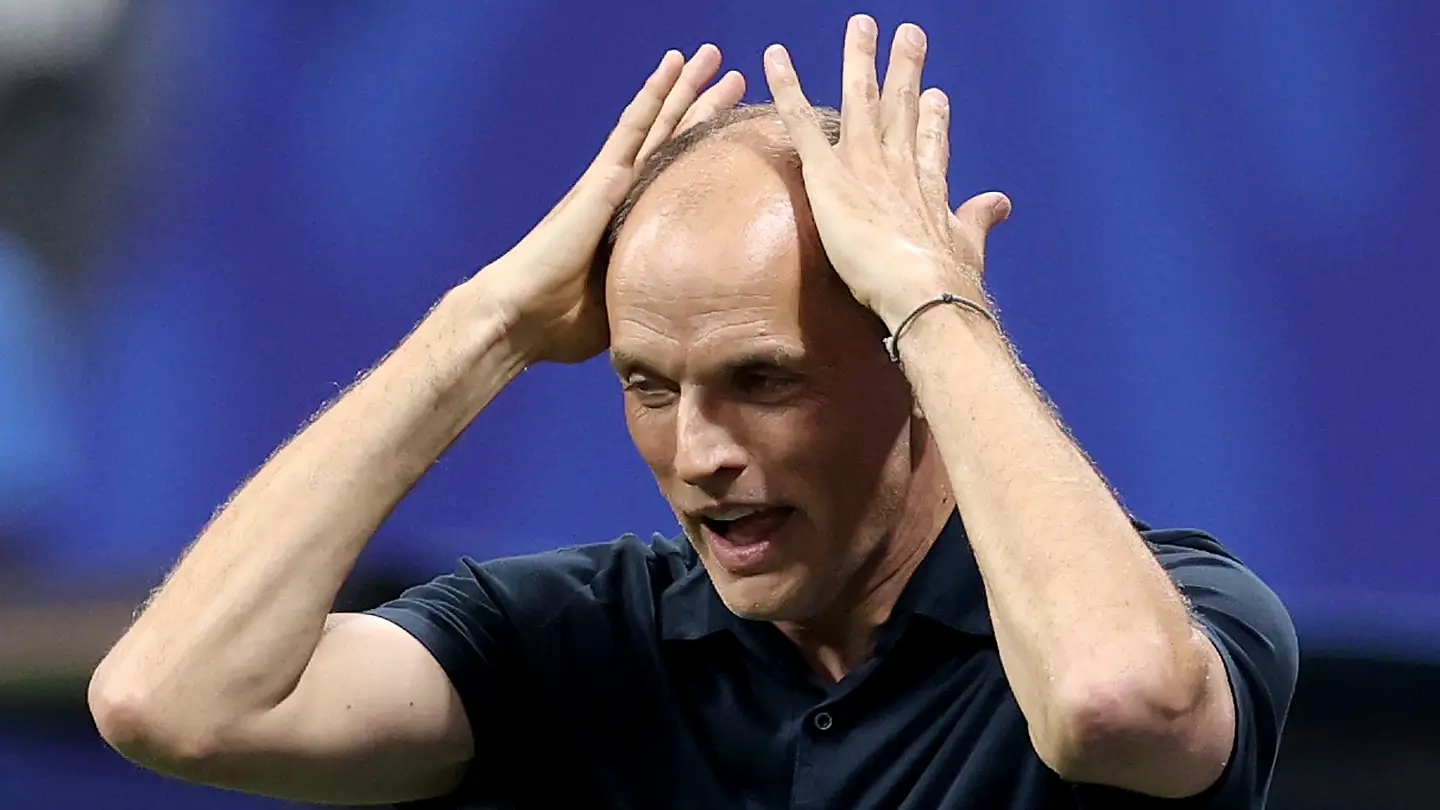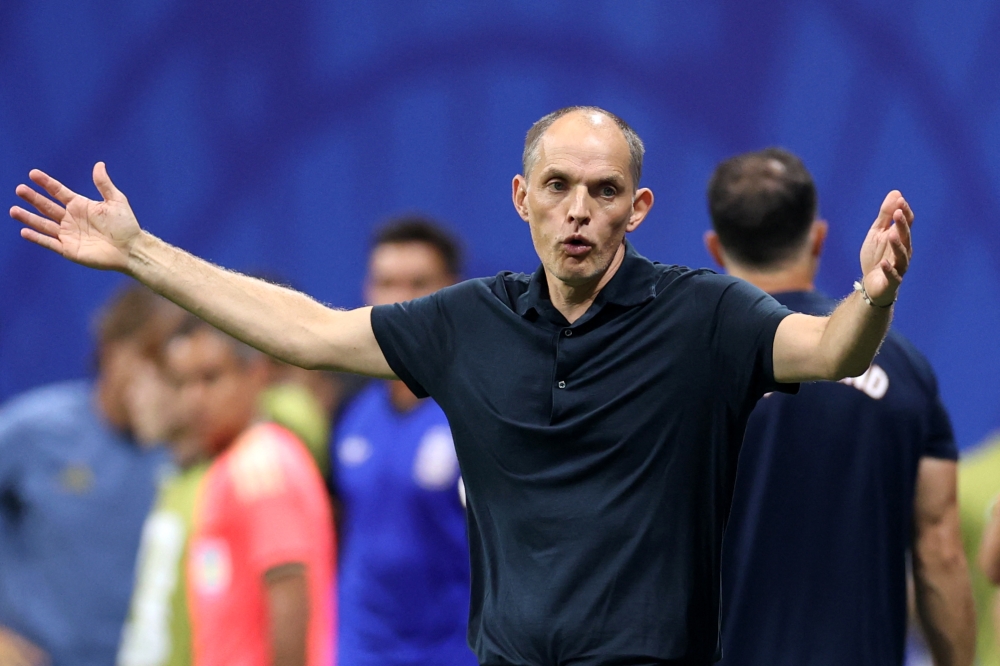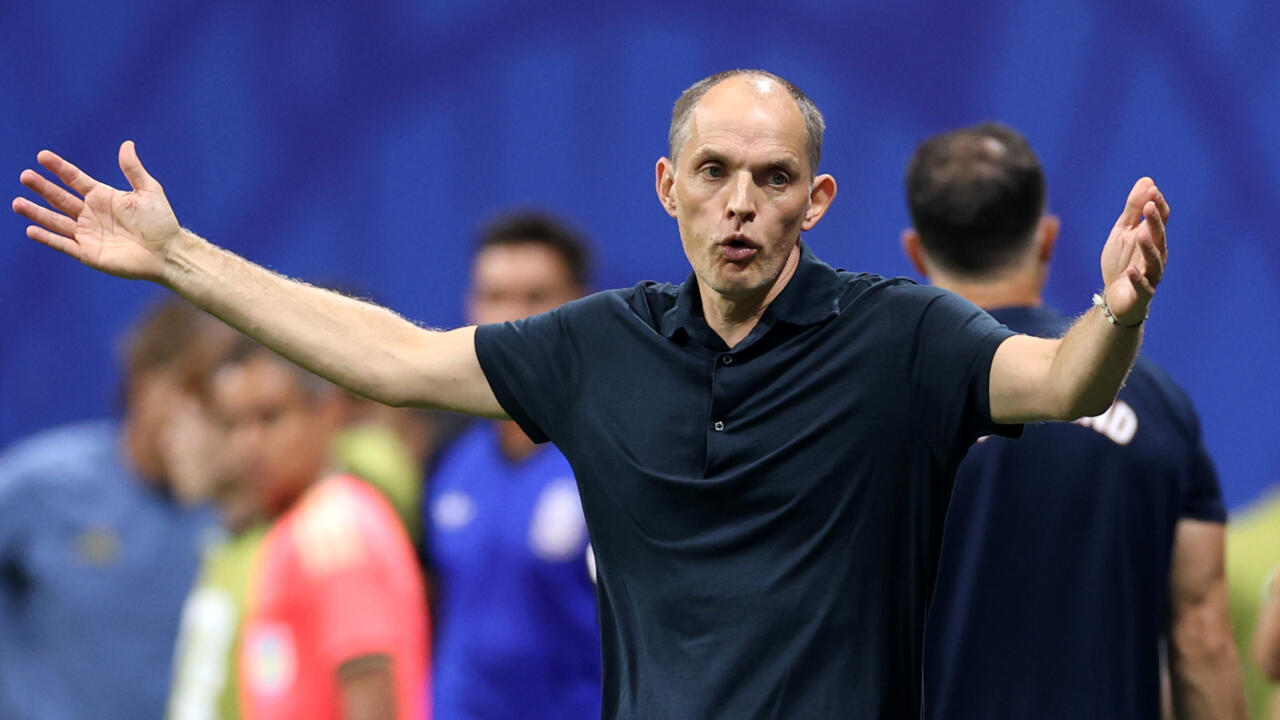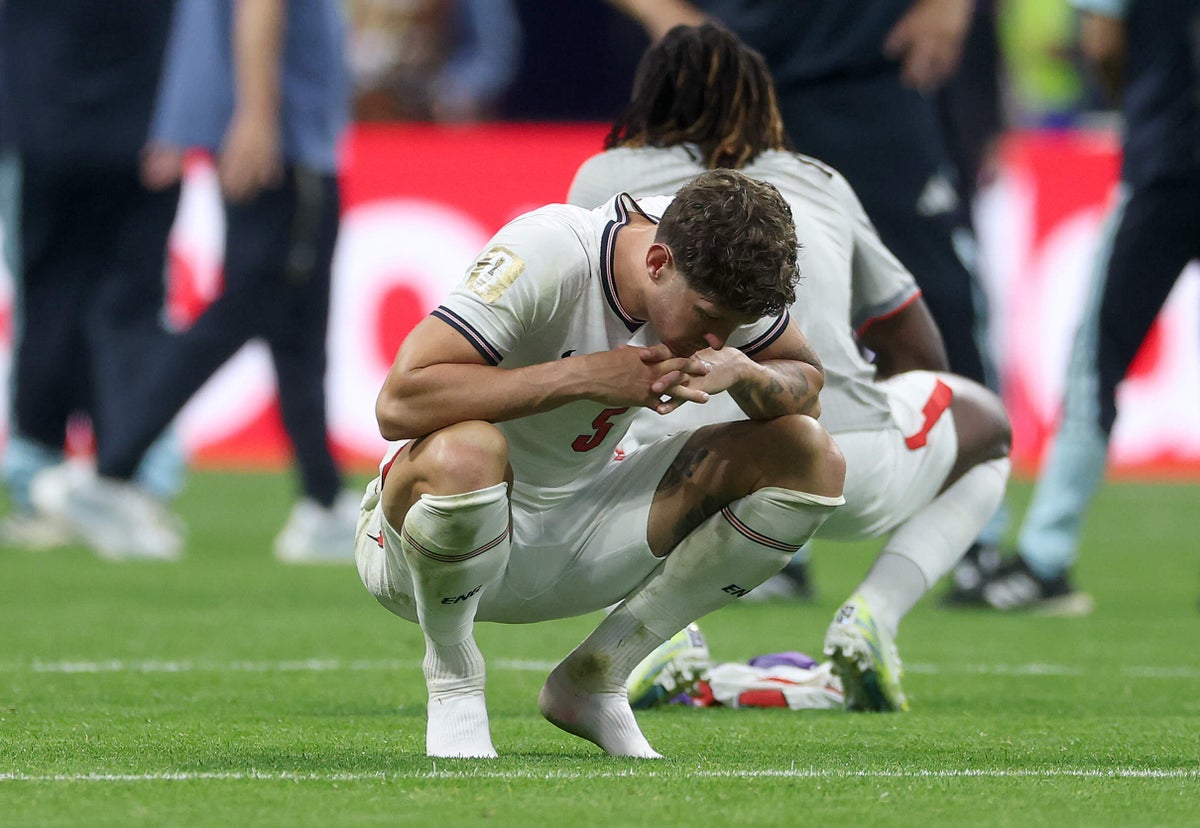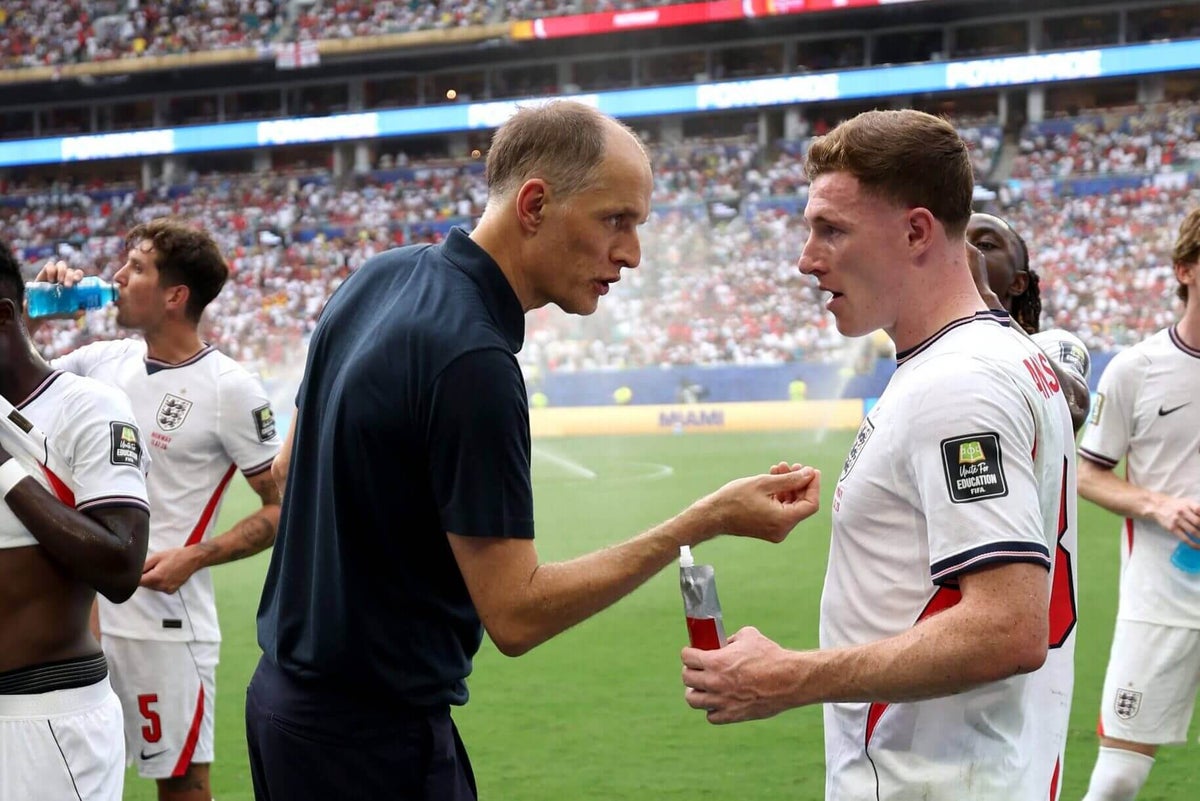
They say history doesn't repeat, but it rhymes.Gareth Southgate's England were one of Europe's most reliable qualifying teams. Then tournaments began, and something quietly changed - almost as if England were wilting under the expectation that all those years of hurt would inevitably be extended with every passing World Cup or Euros.Thomas Tuchel was appointed to fix exactly that. Speaking in March, the former Chelsea boss - widely respected for his tactical acumen and aggressive playing style - gave his assessment of what had caused England to fall at the final hurdle in Euro 2024."The identity, the clarity, the rhythm, the repetition of patterns, the freedom of the players, the expression of the players, the hunger. They were more afraid to drop out of the tournament than in my observation than having the excitement and hunger to win it."Eighteen months later, England's World Cup ended in familiar fashion as Argentina came from behind to win 2-1 in Atlanta, after a second-half performance that has seen Tuchel's tactical retreat slammed by pundits and fans."We were so close," Tuchel told BBC Sport, "but we got too passive after we scored, conceded a lot of chances, couldn't turn the ball possession around and just conceded so many crosses and chances and shots."We were close, but we couldn't keep the level up after we scored."Despite a tournament that promised so much, England supporters are left with that same empty feeling again. It's okay to just want to turn off at times like this - but for Tuchel, his staff and the FA, the autopsy is only just beginning.Using Machine Football, we can begin to answer the uncomfortable question: did Tuchel actually solve England's tournament problem, or did he simply find new words to repeat the same old story?Did Tuchel slip too easily into Southgate's conservative waistcoat?Get the latest World Cup news straight to your inbox by signing up to our Make Football Great Again newsletter now!The pattern under SouthgateSouthgate's record between 2018 and 2024 tells a story England supporters know instinctively.Across 19 World Cup qualifiers, England never lost. They won 15 and drew four, averaging 2.01 expected goals per game while conceding just 0.35.Their average xG difference – England's own xG created minus the xG of the chances they conceded to the opponent – stood at +1.66. The Three Lions were dominating almost every opponent they were facing.Then tournament football arrived.Across the 2018 World Cup, Euro 2020, the 2022 World Cup and Euro 2024, England's attacking output fell to 1.17 xG per game while xG conceded more than doubled to 0.89.Overall, their average xG difference collapsed from +1.66 to just +0.28. Despite progressing to the latter stages of tournaments more consistently than ever, England went from strolling through games to barely scraping through them.The style changed, too. Southgate's qualifying sides averaged 178.3 forward passes and 83.0 passes into the final third per game. In tournaments, those figures dropped to 135.3 and 49.9 respectively, while touches inside the opposition box fell from 24.5 to 15.7.Some of this can be explained away by the higher calibre of opposition and increased jeopardy inherent to tournament football, but Southgate's England often gave the impression they were playing within themselves on the biggest of stages.Most tellingly, the press became more cautious. PPDA – passes allowed per defensive action, where lower numbers indicate more aggressive pressing disrupting the opposition – rose from 7.1 during qualifying to 13.9 at major tournaments.England undeniably became far more passive when tournament football arrived, allowing opponents almost twice as much freedom in possession once the stakes became highest.Tuchel's early readTuchel's sample is far smaller and comes with the obvious caveat that eight qualifiers cannot be compared directly with eight years of Southgate's football. Even so, the early signs are revealing.England won all eight World Cup qualifiers under the German and broke new ground by keeping a clean sheet in every single game, averaging 2.41 xG while conceding just 0.25.Their average xG difference reached +2.16, comfortably ahead of Southgate's qualifying teams. They also pressed more aggressively, recording a PPDA of 6.7 - a more aggressive press than any club teams Tuchel has managed - while averaging 34.4 touches inside the opposition box per game.The World Cup brought inevitable, and considerable, regression. Across seven matches, England's xG difference fell to +1.03, PPDA rose to 12.8 and touches inside the box dropped to 23.6 per game.The question isn't whether England regressed - they evidently did. It's whether they regressed as far as they used to.Under both managers, England became less aggressive once tournament football began. PPDA almost doubled, attacking output declined and results, plus game control, became harder to come by.As stated previously, some regression is to be expected as a consequence of facing stronger opposition. The difference, though, is in where England landed after that regression.Southgate's tournament sides fell to an xG difference of just +0.28. Tuchel's England, by contrast, even after the semi-final defeat, still finished at +1.03 – more than three times higher – while averaging over 50% more touches inside the opposition penalty area than Southgate's tournament teams.England still regressed when it came to the crunch, but to a lesser extent, and from a higher starting point.What went wrong against Argentina?England were poor. Tuchel's semi-finalists finished with just five shots worth 0.79 expected goals, down from tournament averages of 13.6 shots and 2.10 xG.They managed only four touches inside Argentina's penalty area, compared with an average of 23.6 across the tournament. Crosses also fell from a tournament average of 17.7 to just 11.Put simply, every attacking indicator declined at once - and Harry Kane's performance reflected the same frustrating pattern. Both his xG total and penalty-box touches were his lowest of the tournament.Across 105 minutes, Kane produced just one shot worth 0.01 xG, failed to record a single touch inside Argentina's penalty area and completed only eight of his 14 passes.Tuchel's baffling decision to switch to a back five further reduced what little attacking threat remained. It was the Southgate pattern in miniature, compressed into little over half an hour of misery, rather than an entire tournament.One stat that has been widely quoted is that between Anthony Gordon's opener and Enzo Fernandez's equaliser, England saw just 12% of possession, with zero touches in Argentina's penalty area.Gary Lineker's horror at what he was watching, shared on The Rest Is Football podcast on Netflix, was a reaction England fans will relate to."This one seems really, really hard to take," Lineker said. "We went a goal up, they sat deep. The substitutes he made made that even deeper. It turns to five at the back and you're going, 'We will play a low block', against a team who are good against it."It made zero sense to me. Tactically it was astonishing, to be perfectly honest. It was a negative move. We all sat there watching the same game saying the same thing."I found it absolutely unfathomable. You're playing against the greatest footballer there has ever been. Get tight to him [Messi]. He whipped ball after ball after ball into the box."On BBC 5 Live, South American football pundit Tim Vickery added: "England had Argentina exactly where they wanted them. Argentina were terrified of England running at them at pace. England took off all of the players doing that."I'm absolutely baffled at the decisions the coach has taken here. Argentina had a game plan and England played straight into it."England tried to protect their lead by retreating from the front-foot approach that had earned it, with no reliable out-ball to offer them any chance of threatening on the break as Argentina pushed on.Instead, they hunkered down deep in their own half and, in doing so, gave the peerless Lionel Messi and the sharp-shooting Enzo all the space in the world outside the box.Argentina took full advantage. The rest is now history.The verdictOne tournament is not eight years, and drawing solid conclusions from such a small sample of games is tenuous at best. This, however, works both ways.Tuchel's sample remains small, and small samples can flatter just as much as they can induce panic, but the broader numbers are still encouraging.Across an entire World Cup, Tuchel's England created chances and controlled matches at a level Southgate's tournament sides never consistently reached.The clearest illustration is their presence in the opposition penalty area: England averaged 23.6 touches in the box per game at this World Cup, just below the 24.5 Southgate's sides averaged during qualifying and far above the 15.7 his sides managed in major tournaments.England also came back to win two games in this tournament after going behind (DR Congo and Norway). Southgate's charges only managed such a feat three times in eight years (against Denmark at Euro 2020 and Slovakia and Netherlands at Euro 2024), after going behind nine times across four major tournaments.Yet while the overall numbers suggest England have improved, the final 35 minutes against Argentina showed the underlying problem may not have disappeared quite as much as everyone hoped.The manner of that semi-final defeat leads to an uncomfortable conclusion. When England needed to defend a lead on the biggest stage, Tuchel reached for the same response that increasingly defined Southgate's tournaments.If that pattern is to ever be resolved, England need to lose that fear. Unfortunately for Tuchel, his tenure has thus far only resulted in one more painful chapter being added to the story.Join our new WhatsApp community and receive your daily dose of Mirror Football content. We also treat our community members to special offers, promotions, and adverts from us and our partners. If you don't like our community, you can check out any time you like. If you're curious, you can read our Privacy Notice
Thomas Tuchel v Gareth Southgate: What the data shows on who is better manager
After another disappointing tournament exit, we ran the numbers with Machine Football to see if England have really changed.
1,611 words~7 min read