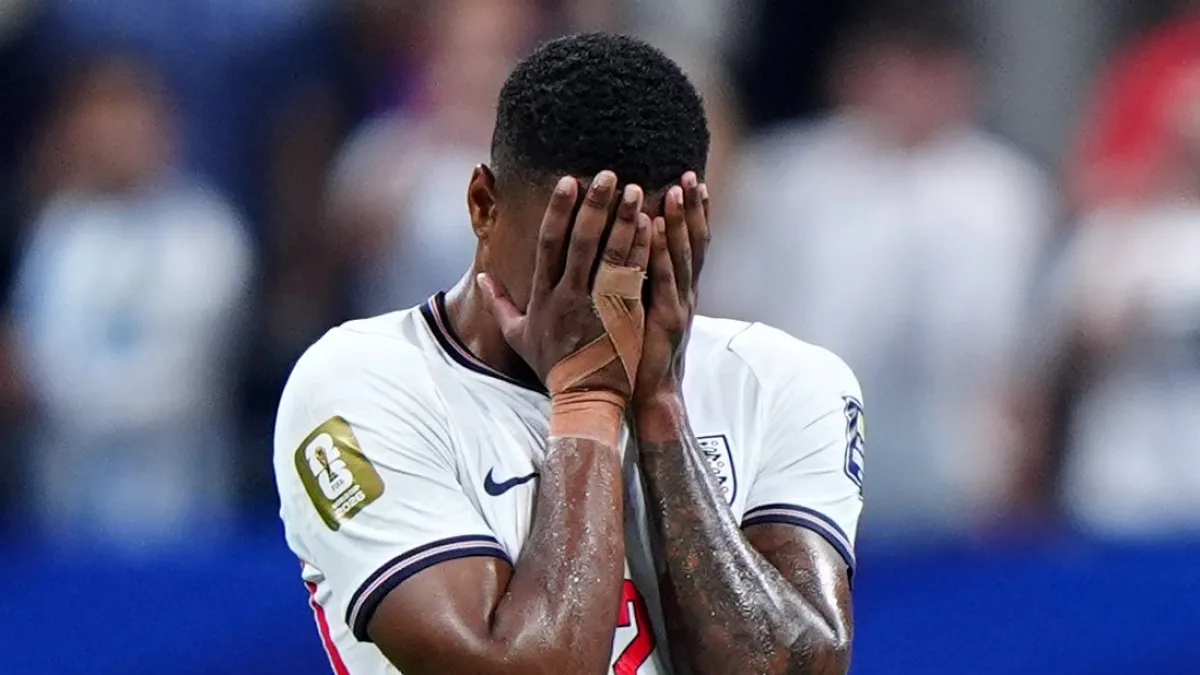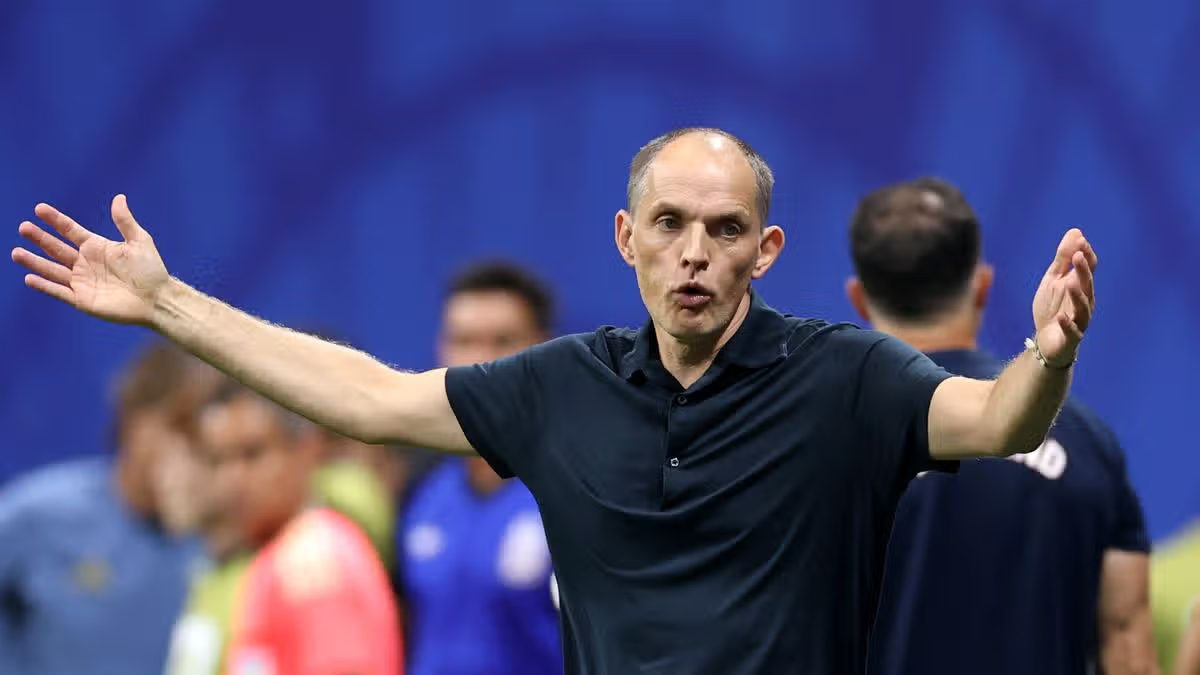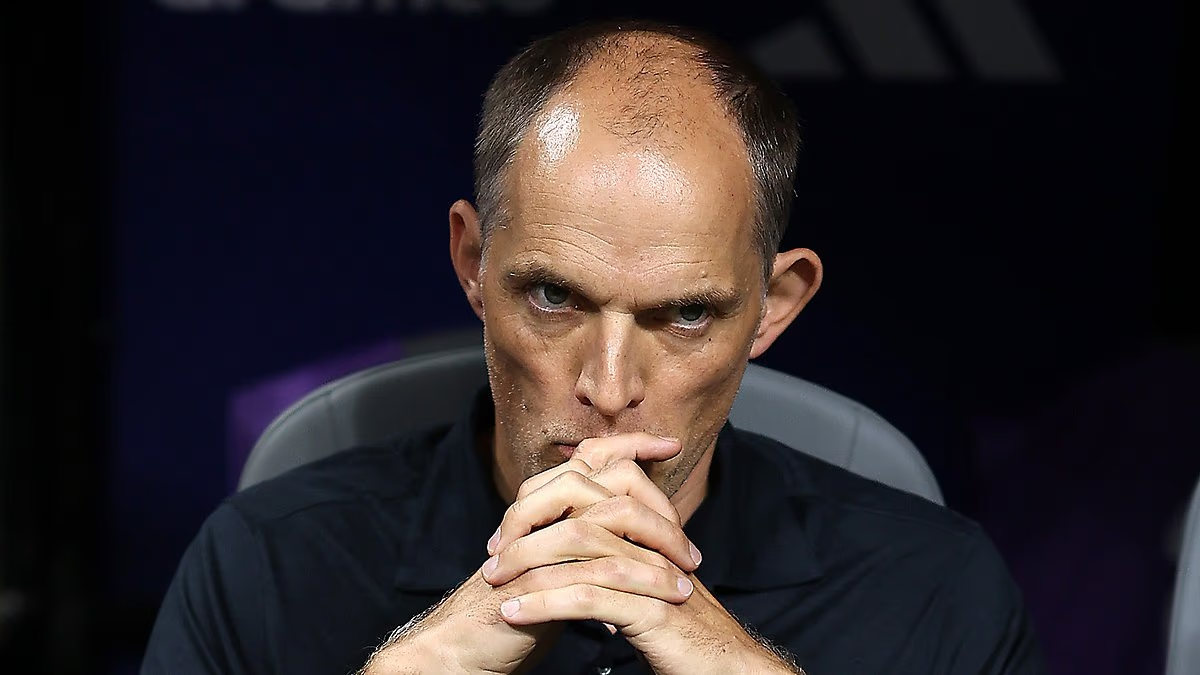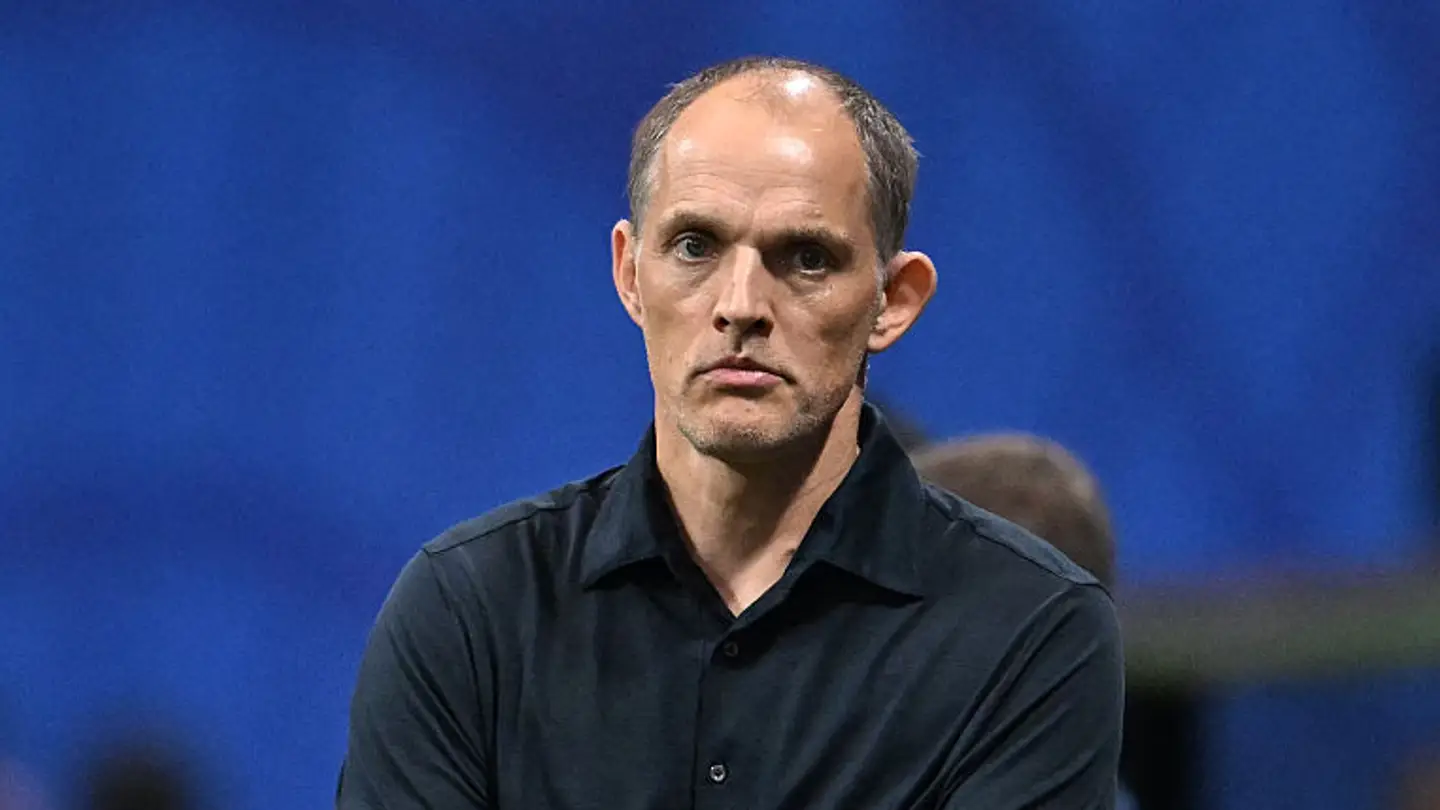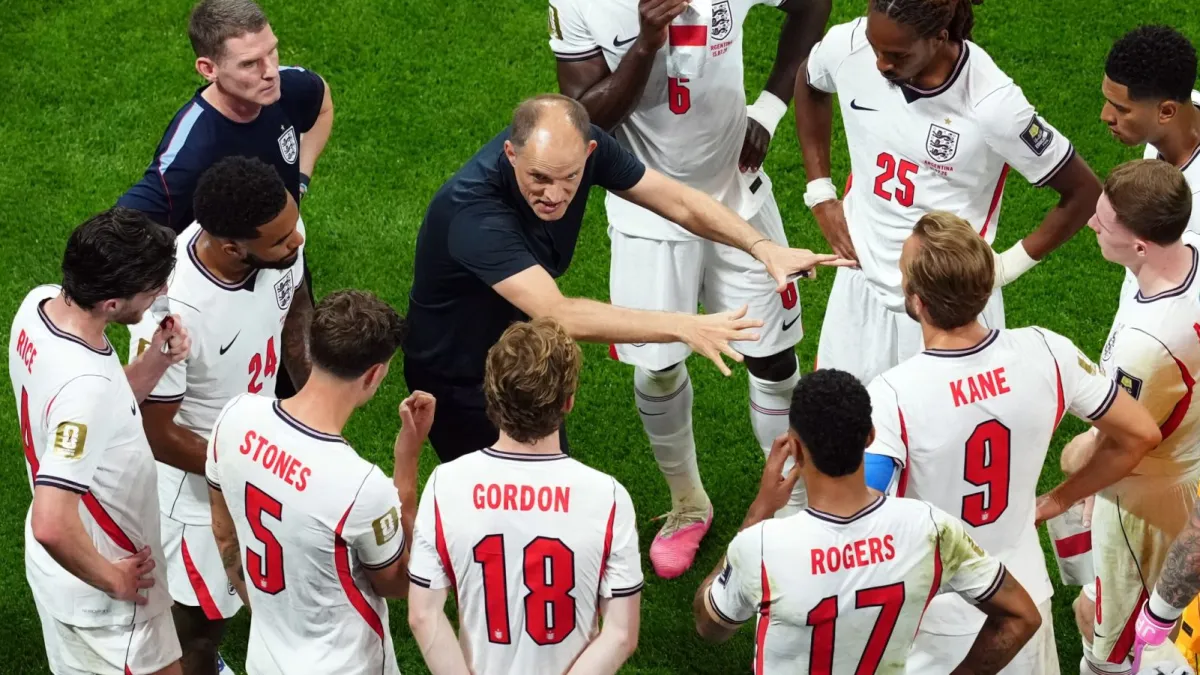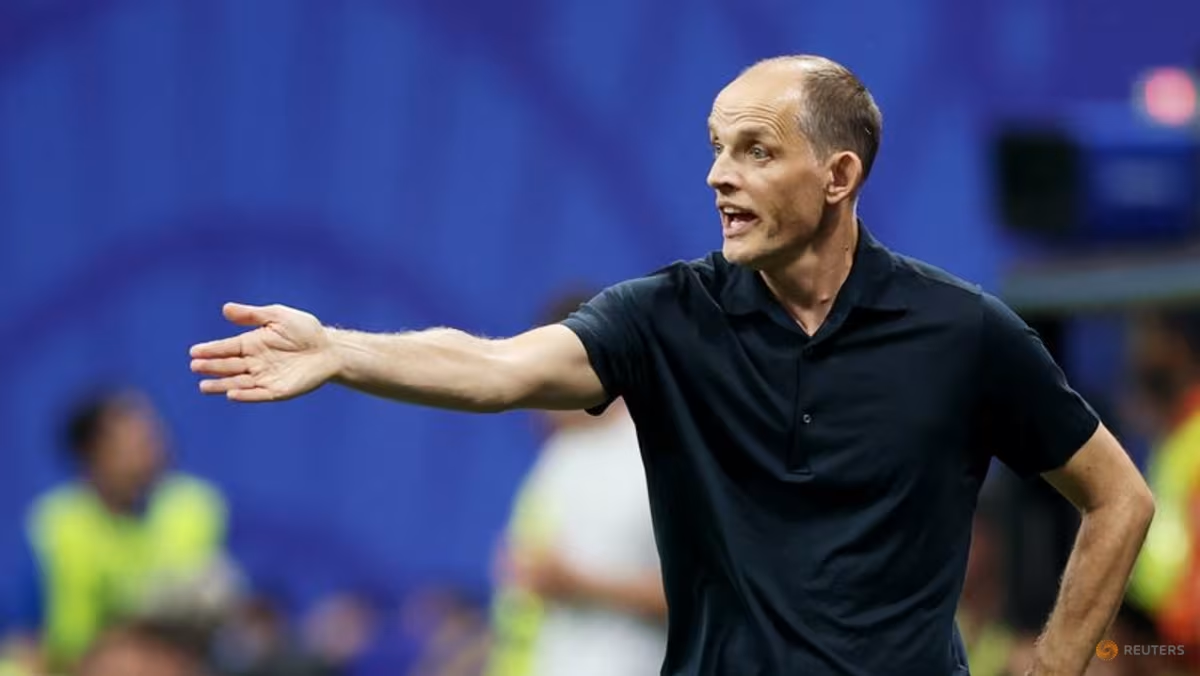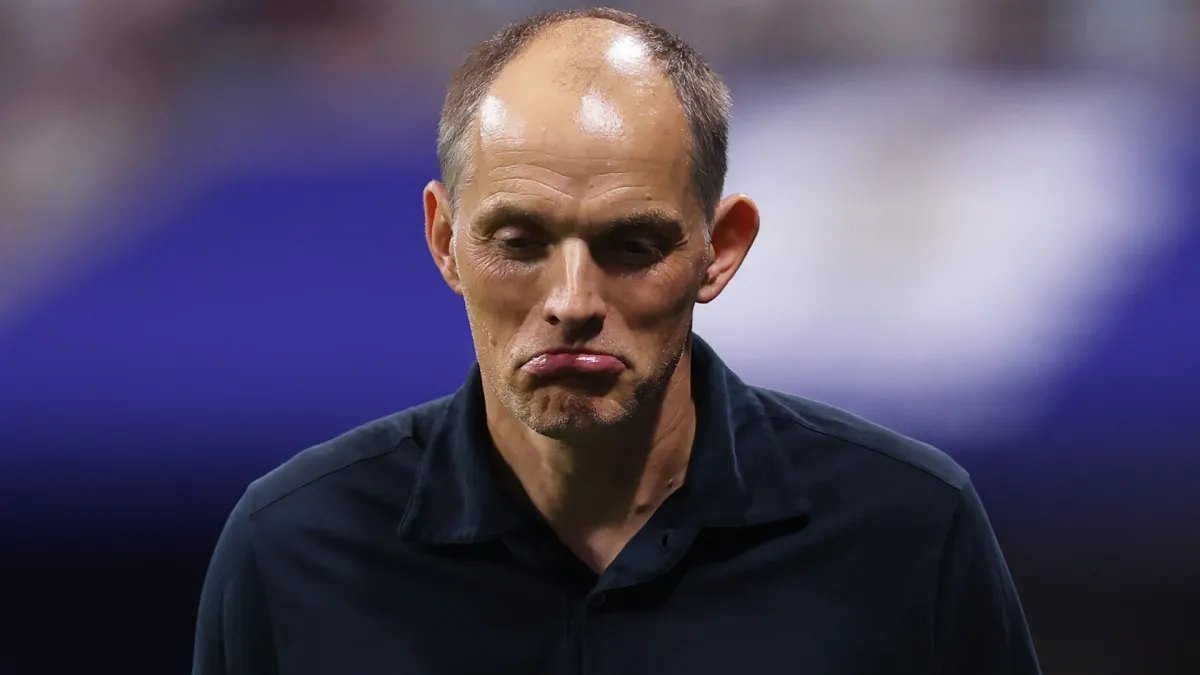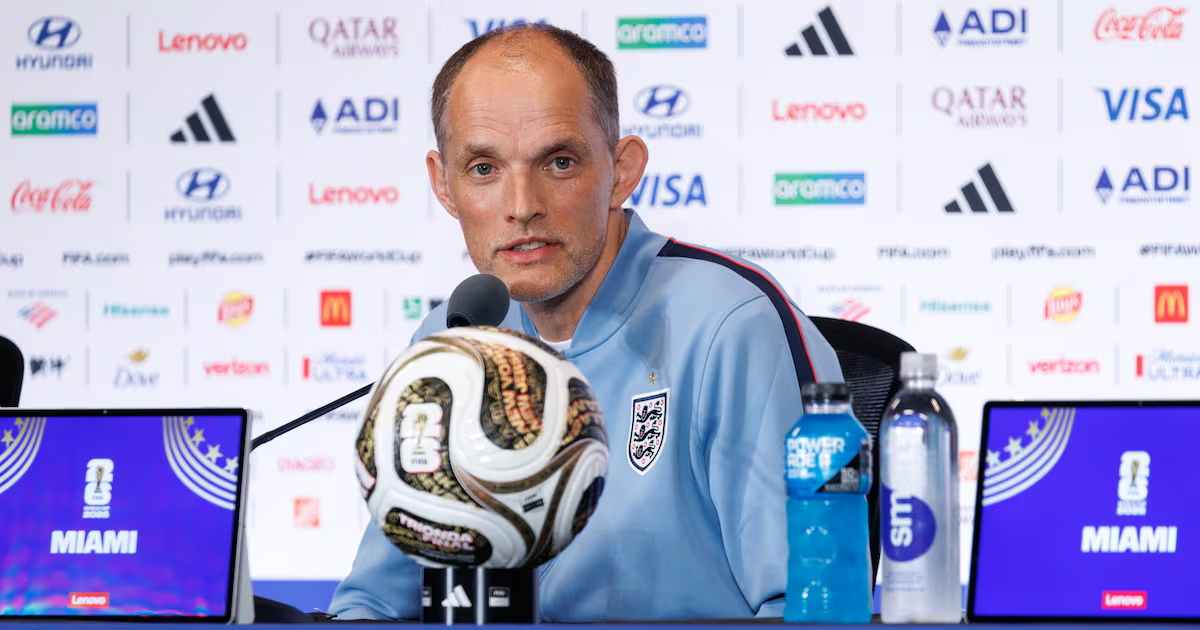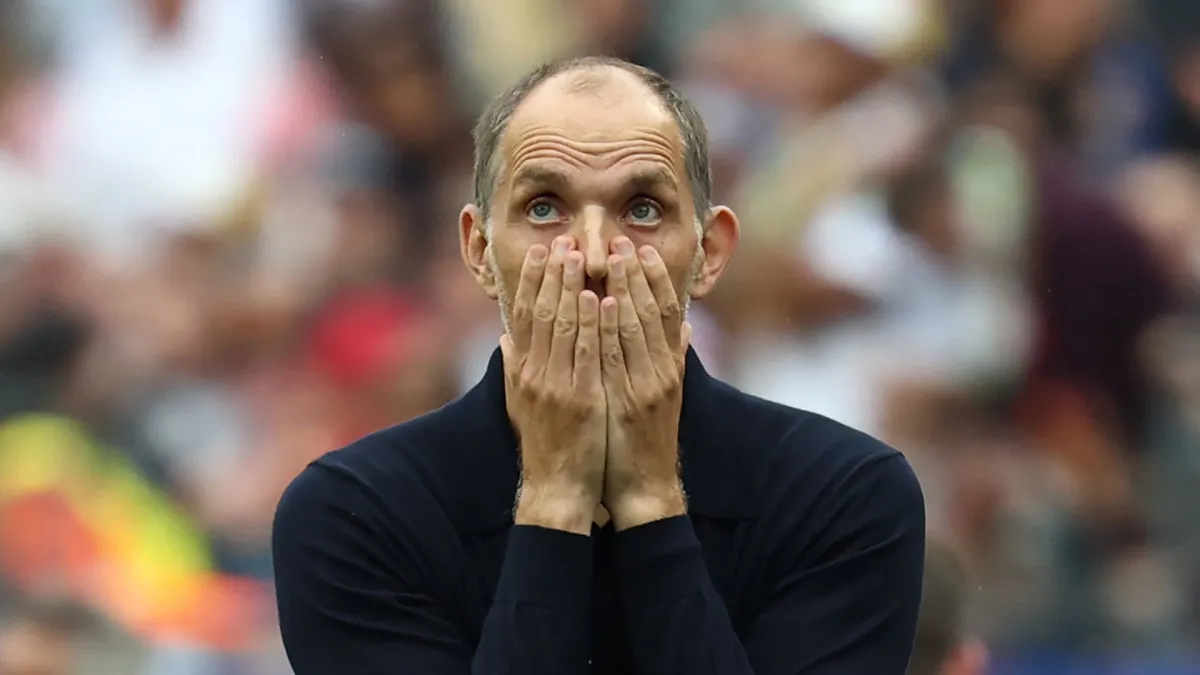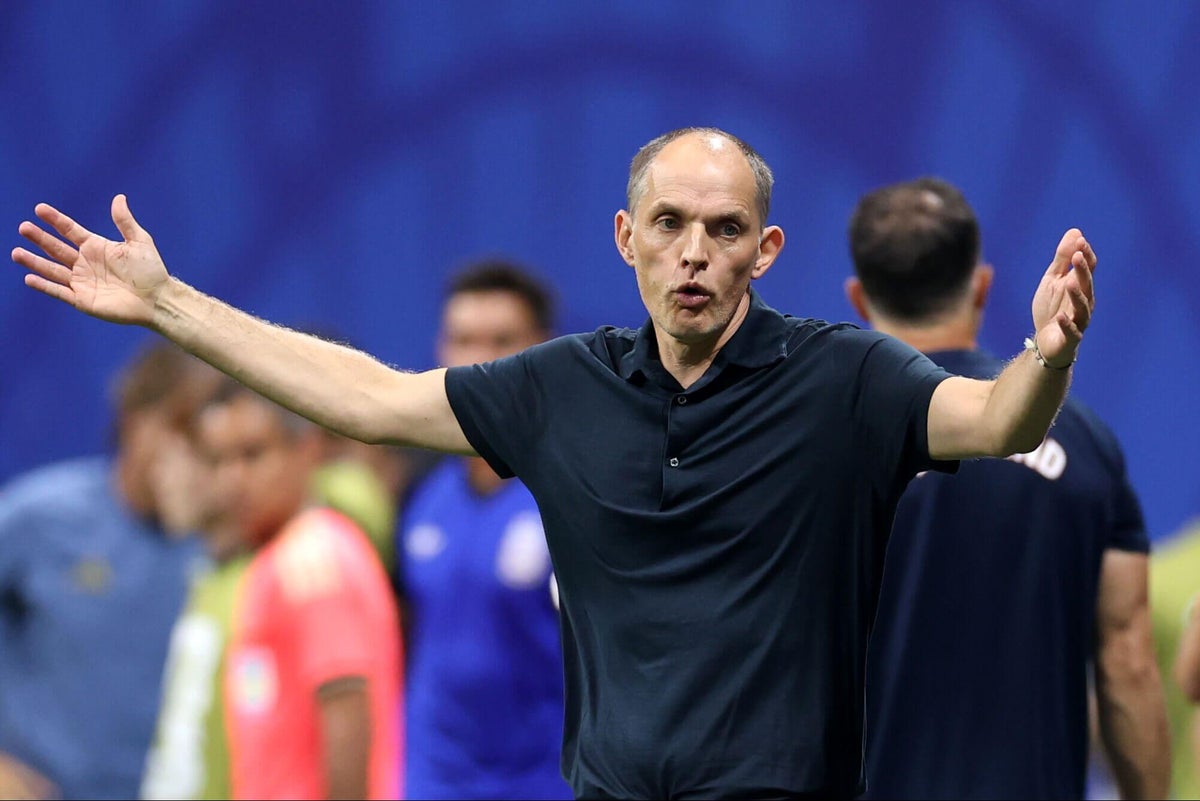
The logic of the Football Association appointing Thomas Tuchel in 2024 was that he was a knock-out specialist, a tactical wizard, someone whose clever bespoke plans for every occasion would give England the best possible chance of winning the World Cup.England reached some huge games under Gareth Southgate but it often felt as if they were frozen by passivity at crucial moments, unable to make the changes required to keep pace with cleverer opponents, forcing their eventual retreat. Not least in their last World Cup semi-final, eight years ago in Moscow, when they were 1-0 up with 22 minutes left before Croatia finally reeled them in.At least this time no-one can accuse the England manager of being passive. This defeat to Argentina was a proactive disaster, a self-inflicted collapse, an entirely chosen retreat into their own penalty area which ended the only way it was ever could do — with England losing a third World Cup semi-final, and Argentina going to New York instead.Some might look at the scoreboard, see that there were only five minutes left when Enzo Fernandez made it 1-1, and argue that England were unlucky. That would be nonsense. England were already deep underwater by that point, unable to resist wave after wave of Argentinean attacks. Only marginal luck and poor finishing meant that England were still ahead.The real turning point, the moment when England lost the game, had come long before. Remember that England were in the dream position here when Anthony Gordon had put them 1-0 up, a goal of incisive counter-attacking, exactly how Tuchel planned it. The game was precisely where England wanted it, with Argentina needing to come onto them and offering space to attack.But England blinked. They turned down the opportunity. No pace from the bench, no Bukayo Saka, Noni Madueke or Marcus Rashford, to pin Argentina back or kill the game. England barely had a single attack after going 1-0 up. One blocked Kane shot. One counter attack when Morgan Rogers hung onto the ball for too long. And nothing else. The rest of the game was played 20 yards from Jordan Pickford’s goal.Enzo Fernandez accepted the chance to fire Argentina level (Thomas Coex/AFP via Getty Images)Remember the Croatia game in Dallas, four long weeks ago. England were 3-2 up and clinging on. Tuchel brought on Saka and Rashford, and they combined on the break with five minutes left to win the game. Tuchel and his assistant Anthony Barry had spent all World Cup talking about England’s Premier League physicality, their speed and intensity, and yet when it mattered most here they declined to utilise it, and decided just to dig in instead — despite facing an Argentina defence susceptible to pace, with Leandro Paredes off, with Nicolas Otamendi on for Lisandro Martinez, leaving huge empty spaces just asking for England players to run into.By the hour mark England were already worryingly deep, defending their own penalty area. Lionel Messi was already starting to drift into dangerous areas where he could hurt England. When he put the ball onto the forehead of Nico Gonzalez, who forced a save from Jordan Pickford, it was clear that Tuchel had to act. Argentina had — as Lionel Scaloni memorably put it afterwards — started to sense “blood in the water”. The second drinks break was a chance for Tuchel to stem the bleeding. Just like he had done with his changes against Norway on Saturday.Instead, Tuchel made a tactical alteration that will go down as one of the most consequential mistakes ever by an England manager in a big game. Rather than getting back up the pitch, or giving Argentina anything to worry about, he decided to implement the Azteca Plan again. Going to a back five, camping out in their own box, with Ezri Konsa on as the extra centre-back and Gordon taken off.The Azteca Plan only worked because Mexico’s sole intention was to sling crosses into the air for Raul Jimenez. England just needed to keep heading the ball away to win the game and make it through. It was the perfect time for a proactive retreat. But to do that here, to build defensive trenches in their own penalty area, meant ceding all the space outside the box to Messi. When he chipped the ball in for Gonzalez to head wide — with 12 minutes left — you did not need to be a Champions League-winning manager to know what the implications would be.But Tuchel doubled down. Dan Burn came on. England retreated further into their 5-4-1. But what is the point in having all those white shirts in the box when Fernandez is free to find space to shoot from just outside it? England even gave him the chance to get his eye in, Pickford tipping one over before the shot that made it 1-1.There was only one winner from there, and Alexis MacAllister even hit the post just before Messi curled in another perfect cross for Lautaro Martinez to head in.Lautaro Martinez heads in Argentina’s winner (Paul Ellis/AFP via Getty Images)There was never any prospect of England getting back into the game and taking it to extra time. They had attacked so little over the previous 40 minutes it was almost impossible to suddenly change direction. England had just 12 per cent possession from Gordon’s opener to Fernandez’s winner, radical anti-possession football that would make Jose Mourinho wince. How could the players instantly start thinking, after booting the ball away time after time, that they were meant to take care of it again?There was no time to repair the damage that had been done. And at the end the England players looked devastated. They knew how close they were to their first men’s World Cup final for 60 years. Gordon took 25 minutes after the final whistle before he finally trudged off down the tunnel.When England lost at this stage to Croatia in Moscow’s Luzhniki Stadium it was immensely painful but it also felt like a footballing education. That was a young England team, fancied by no-one beforehand, with an inexperienced manager. They lacked the intelligence and nous to get over the line and into the final. Their retreat under pressure was an involuntary rearguard, the only way they knew.None of those excuses apply today. This was the fourth semi-final in eight years for many of these England players. The spine of this group has been together for long enough now. With Harry Kane and Jude Bellingham on top of their games, this was a far better England team than in 2018, and with far better options on the bench.This time was meant to be different, not least because the FA had paid the money to recruit the best manager at this World Cup. Someone who would be able to plan and engineer England’s way through this tournament, taking advantage of the physical edge of a squad of Premier League players. Instead it ended the same way it always does, with England offering nothing in attack, retreating and retreating and retreating until they were overwhelmed.The only difference was that this time England chose their own destruction.
Thomas Tuchel is guilty of orchestrating England’s craven World Cup demise
The German coach was supposed to be the master of big-game management but this felt like a self-inflicted collapse
1,188 words~5 min read