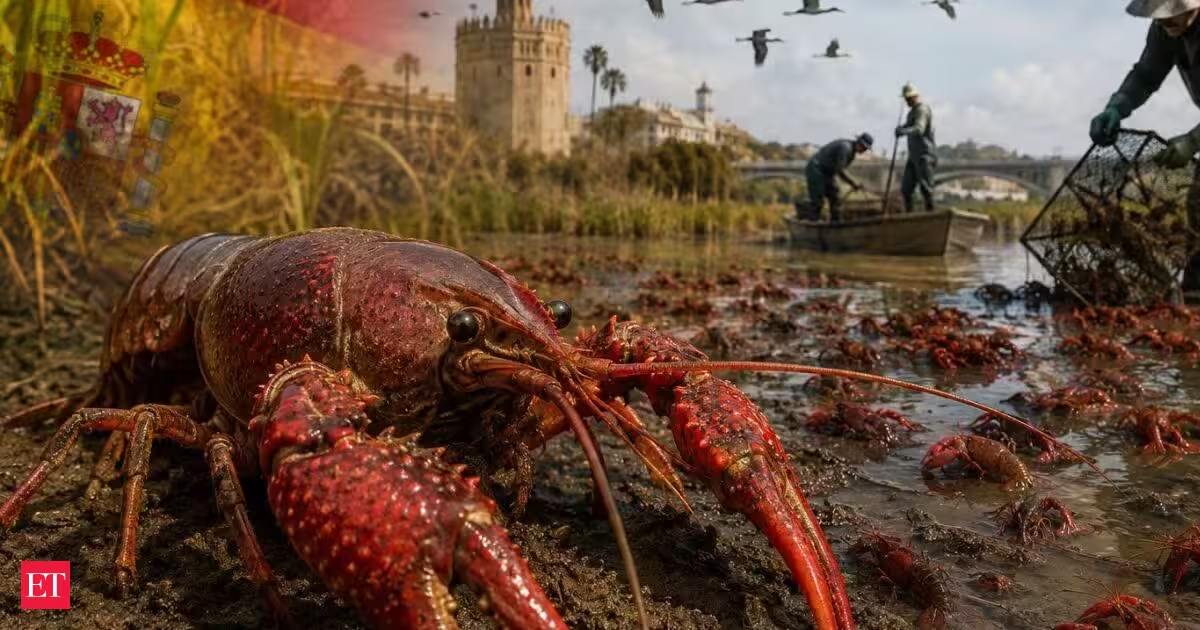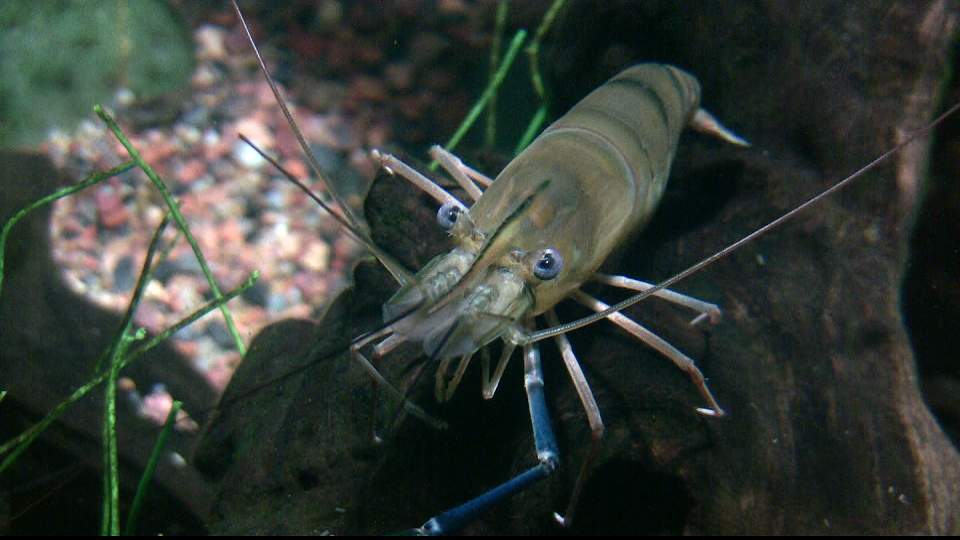
A study led by researchers from Brazil and Uruguay confirmed the presence of invasive prawns in several conservation areas along the Brazilian coast, including estuaries listed by UNESCO as Natural World Heritage Sites.Considered an opportunistic predator and highly adaptable to different marine conditions, the giant river prawn competes with native species for food and shelter, in addition to being a potential vector for diseases.While scientists demand concrete actions to stop the advancement of this intrusive crustacean, small-scale fishers report significant drops in their capture of native animals, warning about the impact of invasive species on their livelihoods.
The stealthy and increasingly persistent presence of an exotic species — the giant river prawn— in Brazil’s coastal ecosystems has been raising numerous alarms among scientists, fishers and environmental managers.
Introduced in the country in the late 20th century to supply the growing aquaculture industry, the prawn (Macrobrachium rosenbergii) is no longer limited to captive breeding. The species has established itself in extremely sensitive natural environments, including protected areas.
A study conducted by researchers from Brazil and Uruguay was published in February, revealing the extent of the problem and detailing the ecological and environmental risks associated with the giant prawn “invasion” — negative aspects that, according to experts, may intensify in the coming years.