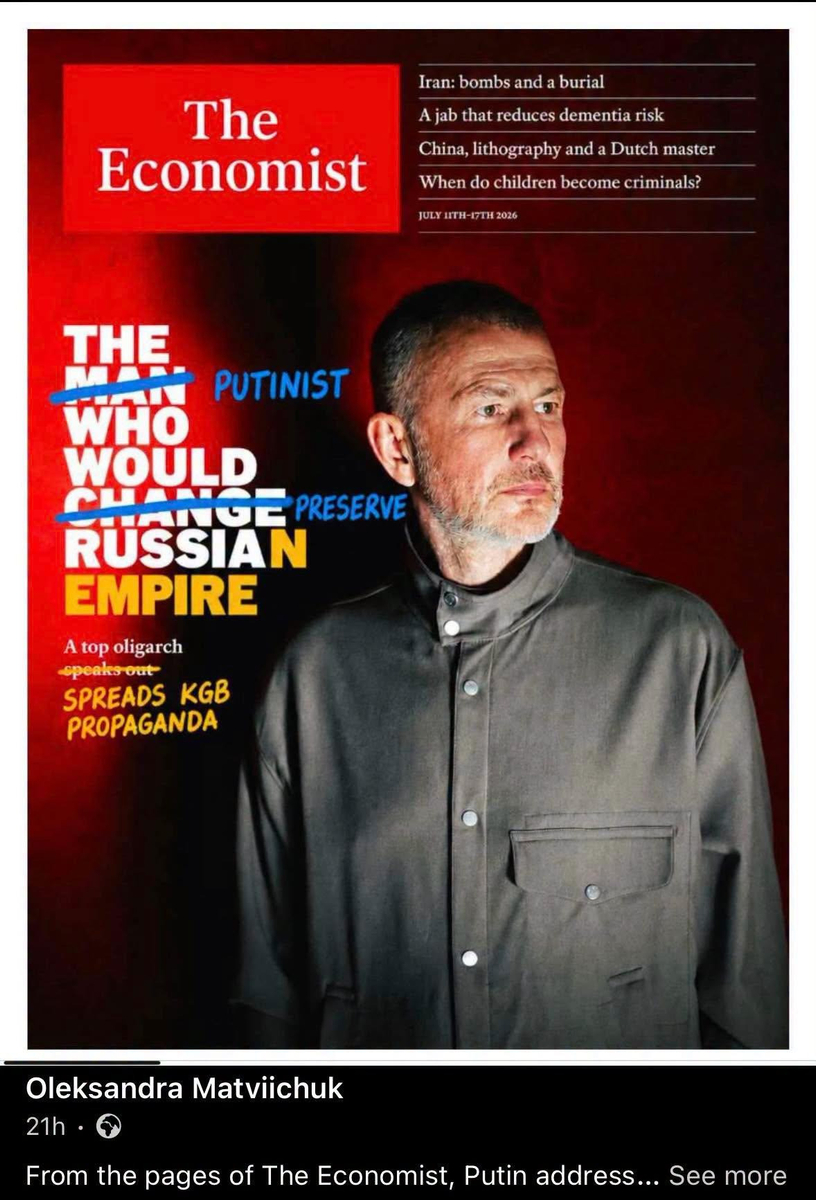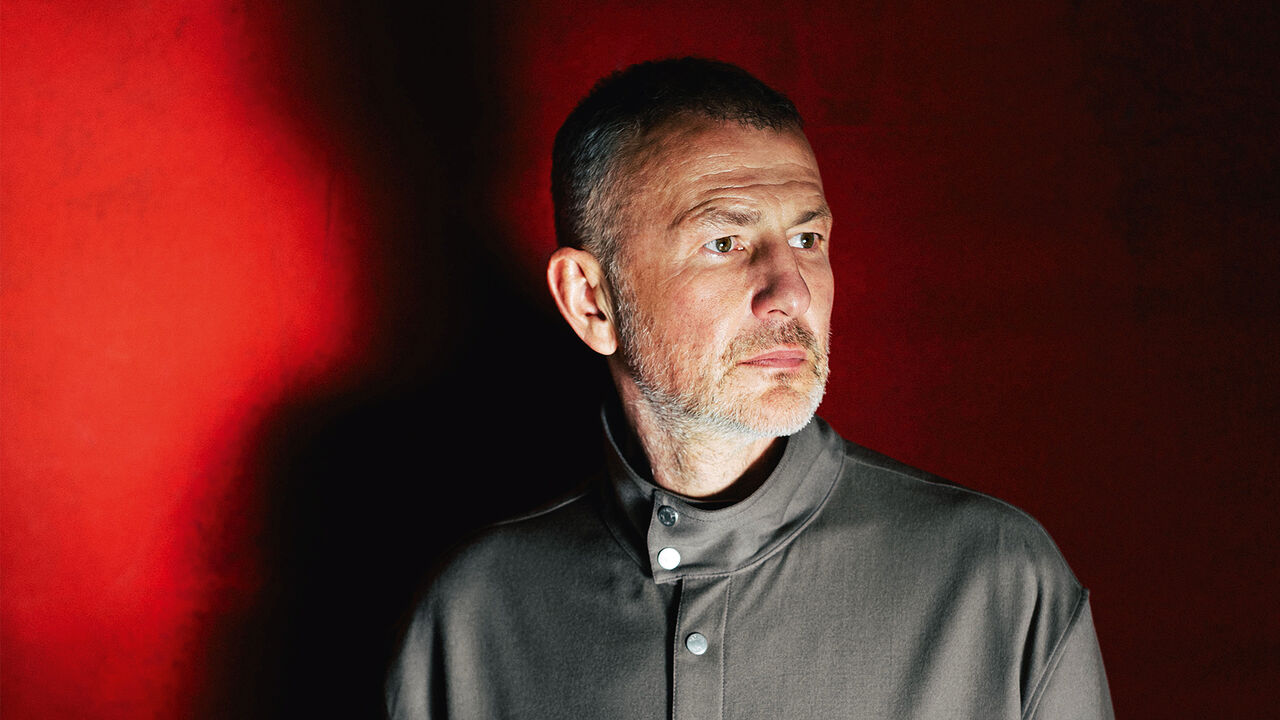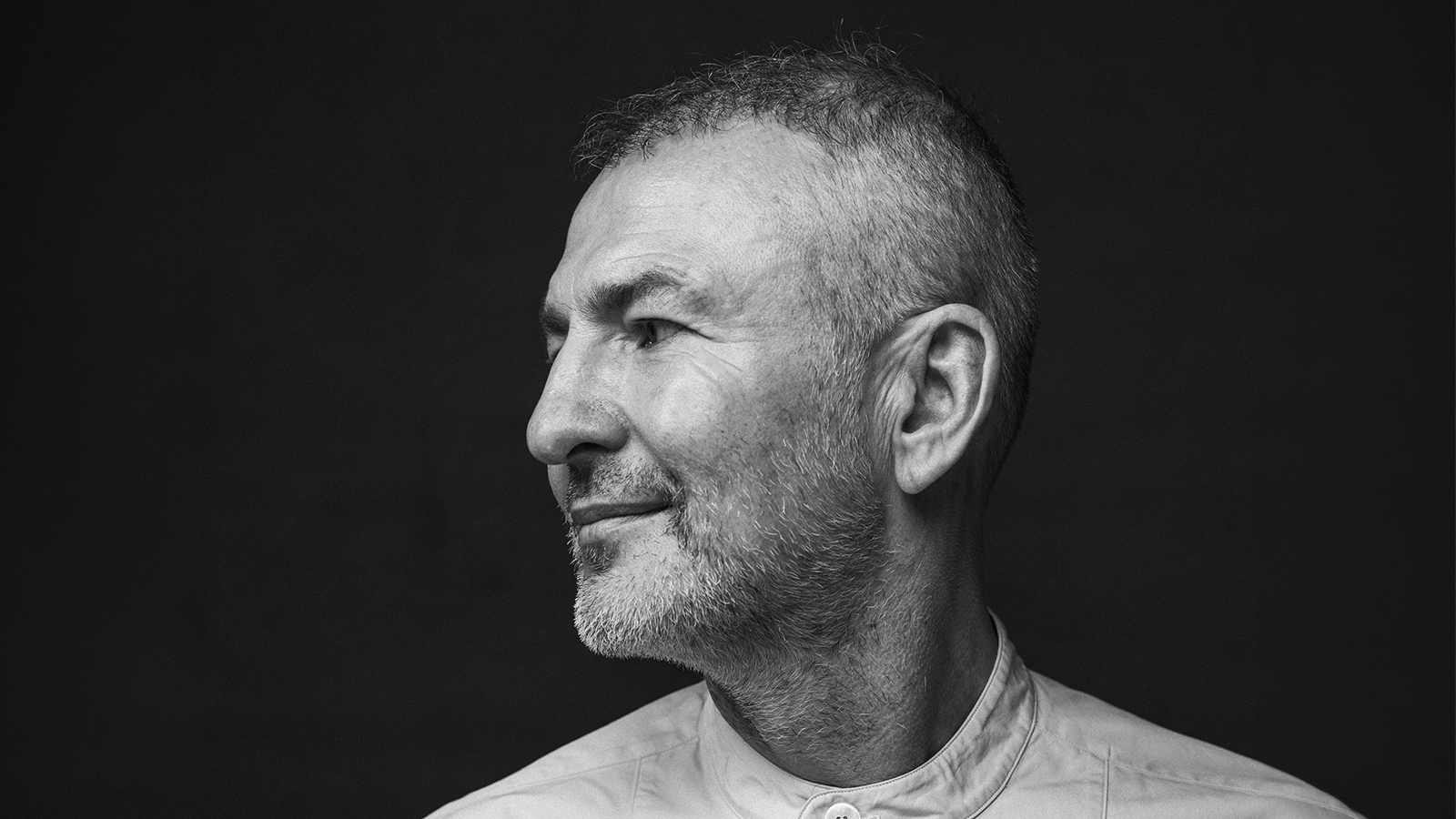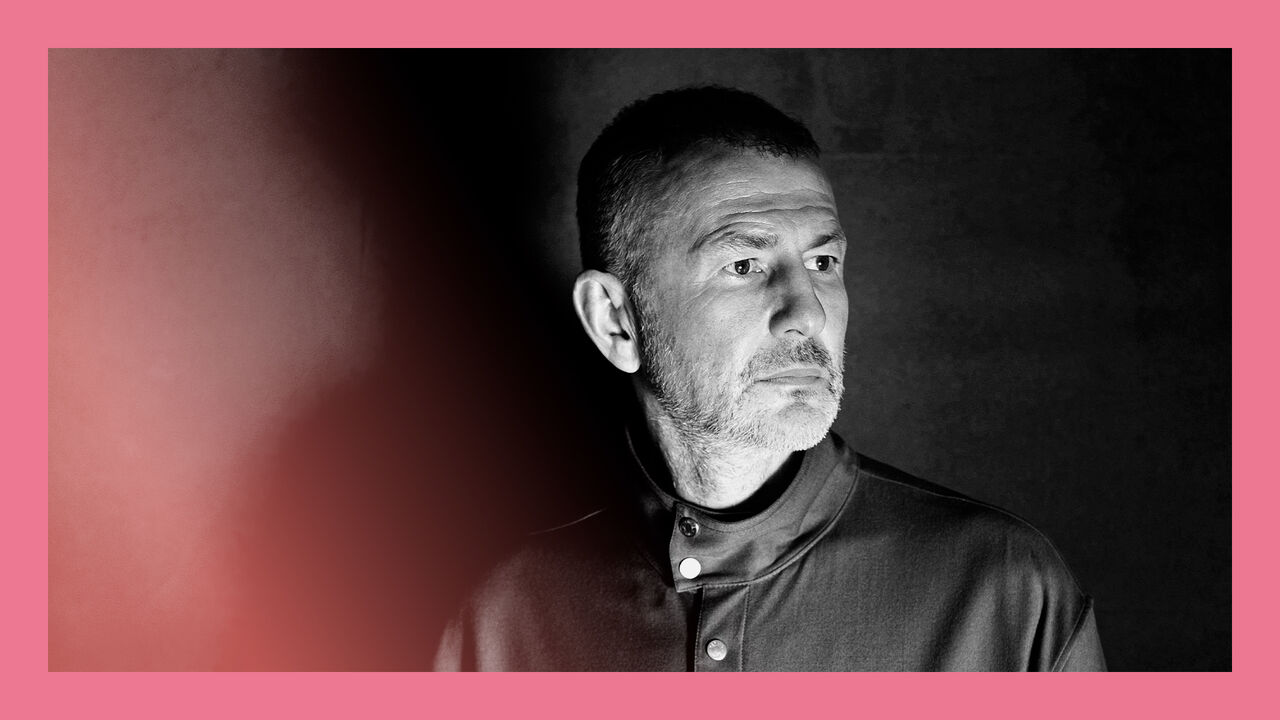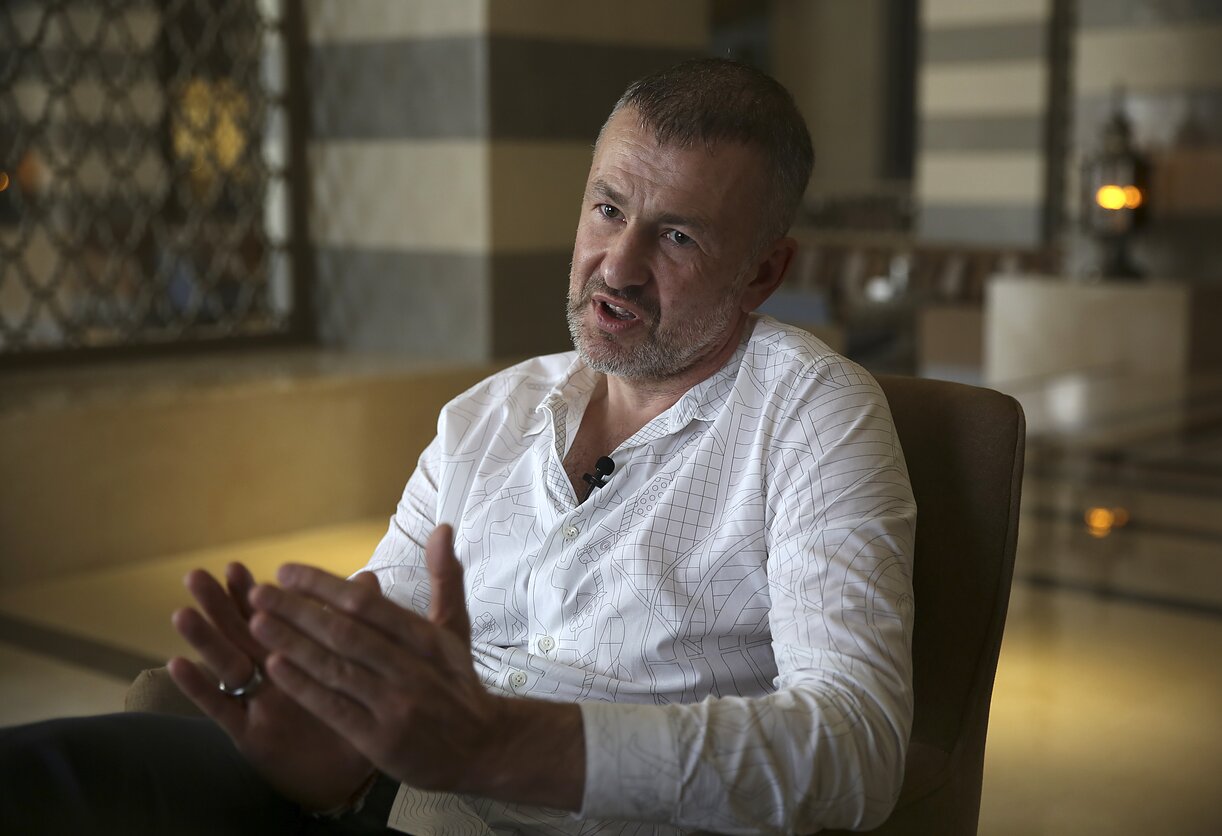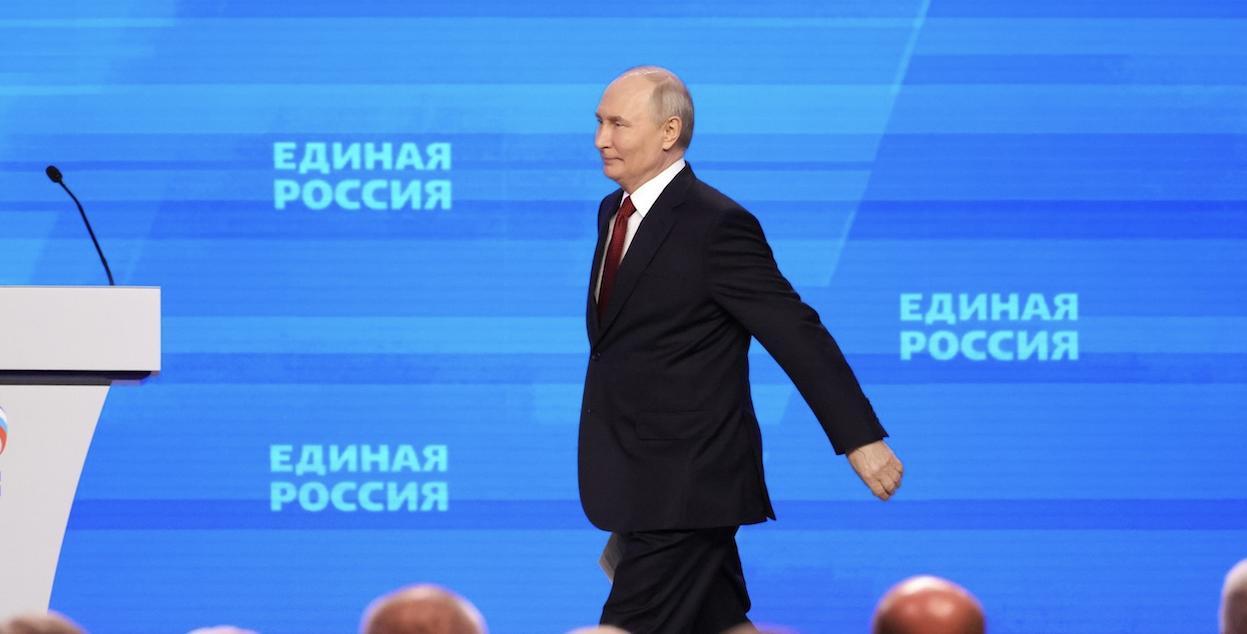
The Economist put a Russian oligarch on its cover with the strange headline “The Man Who Would Change Russia: A Top Oligarch Speaks Out.” The article, based on interviews with oligarch Andrey Melnichenko, claimed that it was dangerous for him to speak out. But in fact, its publication was a “dezinformatsiya,” or “disinformation,” coup for Putin.JOIN US ON TELEGRAMFollow our coverage of the war on the @Kyivpost_official. The story’s headline read “Why a Broken Russia is Bad for the World,” and contained only Kremlin talking points that were designed to stoke fear among Western allies about a possible Russian defeat. Moreover, Melnichenko is hardly credible. He’s a war profiteer and did not refer to the fact that Russia’s invasion – which began in 2014 – was unprovoked, illegal, and laden with war crimes. Instead, he argued that Moscow, the chief perpetrator for decades of wars and strife globally, be allowed to retain its global status. “It will need to be part of the new security architecture,” he said. Frankly, as a journalist, it is questionable whether to publish advice from a man who has made a fortune off the dictatorship and its wars, owns the world’s most valuable yacht, and has homes and wealth socked away in offshore havens. But as Aeschylus wrote: “In war, truth is the first casualty.” July 11 edition
Putin Propaganda
Why one oligarch's Economist interview is really Kremlin messaging in disguise – and why Russia's defeat, not its survival, would benefit the world.
1,349 words~6 min read