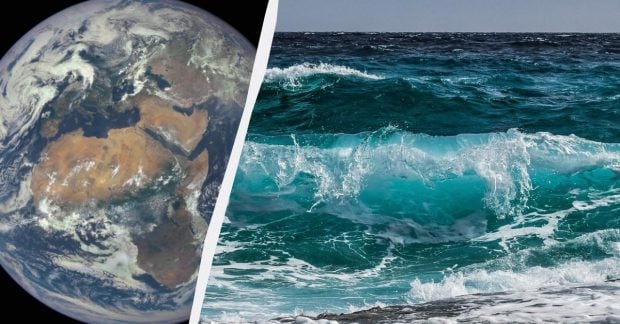
Earth appears to have a natural climate control system that has helped keep the planet habitable for more than 100 million years. Scientists have long known that this system exists, but the mechanisms behind it have remained difficult to explain.
New research points to a previously overlooked connection between sea level and the availability of phosphate in the ocean. Changes in global temperature affected the size of polar ice sheets, which altered sea level. Those shifts then influenced how much phosphate reached the open ocean, how much carbon became buried in marine sediments, and how much carbon dioxide remained in the atmosphere.
Together, these processes helped determine whether Earth became warmer or cooler over long stretches of time.
Sea Level and Earth's Carbon Cycle
The new study was co-authored by Zunli Lu, professor of Earth and environmental sciences in Syracuse University's College of Arts and Sciences. It examines how changing sea levels and ocean oxygen conditions affected phosphate availability and atmospheric carbon dioxide over the past 60 million years.