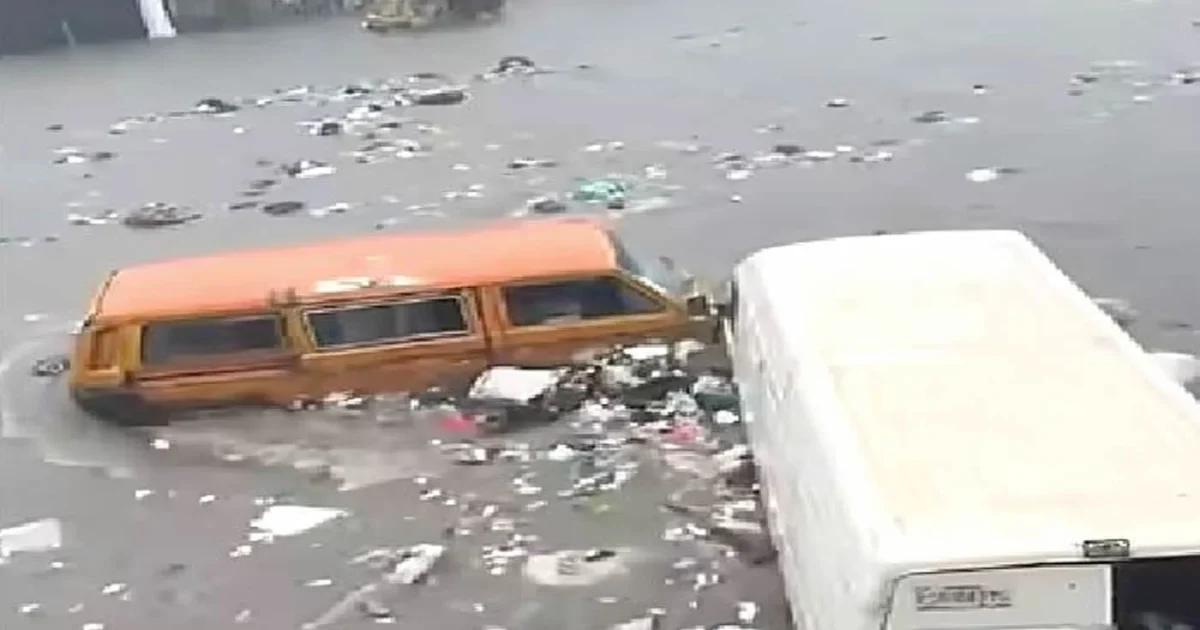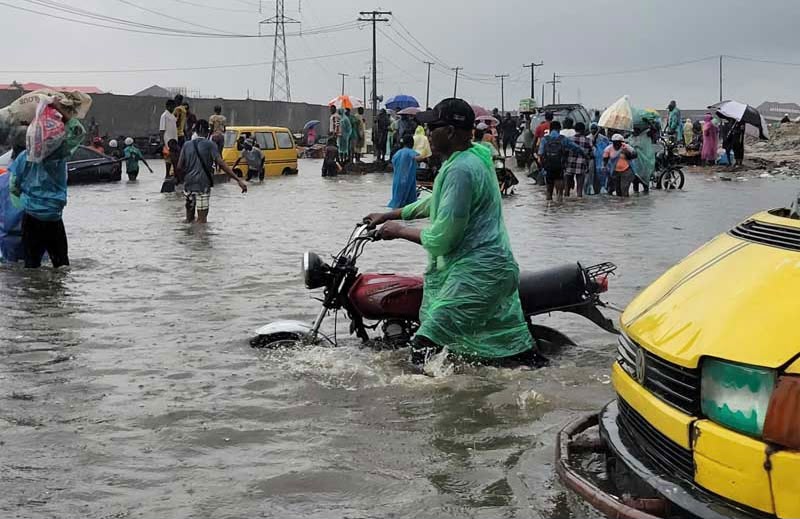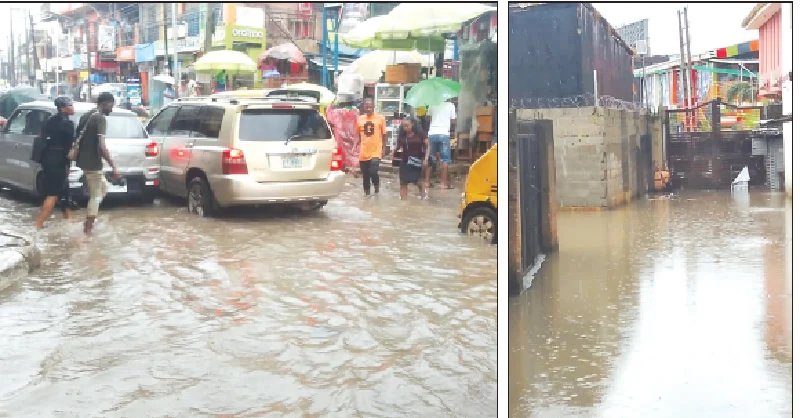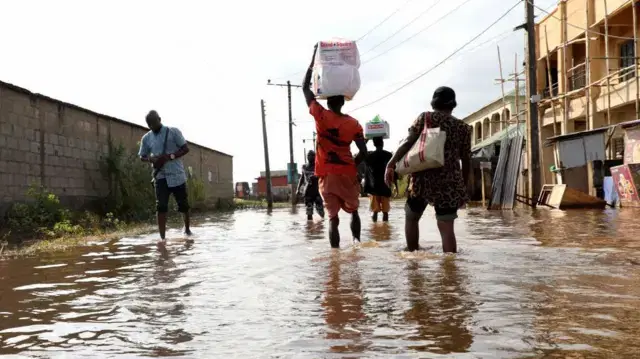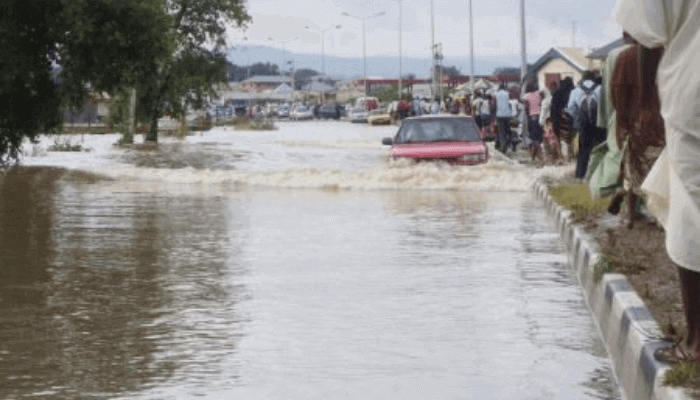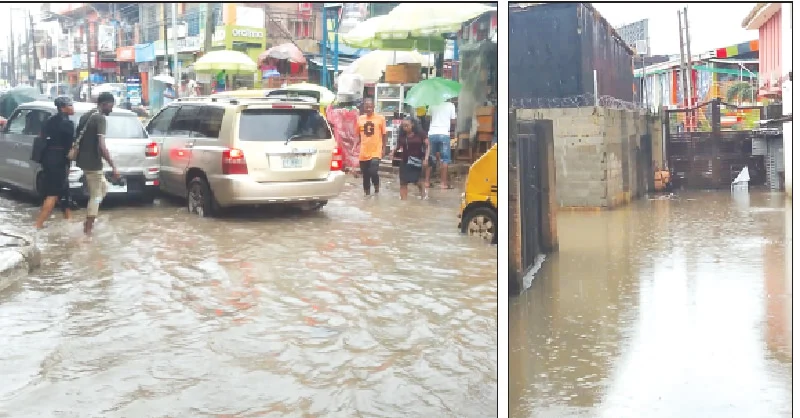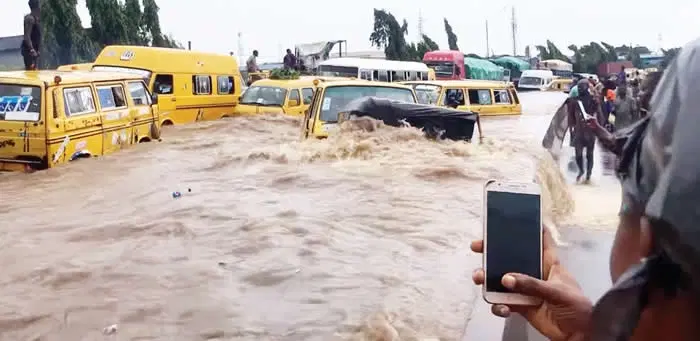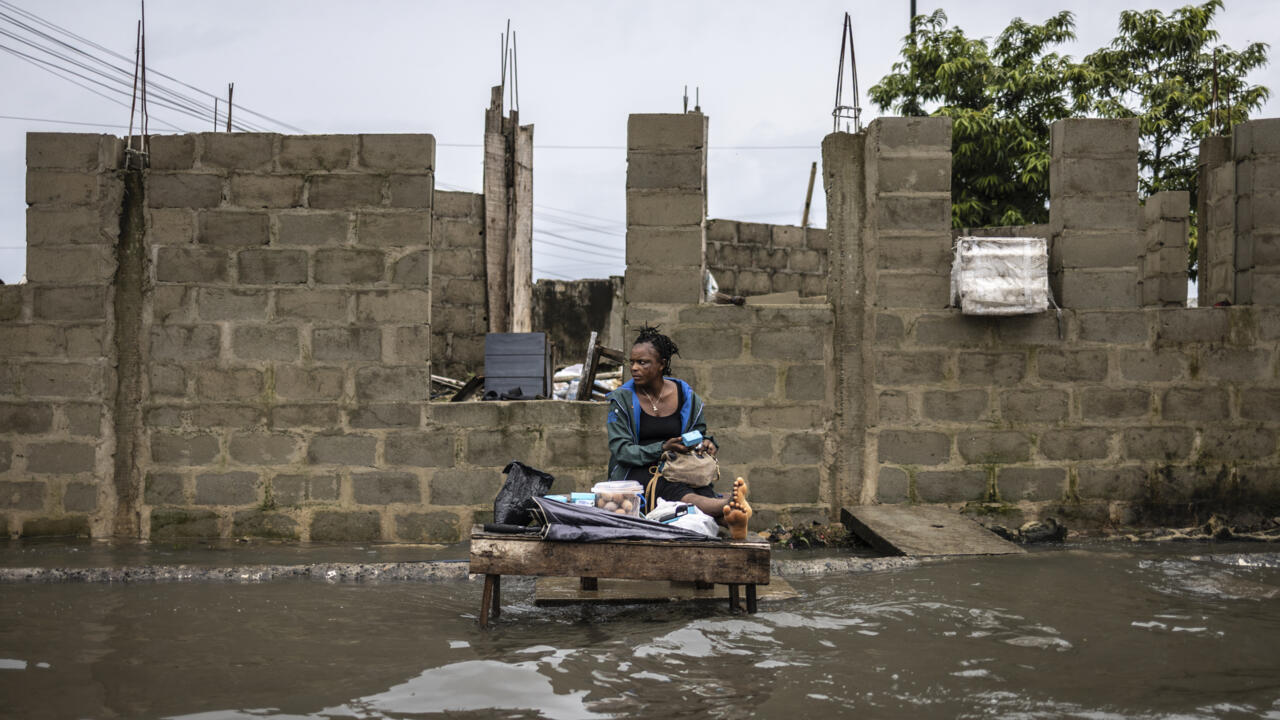
Lagos (AFP) – After hours of overnight torrential rain lashed Lagos recently, church pastor Samuel Akpan spent most of next day bailing water from his flooded parsonage in an upscale district of Nigeria's commercial capital.
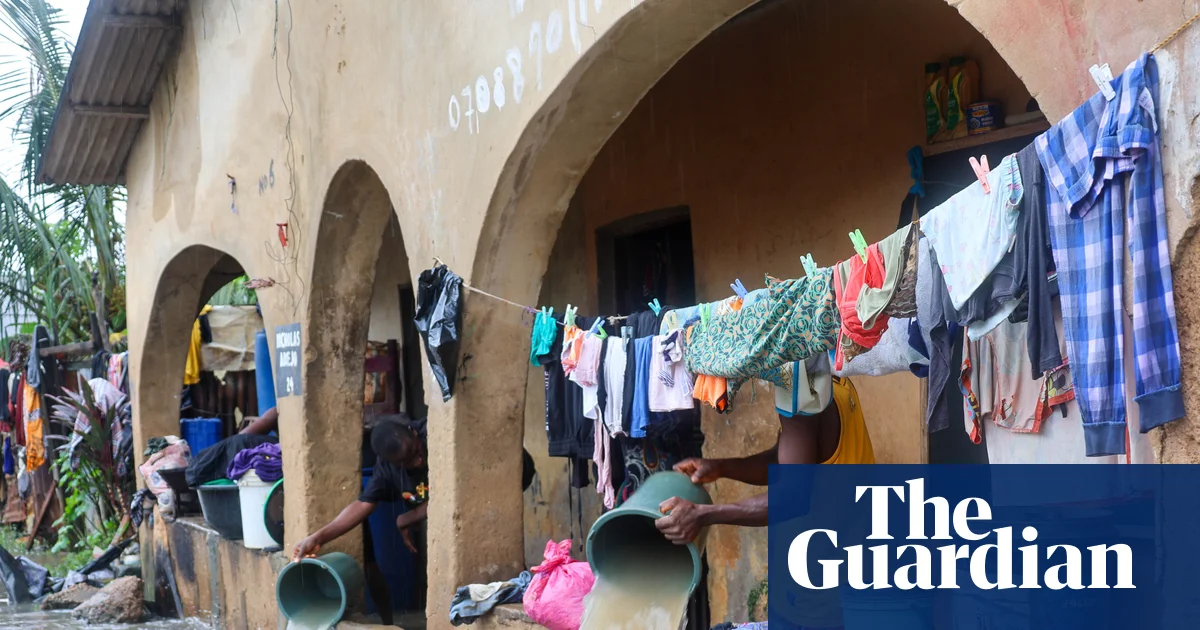
Inside the Apostolic Church of Nigeria in Lekki district, chairs and their sodden cushions were piled in knee-high floodwaters that had engulfed the building.The mega city lies on a low-lying coastline, making the city of around 20 million people vulnerable to flooding.But experts say rising sea levels driven by climate change, erratic rainfall and unregulated groundwater extraction fuelled by rapid urbanisation are also major drivers.Most Lagos households don't have access to treated piped water, forcing them to drill boreholes for potable water, disrupting the equilibrium of the ground.The crowded city is among those the World Economic Forum says is sinking by up to 87 millimetres (3.4 inches) per year.As Nigeria's commercial hub, Lagos attracts thousands of people daily from across the country seeking better economic opportunities. The UN puts Lagos's annual growth rate at six percent. Rapid development of residential, commercial and industrial buildings is everywhere, especially in Lekki, which has a designated special free trade zone to attract investment and is also earmarked for a new international airport. Akpan, 42, recalled waking to "discover that everywhere is flooded," he told AFP, standing in the middle of a soaked church auditorium. His children's schoolbooks, waterlogged and tattered, lay strewn across the grounds.'Under siege'Heavy rains sweep Nigeria between May and November, often resulting in dangerous and at times deadly floods.Last year, authorities forecast annual rainfall of 1,952 mm, above the average of 1,721 millimetres recorded between 2012 and 2022. This year, it is expected to range between 1,650 mm and 3,030 mm."It is like we are under siege with the flood," said Uche Adibua, 46, in the Okota area of Lagos. His apartment has been flooding since it started raining this year."It didn't happen before," he said.But such disasters are becoming more common: late June storms that dumped rain from Ivory Coast to Nigeria, sparking flooding that killed about 100 people, were "supercharged" by climate change, according to World Weather Attribution, a global coalition of scientists.The wider Lagos state, which encompasses the city, has 180 kilometres of coastline and extensive waterways, leaving it particularly vulnerable."Lagos is located in a low-lying coastal environment, which predisposes it to coastal flooding," Ibidun Adelekan, a geography professor at the University of Ibadan, told AFP, adding increasing rainfall compounds the risk.Scientific analyses have shown that the state now experiences heavier rainstorms than in the past, she added. Poor infrastructure, inadequate drainage and indiscriminate waste disposal add to the crisis.