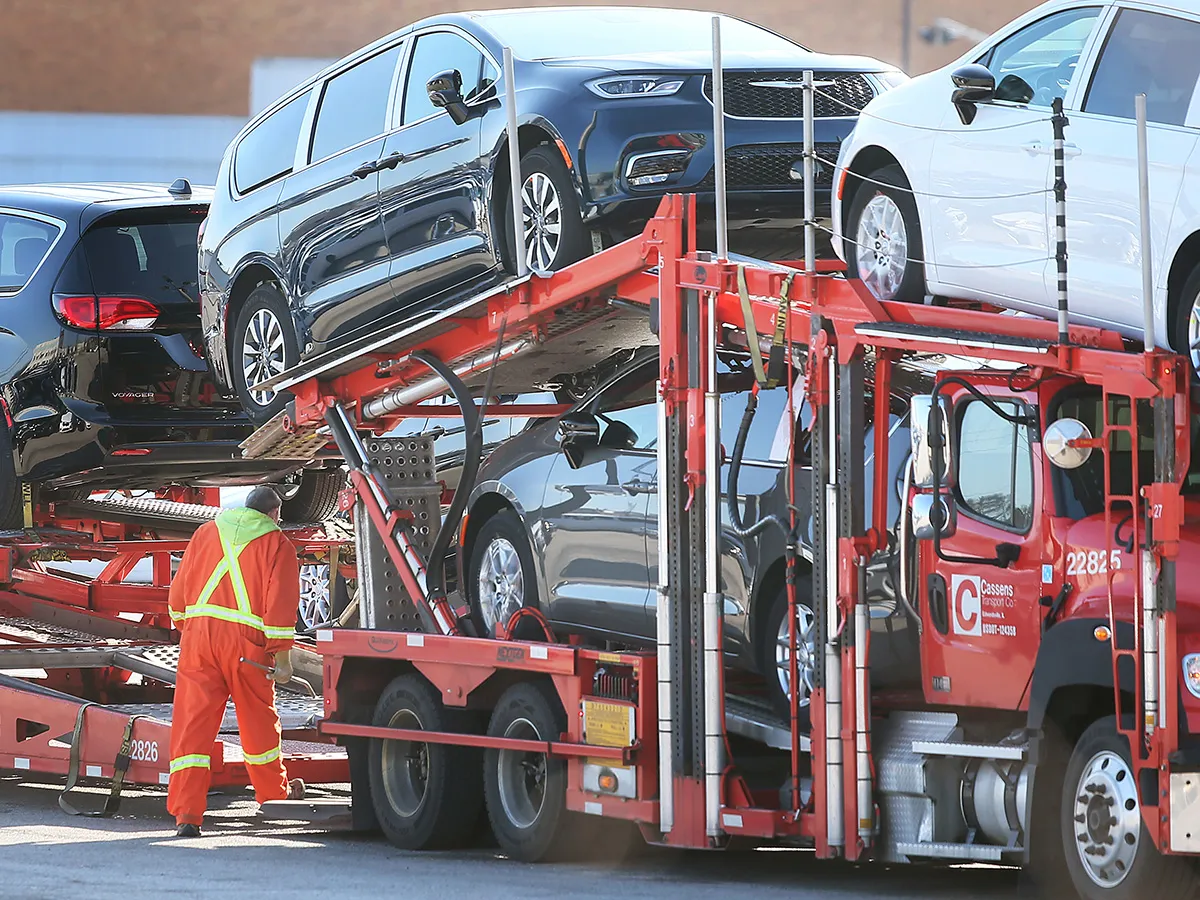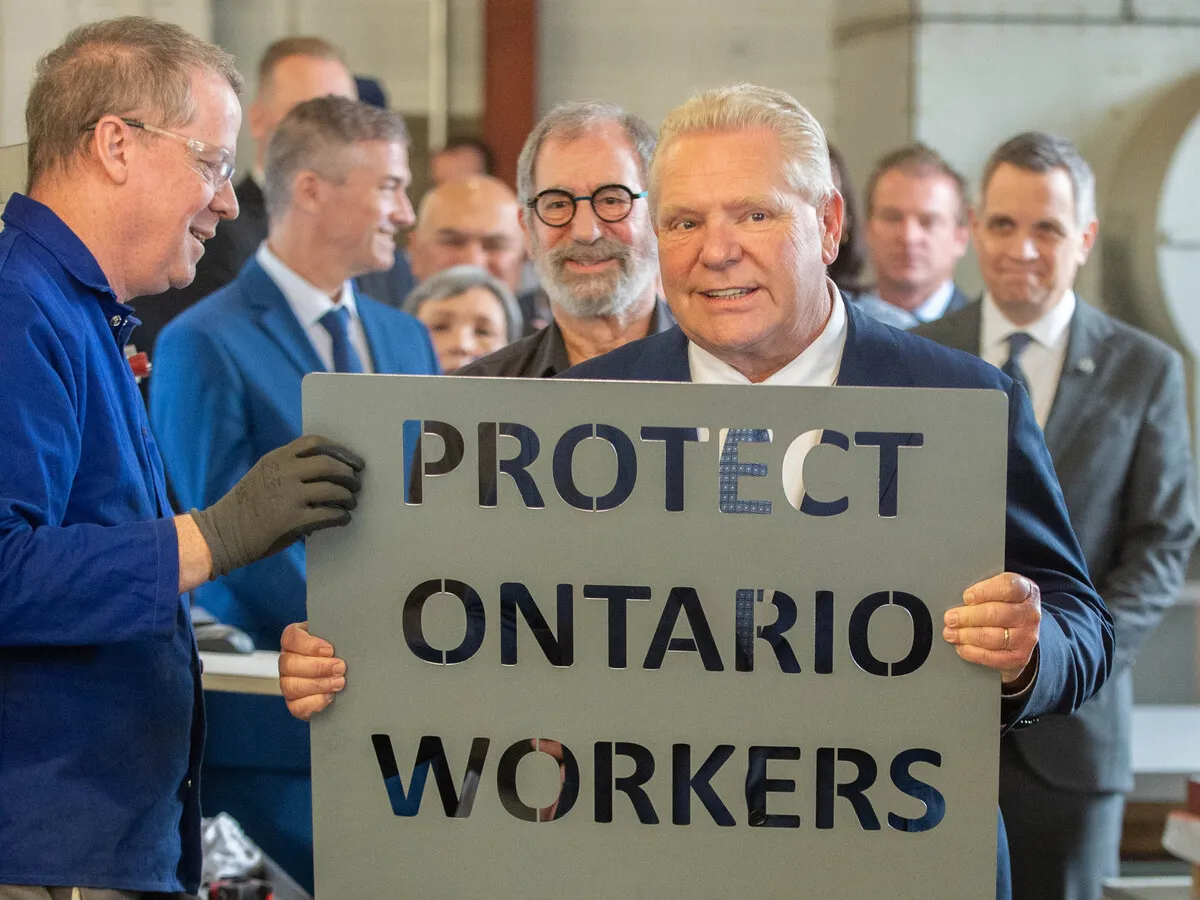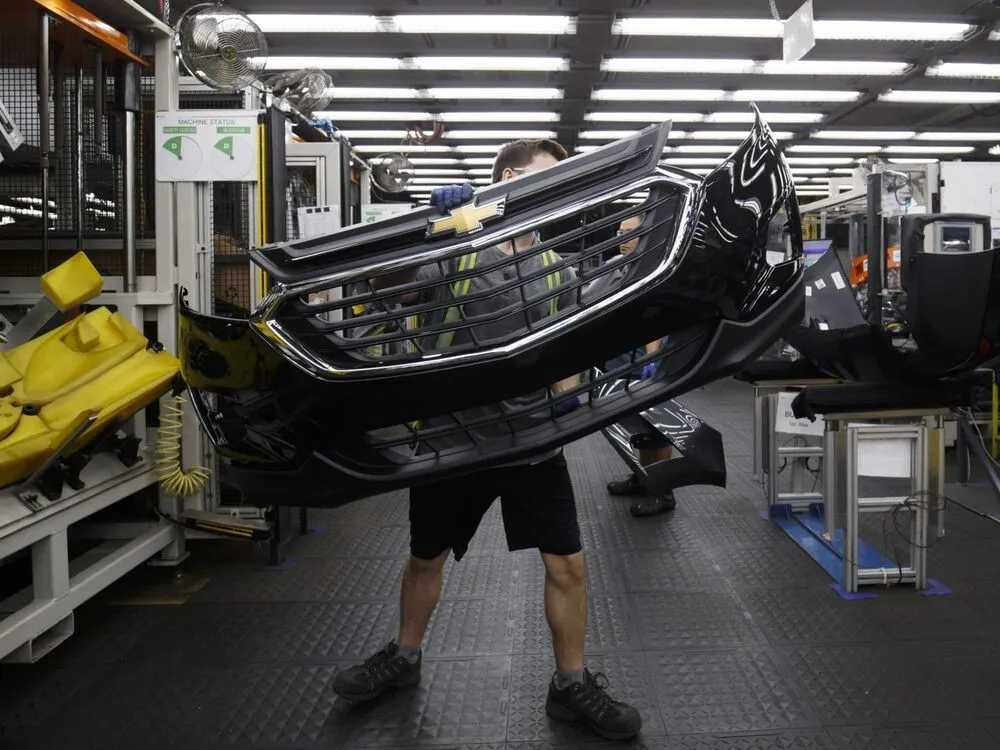
Skip to Content Subscribe Our Offers My Account Manage My Subscriptions FAQ Newsletters Canada Canadian True Crime Canadian Politics Health World Israel & Middle East Financial Post NP Comment Longreads Puzzmo Diversions Comics NP News Quiz New York Times Crossword Horoscopes Life Eating & Drinking Style Sponsored Play for Ontario Travel Travel Canada Travel USA Travel International Cruises Travel Essentials Culture Books Celebrity Movies Music Theatre Television Business Essentials Advice Lives Told Tails Told Shopping Buy Canadian Home Living Outdoor Living Kitchen & Dining Tech Style & Beauty Personal Care Entertainment & Hobbies Gift Guide Travel Guide Amazon Prime Day Deals Savings National Post Store More Sports Hockey Baseball Basketball Football Soccer Golf Tennis Driving Vehicle Research Reviews News Gear Guide Obituaries Place an Obituary Place an In Memoriam Classifieds Place an Ad Celebrations Working Business Ads Archives Healthing Epaper Manage Print Subscription Profile Settings My Subscriptions Saved Articles My Offers Newsletters Customer Service FAQ Newsletters Canada World Financial Post NP Comment Longreads Puzzmo Diversions Life Shopping Epaper Manage Print Subscription HomeNP CommentGeoff Russ: The myth of Ontario manufacturingBribing automakers to stay is not evidence of strengthLast updated 1 day ago You can save this article by registering for free here. Or sign-in if you have an account.An employee carries a General Motors Co. (GM) Chevrolet bumper at the Magna International Inc. Polycon Industries auto parts manufacturing facility in Guelph, Ontario, Canada, on Thursday, Aug. 30, 2018. Photo by Cole Burston /BloombergForty-two per cent of Canadian manufacturers are considering shifting production to the United States or have already done so. A survey from KPMG released in July found that 57 per cent had paused, reduced, or cancelled capital investment projects in Canada. That is a potential exodus in the making, and it could gut what is left of manufacturing in this country.Enjoy the latest local, national and international news.Exclusive articles by Conrad Black, Barbara Kay and others. Plus, special edition NP Platformed and First Reading newsletters and virtual events.Unlimited online access to National Post.National Post ePaper, an electronic replica of the print edition to view on any device, share and comment on.Daily puzzles including the New York Times Crossword.Support local journalism.Enjoy the latest local, national and international news.Exclusive articles by Conrad Black, Barbara Kay and others. Plus, special edition NP Platformed and First Reading newsletters and virtual events.Unlimited online access to National Post.National Post ePaper, an electronic replica of the print edition to view on any device, share and comment on.Daily puzzles including the New York Times Crossword.Support local journalism.Create an account or sign in to continue with your reading experience.Access articles from across Canada with one account.Share your thoughts and join the conversation in the comments.Enjoy additional articles per month.Get email updates from your favourite authors.Create an account or sign in to continue with your reading experience.Access articles from across Canada with one accountShare your thoughts and join the conversation in the commentsEnjoy additional articles per monthGet email updates from your favourite authorsSign In or Create an AccountorAs things currently stand, capital has few national loyalties, and it has little appetite for taking part in a fight with Washington on the Canadian side of the border.The National Post newsletter that doesn’t hold back, giving readers the unvarnished truth on media, politics and culture.By signing up, you consent to receive the above newsletter from Postmedia Network Inc.A welcome email is on its way. If you don't see it, please check your junk folder.The next issue of Right? will soon be in your inbox.We encountered an issue signing you up. Please try againPressed on those numbers, Doug Ford or Mark Carney might face an awkward news conference. Ford often invokes Ontario as a manufacturing powerhouse and says that his provincial government is overseeing “an economic powerhouse that can power jobs, investment and growth across North America.”Carney has argued that Canada will remain an auto nation and become a global leader in next-generation auto manufacturing. It sounds reassuring, and it looks fantastic on a sticker slapped on a hard hat.If only those words were more than half true. Ontario is certainly the heartland of the Canadian auto sector. In 2024, the province accounted for 84.6 percent of the sector’s national employment and 84.7 percent of its national real GDP.However, Ontario’s auto sector is not a sovereign industrial machine; it is a highly competent branch plant of an American-dominated industry. More than 90 per cent of Canadian-made vehicles and 60 per cent of Canadian-made auto parts are exported to the U.S.The auto sector is far from being the only Canadian industry that relies on integration with the U.S. Oil and gas are also deeply reliant on American buyers, but this finally being remedied with the growing arsenal of LNG terminals and oil pipelines from Alberta to the Pacific Coast, intended to slake the appetites of a thirsty, growing Asian market.Ontario is so dependent on American multinationals and U.S. market access that Donald Trump’s tariffs threaten 125,000 direct jobs. Put simply, Ontario can build a great deal, but it is not pulling the levers of control.Even using the term “manufacturing” risks getting lost in a cloud of undue mythology. One imagines roaring mills, dynamic firms, and world-class products. No doubt, Ontario can make vehicles, food products, chemicals, medical goods, aerospace components, and industrial technology. But who can dispute that the romance of Ontario manufacturing still focuses on cars?In the first quarter of 2026, Ontario manufacturing sales fell by 2.1 per cent, following a 0.9 per cent decline in the previous quarter. Sales are down 9.0 percent since mid-2023, driven largely by auto retooling and Trump’s tariffs. Motor vehicle sales fell 13.3 percent in that same quarter, and machinery output fell 4.8 percent.A healthy powerhouse can go through its ups and downs, but if Ontario’s auto sector were a man, he’d be getting backslapped by politicians while a nurse checked his pulse. The same patient would also have a long history of being injected with expensive medications, paid for by the taxpayer, of course.The EV supply chain alone has been stuffed full of taxpayer money in a way that would outrage even the most corrupt rail barons of Confederation. Up to $52.5 billion in federal and provincial support has been tied to $46.1 billion in electric vehicle (EV) supply-chain investments. Some of this could be defensible, as these subsidies emerged partly in response to former U.S. president Joe Biden’s industrial-policy push to reshore American auto manufacturing with subsidies of his own. Canada does not make the rules of the auto sector, and defending a strategic industry was a necessity.However, subsidies are not evidence of market strength. Essentially bribing automakers is an unsustainable model. Ontario needs far more industrial independence and real productive capability.Regarding energy, the world’s nuclear energy industry is approaching a renaissance, and Ontario is well placed to capitalize on that. The province has longstanding nuclear plants, a skilled nuclear workforce, and public demand for reliable power.At Darlington, Ontario Power Generation’s small modular reactor (SMR) project has a federal construction licence for one BWRX-300, a type of SMR designed for repeat deployment. If it chooses to, Ontario could use Darlington as the first step in a domestic SMR supply chain, exporting components, engineering expertise, and deployment services tied to the BWRX-300 platform.If Canada is forced into heavier industrial policy, defence and dual-use manufacturing should be a priority. Canada’s Defence Industrial Strategy points to $180 billion in defence procurement and $290 billion in defence-related infrastructure investment over 10 years. Ontario firms can bid for more communications, aerospace, and electronics contracts, provided procurement protects Canadian control and security in sensitive industries.Where appropriate, AI should not be shied away from. In the second quarter of 2026, 19.2 per cent of Canadian businesses reported using AI to produce goods or deliver services, more than triple the 6.1 per cent reported in the second quarter of 2024. It can be used for scheduling, tooling, robotics, quality control, and more, so long as it raises output per worker.For all the uproar about the loss of industry and lost or outsourced factory jobs in the American Midwest, the South was one of the beneficiaries of northern industrial decline. In the United States, the Sunbelt’s growth in factories and production lines offers lessons for Ontario.The Sunbelt’s looser labour market conditions are key as well, but Ontario’s well-entrenched and politically protected unions will not stand for a copy-and-paste version of Alabama-style open-shop, deregulated labour laws. However, if jobs continue to disappear, skilled workers may face the choice between reform that preserves their livelihoods and no livelihoods at all.Even so, the Sunbelt offers faster permitting, well-serviced industrial land, tax advantages for industry, and worker training. It is a very commercially aggressive region as well. Ontario, and indeed Canada, should invest more heavily in different R&D, industrial sites, and productivity-enhancing infrastructure rather than relying so heavily on direct firm-specific subsidies, while modernizing its labour laws to make the province more attractive to investors. True, Justin Trudeau’s government’s R&D funding was substantial, but largely put into ineffective and ideological industries like “clean tech.” There will always be a need for R&D, whatever the failures of past governments.Ontario manufacturing should have a future. Without it, Canada will move closer to a British-style model: a globally important financial hub in London, a large welfare state, and a thinning industrial base.Subsidized vulnerability should be neither Ontario’s model nor Canada’s.National Post Join the Conversation This website uses cookies to personalize your content (including ads), and allows us to analyze our traffic. Read more about cookies here. By continuing to use our site, you agree to our Terms of Use and Privacy Policy.
Geoff Russ: The myth of Ontario manufacturing
Bribing automakers to stay is not evidence of strength
1,602 words~7 min read