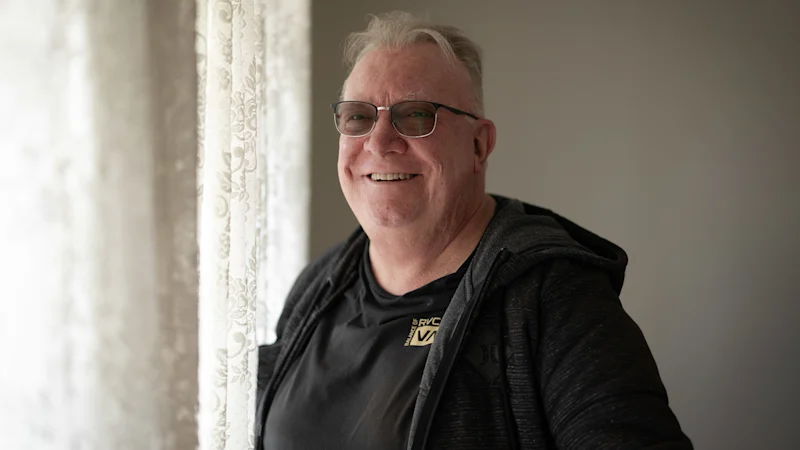
July 16, 2026 — 7:00pmAt a career evening held at my old high school last month, keynote speaker Dr Ben Hamer said something shocking – or shocking to me, at least. He told the schoolgirls they would all likely be working when they were 80.But not working in the traditional sense. The World Economic Forum’s Future of Jobs report predicts that 65 per cent of children entering primary school today will work in job categories that don’t yet exist.The future, says Hamer, will be vastly different for us than it was for our parents. And even more different for our kids than it will be for us.Gary McLean, 64, has worked in manufacturing his entire adult life.Wolter Peeters“This is the most boring life we’ll ever live,” says Hamer, a futurist and founder of foresight agency ThinkerTank. “The pace of change only accelerates from here.”A future we’re unprepared forIn the last 20 years, rates of retirement among Australians in their 60s have halved. One analysis found that more than half a million Americans aged 80 or older are still working, while in other parts of the world a growing number of people aged 100 or older continue to work.At its best, work provides a sense of pleasure, social connection and purpose into older age. A 103-year-old Japanese bicycle repairman, Seiichi Ishii, told The New York Times: “If I die here, in my workshop, I will be happy.”Exercise instructor Bengie Santos, 72, has a “cult-like” following of Americans in their 80s and 90s who come to move their bodies to music in her classes designed specifically for older adults. She told the Associated Press: “I’m hoping I inspire them to keep going.”Instructor Bengie Santos, 72, leading a group class in Shoreline, Washington.AP Photo/Lindsey WassonFor others, working into older age is both a necessity and a part of their identity.Gary McLean has worked in manufacturing his entire adult life. “I enjoy working on machinery,” says the 64-year-old Sydneysider. “It’s all I’ve done since I left school … [but] the best part about work, for me, was the social side.”Last year, while moving heavy building materials, he felt his back go.“I ended up doing a disc in my back,” he says. “It bulged right out and pushed all the nerves up into the vertebra.”Before the injury, McLean had no plans of retiring: “Growing up, my generation was like ‘you just keep going’, you look after your family. You’re the breadwinner.” Now, he doesn’t know what he will do.“I feel really lost,” he says. “Who’s going to employ someone who’s 65 and broken down?”About one in five young people born today will live to at least 100. And as we live longer, we may have little choice but to keep working.It’s a future we’re unprepared for, says Monash University professor Karen Walker-Bone.“The world is changing so fast and the implications aren’t always thought through,” she says.For a new study, published in Injury Prevention, Walker-Bone, director of the Monash Centre for Occupational and Environmental Health, wanted to look at some of the implications of an older workforce. She wondered, for instance, whether their risk of getting injured is higher.“When older people get injured in general, they have slower recovery times, they have more trouble getting back to full function, they spend longer in hospital and need more healthcare than they would have done when they were 25,” she says.The future of old age will look very different.Getty ImagesSo for the study, she looked at the number of people who had turned up to an emergency room (ER) with an incident related to their work and then looked at their profiles.She found that rates of injury in workers aged 60 or over have doubled in the last 10 years.Fractures accounted for 40 per cent of older worker injury admissions, and falling while on the job was the most common cause of injury.It highlights the need for workplaces to adapt the environment to support the safety of older workers (things like lighting and flooring as well as annual individual fall risk assessments), but also the need to cater to the health and longevity of workers, Walker-Bone says.That might mean providing healthier food options, showers, coaching and mentoring, greater flexibility and considering the physical demands of a job as a person ages.Work, redefinedHamer suggests that with automation and an ageing workforce, we will continue to move from manual labour to knowledge work where judgment and experience compound as we age.The future of work may also mean the back half of a career stops being a slow fade, he says: “If work becomes more flexible and more optional, your 60s and 70s could be the most interesting working years you get.”Instead of lives spent in three parts – education, career, retirement – Hamer anticipates more phases and flexibility.Working until we are 80 may not be as bad as it sounds, says Dr Ben Hamer.“We’re seeing it already in career breaks, sabbaticals and what people now call micro-retirements, where you claw back chunks of your life along the way rather than banking all your freedom for the very end,” he says.And while working into older age is a necessity for many people, Hamer believes the work of tomorrow will be more appealing.“What’s terrifying isn’t working at 80. It’s picturing 80-year-old you doing today’s job, under today’s conditions, with today’s commute. Of course that’s grim,” he says. “Nobody’s signing up for the grind into their ninth decade. But that’s not the bet I’m making. The grind is the thing worth escaping. Work, redefined, might be the thing worth keeping.”There’s good evidence that if we can find purpose and engagement, and choice in how we do it, work is protective as we age.“People with a reason to get up in the morning tend to live longer and better than those who’ve fully checked out. The goal isn’t to work until you drop. It’s to stay in the game on your own terms.” Make the most of your health, relationships, fitness and nutrition with our Live Well newsletter. Get it in your inbox every Monday.From our partners
Still working at 80? The future is grim or thrilling, depending on who you ask
Rates of injury in workers aged 60 or over have doubled in the last 10 years, but some experts believe there will be benefits to later retirement.
1,013 words~5 min read