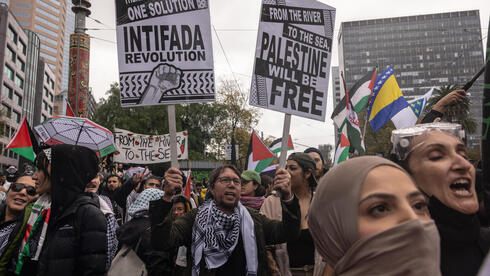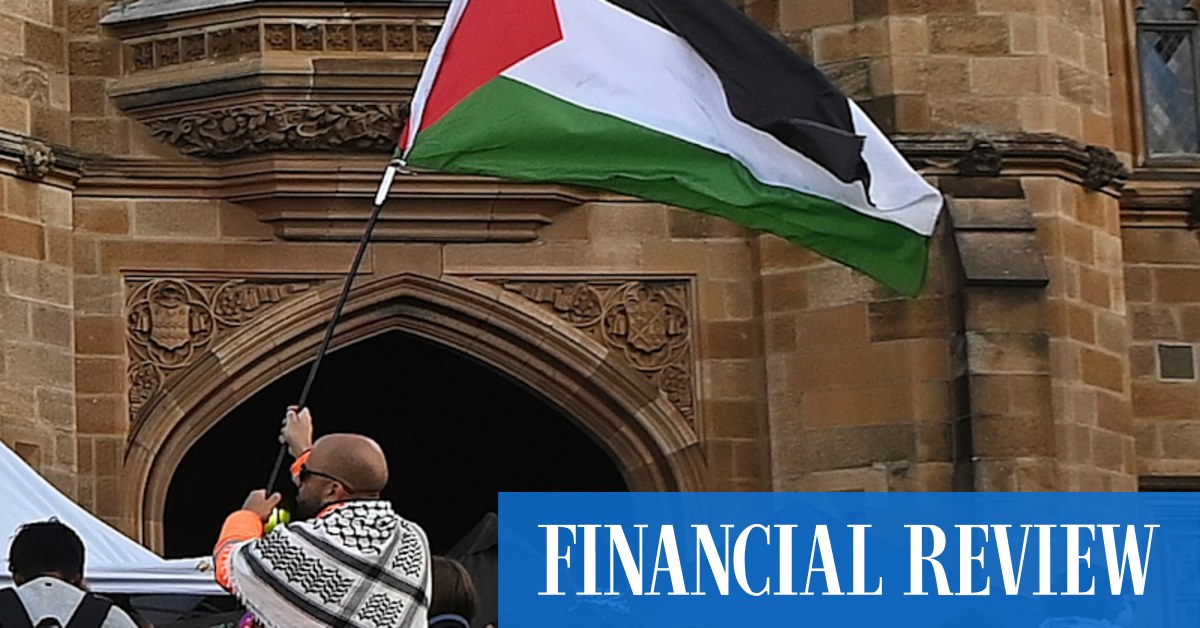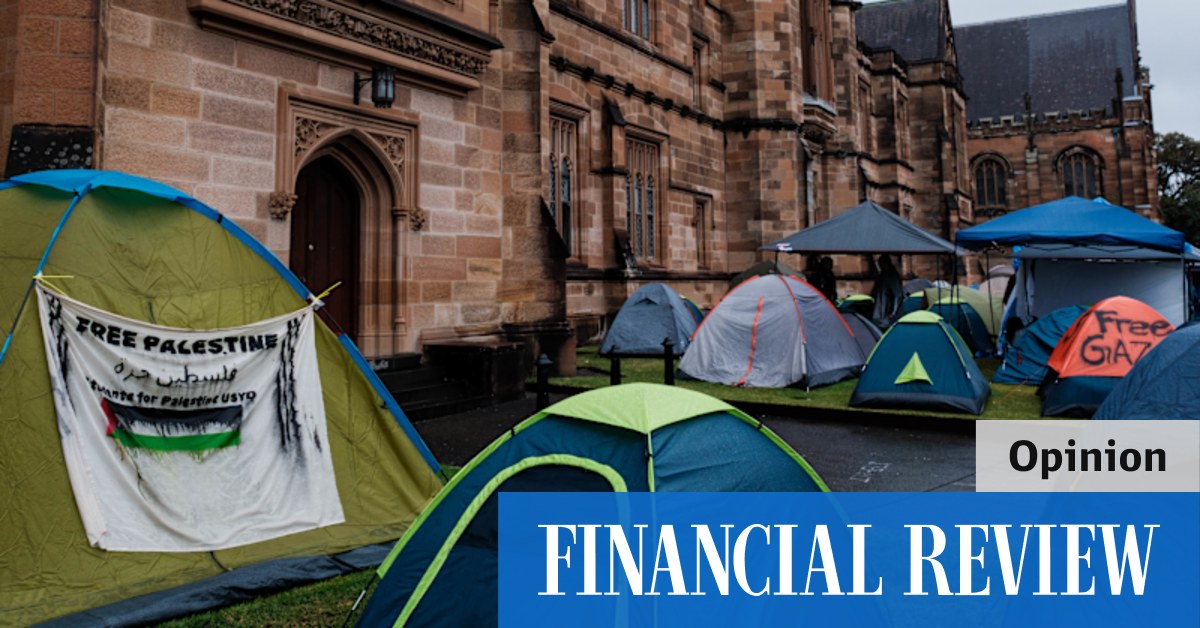
An Australian National University student whose relatives were allegedly killed by the Israel Defense Forces in Gaza was asked to provide their death certificates to get an exam extension, the royal commission into antisemitism has heard.A barrister representing the Australia Palestine Advocacy Network, Yasser Bakri, asked the ANU’s acting provost, Prof Joan Leach, about the case in which a student asked for more time on an assessment because of the deaths. The student was told by their supervisor they would need to obtain proof, Bakri told the commission on Thursday.Leach said she was unaware of the case, but the staffer’s response was inappropriate.The fourth set of hearings in the royal commission into antisemitism and social cohesion is examining the lived experiences of Jewish students and academics, including the response of universities.Leach also denied the university had “lost control” of its campus to a pro-Palestine encampment, revealing an internal safety review found the encampment had a “high” psychosocial risk rating.Sign up for the Breaking News Australia emailThe students set up camp on the grounds of the university in April 2024 in solidarity with Palestinians amid the Israel-Gaza war, with the group taking aim at the university’s links to weapons manufacturers.The workplace review was finalised in October 2024. It found the direct and residual psychosocial risks of the encampment were high.“There is now a procedure so security knows what to do should a protest like an encampment feature,” Leach said.Asked if the ANU “had essentially lost control”, Leach said she would not “characterise it in that way”.“But I think there were concerns about the risks to students and to people in the university community at that point,” she said.“The security services at the university tend to know many of the students and staff, and they were quite active in interacting with the encampment to ensure that they had kept a constant watch on what was going on.“And again, to encourage any students who wanted to leave, or maybe were feeling peer pressure to stay on, to do so.”skip past newsletter promotionafter newsletter promotionANU tried to disband the encampment on multiple occasions, with it ending over a dispute about electricity and light in the evenings. It came just after the university announced “it would not invest in controversial weapons manufacturers and civilian small arms manufacturers”.Leach was also asked about the university’s investigations into an alleged Nazi salute at a student association meeting.The alleged salute received widespread media coverage after video footage was circulated allegedly showing a student performing what appeared to be a Nazi salute and another allegedly mimicking a Hitler moustache.The ANU Students’ Association meeting in question was attended by about 500 people in May 2024. One student was removed because of their conduct from the online meeting, which included debate of the ANU’s ongoing pro-Palestine encampment and the experience of Jewish students on campus.Leach said in the case of the alleged moustache gesture, the investigator found it was a gesture “commonly made” by the student to cover a facial feature they were uncomfortable with. The investigation also found that a Nazi salute had not been made.“In the case of the alleged salute, the video was captured during the AGM. Unfortunately, it’s not fully on video,” she said. “It’s very difficult to discern what was going on.“Through the investigation, other students were asked how they interpreted that gesture, and those students said it was not a Nazi salute. There was a lengthy interview and investigation. There was good reason to believe doing the salute would be pretty antithetical [to that person]. So there was a finding of no misconduct.”
ANU student asked to show death certificates to prove relatives died in Gaza, royal commission hears
Inquiry also hears safety review at Australian National University found protest encampment had ‘high’ psychosocial risk
597 words~3 min read