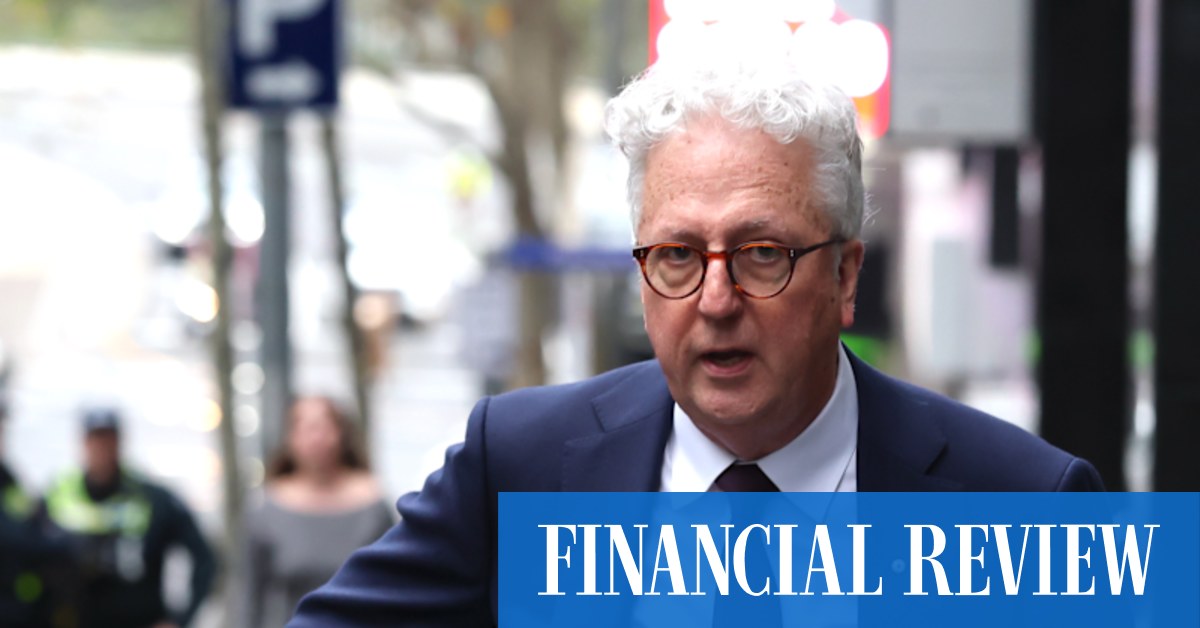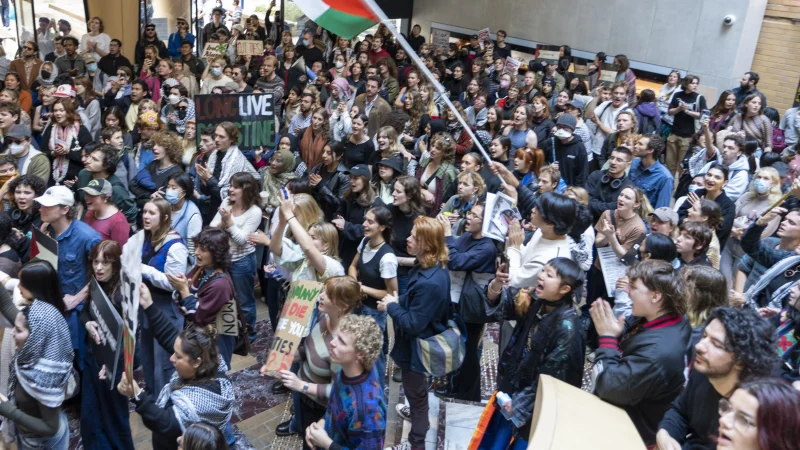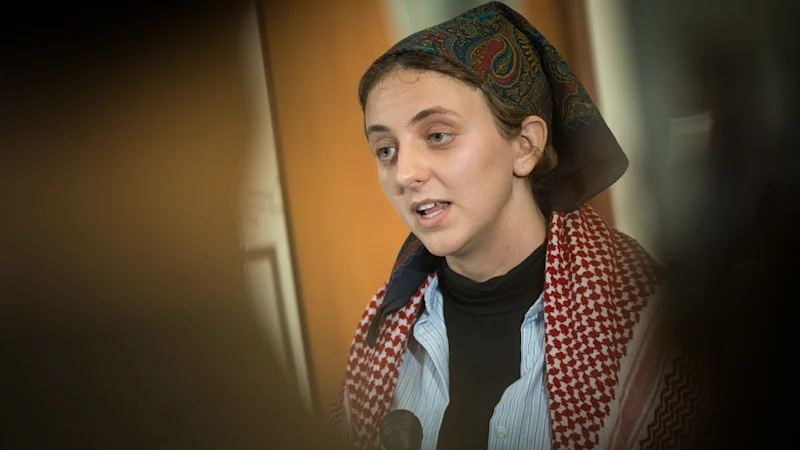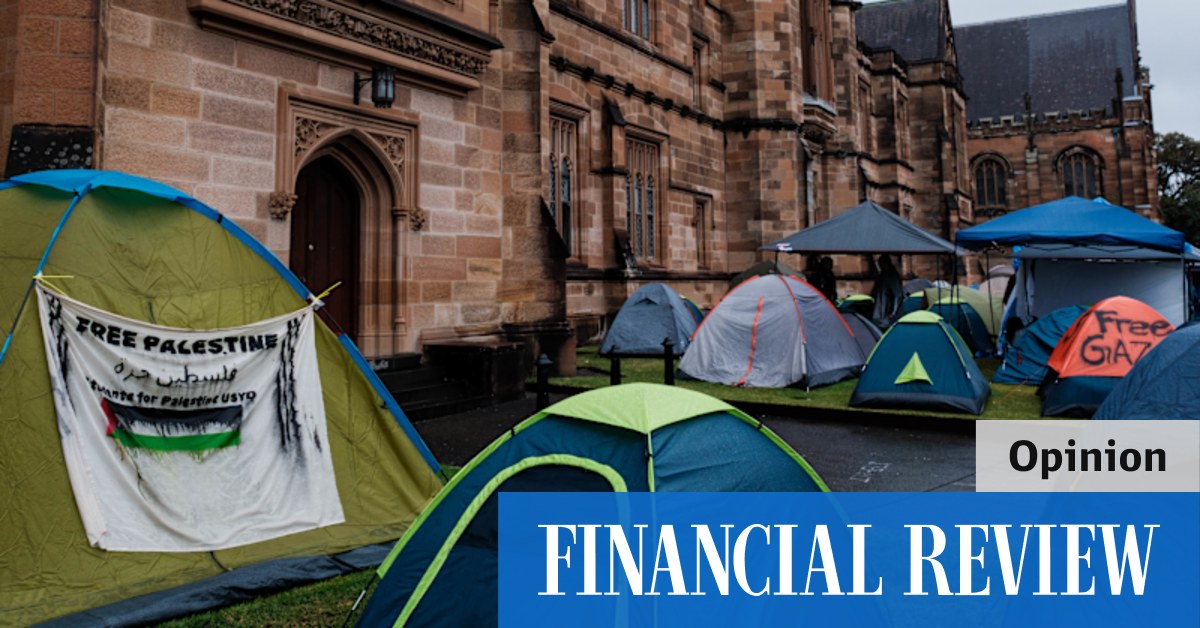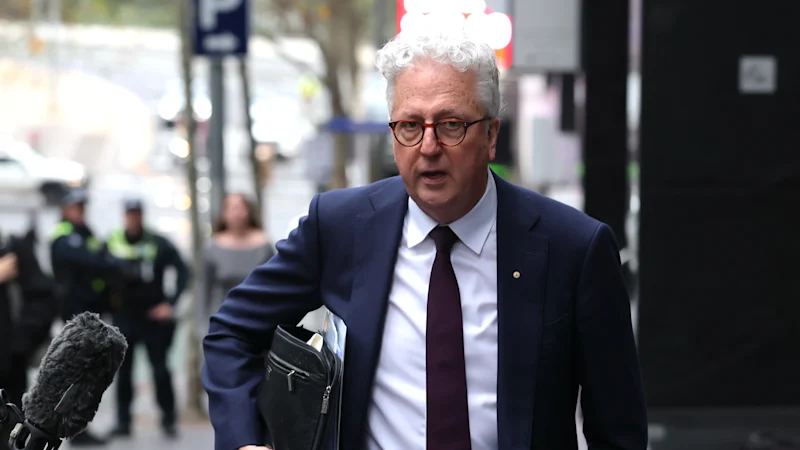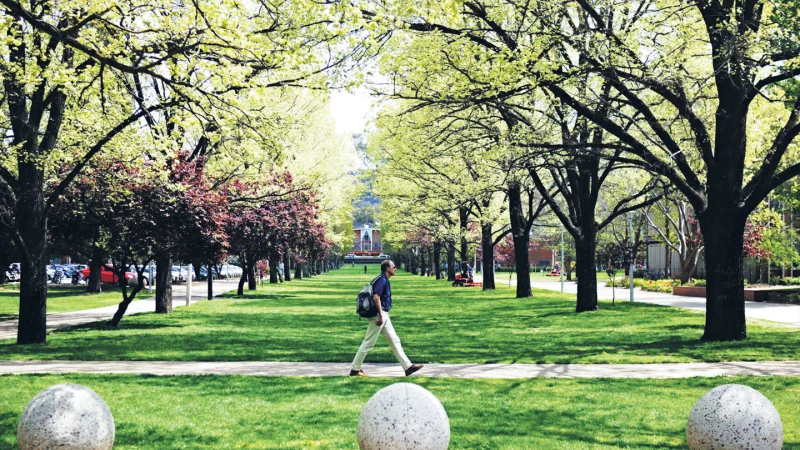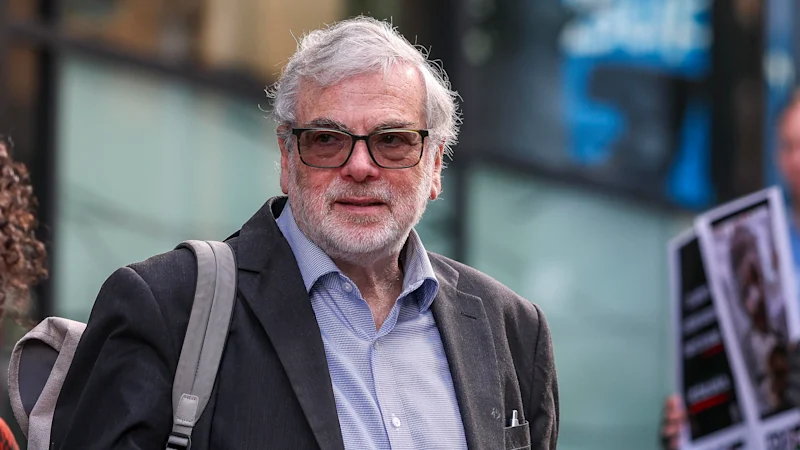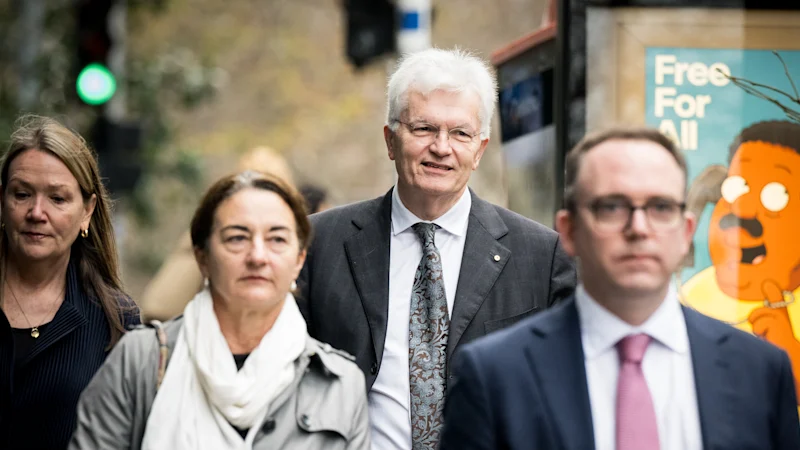
July 15, 2026 — 2:48pmThe pro-Palestinian protest encampment at the University of Melbourne made it the least popular campus in Australia, its interim vice-chancellor has conceded, but says that was not enough to shut down the protest.Professor Glyn Davis was the first of three university leaders to give evidence at the Royal Commission on Antisemitism and Social Cohesion in Melbourne on Wednesday, where he was taken through the chaotic on-campus incidents of 2024, when Israel’s war on Gaza was in full swing.Under questioning, Davis defended the university’s actions in allowing the encampment to proceed, and its handling of Professor Steven Prawer’s office being invaded.Professor Glyn Davis (centre), interim vice-chancellor of the University of Melbourne, arrives for a hearing of the Royal Commission on Antisemitism and Social Cohesion.AAPDavis, who was not in charge during the protest period, told Commissioner Virginia Bell that when encampments on the south lawn had been set up in early 2024, the university’s approach was to allow the protests as long as they did not present a threat to safety.“There were constant discussions between the university security team and the leaders of the encampment and that was a shared objective,” Davis said.He said the large presence of protesters in a high-traffic area of the campus, the “chants and singing and waving of banners”, and regular marches towards the central administrative building “made people nervous about their safety … [and] whether they’re welcome on campus”.This was reflected in surveys which include a measure of student satisfaction with their time on campus.“We got in 2024 our worst-ever scores, the worst in the sector … and I think students used that measure to tell us they were unhappy with what was going on,” Davis said.Even so, the right to protest was upheld.In early May 2024, the University of Melbourne received a letter from the deputy commissioner of Victoria Police asking it to “carefully consider the risks of whether to allow” a pro-Palestinian encampment on campus.The camp protest at the University of Melbourne in May 2024.Wayne TaylorThe letter read: “We assess the presence of permanent encampments, and any increase in size in those encampments, will likely lead to significant public safety risks.”The atmosphere had changed, Davis said, when protesters occupied the Arts West building, erecting 20 tents with 50 protesters in residence in early May 2024.Then-vice-chancellor Duncan Maskell ordered they leave the university grounds and warned that if they did not, they would be charged with trespassing. Still, the protesters stayed.“There was significant damage to the building,” Davis told the commission. “There was damage in the adjacent building … people were coming in at night, red paint through the library.”Protesters marched inside the University of Melbourne Arts West Building on May 3, 2024.Eamon GallagherOn May 22, 2024, the protesters and university negotiated an end to that protest. The university agreed to publish a list of its defence collaborations, yielding details of agreements with Boeing Aerostructures and Lockheed Martin, among US Defence Department collaborations worth $15.4 million.Challenged by counsel assisting the royal commission Zelie Heger about whether it was appropriate for the university to negotiate with the protesters, Davis said: “The university was very clear … that this was unacceptable behaviour.”He added: “On the other hand, the university does not have a police service, doesn’t have its own enforcement. Security guards who work at the university are not empowered to move people on – certainly are not empowered to arrest people for breaking the law. And only Victoria Police can decide that something is trespass.”Davis said it took four police officers to forcibly remove one protester.In response, the university changed its bylaws, which included an order that camping was not allowed on campus, and outsiders could not protest at the university.Davis was also quizzed about the incursion into the office of Professor Steven Prawer, who appeared at the commission on Tuesday, where he recounted the moment he found about 20 masked pro-Palestinian protesters inside his office chanting, “Prawer, Prawer, you can’t hide. You’re guilty of genocide”.Davis revealed on Wednesday the protesters had gained access because a new swipe card access point was being installed in response to earlier targeting of the professor.“The only reason they got into the building was because the doors were open, so security people could put the security changes in place,” Davis said, adding, “life is full of ironies”.Davis agreed the incursion was unacceptable, but pushed back against the professor’s complaint that the university had not kept him abreast of their investigation into the incident.Professor Steven Prawer appeared at the Melbourne hearings for the Royal Commission on Antisemitism and Social Cohesion.Eddie JimThough four students were identified and suspended in relation to incursion, Prawer said he still did not know their identities and was in fear because he could unknowingly encounter them on campus.Davis told the commission that privacy and confidentiality were key to Melbourne University’s complaints process.“We do not provide names of students to anybody in the process, and we do not publicise the outcomes of the process. There is no press release,” Davis said.“Steven Prawer spoke eloquently yesterday about why he was distressed by that decision by the university. I can say it wasn’t made lightly. There was a whole set of internal processes to grapple with that question about whether to breach that principle in his case, and in the end, [the decision] was not to do so, and that was just a difficult, on-balance decision.”Lawyer Gabi Crafti, who represents seven mainstream Jewish communal organisations, cross-examined Davis about a practice among some students during the height of the protests, where students would enter lectures before “inviting classes to vote on matters connected with the Middle East conflict, with the voting then being photographed or recorded” and put on social media.Davis agreed this was clearly unacceptable.“You’re filming people without their permission, but you’re also identifying people who don’t vote for your proposition, and you’re putting it on social media. So it’s a form of intimidation and unacceptable,” he said.Rachel Doyle, representing the Australia Palestine Advocacy Network, asked the vice-chancellor whether anyone had complained about antisemitism during the encampments.“I’m not aware of any complaint of antisemitism in either,” Davis replied.Doyle then addressed the broader questions about freedom of speech in the classroom.“Have you read or heard of criticisms by lecturers in your law school that they’re concerned that their teaching and study about Israel in international law classes is at risk of being, and has been, criticised as being inherently antisemitic?” Doyle asked.“I’m aware in general terms, but not of specific concerns,” Davis replied.“It’s an interesting question across the campus where we teach around conflict in the Middle East. People tend to come to those classes with strong views, and it’s not uncommon to get criticism of those courses.”Start the day with a summary of the day’s most important and interesting stories, analysis and insights. Sign up for our Morning Edition newsletter.Michael Bachelard is a senior writer and former deputy editor and investigations editor of The Age. He has worked in Canberra, Melbourne and Jakarta, has written two books and won multiple awards for journalism, including the Gold Walkley.Connect via X or email.From our partners
‘A form of intimidation’: Vice-chancellor grilled on protests
The University of Melbourne vice-chancellor was asked at the Royal Commission on Antisemitism about student encampments.
1,187 words~5 min read