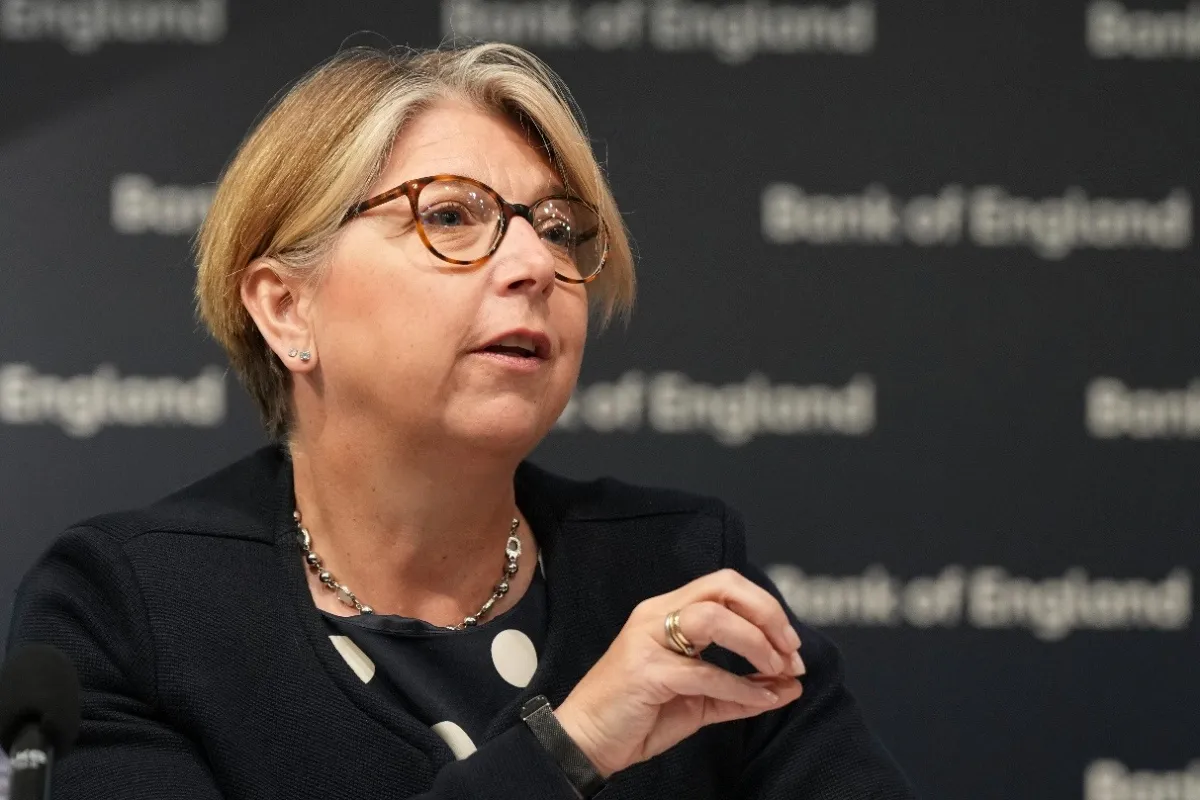
The Bank of England just told markets, in so many words, that it’s not planning to slam the brakes anytime soon. Deputy Governor Sarah Breeden downplayed the risk that rising energy prices linked to the Iran conflict would trigger a wage-price spiral, pointing to a UK economy that’s simply too weak to sustain one.
What Breeden actually said
Speaking on March 26, 2026, Breeden argued that second-round inflation effects from Iran-related energy price increases are “less likely” compared to what the UK experienced during the Russia-Ukraine energy shock. The reasoning is straightforward: the economy is in worse shape now, which paradoxically makes inflation less dangerous.
When an economy is running hot, energy price spikes ripple through the system. Workers demand higher wages to keep up with costs, employers pass those costs to consumers, and you get the kind of inflationary spiral that kept central bankers up at night in 2022, when UK inflation surged past 10%.
But when an economy is sluggish, that transmission mechanism breaks down. Workers have less bargaining power. Employers can’t raise prices as aggressively because demand is soft.