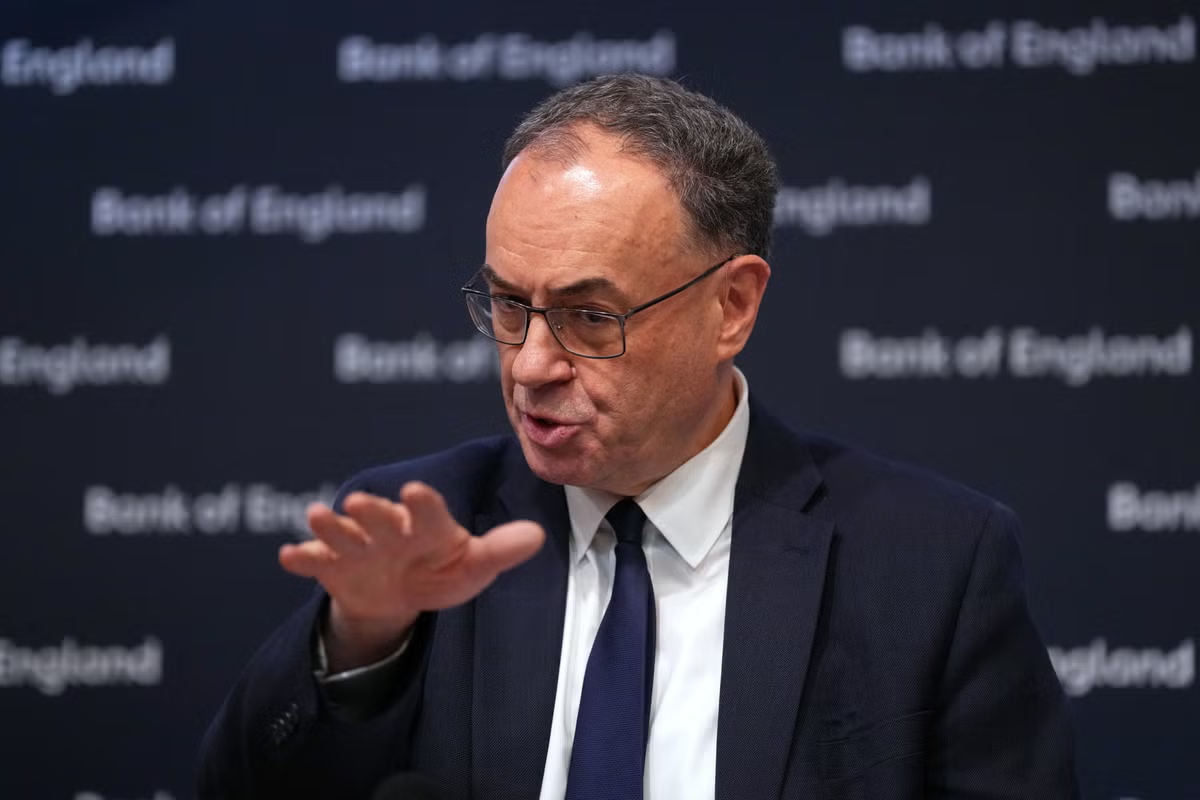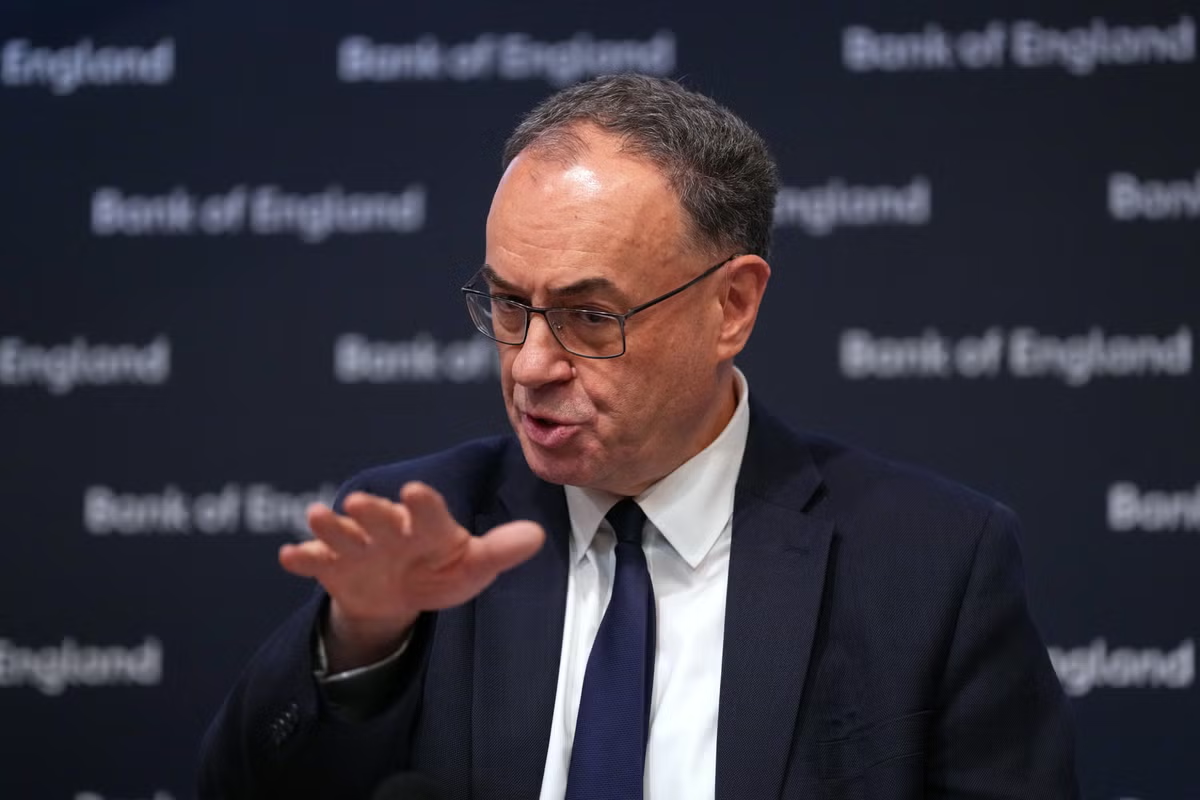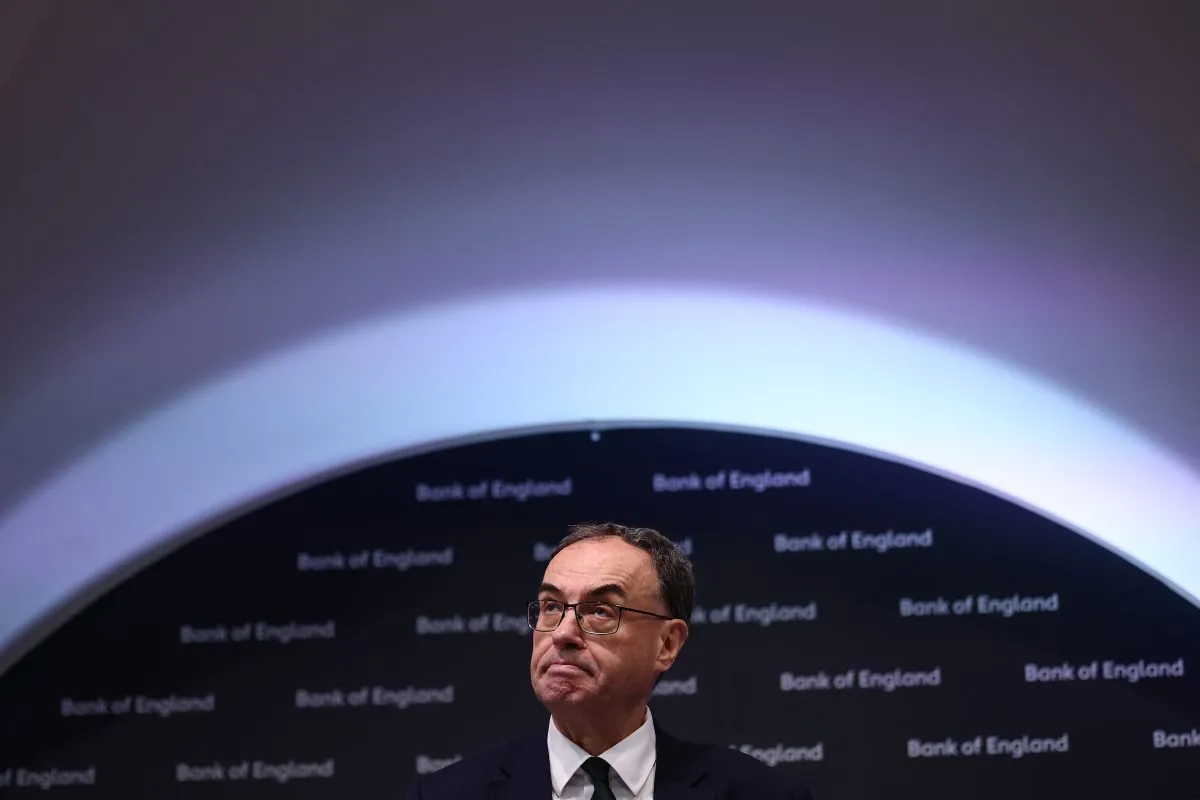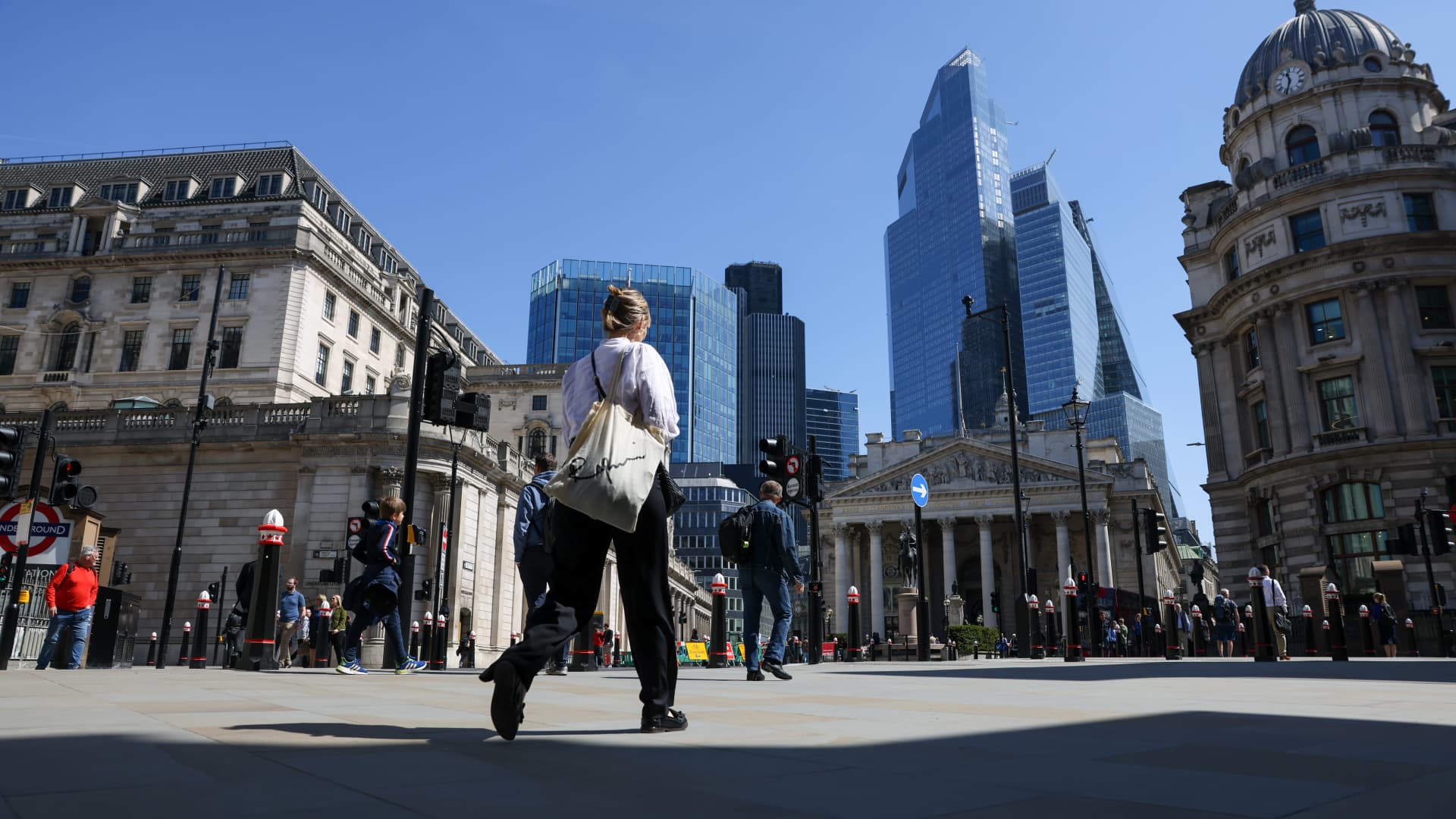
Commuters crossing a junction near the Bank of England (BOE), left, in the City of London, UK, on Wednesday, May 8, 2024. Bank of England policymakers appear the most divided since they brought their hiking cycle to a close last year, illustrating the challenge that Governor Andrew Bailey faces in steering his colleagues toward possible interest-rate cuts in the coming weeks. Photographer: Hollie Adams/Bloomberg via Getty ImagesBloomberg | Bloomberg | Getty ImagesRenewed inflationary pressures in the U.K. since the outbreak of the Iran war have upended monetary policy expectations, with the Bank of England forecast to hold, if not hike, interest rates this year.But the International Monetary Fund — which on Monday upgraded the U.K.'s growth forecast for 2026 — suggested that the central bank should be ready to cut interest rates, if necessary. "Monetary policy should remain restrictive to ensure that higher energy prices do not spill over to core inflation and wage growth," the IMF said in its latest forecast for the U.K. "The rise in energy prices will lift headline inflation this year while also weighing on output, complicating policy calibration," it added.The IMF said that holding the bank's key interest rate, called "Bank Rate," at its current level of 3.75% for the remainder of the year would "maintain a sufficiently restrictive monetary stance to limit second-round effects and keep long-term inflation expectations anchored." But, it added, the BOE should also be prepared to cut rates, if necessary, to support the economy."Given exceptional uncertainty, the BOE should retain the flexibility to adjust the monetary stance in either direction, and be prepared to respond forcefully if second-round effects prove stronger than anticipated," the IMF said.GDP growth upgradeIn a rare spot of good economic news for the U.K., the IMF on Monday upgraded its forecast for the country's economic growth this year to 1%, from a previous estimate of 0.8%."While the U.K. economy has remained resilient in recent years, the war in the Middle East is dampening near-term prospects," the fund noted.The IMF said it expected the British economy to "gradually recover as the shock dissipates." Higher energy prices, it added, would likely push inflation up temporarily and delay the return to the central bank's target of 2% by around a year."Under the current energy price outlook, holding rates for the remainder of the year should be sufficient to bring inflation back to target by end-2027," it said.The fund called on the BOE to ensure decisions are clearly communicated, data-dependent and decided on a meeting-by-meeting basis.The IMF had warned in its spring forecast that the U.K. would receive the worst economic hit of any rich nation due to the Iran war, but acknowledged on Monday that it had so far proved more resilient than expected. Data released last week showed the economy grew 0.6% in the first quarter, beating expectations."Once the energy price shock dissipates, growth should recover in the second half of 2027 and stabilize around potential in the medium term," the IMF noted.
Bank of England does not need to hike interest rates, says IMF — it may even need to cut
The Bank of England is expected to hold and even potentially hike interest rates this year in response to resurgent inflation sparked by the Iran war.
496 words~2 min read