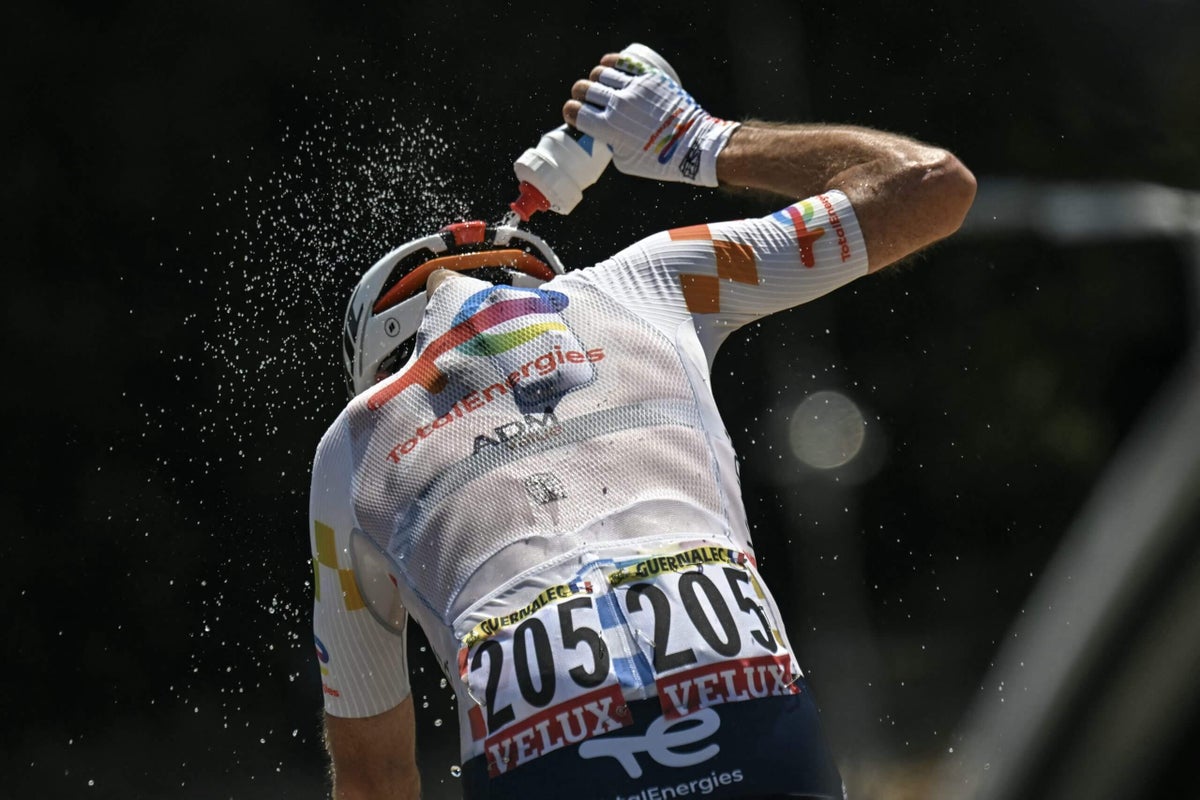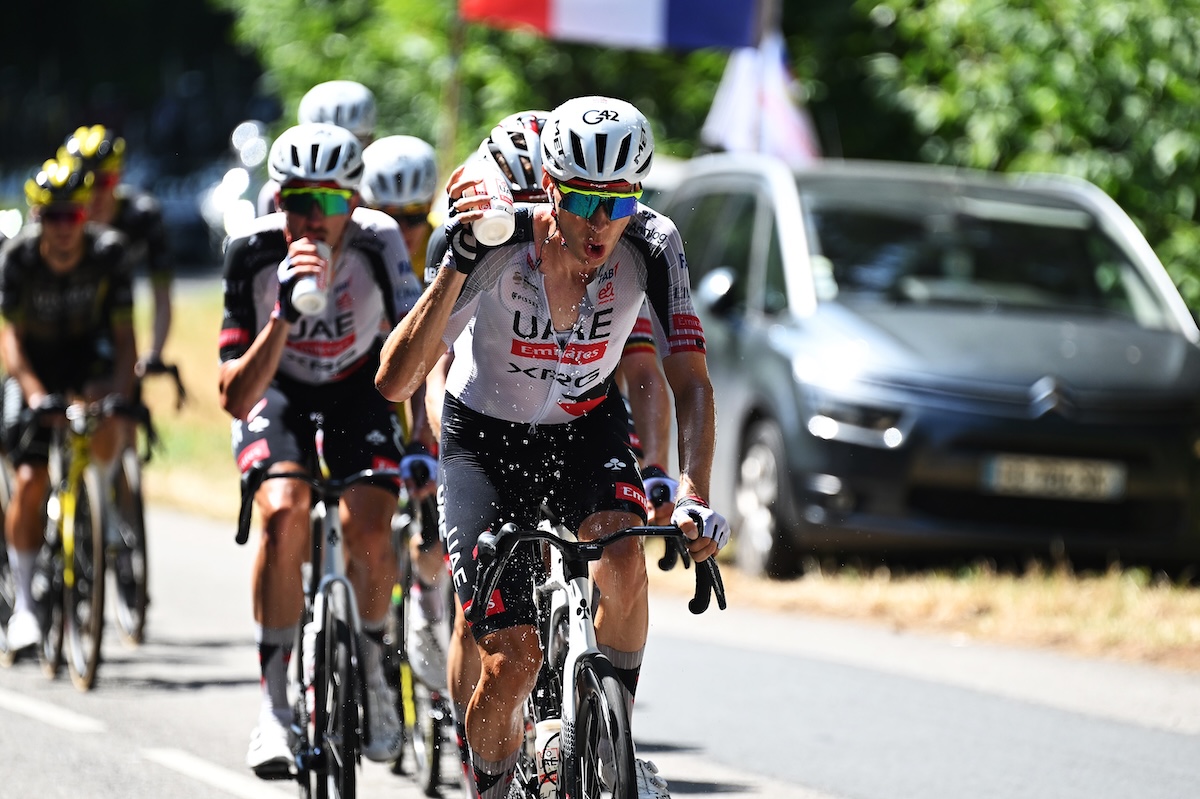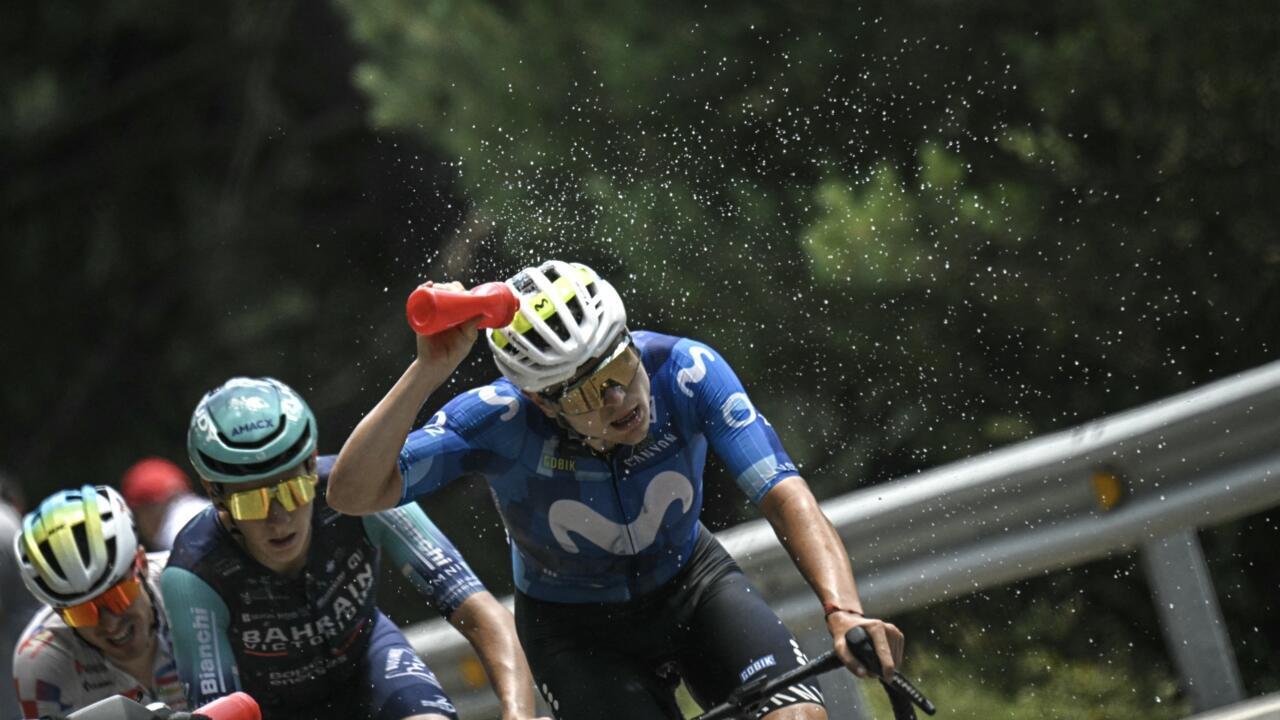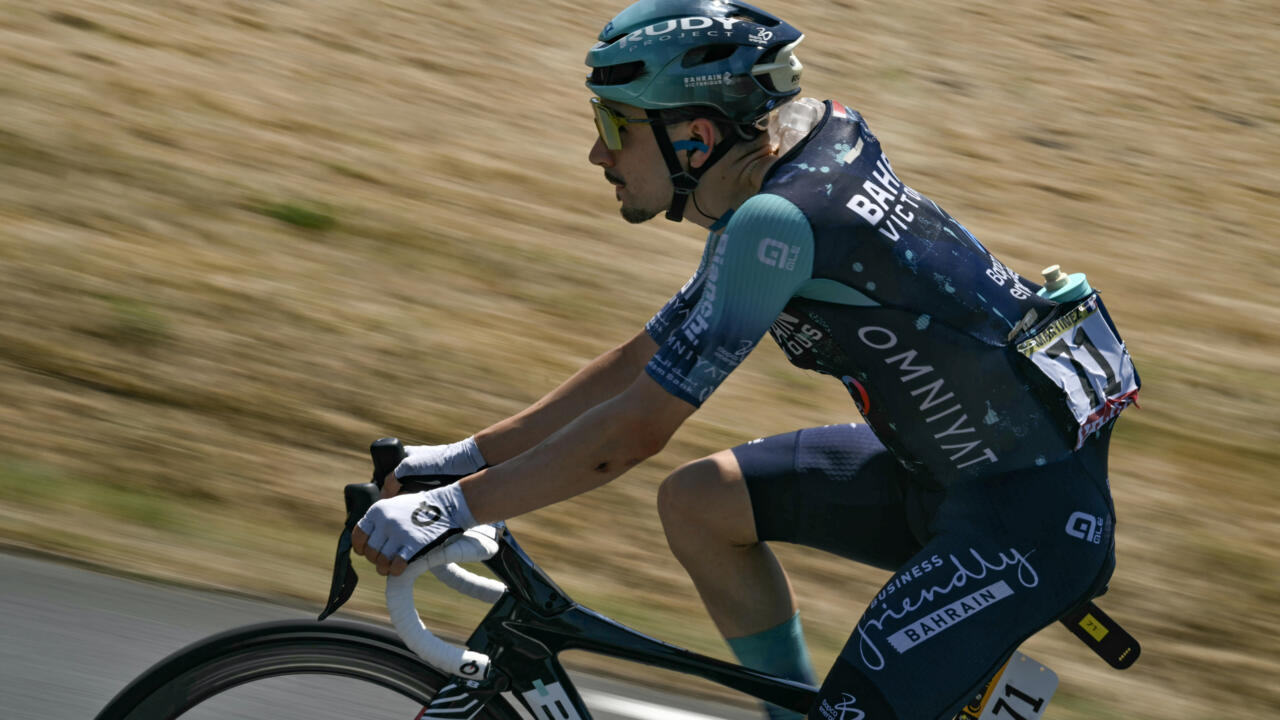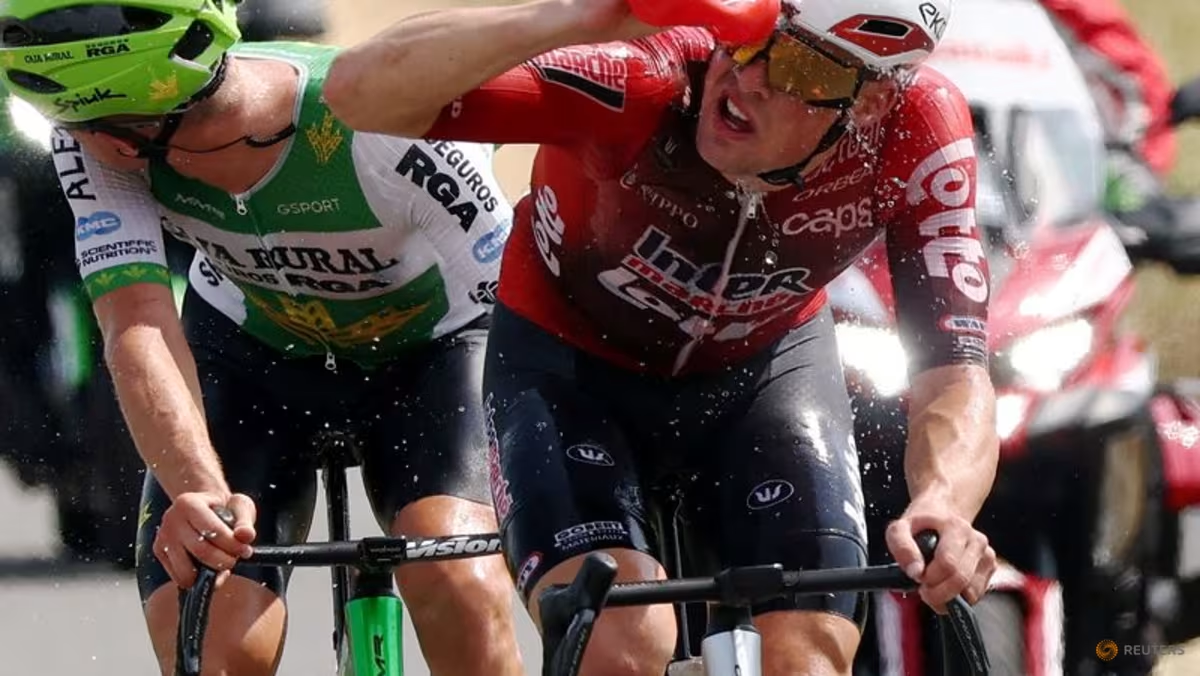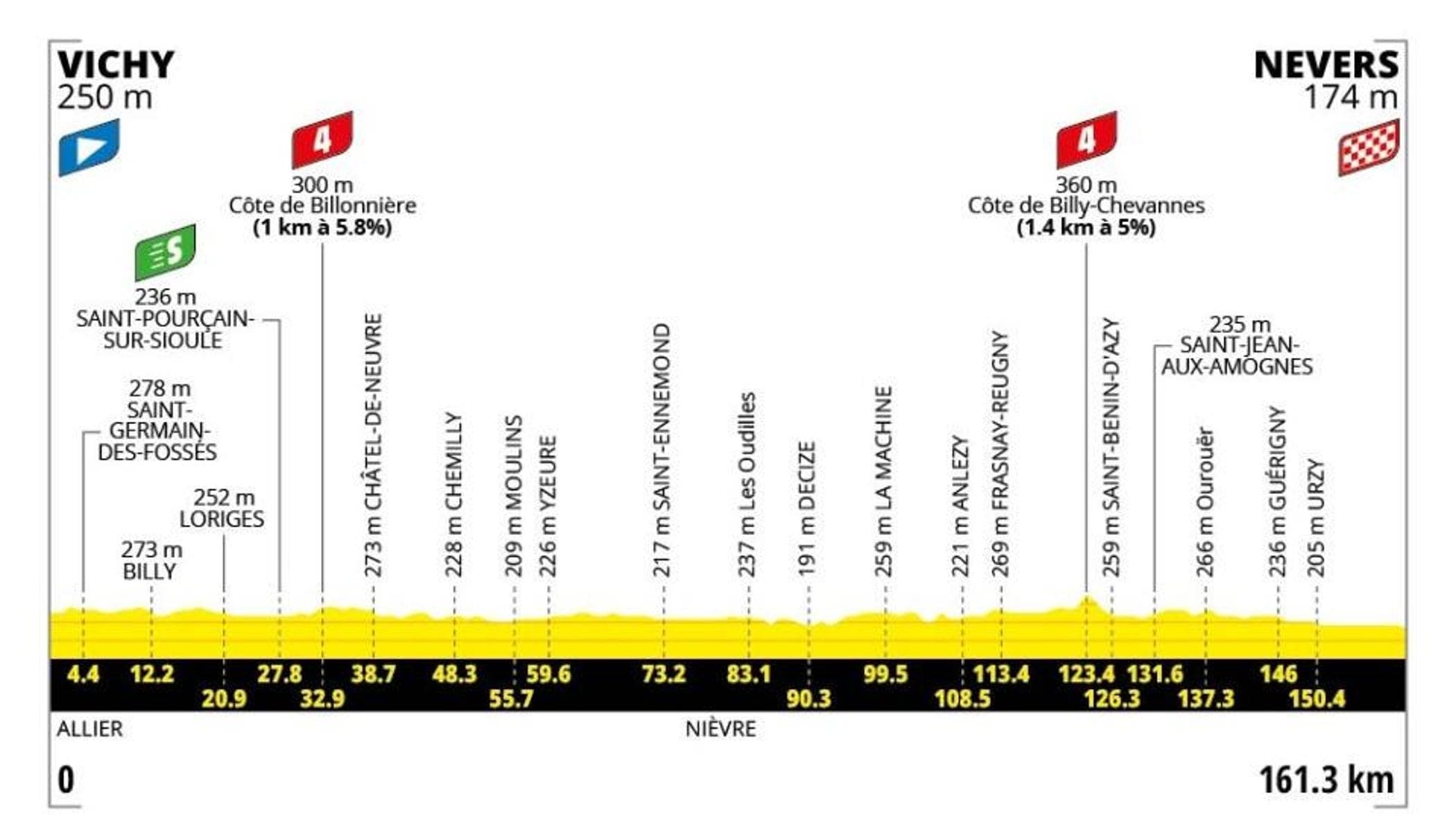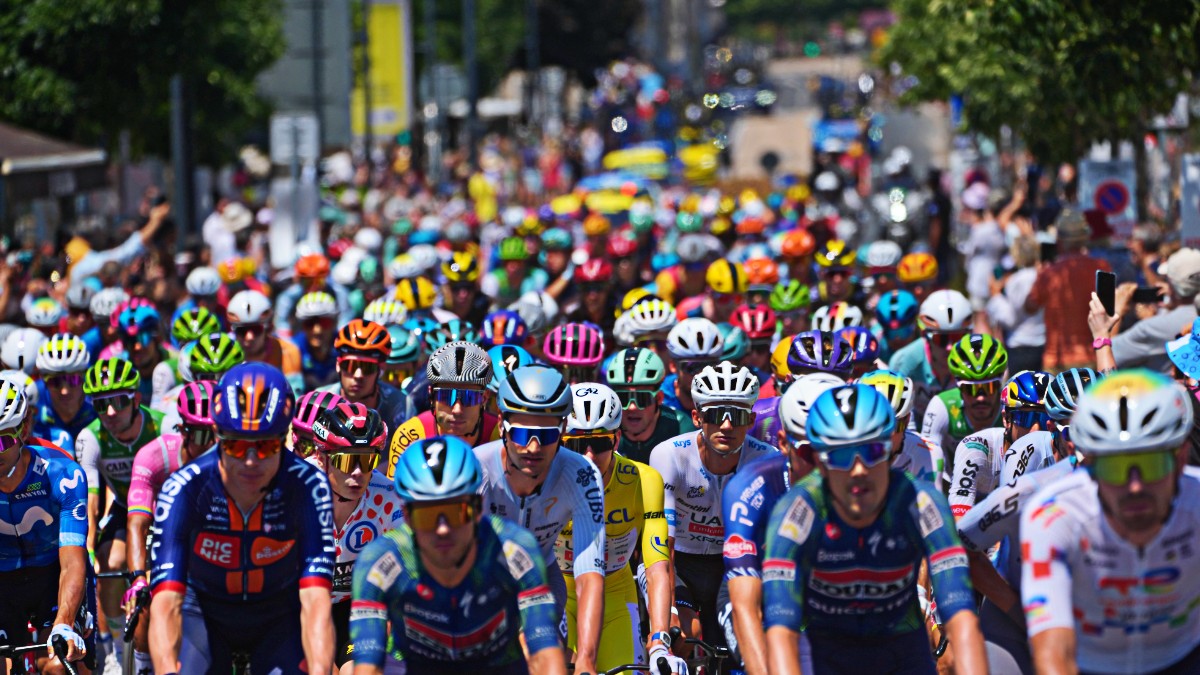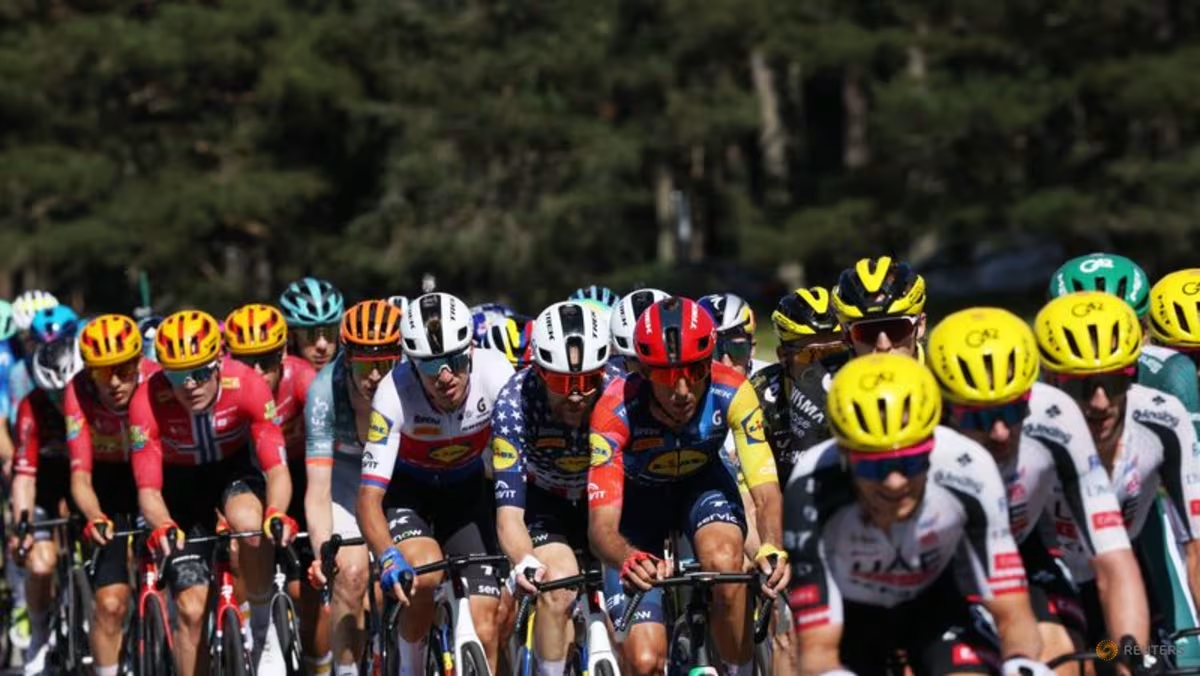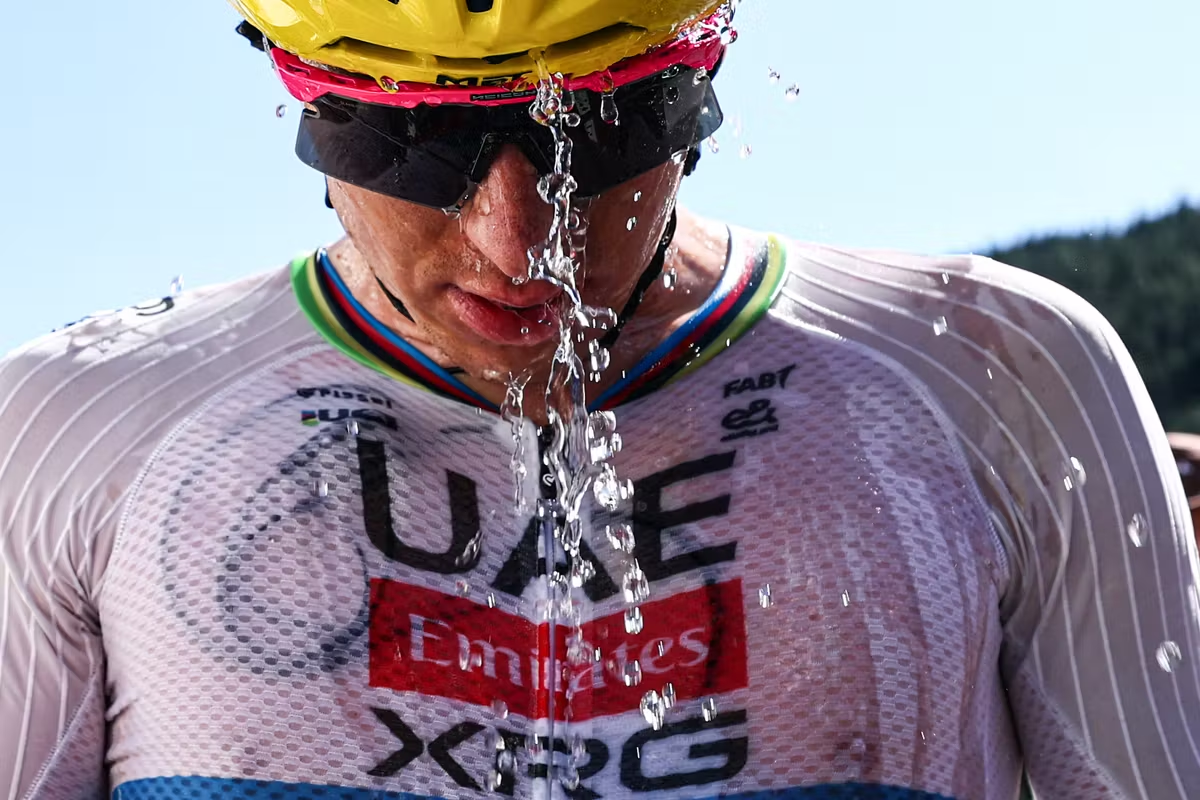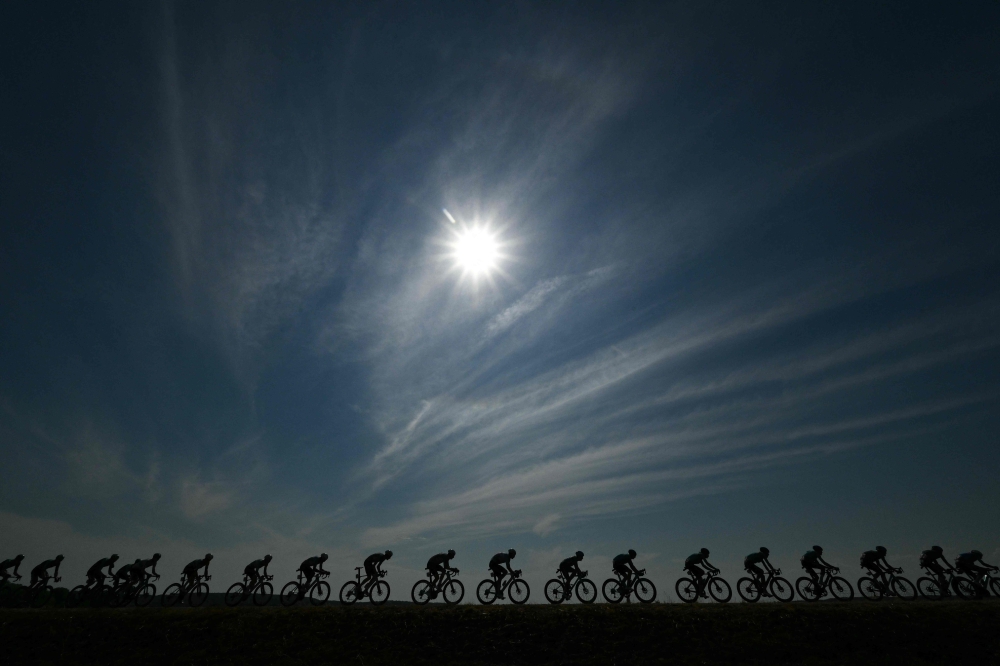
The pack of riders (peloton) is silhouetted as it cycles during the 11th stage of the 113th edition of the Tour de France cycling race, 161,3 km between Vichy and Nevers in central France, on July 15, 2026. — AFP pic First Published: Thursday, 16 Jul 2026 1:30 PM MYT NEVERS (France), July 16 — Drops of rain fell at the start of the Tour de France’s 11th stage from Vichy to Nevers, bringing much-needed but brief respite for the riders.After 10 days of racing in temperatures which never dropped below 30°C, and often edged above 40°C, Tour cyclists’ bodies are more tired than they would usually be at this stage of the race.And they still have not started the energy-sapping high mountain stages of the third week.“There really is greater tiredness than in the other Tours,” the Tour’s chief doctor Florence Pommerie told AFP.From her vantage point in the medical car following the riders, she has seen the battered bodies, emaciated faces and haggard gazes accentuated by the glaring heat.Since the Tour began in Barcelona just over 10 days ago, the task facing riders has been even more arduous than they would expect at a Grand Tour.As well as dragging themselves more than 3,200 kilometres, over mountain peaks and through buffeting headwinds, their bodies have had to battle with trying to keep cool.“It takes an incredible amount of energy to cool the body because when it’s hot and the body temperature rises, it uses 70 per cent of its energy to cool itself,” added Pommerie.Heat stroke risk During effort, a person’s body temperature can reach 39°C — which would be considered a fever.It is essential to cool some strategic parts of the body such as the neck, head, extremities and forearms.Riders have gone through heat training to help themselves prepare for the extreme conditions of the Grande Boucle, but that can only do so much.“You can do all the heat training that you want, but then when you are in the race and you have to face one week with really warm conditions. Every day it’s getting warmer and warmer, for sure. It’s a really difficult condition for the rider,” Mattia Michelusi, the head of performance at the Cofidis team told AFP.The first objective is to manage the fatigue provoked by heat.“The guy who is unable to produce his watts, his power, gets to the finish rinsed,” Samuel Maraffi, the doctor at TotalEnergies, told AFP.The second objective is to avoid getting heat stroke.“It’s really an effort-induced heat stroke... you can get it even when it’s not hot,” said Pommerie.Heat stroke can lead to feeling faint, going pale or even fainting.“We want to avoid any kind of heat stroke that happens basically when the temperature is really high and the body is not able to dissipate this heat,” added Michelusi.“The main strategy is to try to cool down the body as much as possible during the day.”That involves using ice socks, cold water bottles and ice vests, either before, during or after each stage.Some teams even provide special cooling mattresses for their riders to sleep on at night.However, heat training sessions of 45 minutes to one hour cannot recreate the impact of riding for four to five hours in scorching heat.“What happens is that they lose a big amount of water, and if you do that for several days in a row, it is almost impossible to replace the water that you lose,” said Michelusi.And that increases the risks of getting heat stroke.Infections risk From Pommerie’s perspective, the teams are on top of the issue.“They wet (the riders) a lot so that it evaporates with the wind, so they’ve largely got that under control,” she said.“But that doesn’t change the fact that their bodies have suffered a lot.”And the cumulative effect can harm a rider’s health.The immense use of energy for cooling purposes can have “a huge impact on their digestive system” meaning that they do not absorb what they eat as well as they would otherwise, added Maraffi.He said it can also affect their sleep, which can lead to “a huge impact on their recovery” after a stage.And just as when riding in cold temperatures, tiredness can make riders more susceptible to viruses.“Under normal circumstances the immune system does not completely recover, so there is a susceptibility to infections, and the heat increases that,” said Maraffi. — AFP
Tour de France riders battle suffocating heat
NEVERS (France), July 16 — Drops of rain fell at the start of the Tour de France’s 11th stage from Vichy to Nevers, bringing much-needed but brief respite for the riders.After...
729 words~3 min read