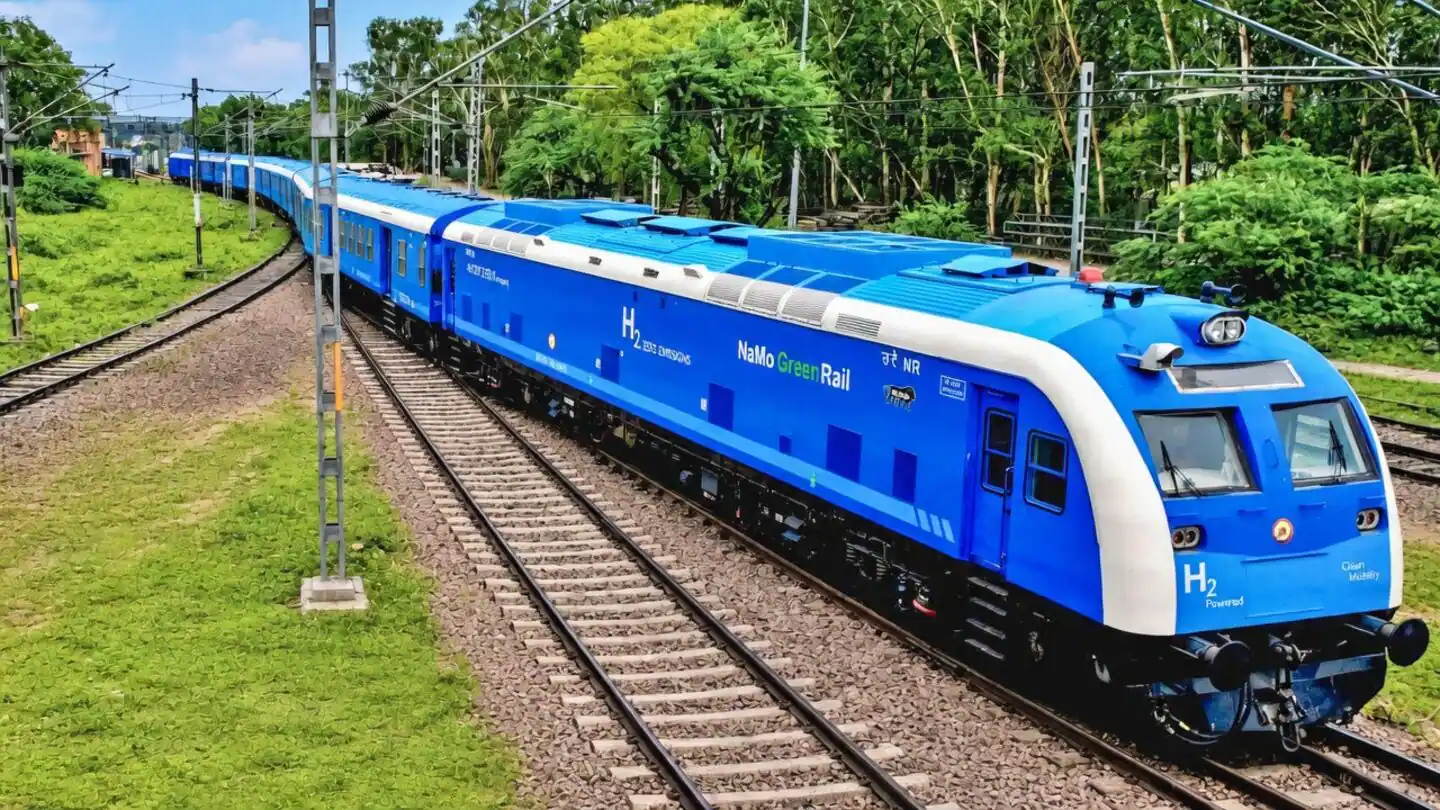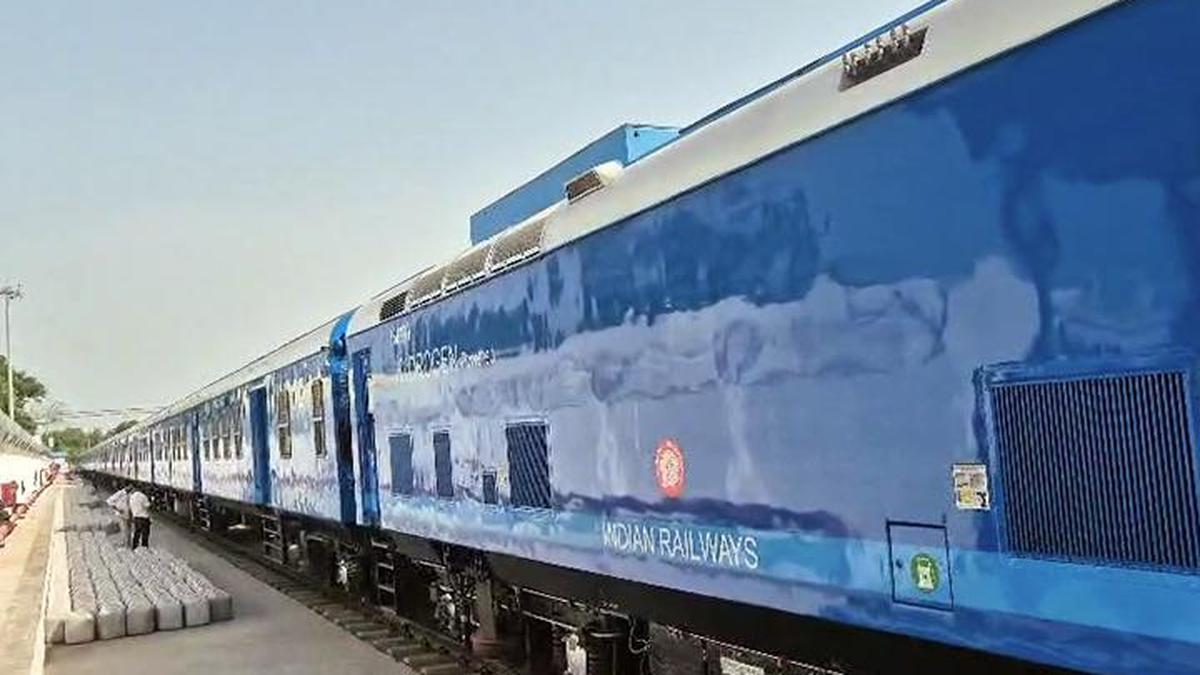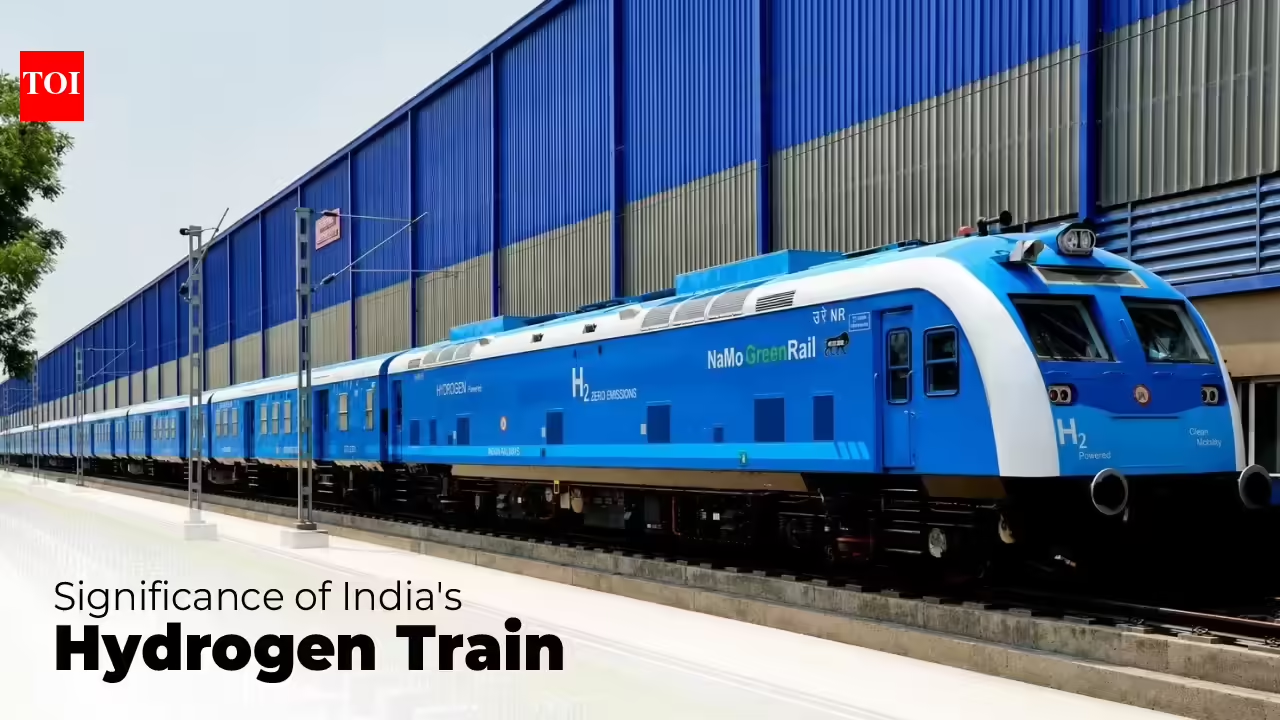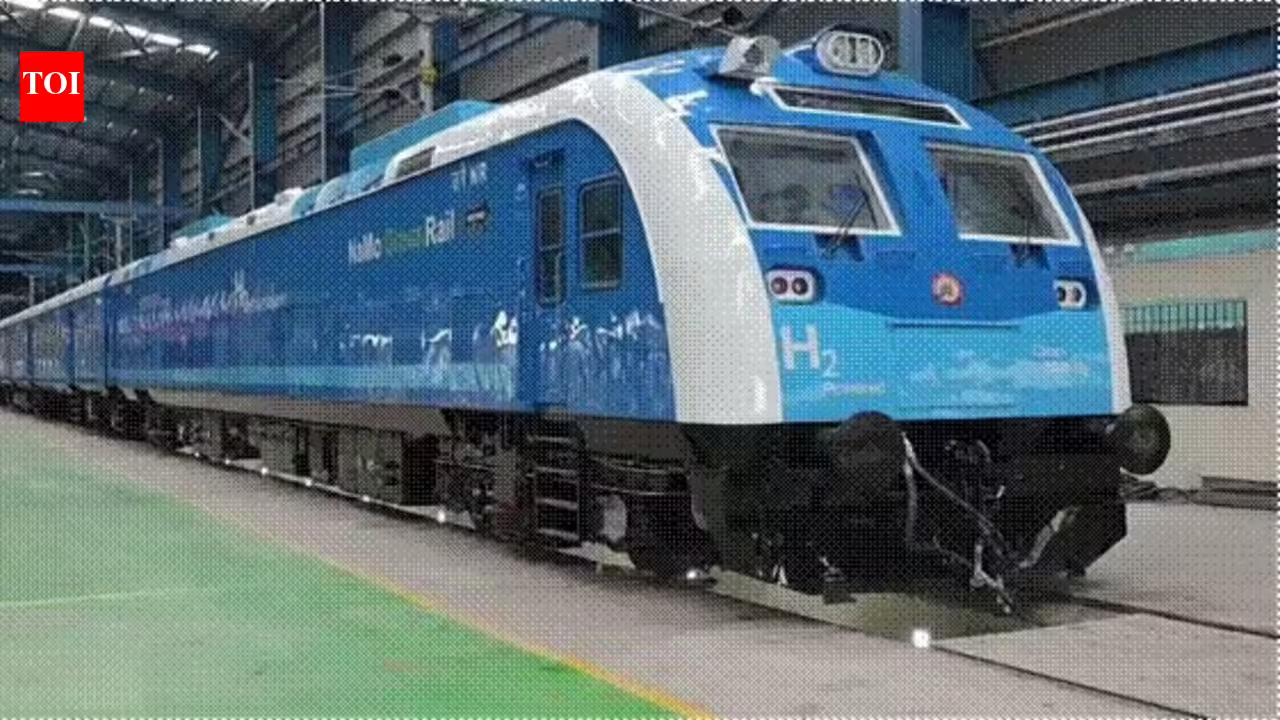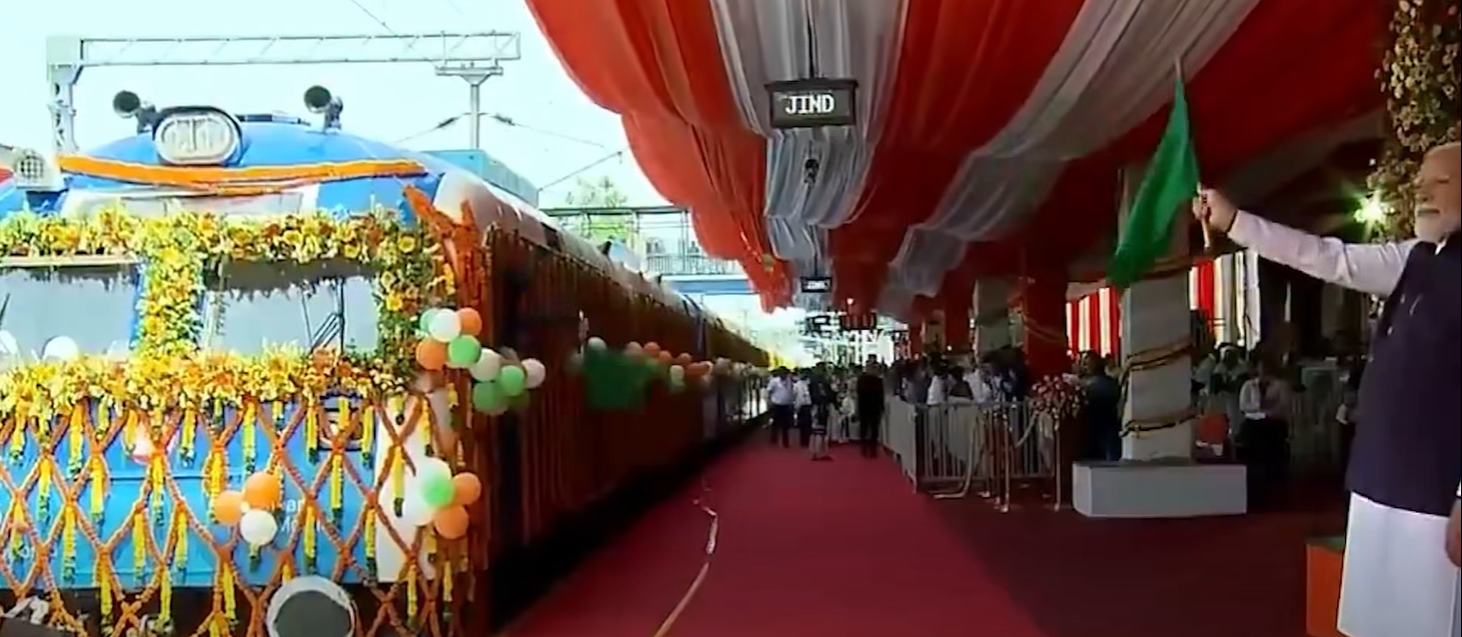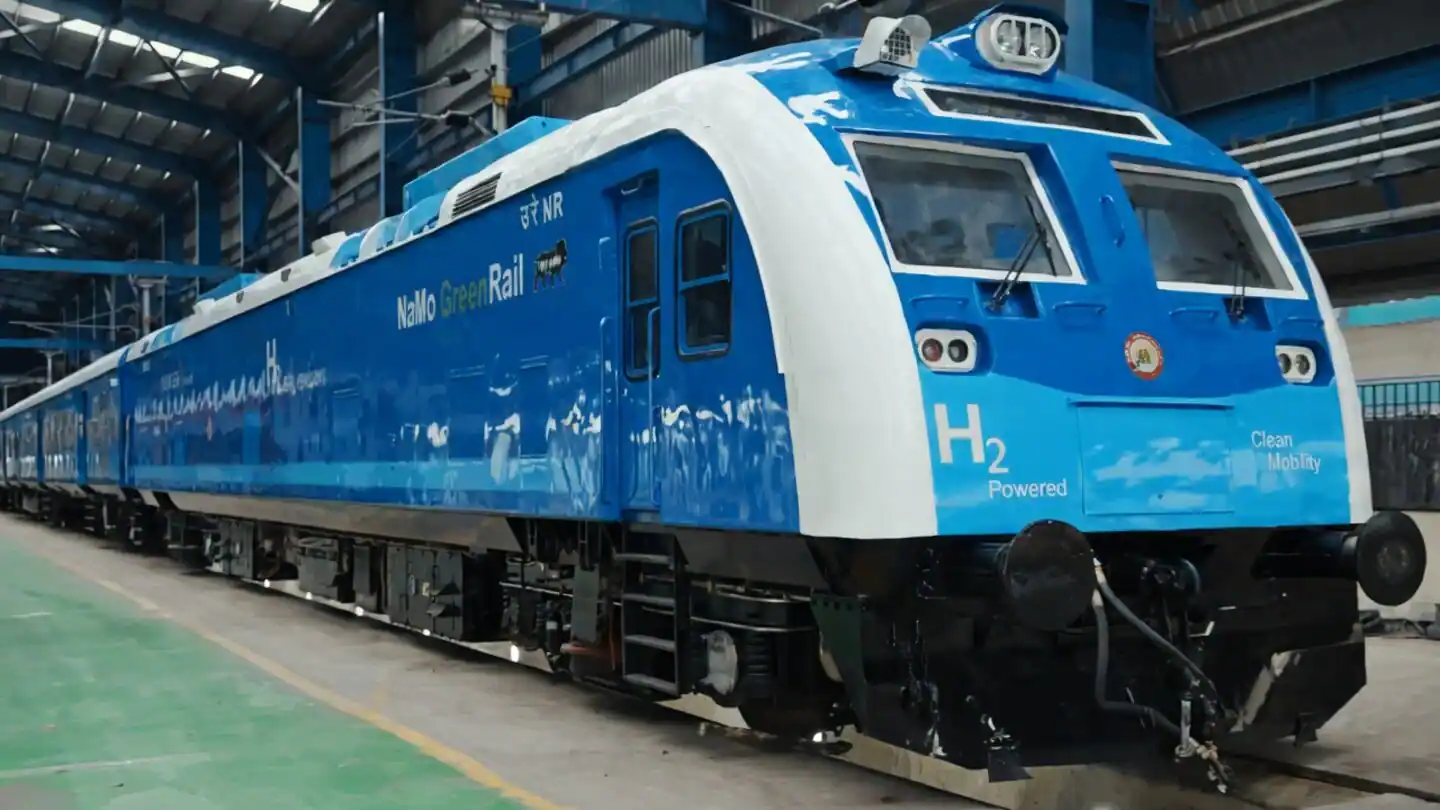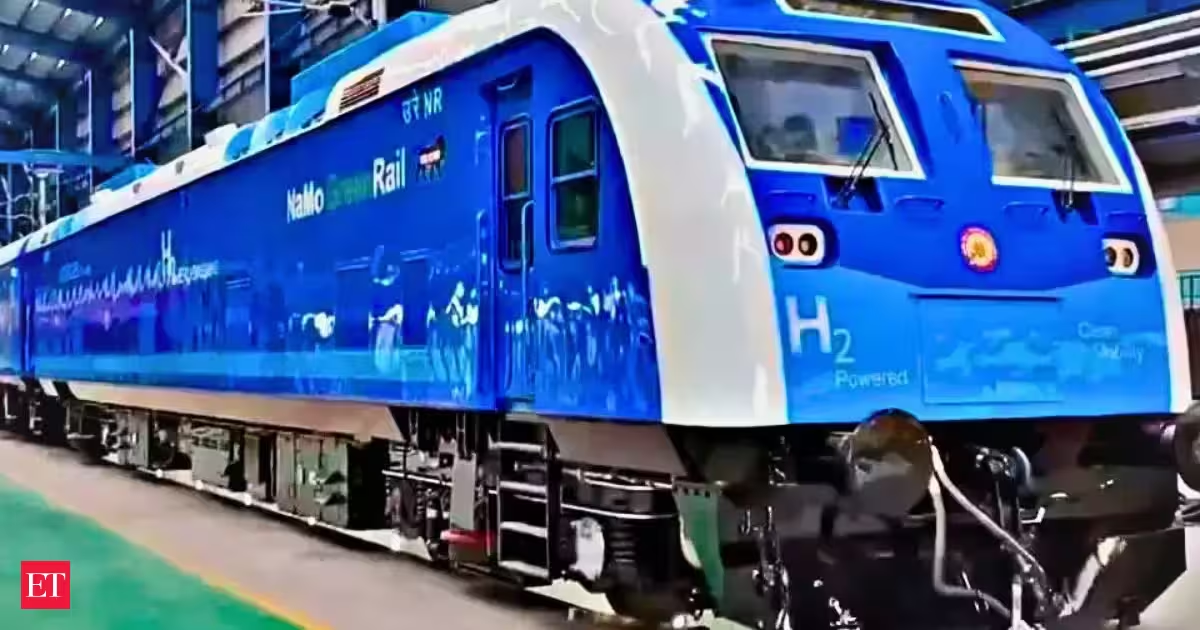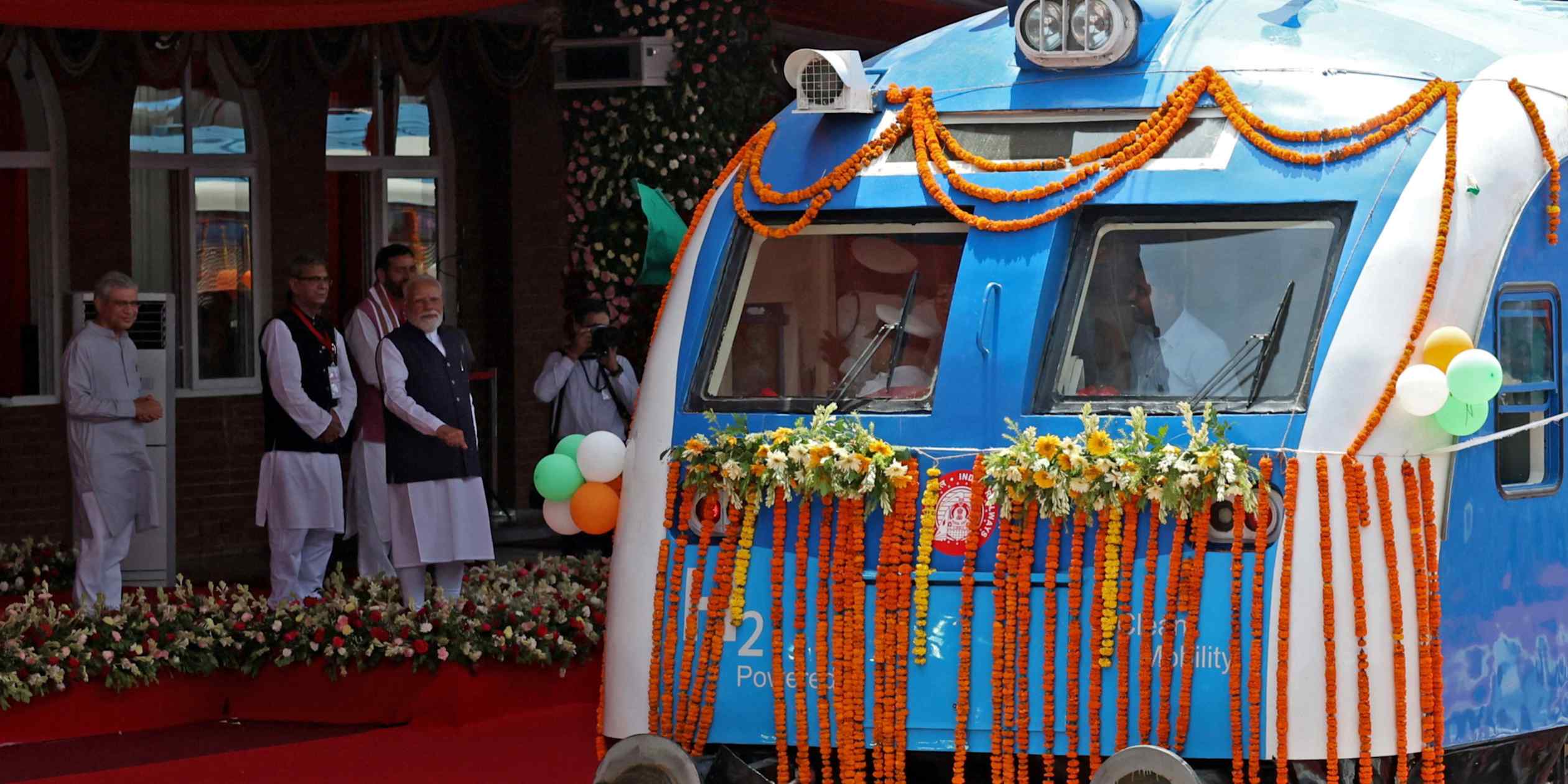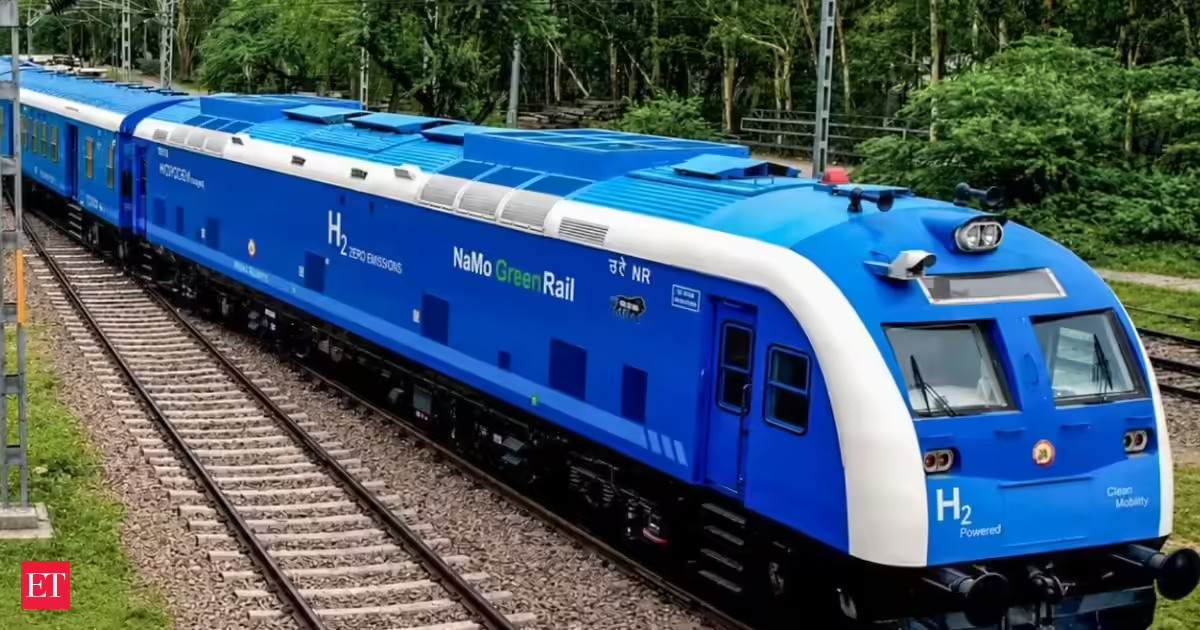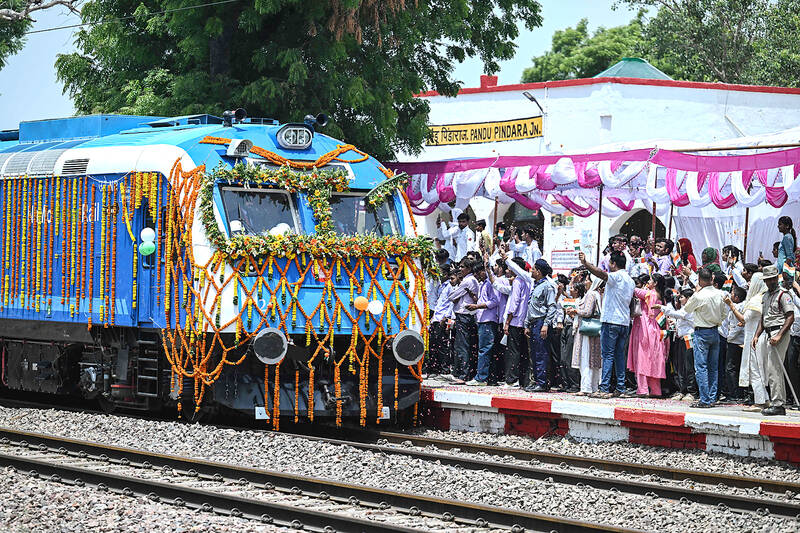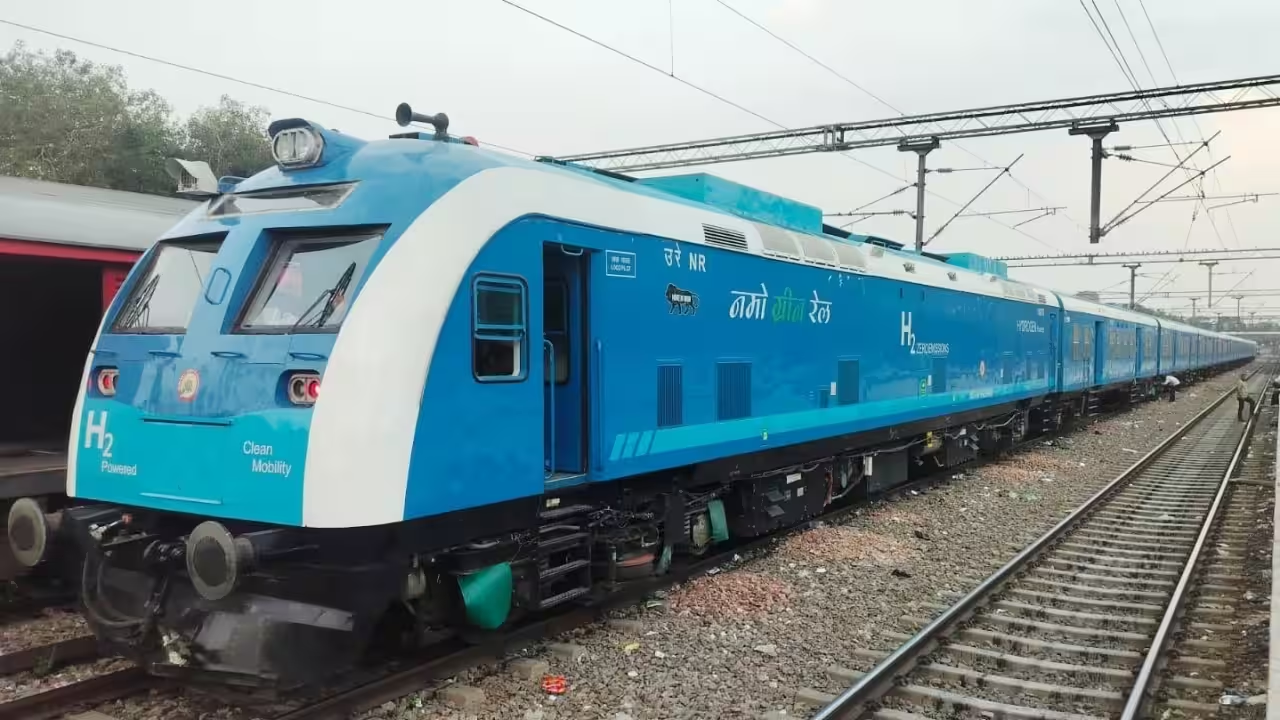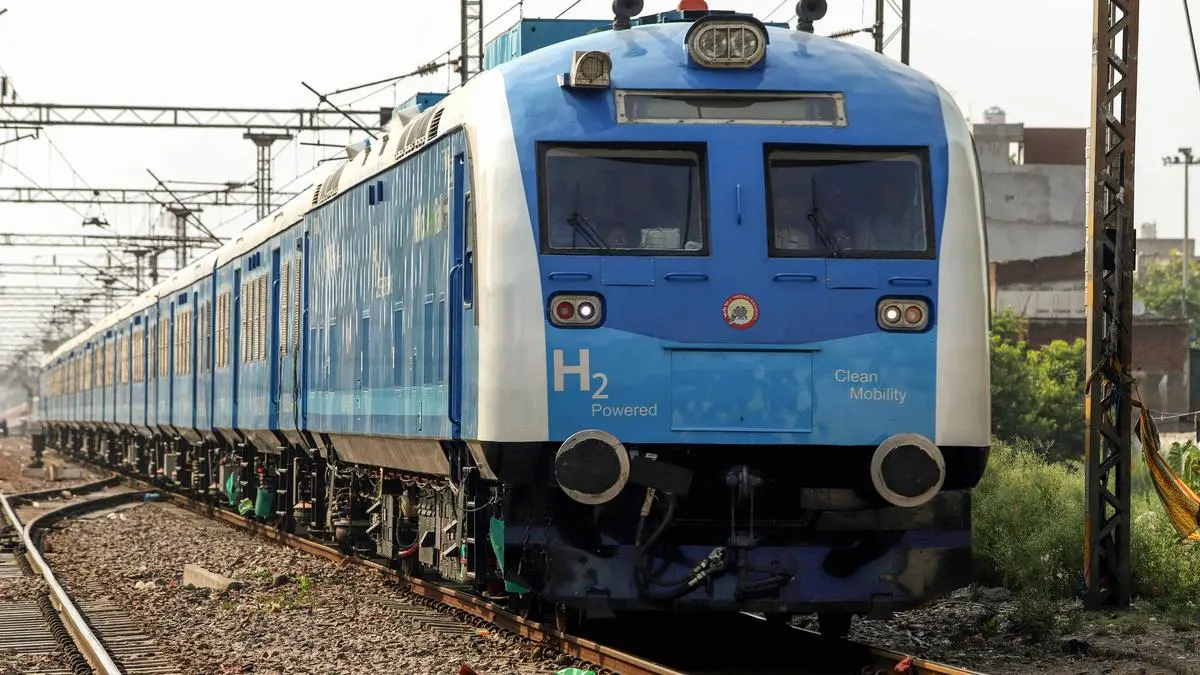
India's first hydrogen-powered train seen on the Delhi railway track during its high-speed trial, in New Delhi last month (file photo)
| Photo Credit:
After more than three years of ambitious announcements, social media teasers and repeated postponements, Indian Railways’ (IR’s) first hydrogen-powered train is finally ready. Prime Minister Narendra Modi is expected to flag it off later this week.The train will operate between Jind and Sonipat and consists of two hydrogen-powered driving power cars, each producing 1,200 kW of traction power, and eight passenger coaches.The launch deserves recognition. Hydrogen fuel cells generate electricity while emitting only water vapour, and the train represents a significant engineering achievement. Although the fuel-cell stack itself is imported, an Indian company has successfully developed the propulsion, control systems and overall integration. India thus becomes only the third country, after Germany and China, to introduce hydrogen trains in commercial passenger service.Yet technological milestones should encourage informed debate rather than unquestioned celebration.Germany, which pioneered hydrogen rail technology with the Alstom Coradia iLint in 2022, has already scaled back many of its operations, with several routes shifting towards battery-powered trains after encountering issues such as fuel-cell degradation, supply chain challenges and operational reliability. Japan, Sweden, South Korea, Switzerland and the US have confined themselves largely to demonstration projects while continuing to evaluate the technology.India is perhaps the only country to run a hydrogen-powered passenger train on a fully electrified route under the wire; hydrogen trains are designed as an alternative to polluting diesel trains on non-electrified regional lines.Heritage routesAs an afterthought, therefore, it changed the discourse to ‘Hydrogen for Heritage’, declaring that 35 such trains shall be developed for eight scenic, ecologically sensitive narrow-gauge and metre-gauge heritage routes.The concept has merit. Heritage railways traverse environmentally sensitive regions where conventional electrification may be undesirable, and hydrogen could potentially offer a cleaner alternative. However, these routes are small, geographically dispersed and located in remote areas. Establishing hydrogen production, storage and refuelling infrastructure at each location would be expensive and operationally demanding. Moreover, despite a budgetary allocation of about ₹2,800 crore three years ago, little visible progress has been made towards developing these heritage train prototypes.The broader question concerns hydrogen itself. Hydrogen is often described as the fuel of the future, but it is more accurately an energy carrier than a primary fuel. Unlike coal, petroleum or uranium, hydrogen must first be manufactured using energy before it can be used. It is then compressed or liquefied, transported, stored and finally converted back into electricity inside a fuel cell.Every stage consumes energy, leaving hydrogen with significantly lower overall efficiency than battery-electric systems. However, inexplicably, IR has not yet pursued battery-powered trains in any significant way.The challengesHydrogen’s environmental credentials also depend on how it is produced. More than 95 per cent of global hydrogen is currently derived from natural gas, a process that emits carbon dioxide. Truly green hydrogen, produced by splitting water using renewable electricity, remains considerably more expensive. Unless the electricity used for electrolysis itself comes from renewable sources, hydrogen cannot be described as a completely green fuel.Despite these challenges hydrogen offers considerable promise in sectors where batteries face fundamental limitations, such as green steel production, fertilizer manufacture, long-distance shipping and perhaps aviation. Railways, however, present a far more nuanced case.The Jind-Sonipat prototype will nevertheless provide invaluable operational experience. Indian engineers will acquire practical knowledge in fuel-cell operation, hydrogen storage, maintenance, safety and long-term reliability. That experience makes the project worthwhile, provided future decisions are guided by evidence and close study of international experience rather than by technological enthusiasm.The writer is Retd. General Manager/Indian Railways, Leader of Vande Bharat project & Independent Rail ConsultantPublished on July 16, 2026