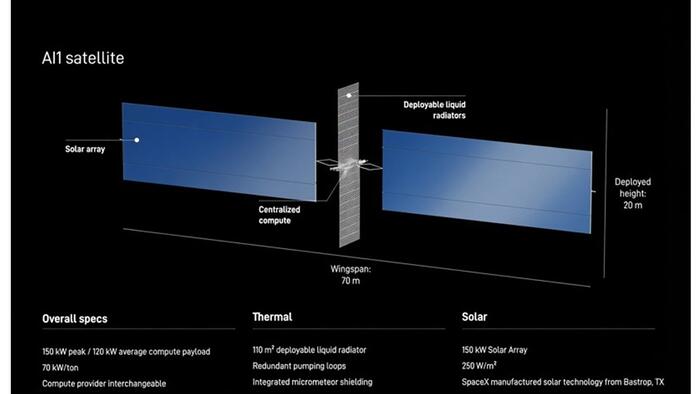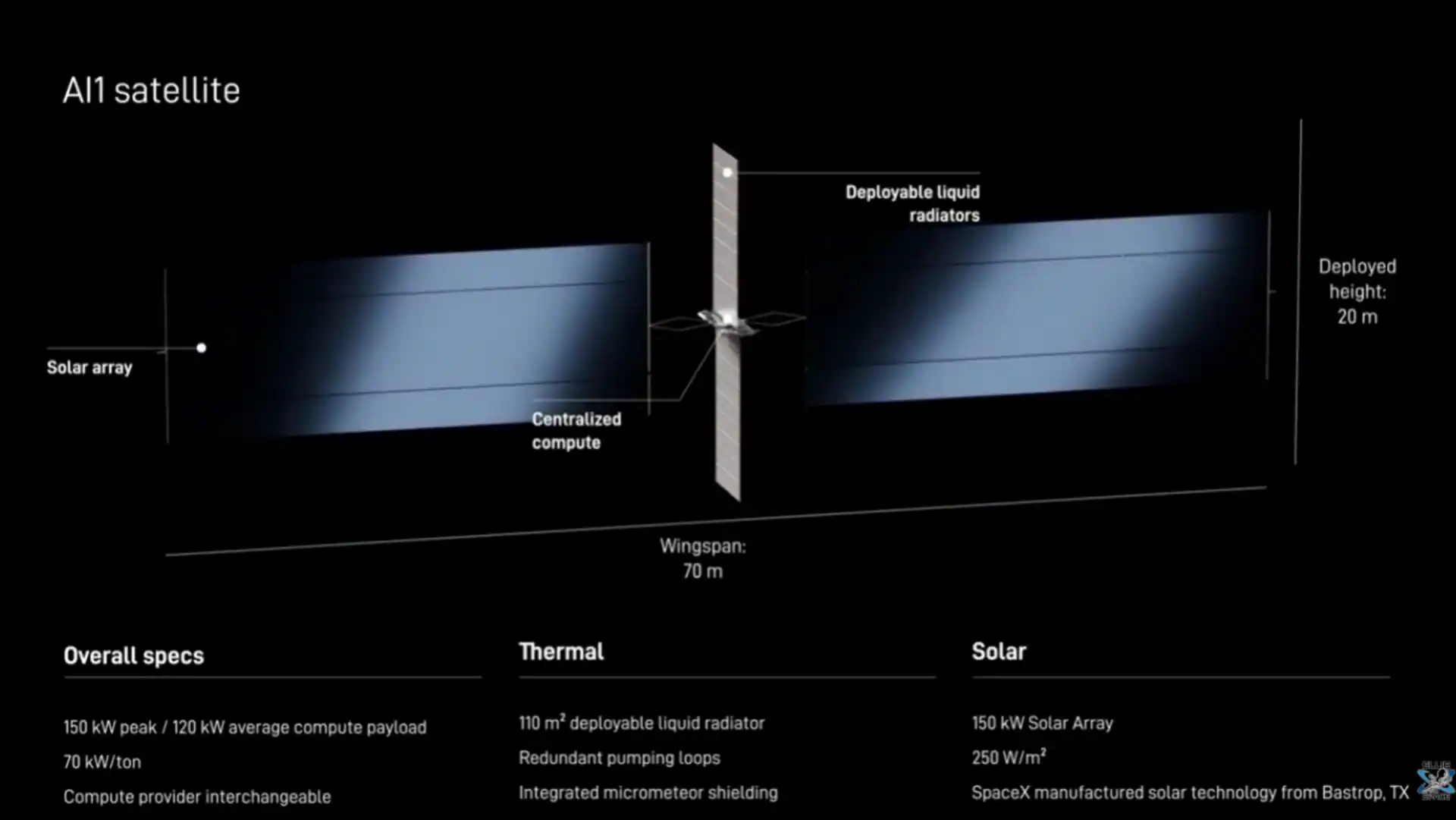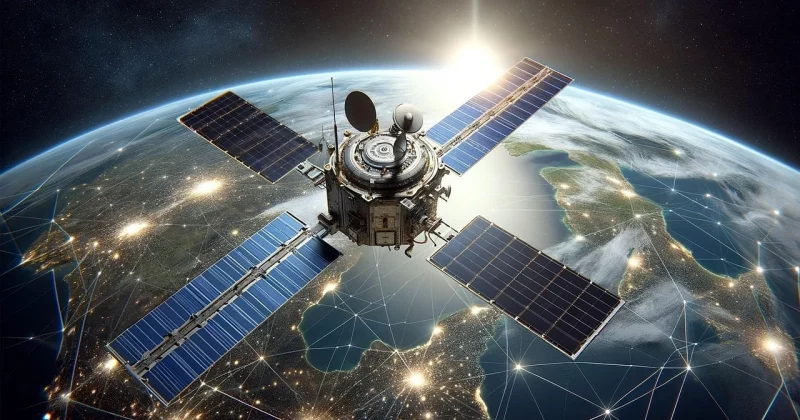
SpaceX unveiled its AI1 orbital data center satellite in a video around June 9, 2026, laying out a vision for AI computation that skips terrestrial infrastructure entirely. The satellite is designed for sun-synchronous orbit, powered by solar arrays, cooled by passive radiation, and connected to the rest of the world through laser links to the existing Starlink constellation.
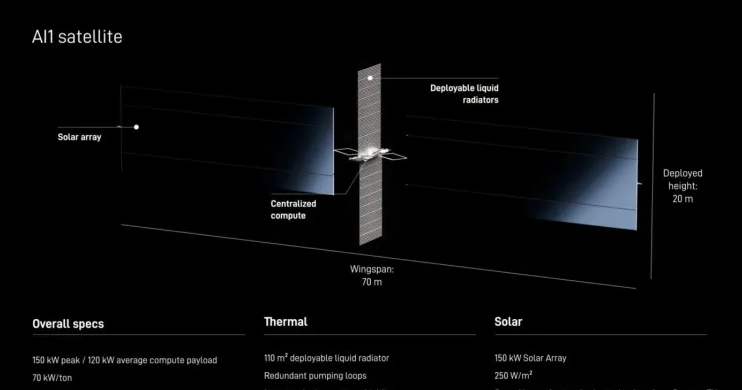
The headline specs are striking. The AI1 has a 70-meter wingspan, a deployed height of 20 meters, and a peak compute payload capacity of 150 kW. Elon Musk noted that one AI1 satellite’s power output is roughly equivalent to one Nvidia GB300 rack.
Simpler than Starlink, bigger ambitions
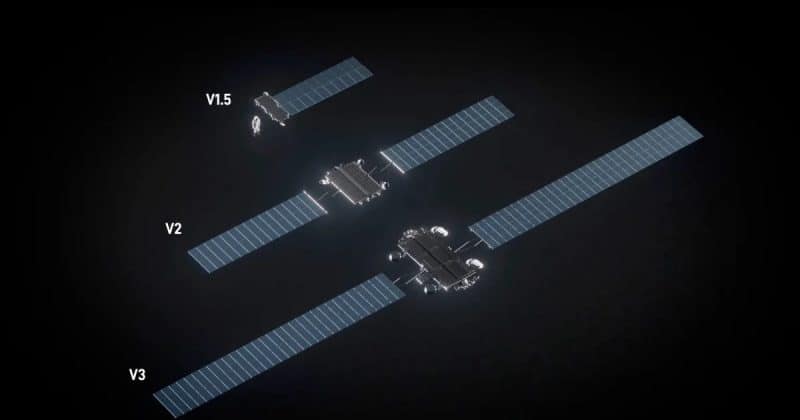
Musk pointed out that AI1 manufacturing drops the phased-array antennas that make Starlink satellites complex to produce. What’s left is solar cells, radiators, and laser links.
In January 2026, SpaceX filed with the FCC proposing a constellation of up to one million AI1 satellites. To support that manufacturing ambition, the company is building a Gigasat factory in Bastrop, Texas. Initial AI1 satellite launches are targeted for late 2027, though SpaceX plans to deploy compute payloads on select existing Starlink satellites before the dedicated AI1 fleet is ready.