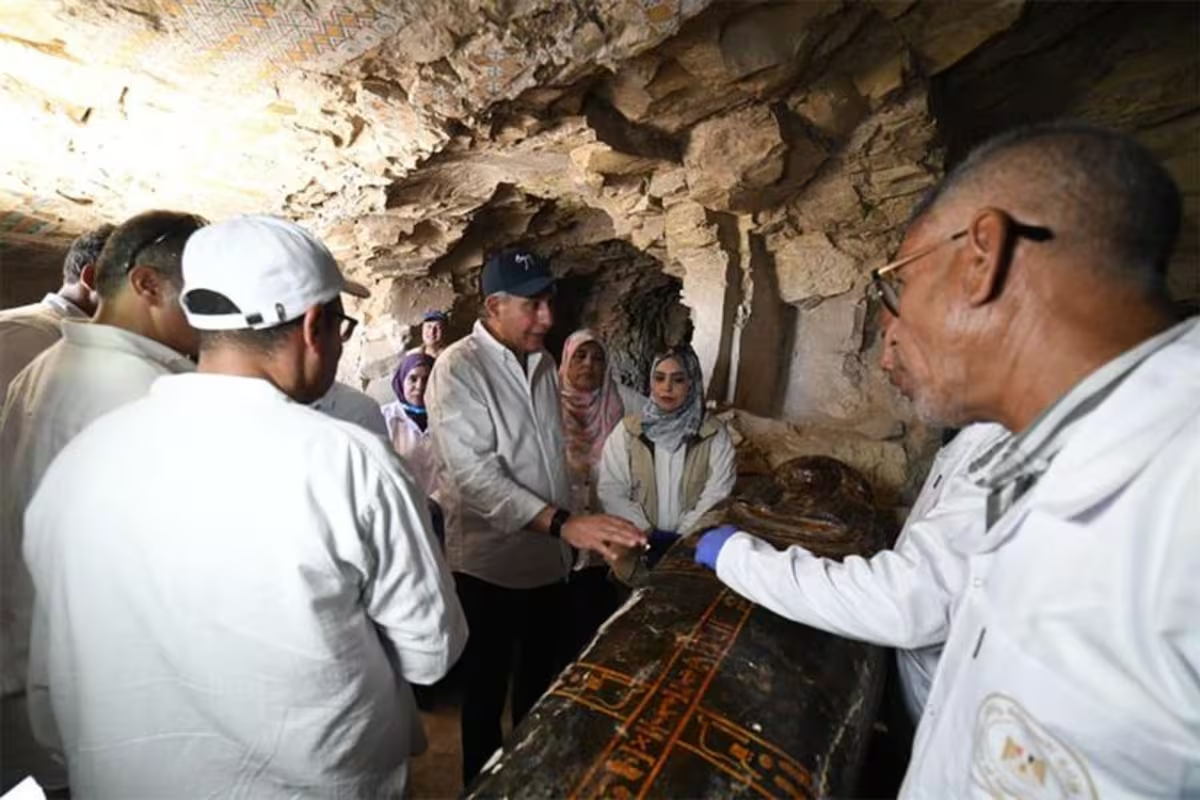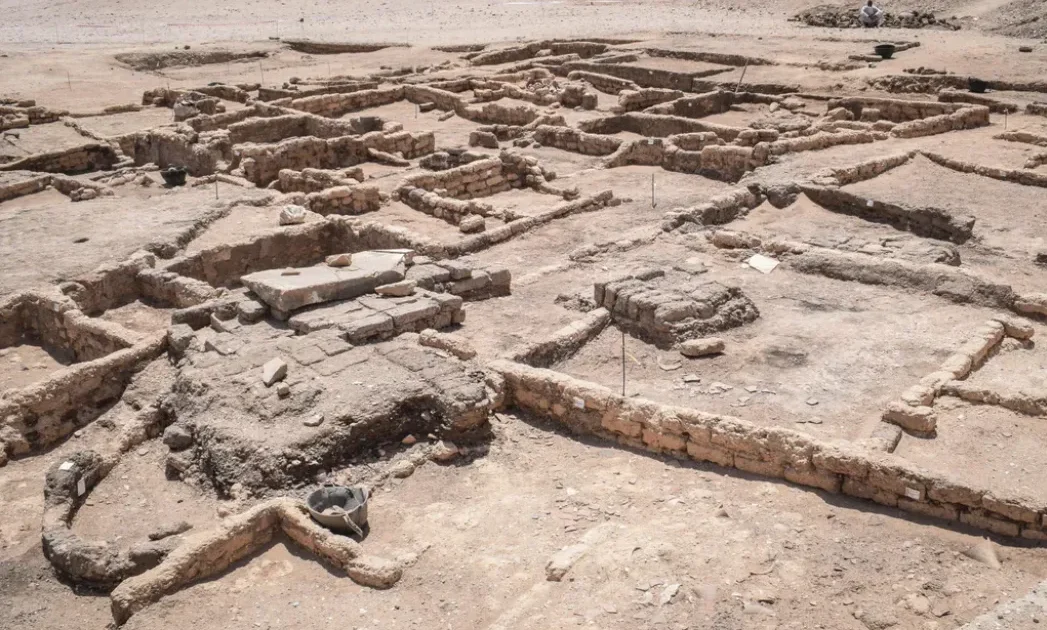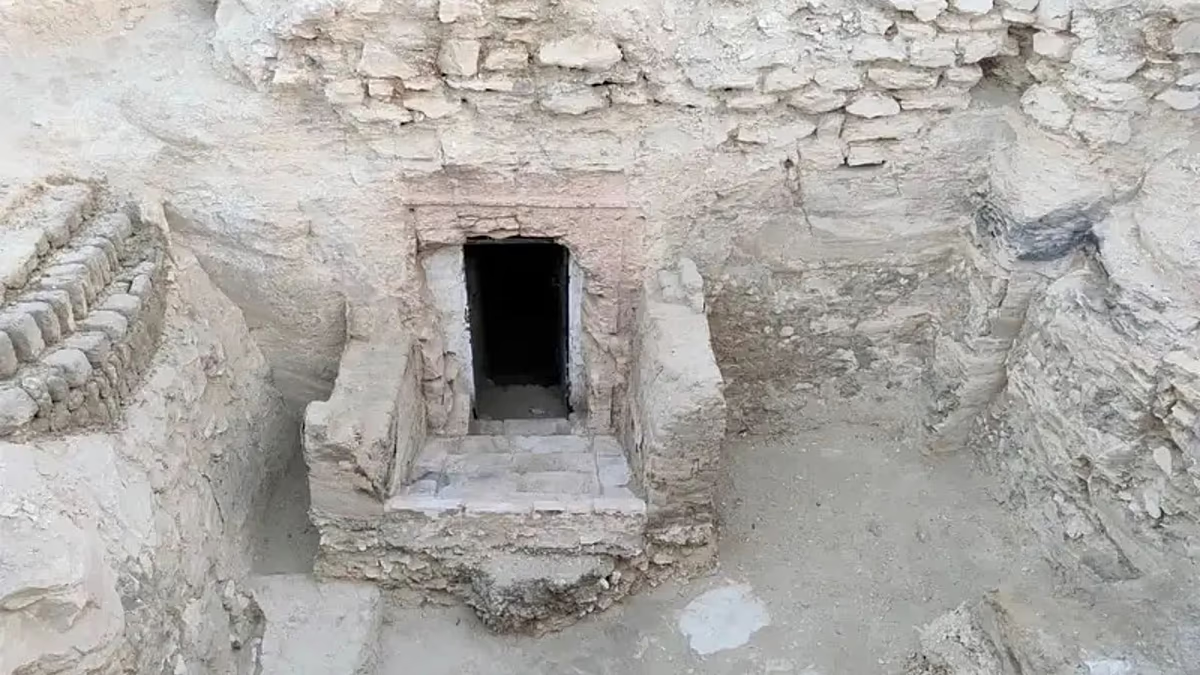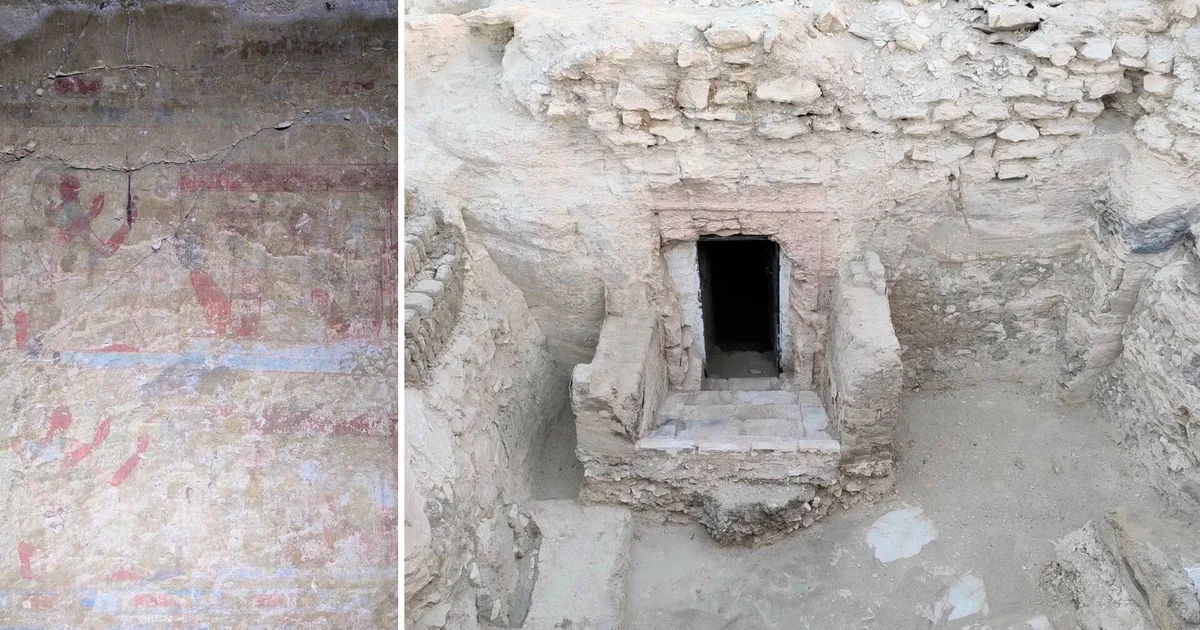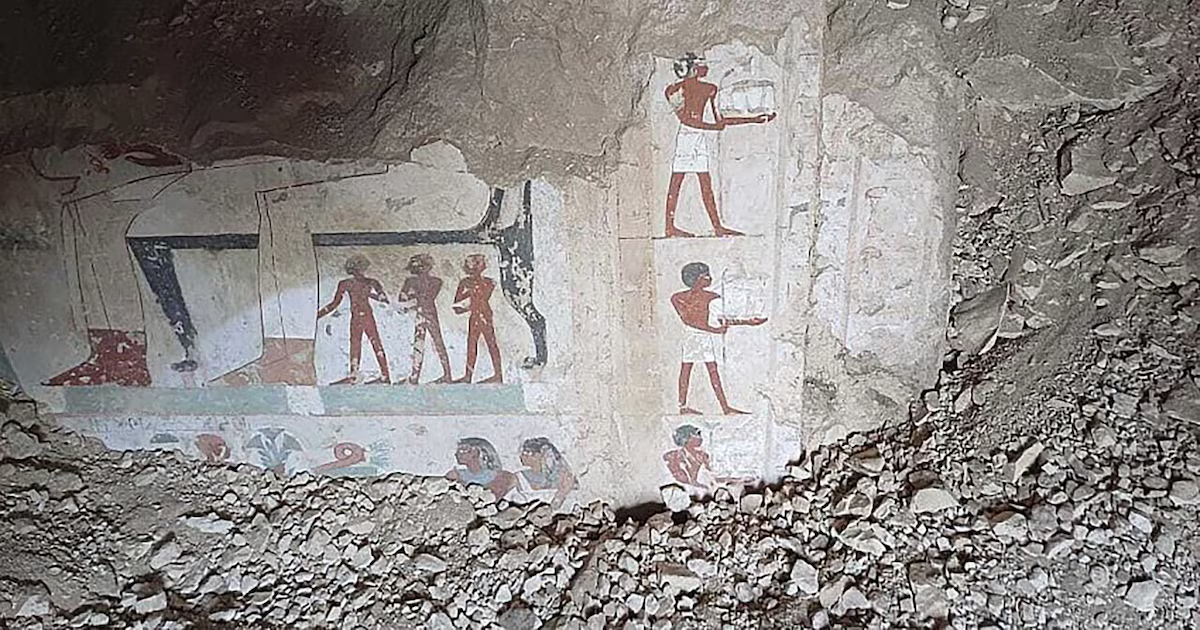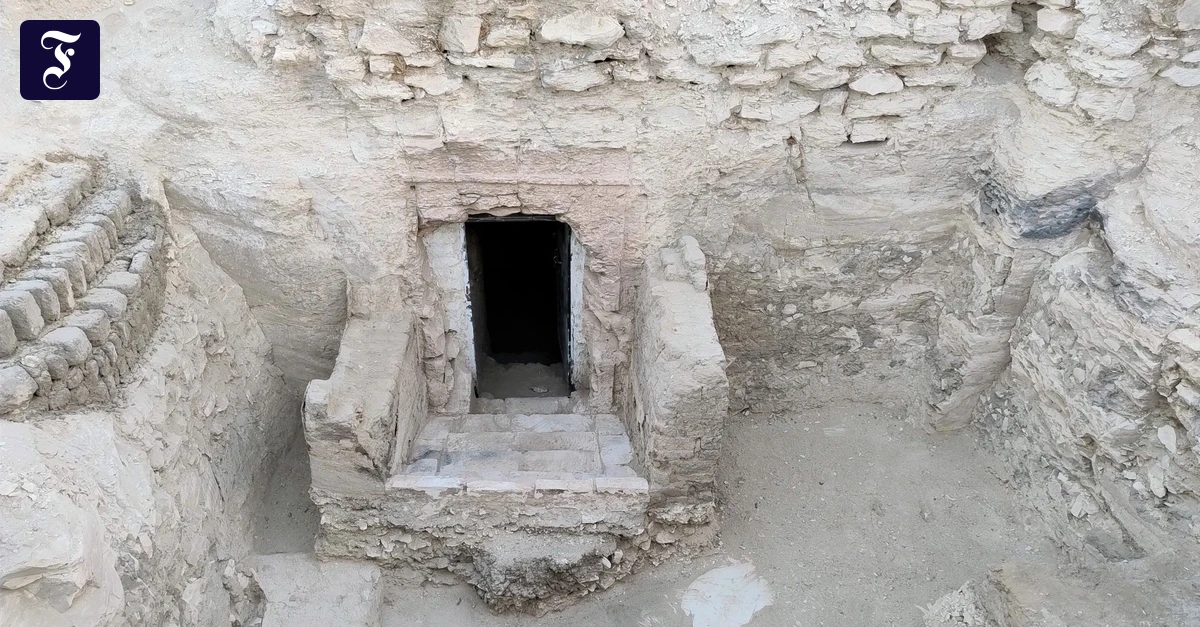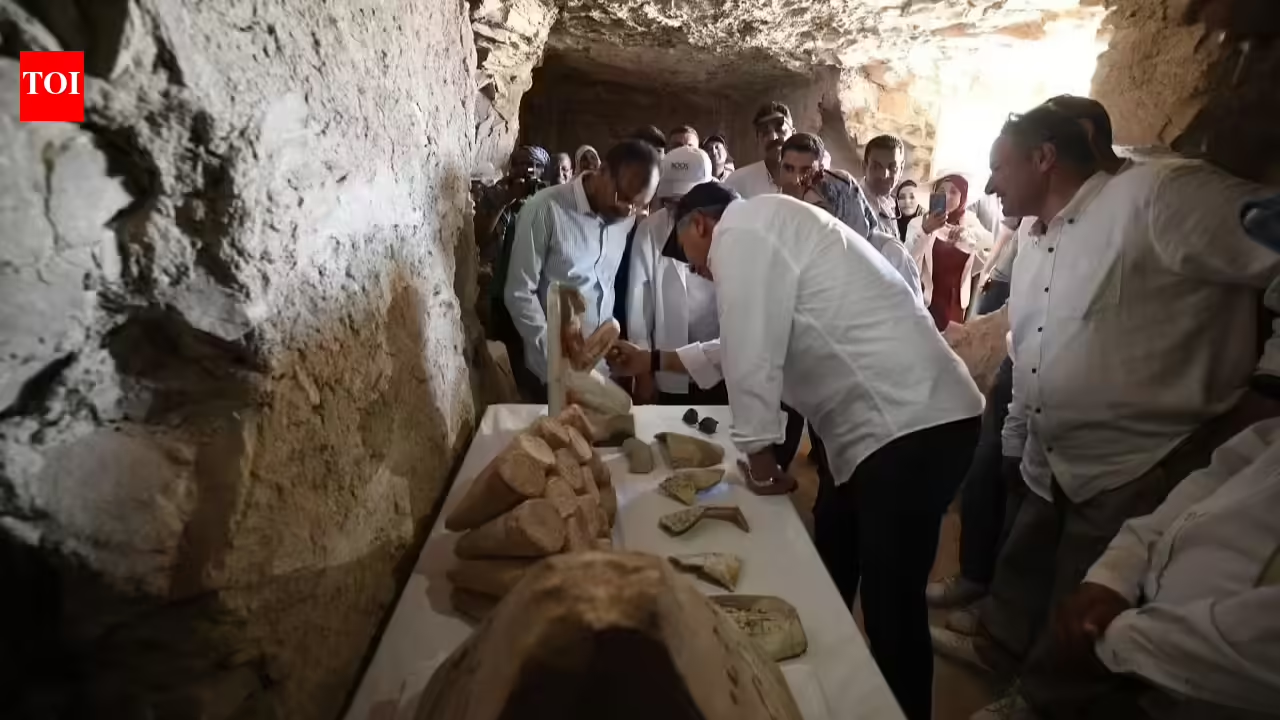
Ancient Egyptian tombs discovered. Image credits: Egyptian Ministry of Tourism and AntiquitiesArchaeologists working on Luxor’s West Bank have discovered a collection of ancient burials after excavating beneath layers of rubble that had covered part of the Dra Abu el-Naga necropolis for more than 150 years. According to Egypt’s Ministry of Tourism and Antiquities, 10 painted wooden coffins, more than 30 mummified cats, decorated funerary objects and a tomb of a previously undocumented priest were discovered in the courtyard of the tomb of Baki by an Egyptian archaeological mission from the Supreme Council of Antiquities.According to Archaeology Magazine, the excavations focused on an area buried beneath a spoil heap that was left by 19th-century archaeological work, thus preventing researchers from fully examining the site for years. Once the debris was removed, archaeologists uncovered a burial shaft containing coffins from different historical periods, indicating that the necropolis was reused long after the original tombs were created. Notably, the discovery may help illustrate how later generations adopted burial spaces while preserving important religious traditionsPainted coffins were found beneath LuxorAccording to the Ministry of Tourism and Antiquities, the burial shaft contained 10 painted wooden coffins in surprisingly good condition despite their age. Archaeologists have identified four coffins dating to the 18th Dynasty, including one coffin belonging to Merit, a chantress of the god Amun. Furthermore, another coffin belonged to Padi-Amun, a priest associated with the Temple of Amun. Meanwhile, the remaining coffins dated back to Egypt’s Late Period, illustrating how the burial site remained significant across multiple dynasties. The excavation team said the burial shaft may have functioned as a protective cache rather than just a conventional cemetery. Many researchers believe that the priest or the local communities may have relocated the coffins to safeguard them from periods of tomb robbery, a practice documented at several Egyptian necropolises. The well-preserved inscriptions are expected to provide researchers with additional knowledge about funerary beliefs spanning over hundreds of years.Ancient Egyptian tombs discovered. Image credits: Egyptian Ministry of Tourism and AntiquitiesAccording to the Ministry of Tourism and Antiquities, one of the excavation’s most significant discoveries was the tomb of the previously undocumented priest named Aa-Shefi-Nakhtou, who reportedly served as a Purification Priest in the Temple of Amun. Notably, hieroglyphic inscriptions inside the tomb also mention his father Padi-Amun and name two women, Isis and Ta-Kaft, both described as chantresses in the Temple of Amun, providing researchers with fresh knowledge about religious families’ connection to the influential temple complex at ancient Thebes. Additionally, according to Archaeology Magazine, archaeologists also recovered more than 30 mummified cats, which could be traced back to the Ptolemaic period, along with a decorated sandstone pyramidion belonging to a scribe named Benji. Therefore, these discoveries suggest that the necropolis remained an active religious landscape for centuries after its earliest tombs were constructed, thus reflecting changing rituals while preserving older sacred places.The Ministry of Tourism and Antiquities have claimed that the researchers will continue to analyse the coffins, inscriptions on them, and the artefacts recovered from the site for a better understanding of the chronology and historical significance. With the progression of conservation work, the discoveries are expected to contribute to a more detailed understanding of ancient Thebes’ religious and funerary traditions.
Digging beneath Luxor’s rubble, archaeologists found 10 painted coffins and more than 30 mummified cats, plus the tomb of a previously undocumented priest
Archaeologists working on Luxor’s West Bank have discovered a collection of ancient burials after excavating beneath layers of rubble that had covered part of the Dra Abu el-Naga necropolis for more than 150 years. According to Egypt’s Ministry of Tourism and Antiquities, 10 painted wooden coffins, more than 30 mummified cats, decorated funerary objects and a tomb of a previously undocumented priest were discovered in the courtyard of the tomb of Baki by an Egyptian archaeological mission from the Supreme Council of Antiquities.
537 words~2 min read