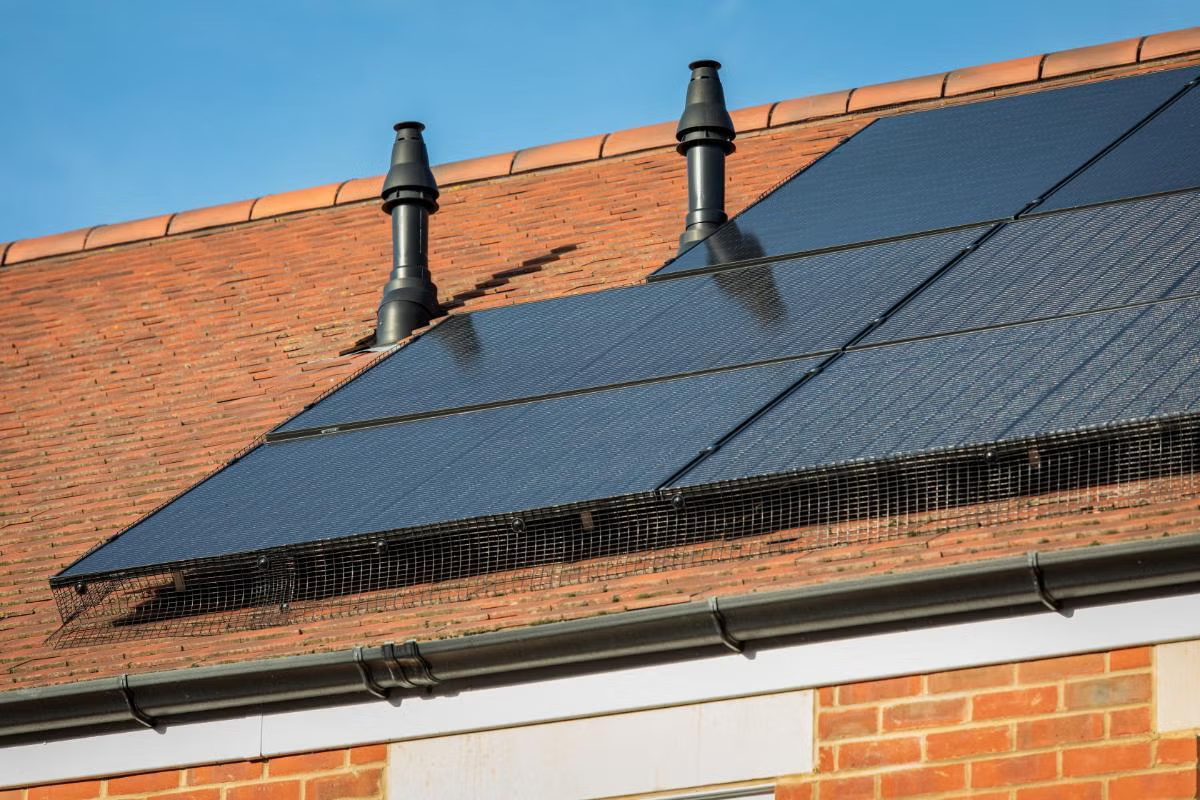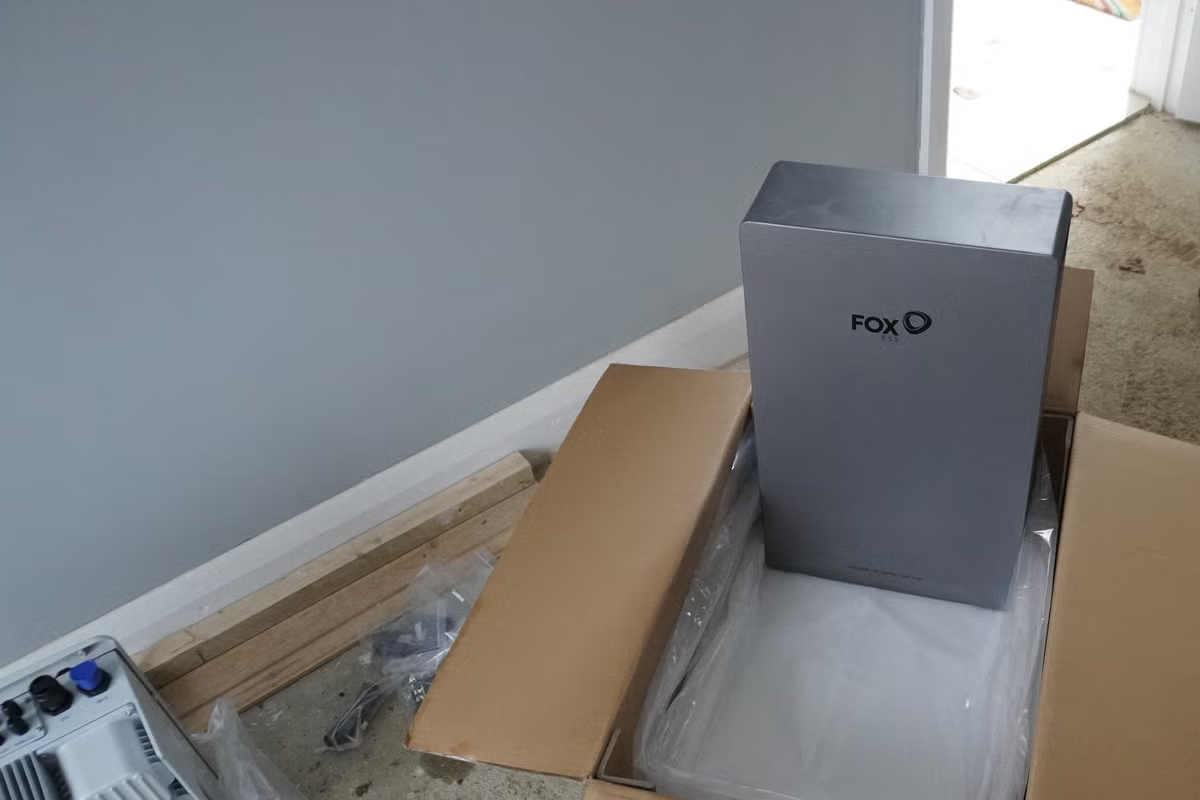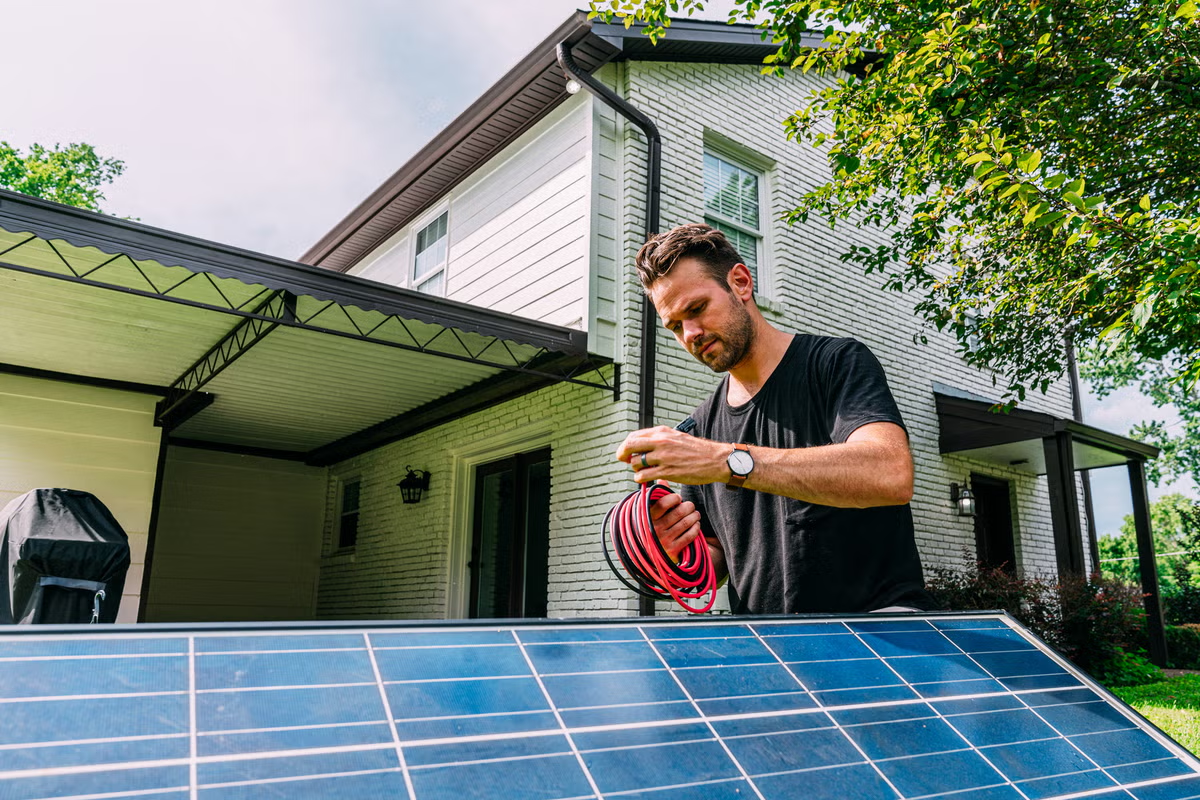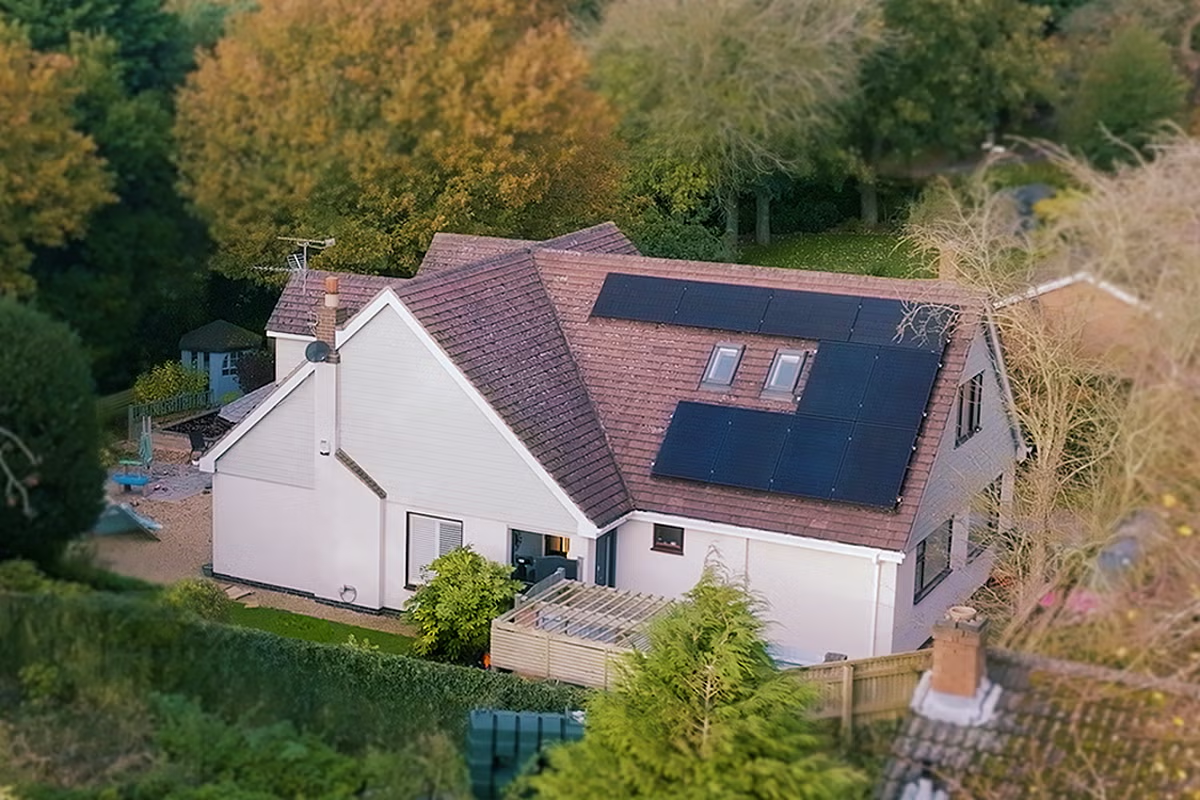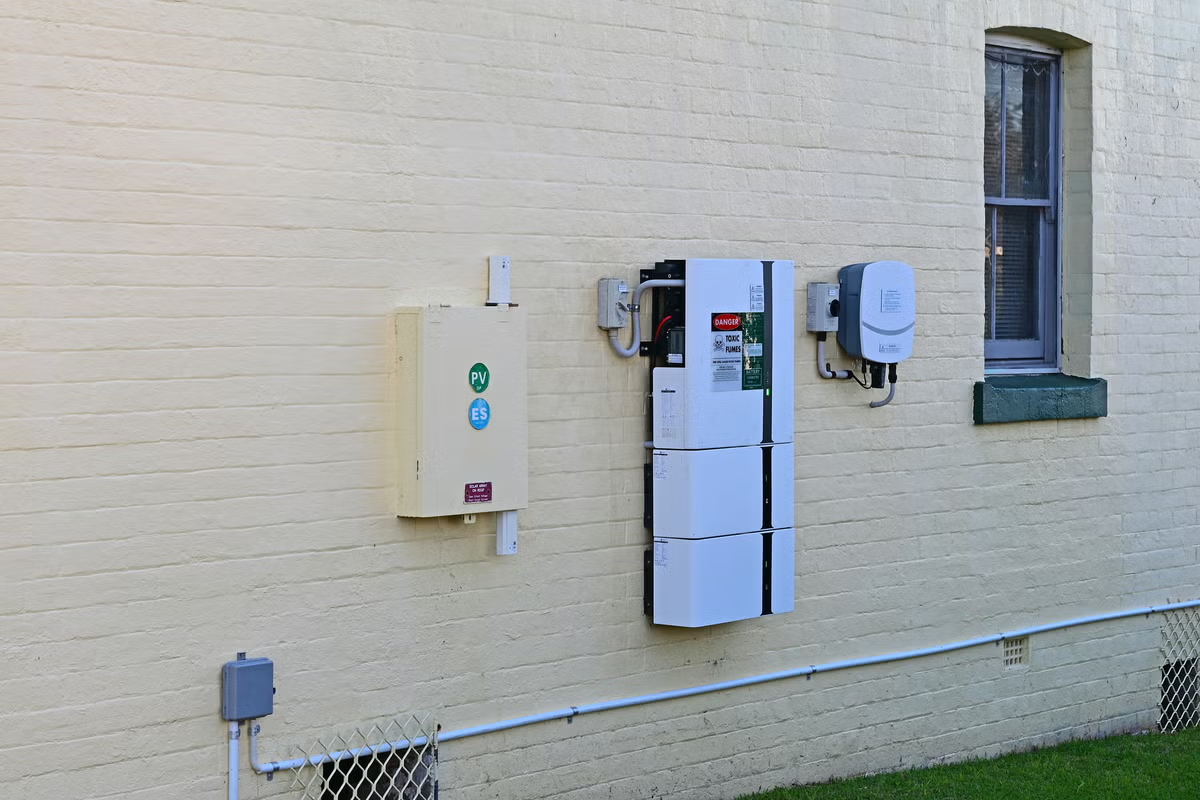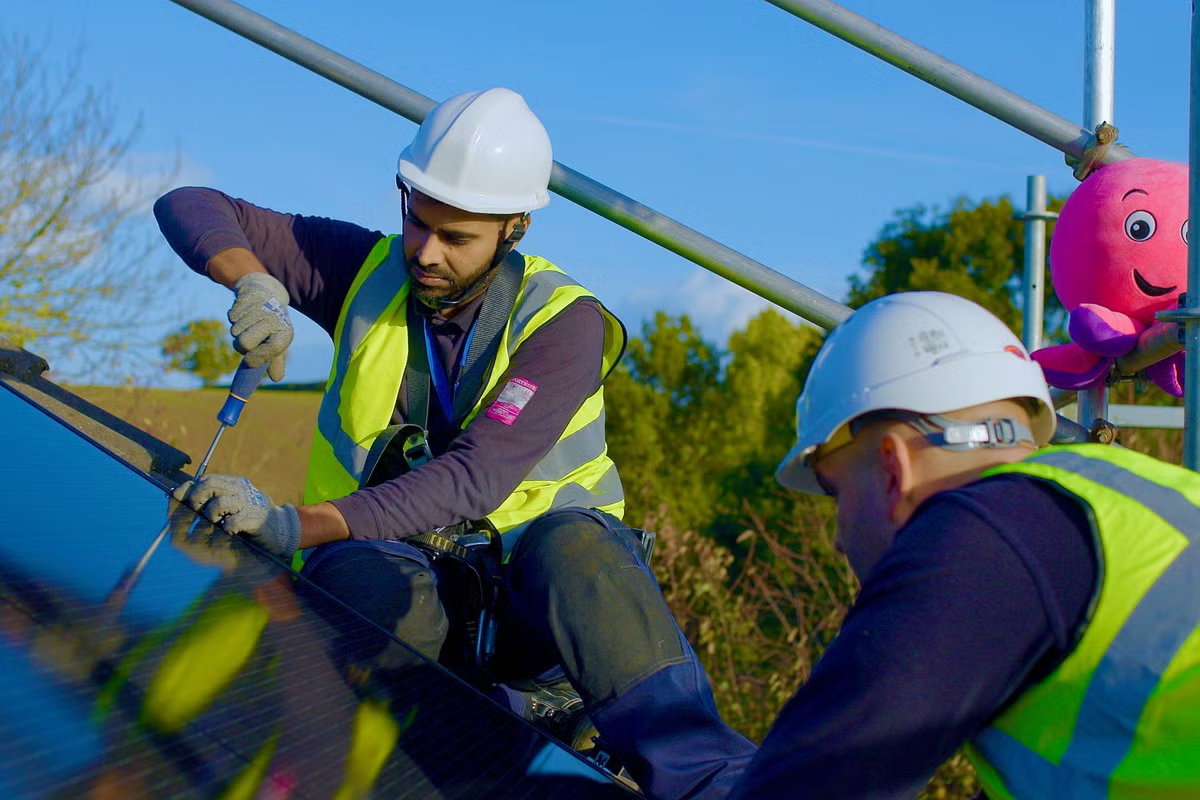
Energy prices have climbed again this summer, and many homeowners will be asking themselves the same question I install solar panels now before bills rise even further?The answer isn’t quite as simple as trying to beat the next Ofgem price cap. Solar panels are a long-term investment, and the strongest case for installing them isn’t that you can perfectly time the energy market. It’s that they can reduce how much electricity you need to buy from the grid, giving you more protection from price volatility over the years ahead.From 1 July to 30 September 2026, Ofgem’s price cap for a typical dual-fuel household paying by Direct Debit is £1,862 a year, a 13 per cent rise on the previous quarter. The cap limits the unit rates and standing charges suppliers can apply to default tariffs, but households still pay for the energy they use. That means every kilowatt hour of electricity you can generate and use at home becomes more valuable when grid prices are high. For homes with suitable roof space, solar panels can help reduce that exposure. However, Phil Steele, future technologies evangelist at Octopus Energy, says buyers shouldn’t think of solar purely as a way to get ahead of the next energy price rise.“I wouldn’t connect installing solar panels only with when prices rise again,” he says. “Anytime is a good time to put solar panels on. The cost has really come down, you get an export credit, and you’re going to start saving on your bills straight away.”Why does the rise in energy prices strengthen the case for solar?Solar panels generate electricity that your home can use directly. The more of that electricity you use yourself, the less you need to buy from your supplier.And if you’re considering whether solar panels are worth it, this is perhaps the greatest incentive for taking the leap because electricity prices remain very high by historic standards, even before any future price rises are considered. Solar won’t remove your reliance on the grid entirely, especially in winter, but it can reduce the amount of electricity you import over the course of a year.There’s also the Smart Export Guarantee, which allows households to be paid for excess electricity exported back to the grid. However, for most homes, the strongest savings usually come from using your own solar electricity rather than selling it and buying electricity back later.That’s why the timing question is slightly misleading. The point isn’t simply whether electricity prices rise again next quarter, but whether you want to reduce the amount of electricity you buy from the grid over the next 20 to 25 years.Save on your electricity bills with Octopus solar and batteryGO TO WEBSITEAdvertisementSave on your electricity bills with Octopus solar and batteryGO TO WEBSITEAdvertisementShould you wait until prices rise again?Waiting for the next price shock may feel logical, but there’s a risk that many people will make the same decision at the same time.Steele says installing before a rush can put households in a better position, especially because solar generation is seasonal.“If you do it in the winter, you’re prepared for the next spring and summer,” he says. “I wouldn’t wait until energy prices jump. If anything, there’s a risk then that you join the crowd and everybody else suddenly jumps at the same time, and then you’re waiting for availability of installers and kits.”That doesn’t mean solar panels are right for every home immediately. It does mean that, if the numbers already work for your property, waiting for the next rise in bills is unlikely to improve the underlying case.There’s also evidence that demand for solar is already very high. Government data published in May 2026 said 2025 was the strongest year on record for solar deployment, with 269,000 installations completed across the UK, around 255,000 of which were rooftop systems.How much can solar panels cut your bills?The amount you can save with solar panels depends on the size of the system, how much electricity your home uses, how much of that electricity you use during daylight hours, your export tariff and whether you add a battery.The Energy Saving Trust says an average home solar panel system costs around £6,100 to install and can reduce carbon emissions as well as electricity bills. Steele says the savings can be significant, particularly when solar panels are paired with battery storage.“The benefit depends on the size of the solar system and what you already consume,” he says. “But a typical house could be able to achieve 40 plus per cent saving on your annual electricity bill once you put solar panel on, particularly if you put a battery in as well.”That “particularly” is a key point of consideration. A home that uses a lot of electricity during the day may be able to use more of its solar generation directly. A household in which everyone is out during daylight hours may export more of its electricity unless it has a battery in which to store it or can shift some usage into the middle of the day.Why batteries can improve the economicsWithout a battery, solar panels generate most of their electricity during daylight hours. If your home can’t use all of that power at the time, the excess is exported to the grid. You may then need to buy electricity back later in the evening, when your panels are no longer generating.A battery changes that equation by storing surplus solar electricity for later use. It can also allow households on compatible smart tariffs to charge when electricity is cheaper and use that stored energy during more expensive periods.Steele gives the example of using a battery differently across the seasons. In summer, it can store spare solar generation. In winter, when solar output is lower, households may be able to charge a battery at low rates and use it during peak periods.“If I’ve got a battery, I can also start to trade that battery effectively,” he says. “If I’m using the battery mostly to store spare solar energy, in the winter I’ll use either our Flux tariff or the Agile tariff and import when rates are low and charge the battery to get me through the peak period then.”For buyers, the key question is whether the additional cost of a battery is justified by the extra savings and flexibility. The answer will vary depending on the household’s electricity use, tariff and export rate.Is your home suitable for solar panels?Before thinking about energy price forecasts, the first question to ask yourself is whether your home is physically suitable.“Your only limiting factor is actually: have you got the rooftop to put it on?” says Steele.In practice, that means checking how much usable roof space you have, which direction it faces and whether it’s shaded by chimneys, dormer windows, gables, trees or neighbouring buildings. A roof doesn’t need to be perfect, but awkward layouts can make installation more expensive or reduce the amount of electricity a system can generate.Steele says homes with complex roofs may still be able to install panels, but the economics can weaken if the installer has to spread panels across several small roof sections.“If you’ve got too many dormer windows, gables, chimneys and all the rest, it might be quite cost-prohibitive to put one panel on one piece of roof and one panel on another piece of roof,” he says.That’s why a proper site survey is crucial. A good solar panel installer should estimate annual generation, likely self-consumption, export income, installation complexity and payback period before you commit.Read more: Best solar panel installers What should buyers check before installing?If you’re considering solar panels in 2026, the quote should include more than the number of panels and the headline installation cost.Ask how much electricity the system is expected to generate each year, what proportion you’re likely to use at home, what export tariff assumptions are being used and whether a battery would materially improve the payback period. It’s also worth asking whether the system is compatible with any of your future plans, such as an electric vehicle, heat pump or smart tariff.You should also check the warranty on the panels and inverter, whether the installer is MCS certified, how scaffolding is priced and whether the quote includes any additional electrical work.Most importantly, compare the payback estimate with your own habits. A household with high daytime electricity demand may see a different return from one that uses most of its electricity in the evening.So, should you install solar panels before prices rise again?If your roof is suitable and the numbers work, installing sooner can make sense. Not because anyone can predict the next price cap with certainty, but because solar panels begin reducing your grid electricity use the moment they’re installed.Waiting until the next price rise may simply mean missing months of potential savings, or joining a queue when more households decide to act at once. For buyers who can afford the upfront cost, solar panels are best understood as protection against long-term energy price uncertainty rather than a short-term bet on the next bill increase.The decision still needs to be based on your home, your usage and the quality of the quote. But if the case already stacks up, the argument for waiting is getting harder to make.
Should you get solar panels before energy prices rise again?
Solar panels can help households cut their reliance on grid electricity, but should you install them before energy prices rise again? We look at timing, savings, batteries and roof suitability
1,539 words~7 min read