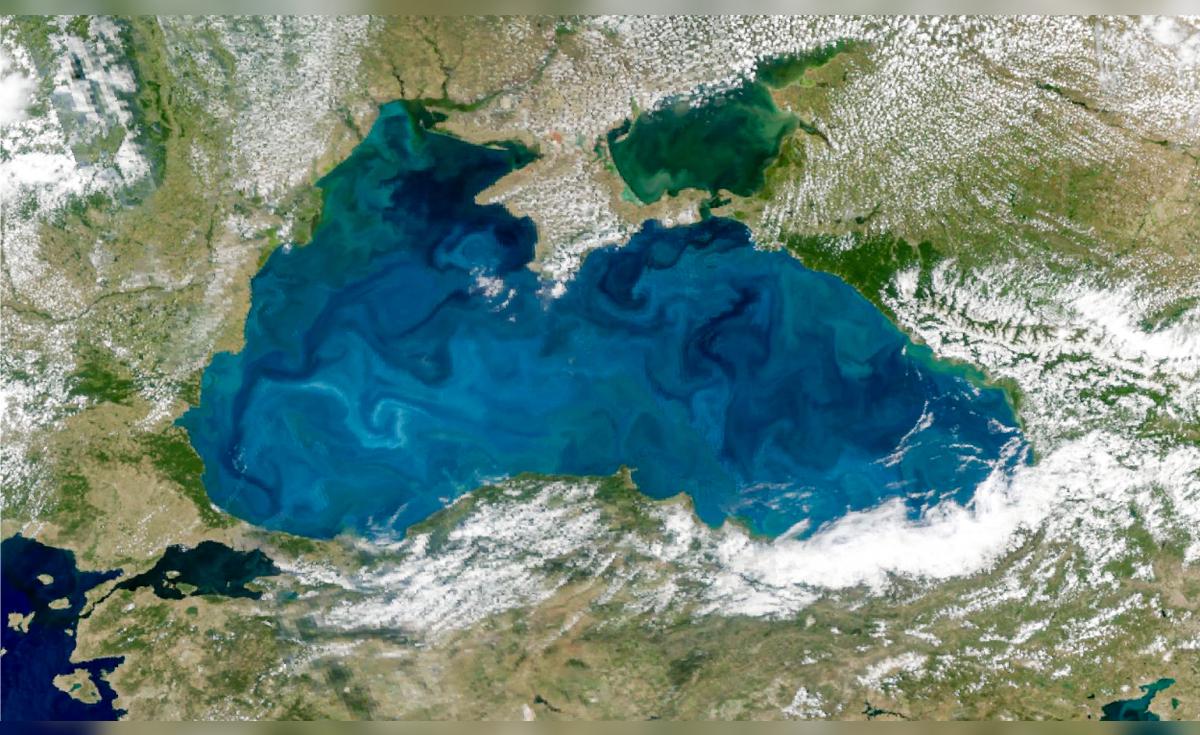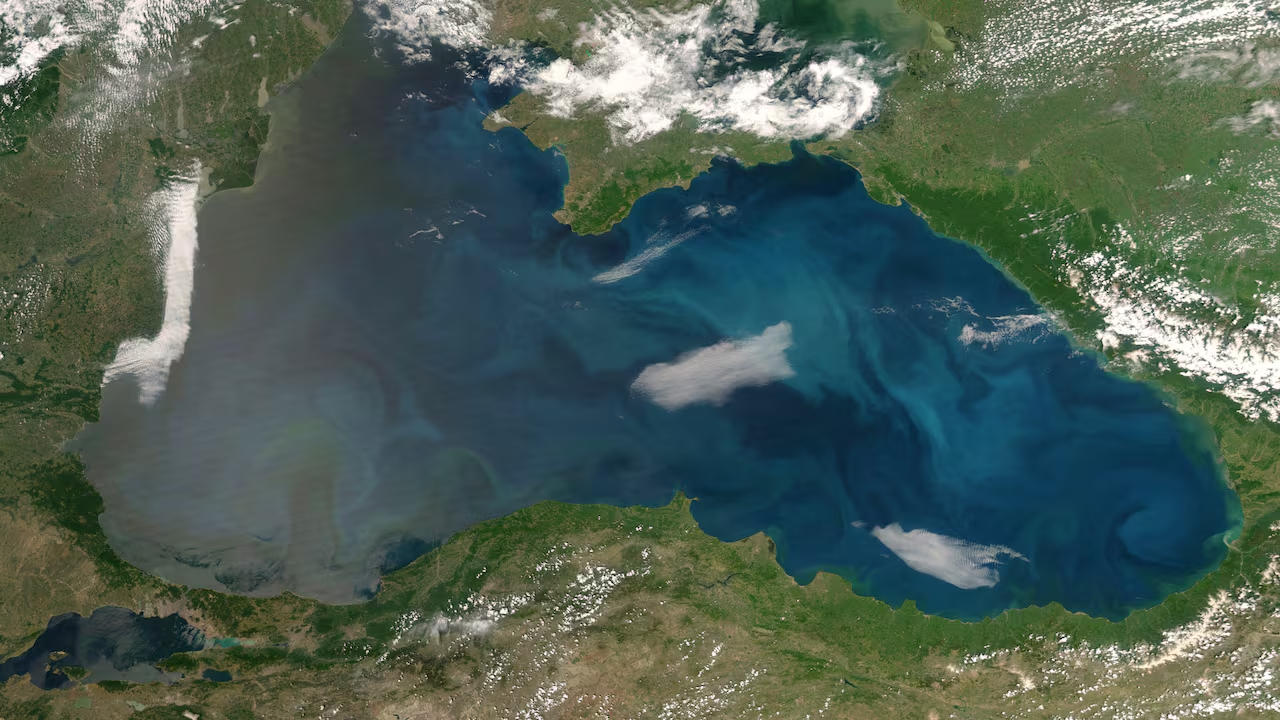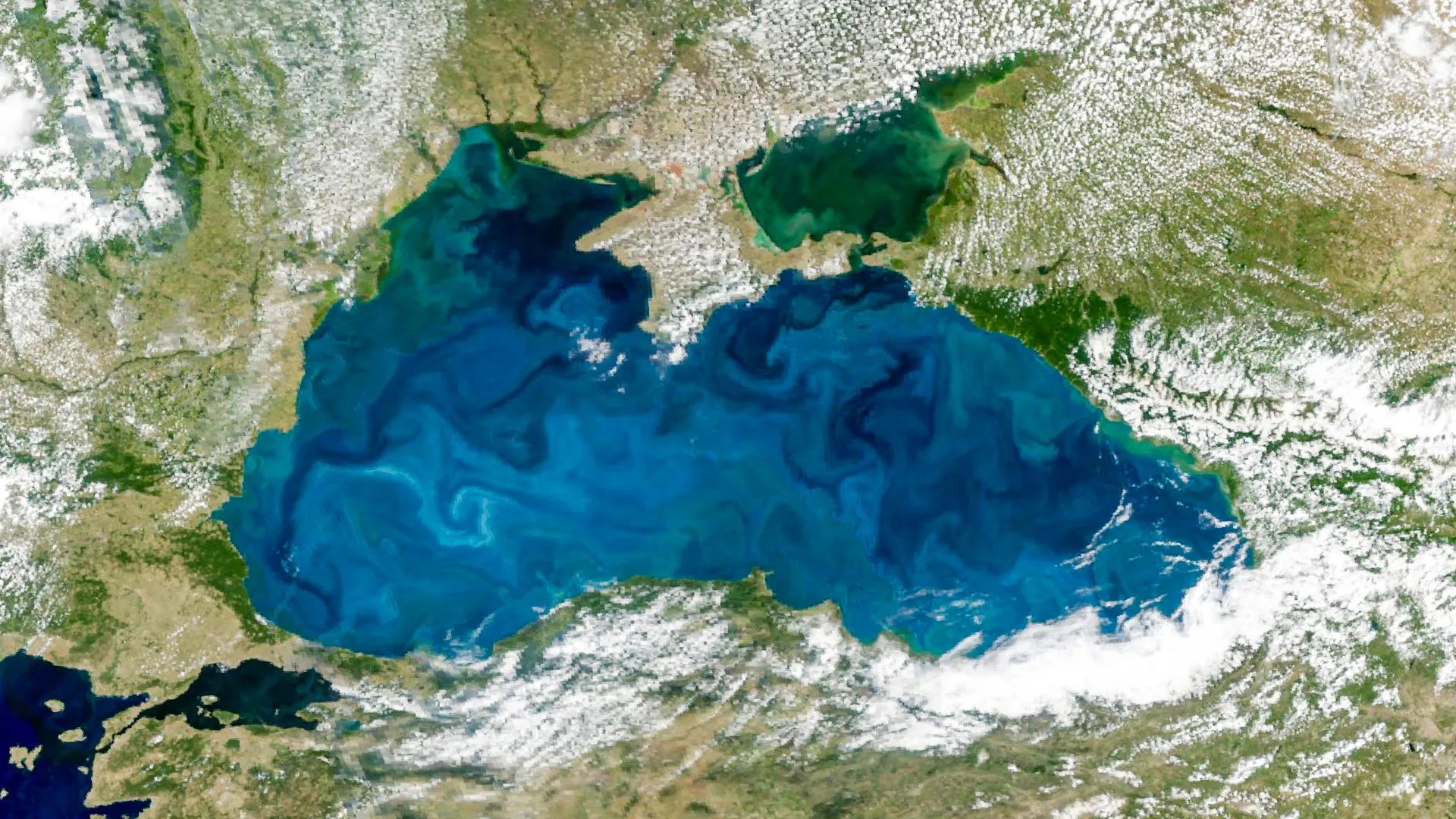
The Black Sea, which lies between Europe and Asia and connects to the Mediterranean through a series of waterways, is known for its dark waters. But every spring and summer, it undergoes a remarkable transformation, with large areas turning a vivid turquoise. On June 22, 2026, NASA's PACE (Plankton, Aerosol, Cloud, ocean Ecosystem) satellite captured this colorful seasonal display using its OCI (Ocean Color Instrument).
Scientists believe the striking turquoise color comes from blooms of coccolithophores, microscopic phytoplankton coated in calcium carbonate plates. When these organisms multiply in enormous numbers during late spring and early summer, their reflective shells scatter sunlight and give the ocean a milky blue appearance that is visible even from space.
At other times of the year, different microscopic algae called diatoms become more abundant. Unlike coccolithophores, diatoms have silica shells and generally make the Black Sea appear darker instead of brighter.
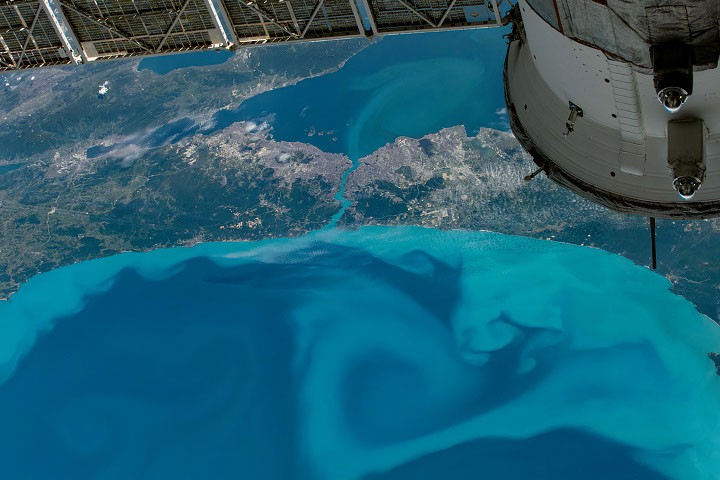
Bosphorus Also Glows Turquoise
The seasonal bloom extended into the Bosphorus, the narrow waterway that runs through Istanbul and links the Black Sea with the Sea of Marmara. On May 27, 2026, about a month before the PACE satellite captured the wider scene, an astronaut aboard the International Space Station photographed the strait as blooming phytoplankton traced swirling currents on both sides of the channel. (Note that north is oriented toward the bottom of the frame.)