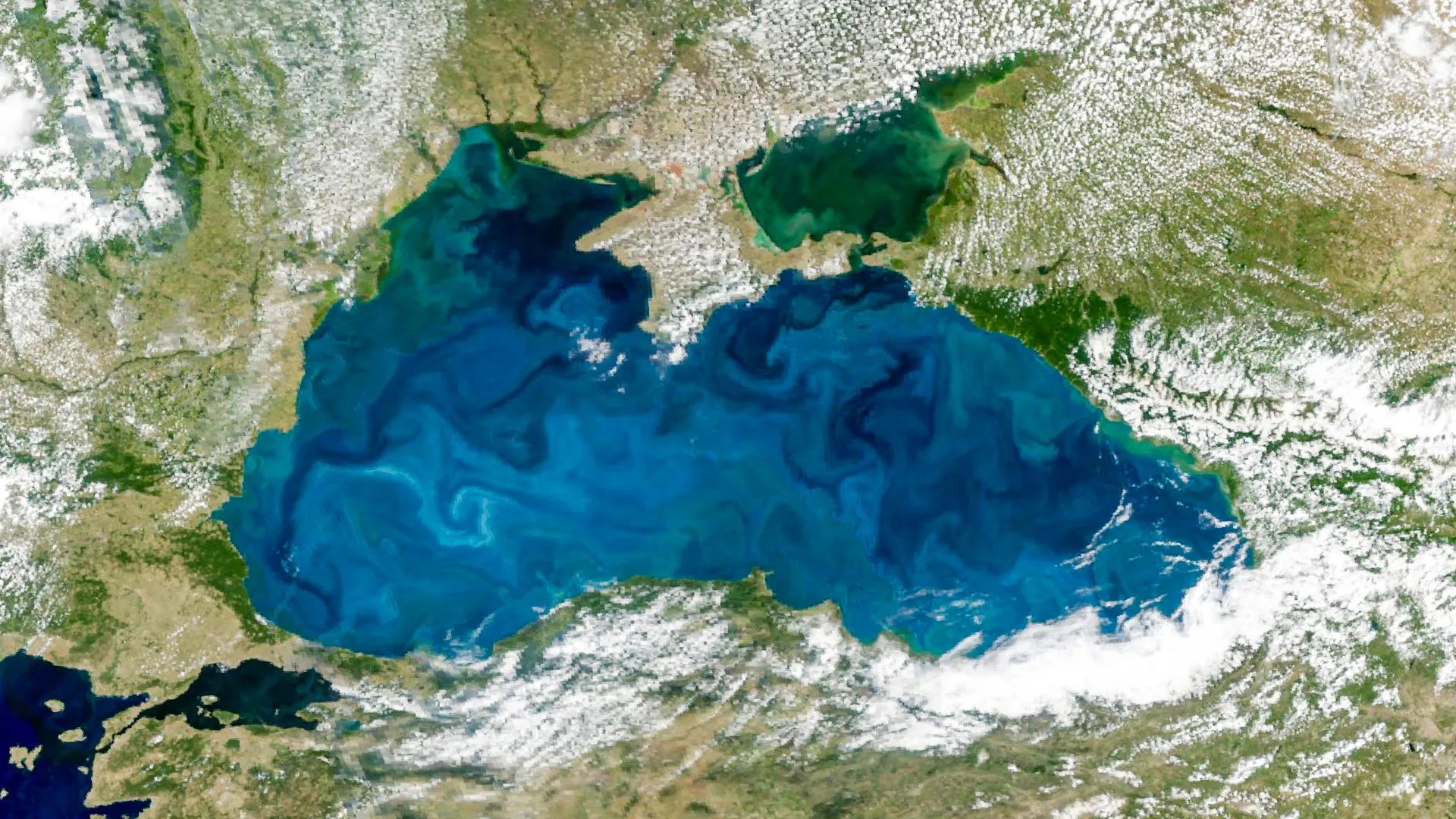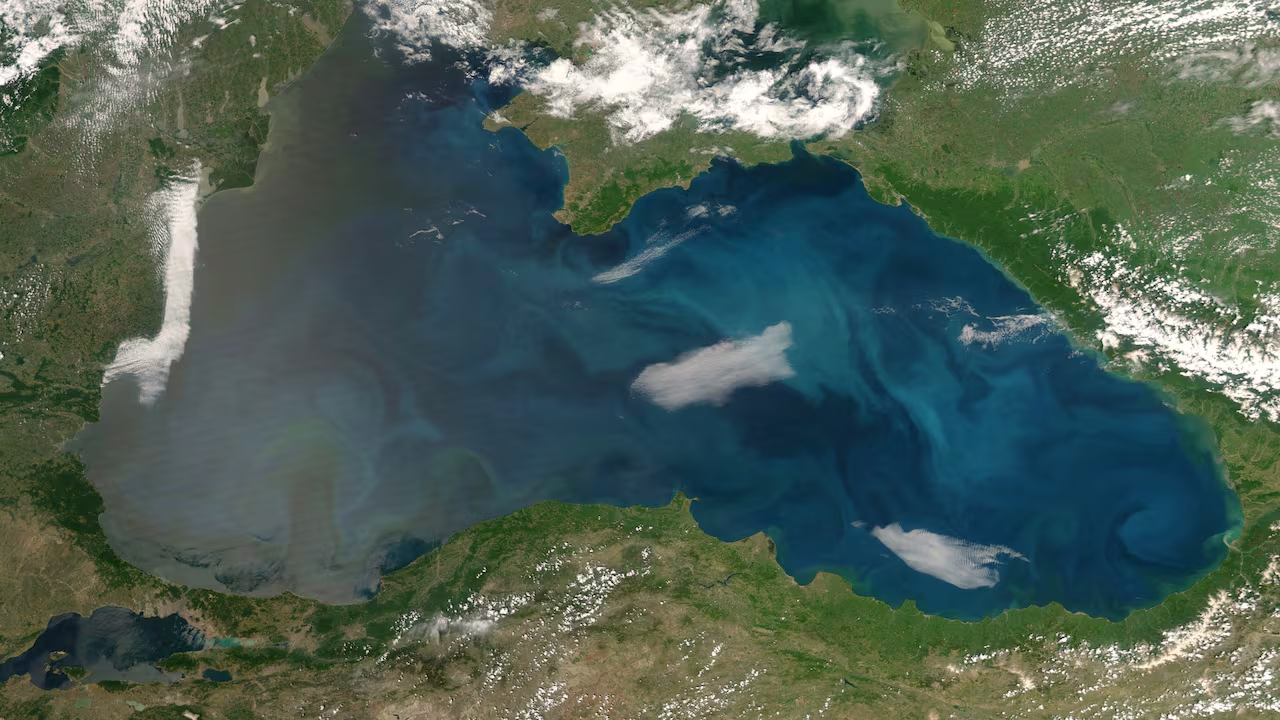
3 min readImage of the Day for June 25, 2026Phytoplankton added a milky blue hue to the waters of the Black Sea and nearby waterways in spring and summer 2026. NASA Earth ObservatoryJun 25, 2026 Article
View more Images of the Day:
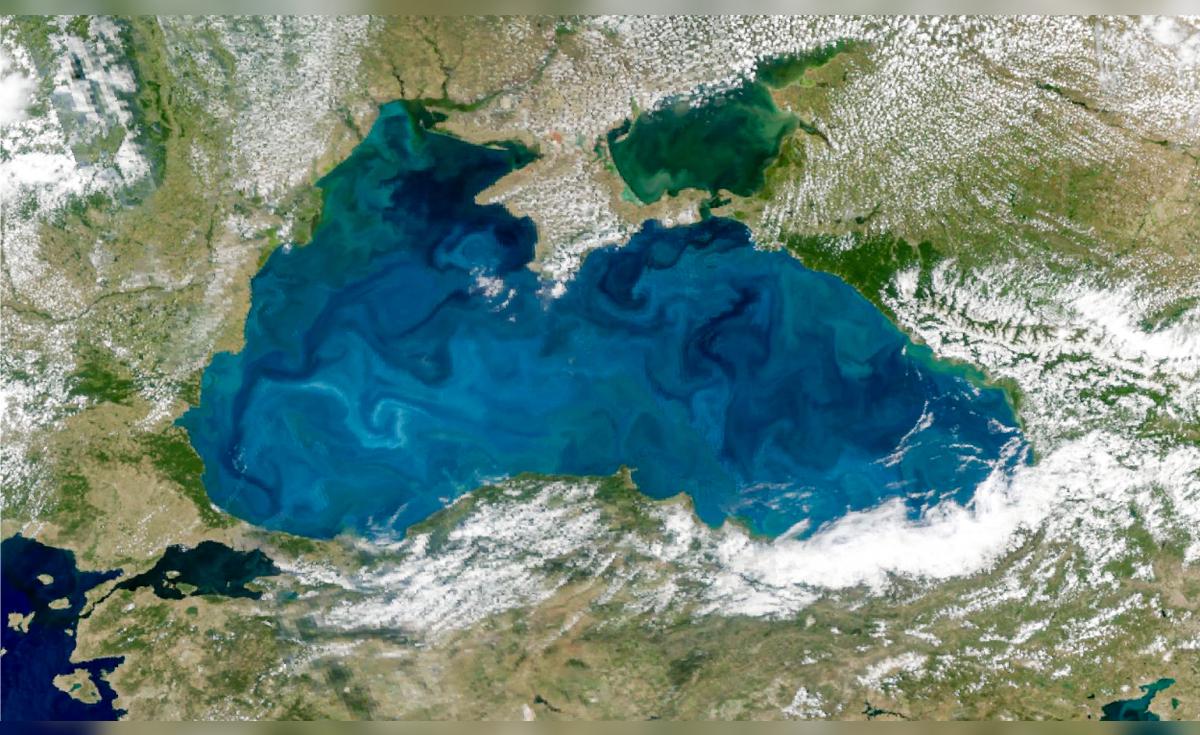
The Black Sea sits at the boundary between Europe and Asia and connects to the Mediterranean Sea via a chain of waterways. Its surface often appears dark, but each spring and summer it transforms into a striking expanse of swirling turquoise. The OCI (Ocean Color Instrument) on NASA’s PACE (Plankton, Aerosol, Cloud, ocean Ecosystem) satellite captured this image (above) of the colorful waters on June 22, 2026.
The turquoise color is likely caused by coccolithophores, a type of phytoplankton covered with calcium carbonate plates that can give surface waters a milky-blue appearance. These types of phytoplankton tend to dominate in late spring and early summer. Other times of the year, diatoms—a type of microscopic algae with silica shells—can become more prevalent, and they tend to darken the water rather than brighten it.
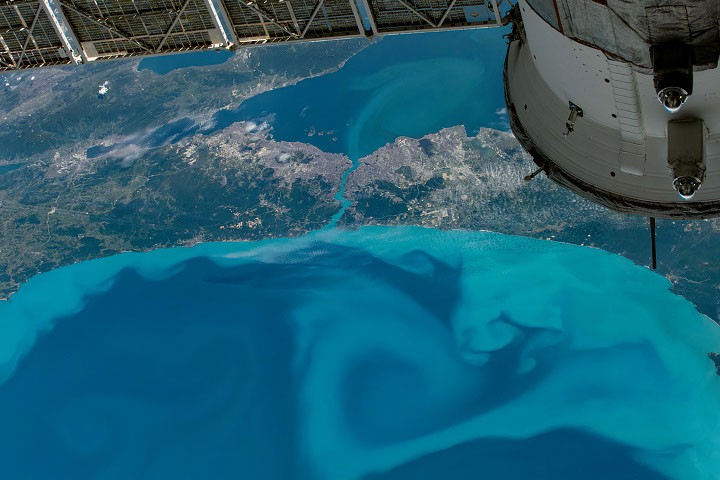
The Bosphorus, the narrow strait running through Istanbul that connects the Black Sea with the Sea of Marmara, also turned turquoise. An astronaut aboard the International Space Station photographed the strait on May 27, 2026 (below), about a month before the PACE image, capturing blooming phytoplankton as it traced currents on both sides of the waterway. (Note that north is oriented toward the bottom of the frame.)