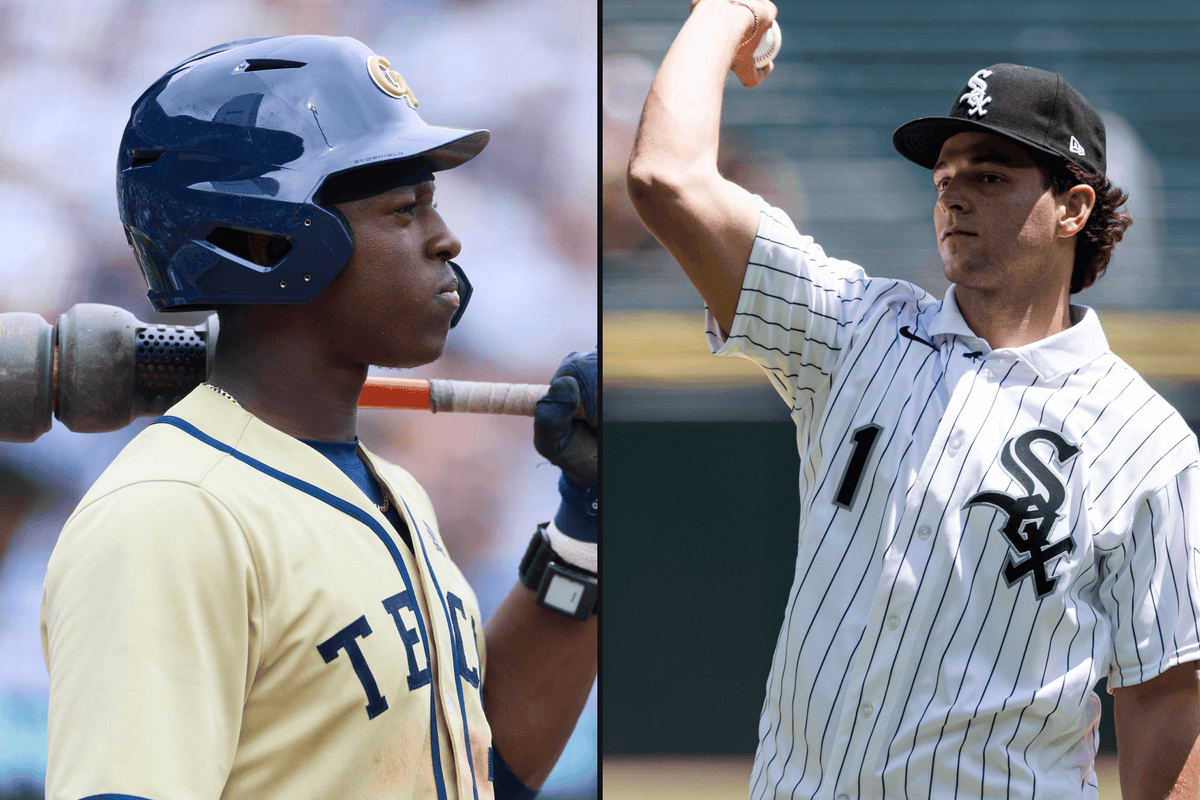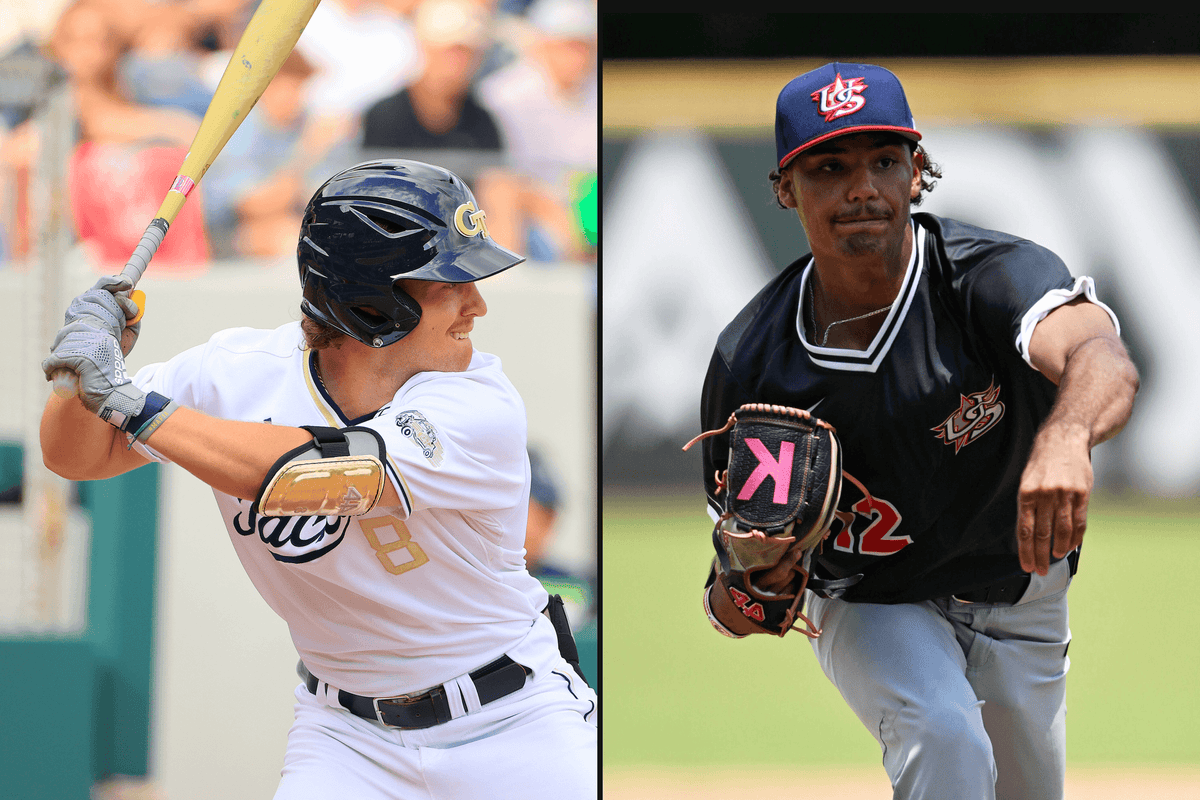
With the 2026 MLB Draft now in the books, here’s my look at each American League West team’s draft class. I focus on the top 10 rounds, since those are the picks that count toward each team’s bonus pool. Players taken after the 10th round may be paid up to $150,000 without counting against the bonus pool, so the best prospects taken in Rounds 11 through 20 rarely end up signing.The number in parentheses after each player’s name indicates the round in which he was taken; PPI equals Prospect Promotion Incentive pick, which comes right after the first round, CBA equals Competitive Balance Round A, which comes after the first round, and CBB equals Competitive Balance Round B, which comes after the second round. A “C” after a number indicates that it was a compensation pick between rounds for losing a free agent or failing to sign one last year.Which teams fared well during MLB Draft Day 1?Keith LawI do assume that all players taken in the top 10 rounds will sign, although each year there are roughly two to five players who don’t for various reasons. I also skipped over college seniors who were probably selected as money-saver picks, agreeing to bonuses under their slot figures so their teams can go over slot for other players, or other players who appear to be more about under-slot bonuses than major-league potential.Finally, I don’t give letter grades for drafts. I think that whole idea is absurd. The best I can offer is to tell you that I think teams did well or not well based on what I know about the players available at those picks, and in general, I prefer to talk about specific picks rather than try to sum up months of work for each scouting department in a pithy line or two.(Note: Scouting grades are on a 20-80 scale. Click here for my top-100 draft prospect list.)Athletics: Burress leads class headlined by college talentsThe A’s took Georgia Tech outfielder Drew Burress (1) with their first selection, grabbing one of the top college bats in the class. He is short, listed at a generous 5-foot-9, but has consistently hit for power, with 40 homers in three college seasons, and more walks than strikeouts in every year. He does get a little uphill and had a rough start to 2026 when he was trying too much to lift and pull everything. He’ll go out as a center fielder but may be pushed to a corner.Mason Edwards piled up the strikeouts at USC despite not having an overpowering fastball. (Troy Wayrynen / Imagn Images)USC left-hander Mason Edwards (2) has two above-average or better pitches in his curveball and changeup — if his fastball were about 3 mph harder, he would have been a top-10 pick. His fastball sits 90-92 and it doesn’t have a ton of life, so he often pitches away from contact, trying to generate chases because his fastball will get hit in the zone. He led all Division I pitchers in strikeouts by a huge margin, with 23 percent more than any other pitcher had.Arkansas right-hander Gabe Gaeckle (CBB) lost his rotation spot this spring, but should go back to starting in pro ball. He’s up to 98 with an above-average slider and average curveball. He’ll need a changeup to start because lefties tagged him this year. Even though I think he’ll end up in relief in the long run, I’d start him for now.NC State right-hander Jacob Dudan (3) was cruising toward the first round when his elbow went, requiring Tommy John surgery, so if he recovers fully, this is great value for the round. He was 95-96 with a plus slider, barely using a changeup; if he gets that, he’s a mid-rotation starter.UCLA infielder Roman Martin (4) is an absolute steal at this spot. He played third base this year in deference to Roch Cholowsky, but might be a better defender at short than Cholowsky. Martin is a passive hitter who does damage when he swings, with a hard-hit rate of 51 percent on the season. He may benefit from swinging more, with the upside of an above-average regular.Georgia Tech outfielder Alex Hernandez (5) makes a ton of hard contact when he puts it in play, but struggles to hit anything that bends, wiggles or shakes.Miami catcher Alex Sosa (6) hit 18 homers this year, despite mediocre contact quality, and he has average bat-to-ball skills. He could stick behind the plate if the A’s can help him improve his throwing, which is the weakest part of his defense.UC Santa Barbara right-hander Nathan Aceves (12) was just barely draft-eligible as a sophomore, having turned 21 the week before the draft. He’s up to 97, sitting 92-94, with a changeup, 11/5 curveball and slider. The changeup was his main offspeed pitch; the slider had the best whiff rate, so of course I like the curveball. He looks starterish.Tennessee left-hander Evan Blanco (13) transferred to UT from UVA to get back to starting. He’s probably a reliever due to his fringy fastball, with a 55 slider and 55 changeup along with at least average control.Houston Astros: Class a blend of college talent, high-upside projectsThe Astros led off with one of the best pure bats in the college group in Texas Tech outfielder Logan Hughes (1), who had high contact rates and hit for power the last two years. He has a quiet approach and meets the ball out front for consistent, hard contact, and he has walked more than he’s struck out in those seasons. He’s a below-average runner and will either play left field or first base, which was why I had him 42nd on my board even with a first-round bat.Logan Hughes is somewhat limited defensively, but he can really hit. (Nathan Giese / Avalanche-Journal / USA Today via Imagn Images)Notre Dame right-hander Jack Radel (PPI) saw his stuff improve from 2025 to 2026, with a velocity jump of a mile and a half. He also added a cutter, so by the end of the spring he was 94-98 and dominating right-handed batters. The slider is plus, and if he can find a changeup or splitter for lefties, he could be a mid-rotation starter.
AL West 2026 draft report cards: Rangers bet on upside; A’s grab college talent
The Angels took a different approach to their draft under new leadership, while the Rangers went for upside with their first three picks.
2,875 words~13 min read