The U.S. International Development Finance Corporation is a federal agency with a nondescript, perhaps even boring, name, but officials are pitching themselves to the American people as the “coolest and best government agency that you’ve never heard of.”Founded by President Donald Trump during his first administration, the DFC was established to “combat and serve as a bulwark against” China’s Belt and Road Initiative — the CCP’s campaign to bolster geopolitical power through infrastructure investments in places such as Africa and Central Asia.“Belt and Road — and its Digital Silk Road — is in 146 different countries. So I think there’s a lot of territory to cover,” DFC CEO Ben Black, who is set to testify in front of the House foreign affairs committee Wednesday, told the Washington Examiner during an interview.
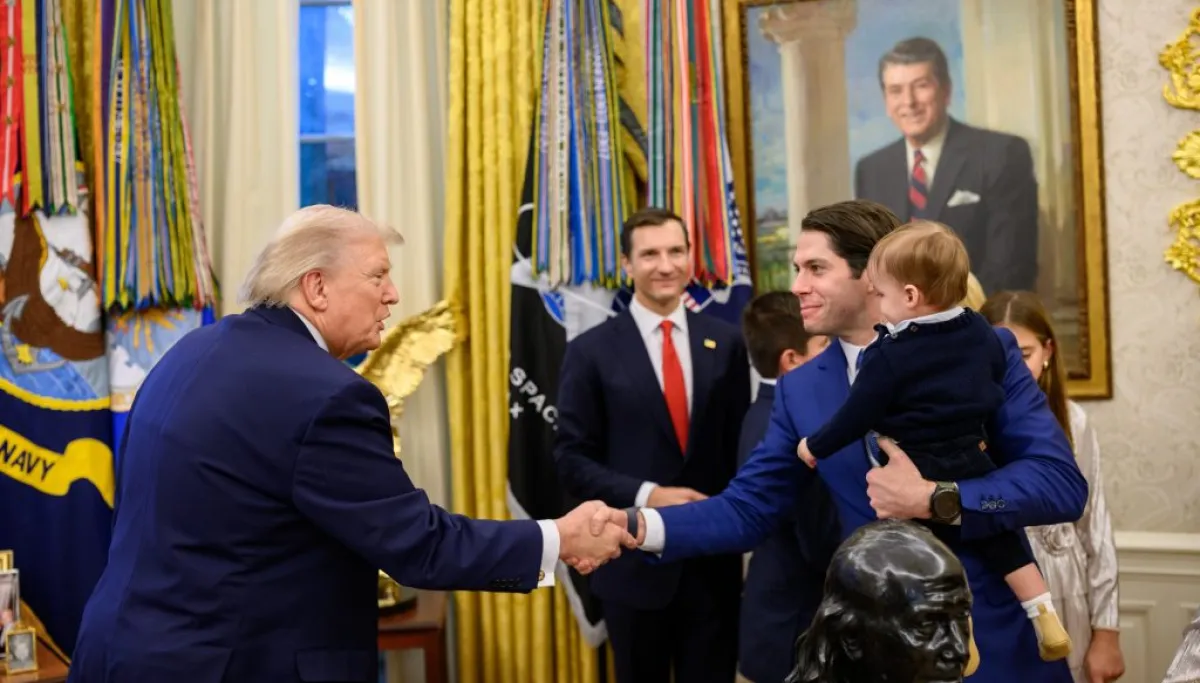
President Donald Trump and Vice President JD Vance hold a swearing-in ceremony for Ben Black, CEO of the U.S. International Development Finance Corporation, and John Jovanovic, chairman of Exim Bank, on Friday, December 12, 2025. (Official White House photo by Daniel Torok, provided by U.S. International Development Finance Corporation)
The agency’s strategy is straightforward. Officials investigate and scrutinize private investment opportunities in areas of interest around the globe. When they identify a project that looks like it could turn a profit while edifying U.S. soft power in that area, they search for local partners to make it happen and invest.“We are for-profit, so our deals have to make money, and we bring in local partners to do just that,” Black said. “There is a lot in Africa who do that. I’d also say we’re really leaning into Central Asia, which has been territory that we’ve let go unnoticed and untouched for a long time, and there’s a lot of interest to work with us there and a lot of desire to lean into the United States.”The DFC has poured money into projects ranging from Brazilian mining deals to a maritime reinsurance plan in the Strait of Hormuz.This is not intended to be an Americanized version of the Belt and Road Initiative. It’s an entirely different model with an entirely different philosophy because the U.S. believes that Beijing’s strategy isn’t working out.The Belt and Road was launched by Chinese paramount leader Xi Jinping in 2013 as a multi-pronged global development program that would expand China’s influence and growth in neglected regions in Africa, Asia, and Eastern Europe. Chinese workers have been shipped out to countries as far as South Africa, Portugal, and Chile to construct railways, set up economic investment zones, and modernize tech industries.The initiative has chalked up a list of major success stories, such as the China-Europe Railway Express, which shortened shipping to major European cities by weeks. There is also the China-Pakistan Economic Corridor, which connected the two nations through airports, highways, maritime ports, and thousands of miles of highway.But some countries and international bodies warn that China is using the BRI to conduct “debt trap diplomacy,” a concept explained by Chatham House as “luring poor, developing countries into agreeing unsustainable loans to pursue infrastructure projects so that, when they experience financial difficulty, Beijing can seize the asset, thereby extending its strategic or military reach.”Hambantota International Port in Sri Lanka is among the most notable casualties of China’s high-interest construction loans. The Sri Lankan government, crushed by debt, settled its BRI outstanding debts to Beijing by leasing over control of the port for 99 years.