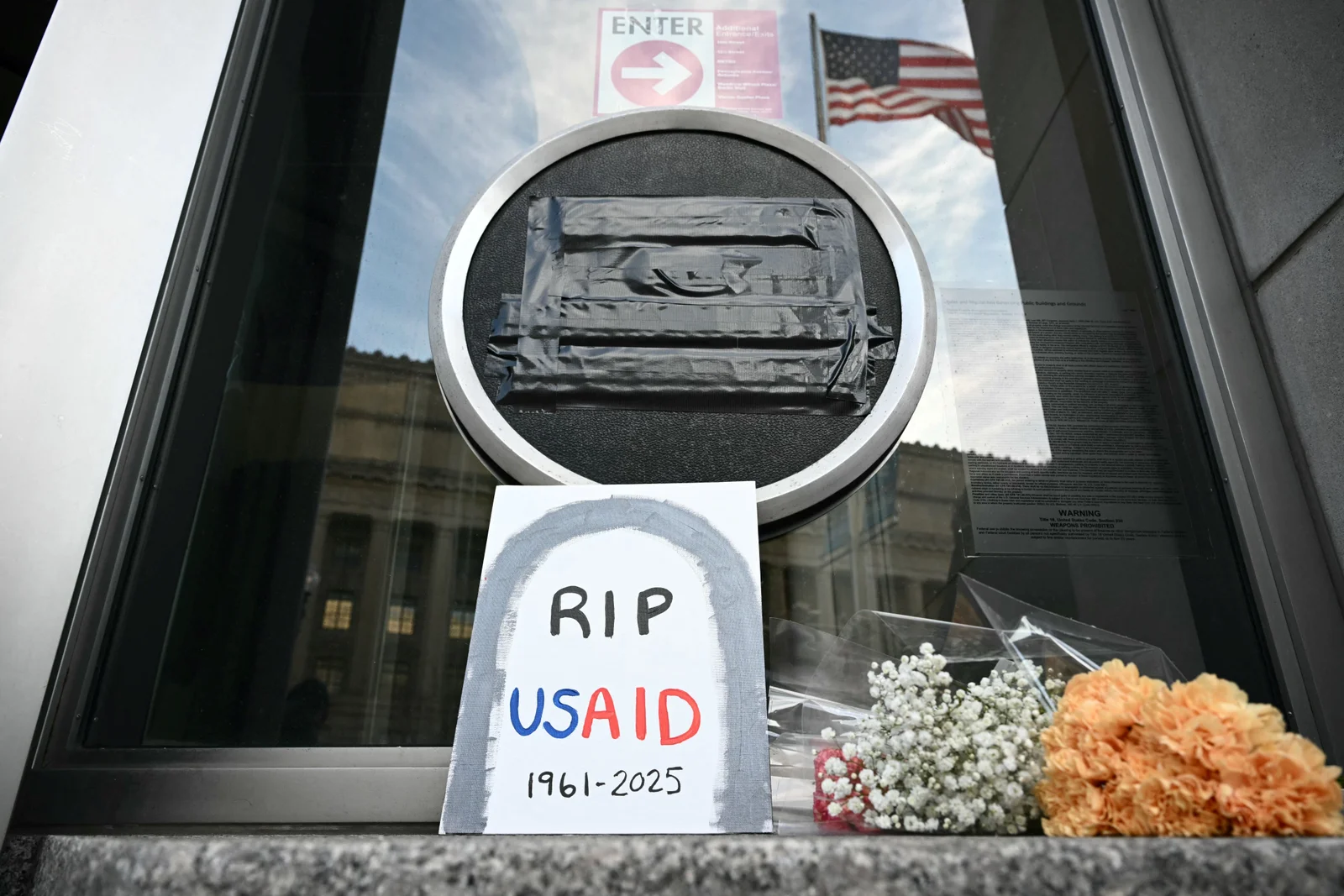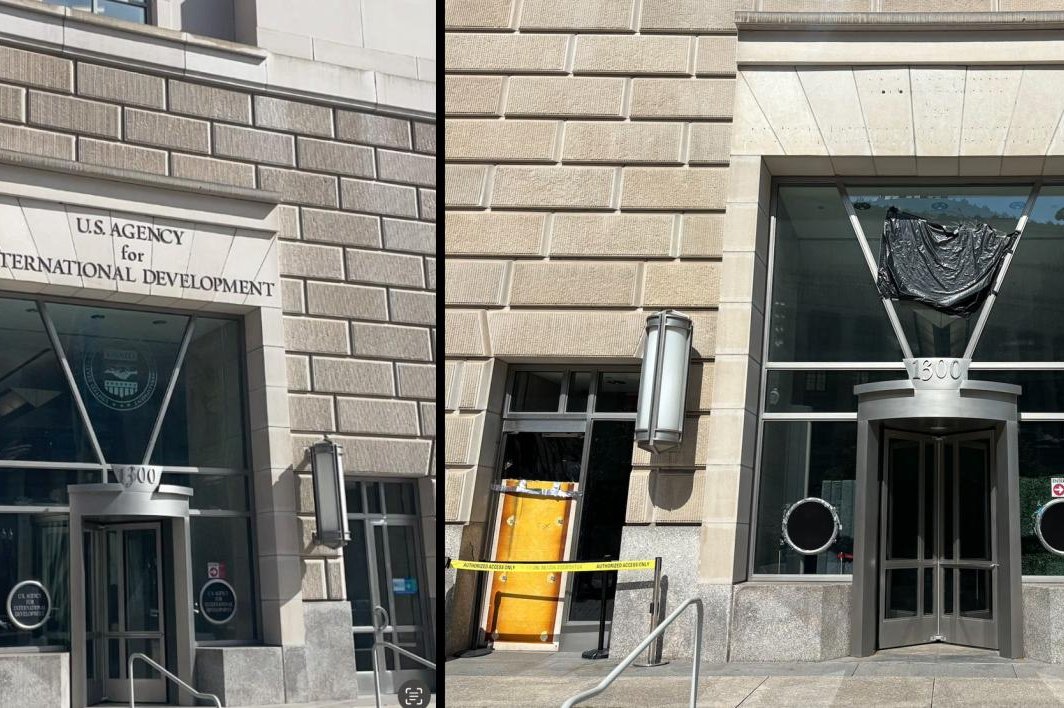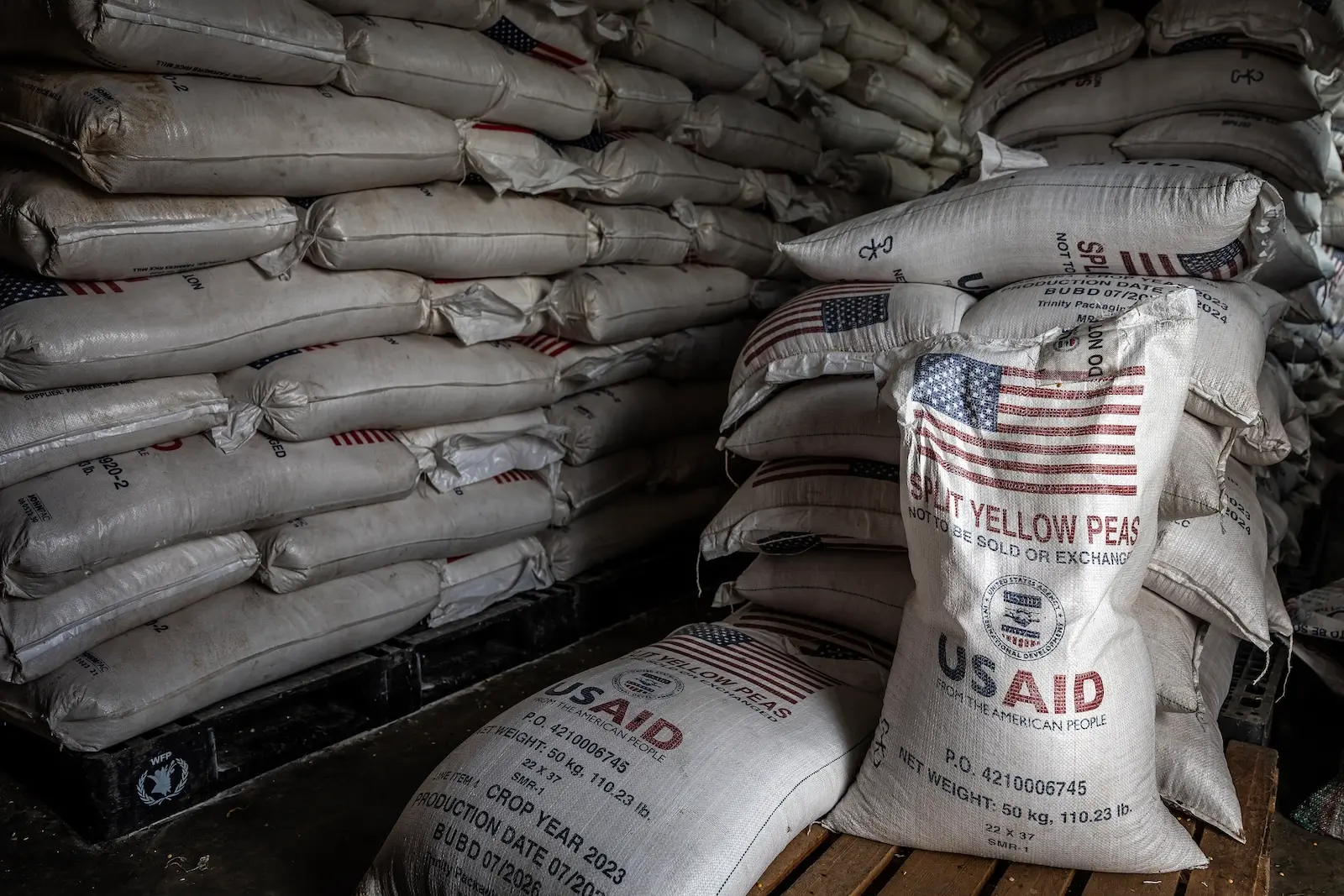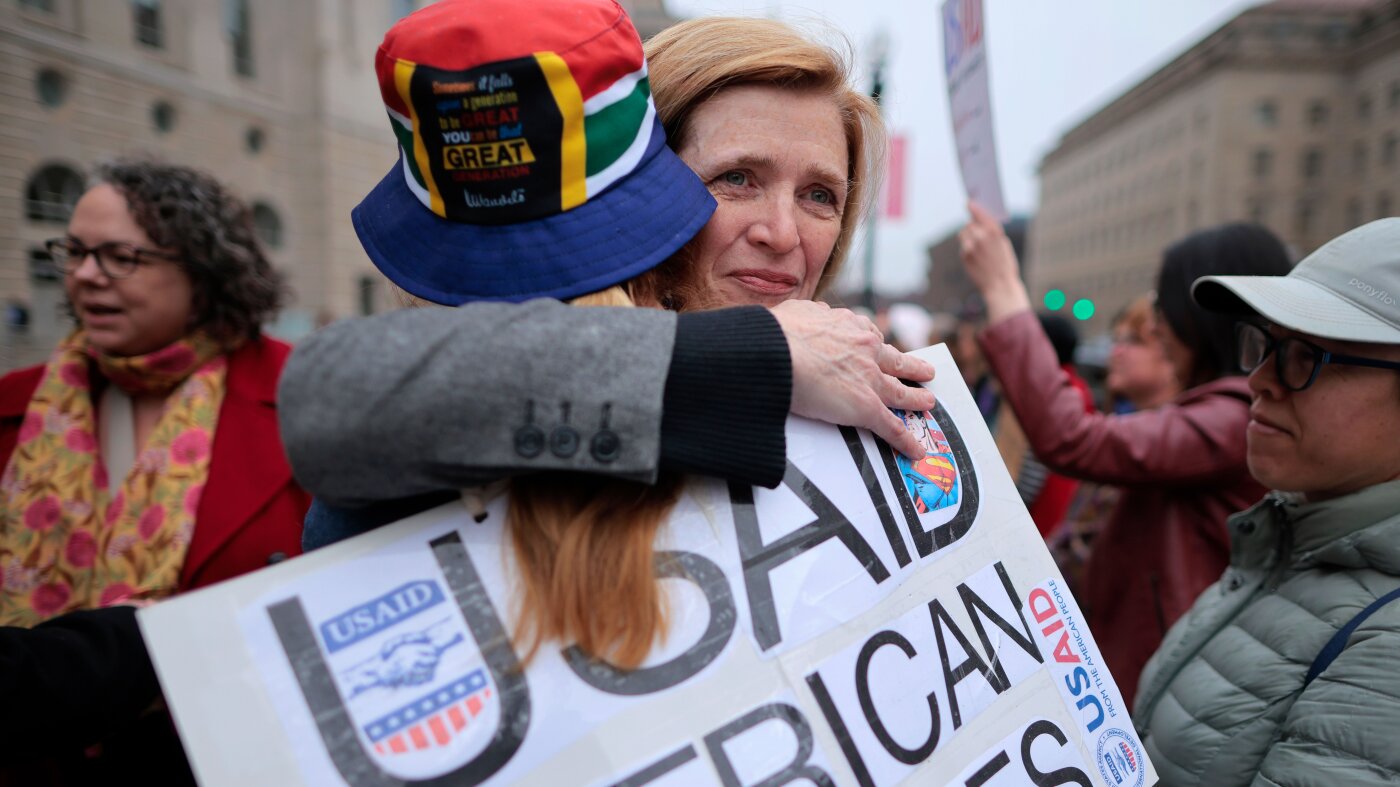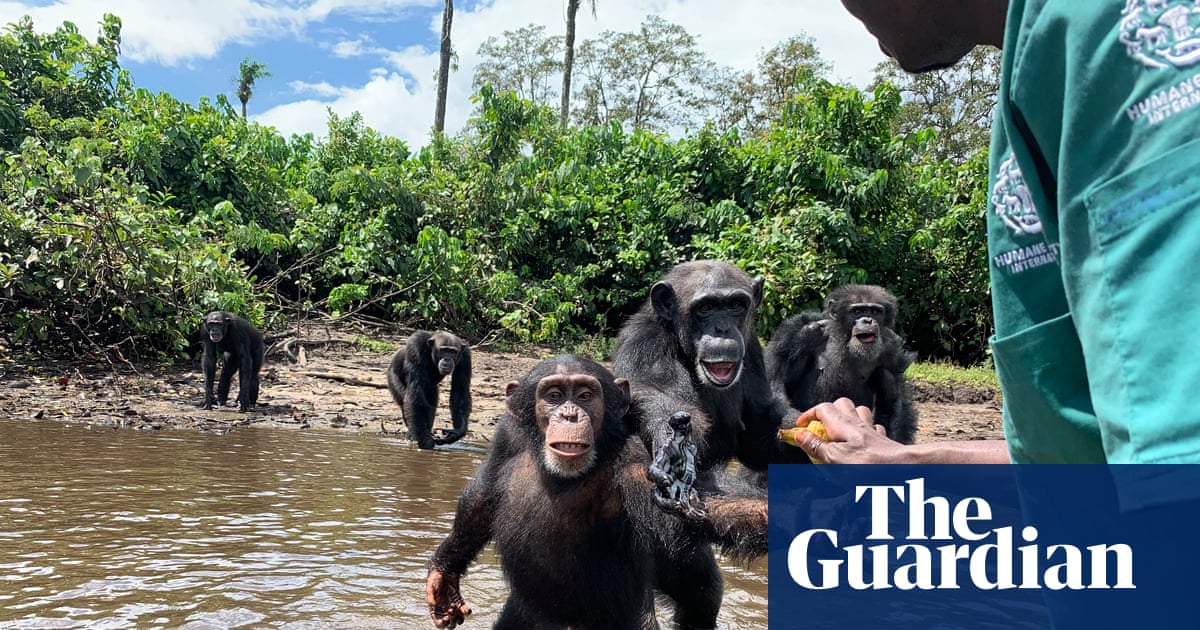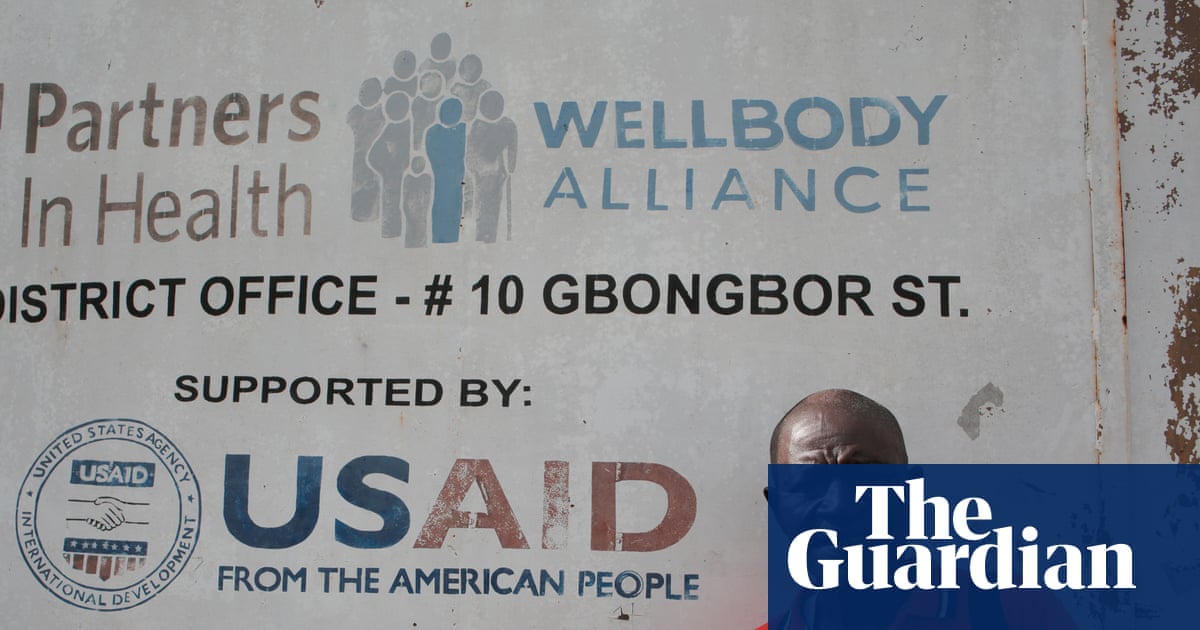
It’s not just humans that are suffering from the Trump administration’s destruction of the U.S. Agency for International Development. For nearly 40 years, USAID was one of the top global funders of international conservation. In December 2024, shortly before its demise, then-USAID director Samantha Power launched the agency’s sweeping new biodiversity policy, which emphasized locally led development and climate resilience as guiding principles for a $350 million annual conservation portfolio.
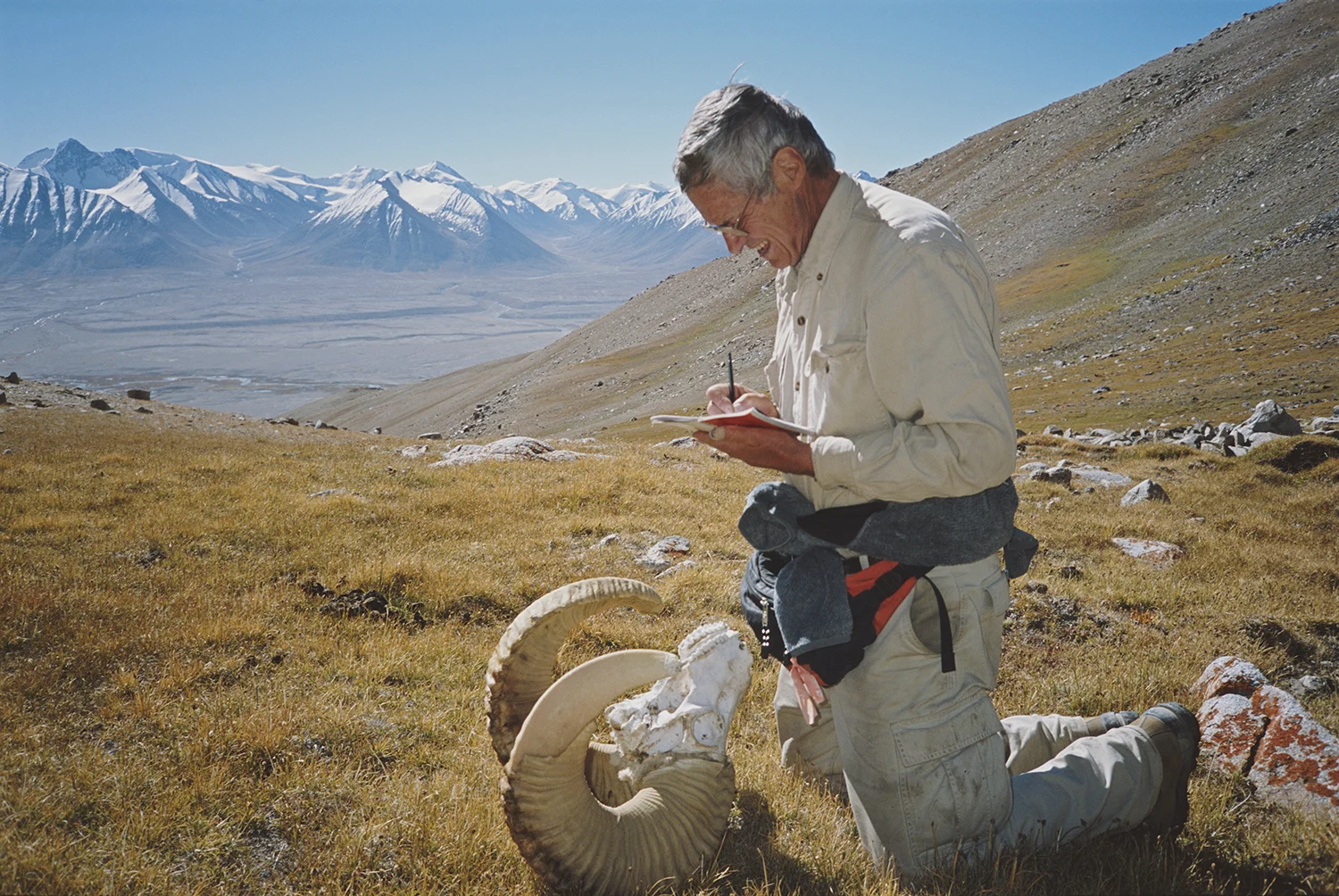
A book cover titled "HOMESICK FOR A WORLD UNKNOWN" in bold, light-colored uppercase letters against a black background. Centered in the middle is a horizontal photograph of a person wearing a large backpack, sitting on a rocky ridge and looking out over a vast valley and distant snow-capped mountains under a bright blue sky. Below the title, smaller text reads "The Life of George B. Schaller." The author's name, "MIRIAM HORN," is printed in bold at the bottom.
Homesick for a World Unknown: The Life of George B. Schaller, Miriam Horn, Penguin Press, 640 pp., $40, April 2026
The seeds of the idea that protecting endangered species is a shared international obligation were planted in the same heady, optimistic era that gave rise to USAID. The early 1960s saw the founding of USAID, the Peace Corps, the nonprofit World Wildlife Fund, and the United Nations Development Program, which became another major backer of conservation. In 1964, the International Union for the Conservation of Nature released its first list of globally threatened species, later known as the “red list,” which remains the benchmark for classifying species as endangered today.