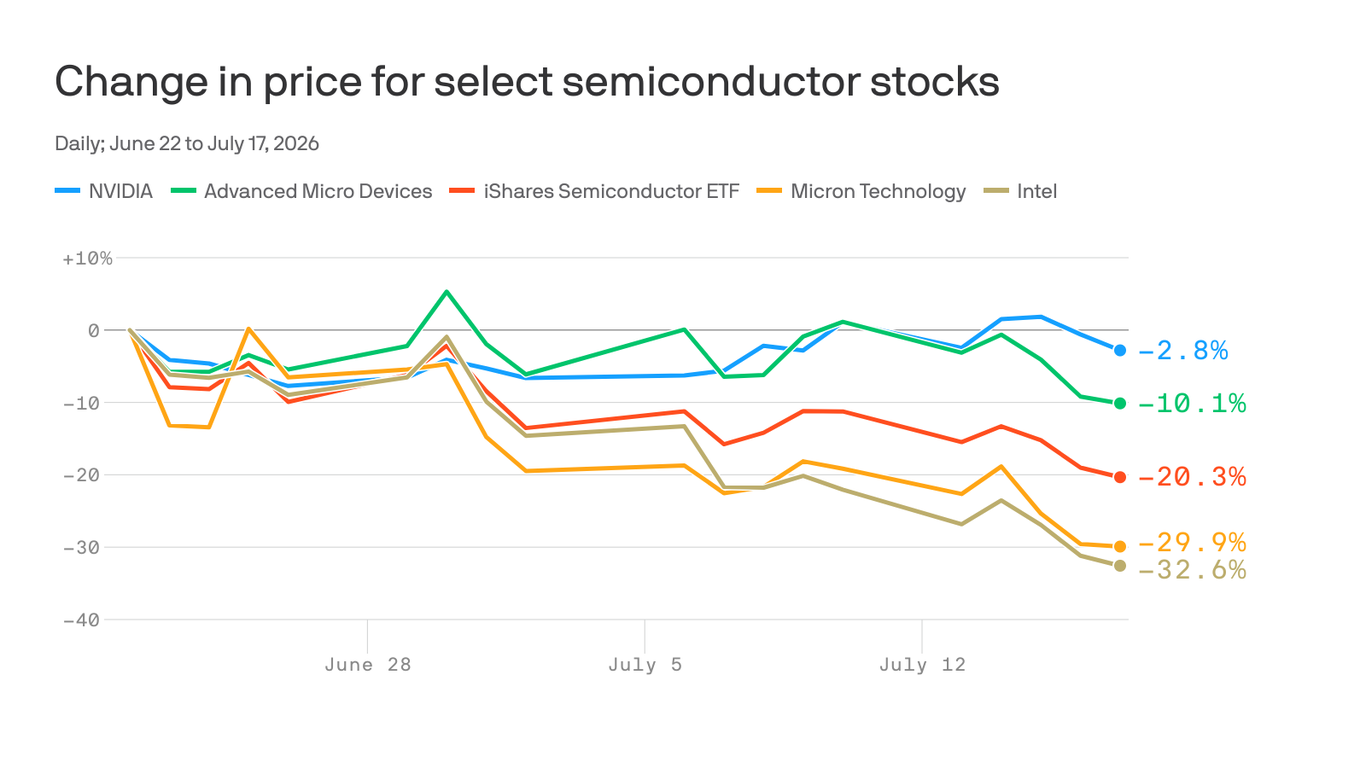
The AI chip market just had one of those weeks that reminds everyone this sector can be as brutal as it is exciting. A broad selloff in semiconductor stocks erased over $1 trillion in combined market value, with the Philadelphia Semiconductor Index dropping roughly 10% as investors decided that, actually, maybe they had been a little optimistic.
The timing is not accidental. A wave of custom AI chips began shipping from major tech companies in late June and early July 2026, signaling that Nvidia’s near-monopoly on AI compute is starting to look more contested than it has in years.
The numbers behind the carnage
Micron lost approximately $38 billion in market cap in a single trading session. Intel, already navigating a difficult restructuring period, fell 21% over several days. Samsung reported a profit increase of roughly 1,800% for Q2 2026, which should have been a victory lap, and yet its stock still declined amid the broader market panic.
The correction reflects two distinct anxieties colliding at the same moment. First, pure valuation concern: AI infrastructure spending has been enormous, and investors are increasingly asking when that spending turns into returns. Second, a more structural worry: the competitive landscape for AI chips just got meaningfully more crowded.