The AI trade had a rough welcome to the new quarter. Semiconductor stocks kicked off July with a dramatic selloff, raising an uncomfortable question that investors had been quietly sitting with for months: is the AI infrastructure boom a durable supercycle, or did everyone just get very far ahead of themselves?
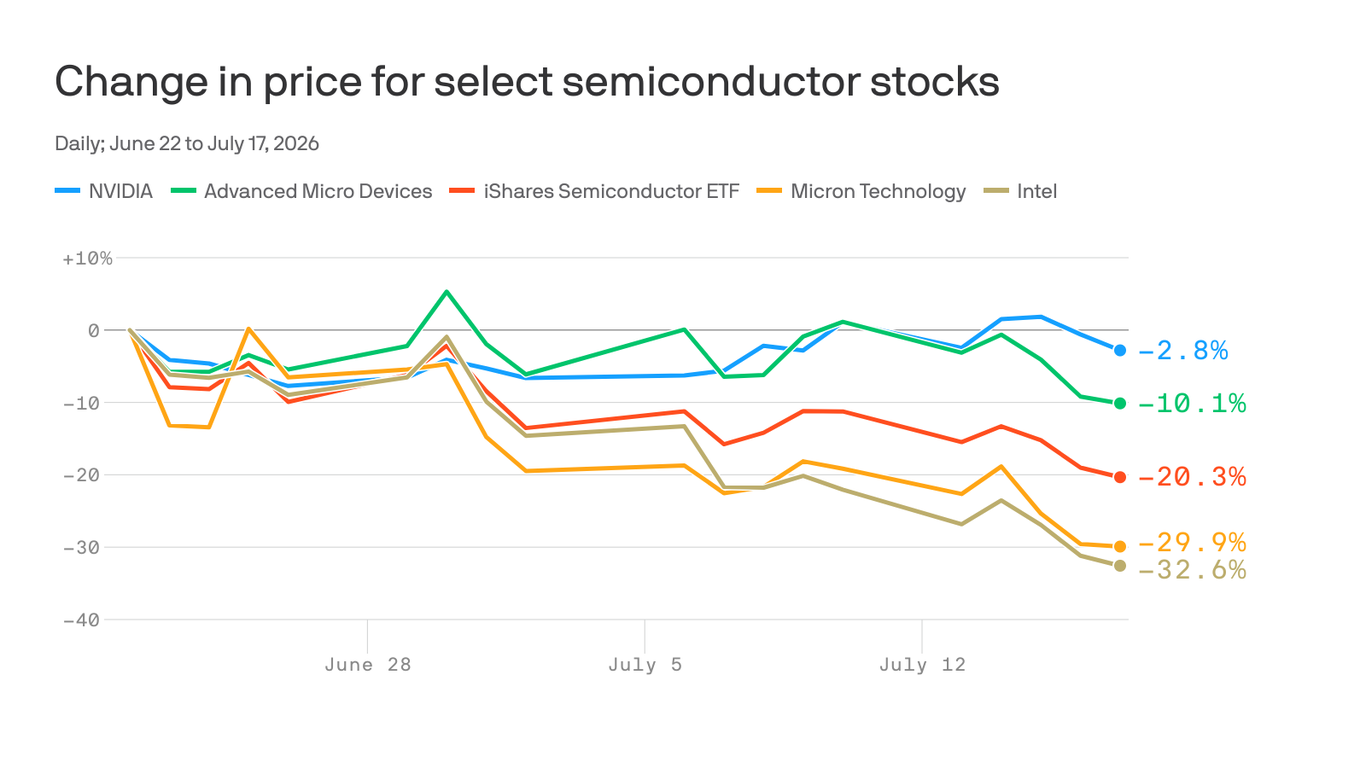
The numbers were not subtle. The VanEck Semiconductor ETF fell more than 5% on the first trading day of July alone. Micron dropped 11%, erasing $138 billion in market cap in a single session. Intel shed 9%, AMD gave back 7%, and the Philadelphia Semiconductor Index lost roughly 12% across two trading days. For context, that same index had surged more than 80% in the first half of the year.
What actually happened
SK Hynix, one of the key suppliers of high-bandwidth memory used in AI chips, signaled a slower pace of production expansion. Mixed guidance from Broadcom added another layer of uncertainty. The Federal Reserve added its own background noise, with ambiguous signals about the rate trajectory.
The $1.3 trillion in value wiped from the broader AI chip ecosystem since June is less a verdict on AI itself and more a reminder that even the best trades require periodic reality checks.