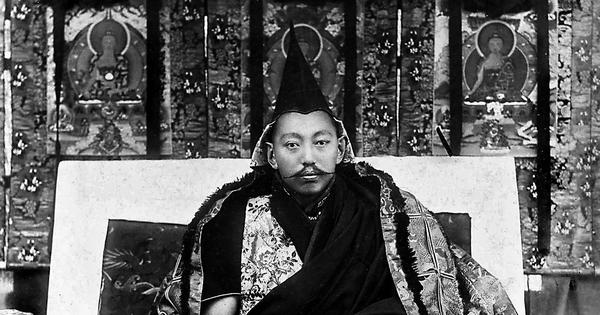
In February 1910, the Associated Press flashed a dramatic bulletin: the “Tibetan Pope” had fled Lhasa, narrowly escaping Chinese troops who pursued him all the way to the Tibet-Sikkim border. Thubten Gyatso, the 13th Dalai Lama, then a 34-year-old, was walking a high-stakes geopolitical tightrope. The Qing Dynasty was on its last legs in China, while the British and Russian empires were vying for influence over Tibet.Describing his escape as “narrow”, the Associated Press reported that the spiritual leader travelled day and night. At a river crossing, Chinese forces caught up with the Tibetan entourage, but his followers fought off the pursuers, buying enough time for the Dalai Lama to cross into British-protected Sikkim. From there, he journeyed to Darjeeling and requested asylum from British authorities.The situation was a deeply ironic twist of fate. Only three months earlier, the Dalai Lama had returned to Lhasa after six years in exile. That initial flight had been triggered by the British themselves, whose 1904 invasion of Tibet, led by Colonel Francis Younghusband, forced the leader to flee to Mongolia under the influence of the Russian Buryat monk Agvan Dorzhiev.During his two years in Urga (now Ulaanbaatar), the Dalai Lama hoped the tsar of Russia, Nicholas II, would intervene on Tibet’s behalf. When that did not happen, he pivoted to China. In 1908, he arrived in Peking (now Beijing), meeting Empress Dowager Cixi and Emperor Guangxu shortly before their deaths. The Qing court gave him administrative authority over Tibet, replacing the provisional governors installed after the British invasion.His return to Lhasa was not without opposition. Monks at the influential Debong (now Drepung) Monastery objected to his restoration, but he enjoyed broad public support. His homecoming began smoothly, and he pardoned locals who had assisted Younghusband’s invasion. However, friction quickly developed with Zhao Erfeng, the powerful Chinese envoy, or Amban, in Lhasa.A report by the Press Association said the Dalai Lama protested against “the excesses of the Chinese troops on the Szechuan [Sichuan] frontier”, where monasteries had been looted and lamas killed. “This remonstrance brought to a head the whole question of the respective positions of the Amban and the Dalai Lama,” the report said.The Amban insisted he held ultimate authority because Tibet was a Chinese province, while the Dalai Lama “quoted a letter of authority given to him by the Pekin government”. As the dispute escalated over who had the right to appoint the abbot of the Sera monastery, the Amban launched an armed assault on Lhasa, forcing the Dalai Lama to flee once more.
The 13th Dalai Lama fled Tibet for India long before his successor’s famous escape
As the Qing empire crumbled, the Tibetan leader sought British backing. The Raj welcomed him with honours but stopped short of supporting his political cause.
1,766 words~8 min read