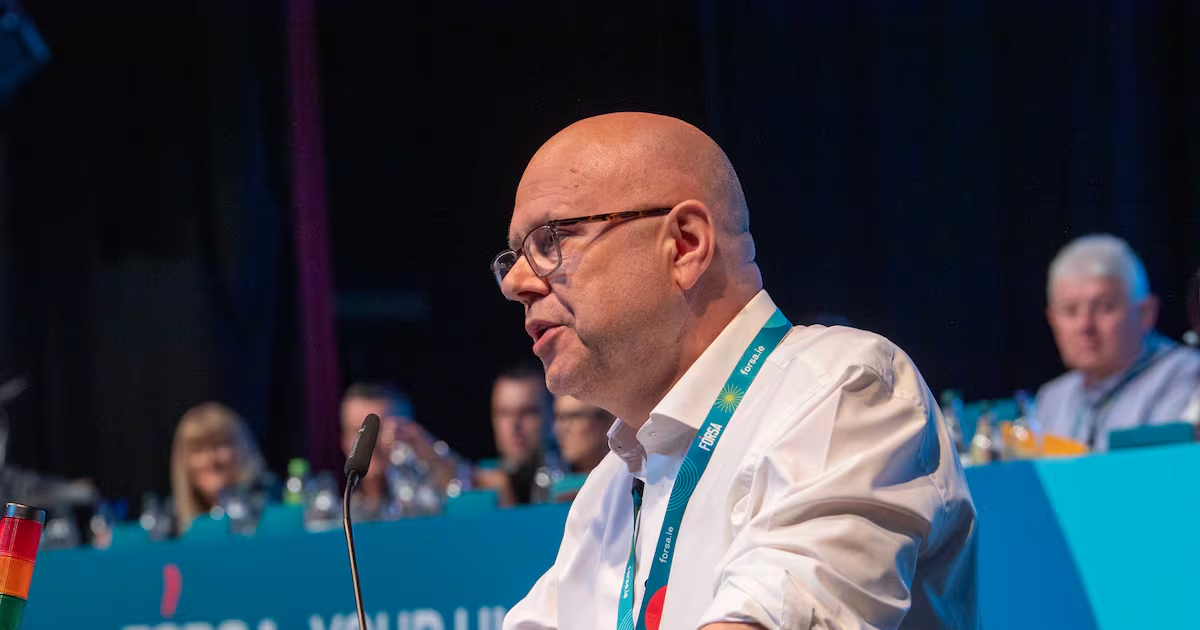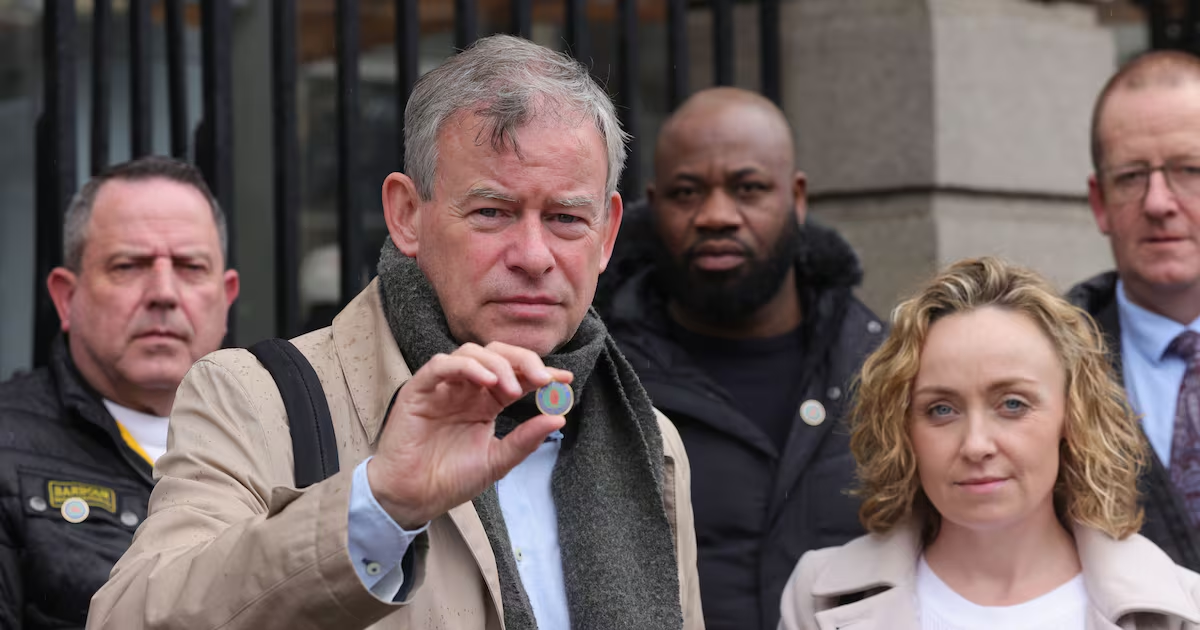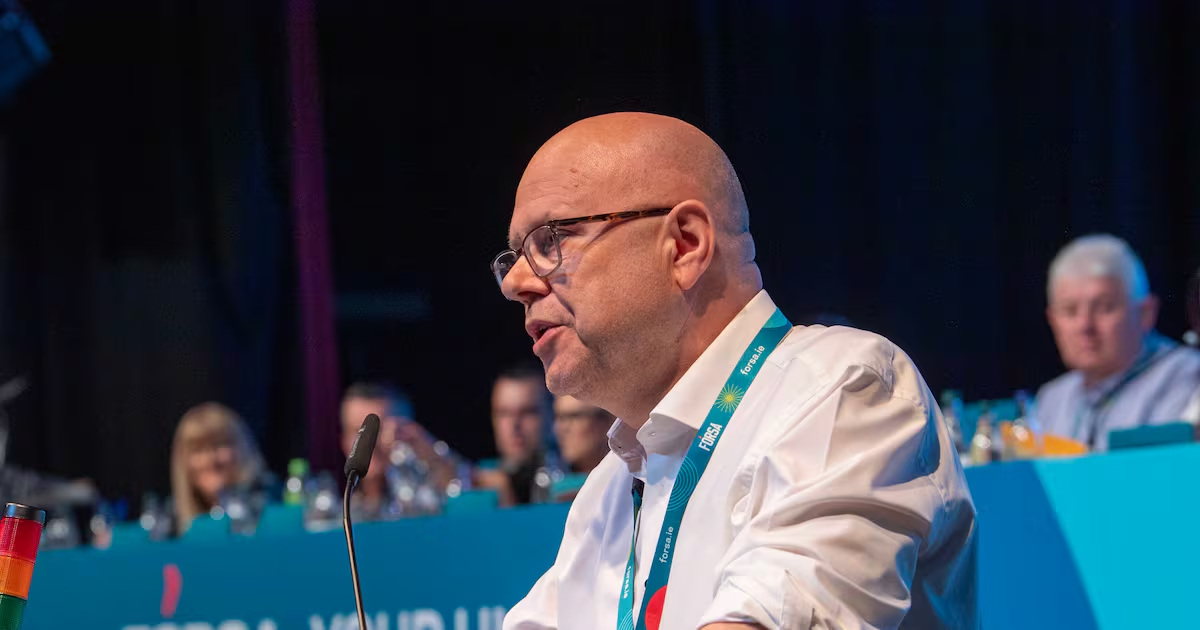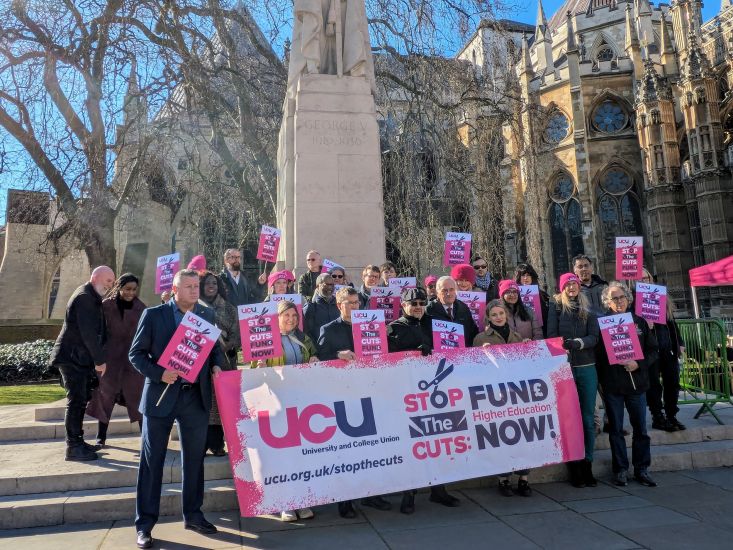
The Irish Federation of University Teachers (IFUT) has become the latest trade union to announce a ballot on industrial action in the absence of talks on a new public sector pay deal.The union said on Monday that it will start a consultation process with its members over the coming weeks with the aim of opening a ballot on action, up to and including strikes, by September 1st.The ballot itself would be expected to take about two weeks to complete, with any action subsequent to that having the potential to disrupt the early part of the new academic year.The union has about 7,000 members across the university sector. In common with other unions, IFUT blames Government for the failure to get talks under way on a successor deal to the one that ended last month, which provided a minimum of 9.25 per cent in guaranteed pay increases for all public sector workers over the course of the previous 2½ years.“Government has allowed the current agreement to expire without a pay settlement for the second half of 2026 and without a credible process to replace it,” said IFUT general secretary Frank Jones.“This is not a technical delay. It is a serious failure to respect public servants and the collective bargaining process. Higher education staff cannot be expected to continue absorbing rising living costs while their pay is left unresolved. Nor can they be expected to accept unfinished commitments or the possibility of changes being imposed without agreement.“IFUT members are organised, determined and preparing to act. Government must now decide whether it is prepared to engage seriously and reach a fair settlement,” he said. As with a number of other public sector unions, IFUT remains at odds with the Department of Public Expenditure and Reform over aspects of “local bargaining” – a portion of the last pay agreement that allowed unions to suggest ways in which an additional 1 per cent of the pay bill for various sectors could be used to solve outstanding issues within them.IFUT sought to use the money, it says, to improve the conditions of its more precarious members such as hourly paid lecturers and researchers with no clear career framework. However, the two sides did not reach agreement on the measures despite a number of conciliation efforts at the Workplace Relations Commission.The matter is now due to go before the Labour Court at the start of September.“These workers sustain teaching, learning and research across higher education,” said Jones. “They deserve secure employment, fair treatment and the delivery of commitments already made.”Unions representing more than half of the State’s 400,000-plus public servants have now announced their intention to ballot their members for industrial action in relation to pay and other issues arising out of the two sides’ failure to commence global talks on a new deal.
University lecturers are latest public sector group to announce ballot for industrial action
IFUT union says Government allowed recent pay deal to expire ‘without a credible process to replace it’
467 words~2 min read