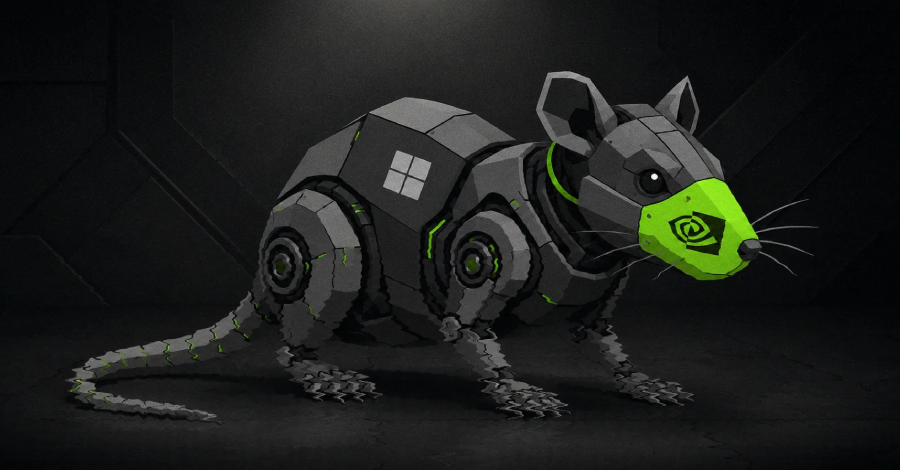
Cybersecurity researchers have flagged a previously undocumented Rust-based remote access trojan (RAT) codenamed LabubaRAT that masquerades as NVIDIA software to blend into target environments.
"LabubaRAT creates a reusable foothold for hands-on activity," Blackpoint Cyber researchers Sam Decker and Nevan Beal said in an analysis published today. "Once deployed, it can profile the host, identify security tools, receive operator commands, move files, capture screenshots, and proxy traffic through the affected system."
The implant also supports multiple communication methods, including HTTPS, WebView2, and DNS tunneling, allowing attackers to maintain access to compromised hosts even if one pathway is detected and closed off. There are some signs that LabubuRAT is being offered under a malware-as-a-service (MaaS) model.
The starting point of the attack chain is an executable named "nvidia-sysruntime.exe," which impersonates NVIDIA's container runtime toolkit. The sample, instead of hard-coding its command-and-control (C2) information, accepts a runtime configuration through command-line arguments.
This allows the campaign operator to define various parameters that are key to establishing communication with the remote server, including the server details ("pipicka[.]xyz") and the polling interval used by the implant. Alternatively, the attacker can also supply these individual values in the form of one single Base64-encoded argument.