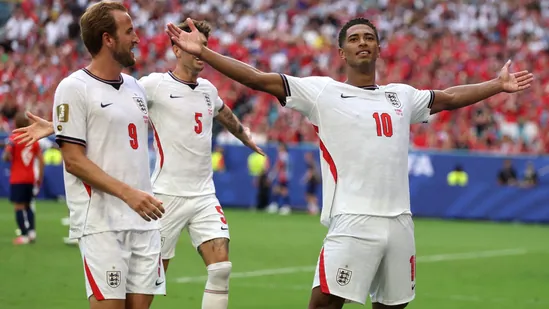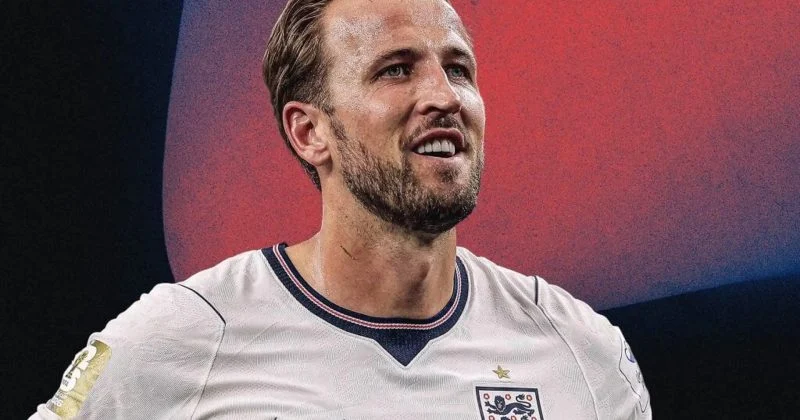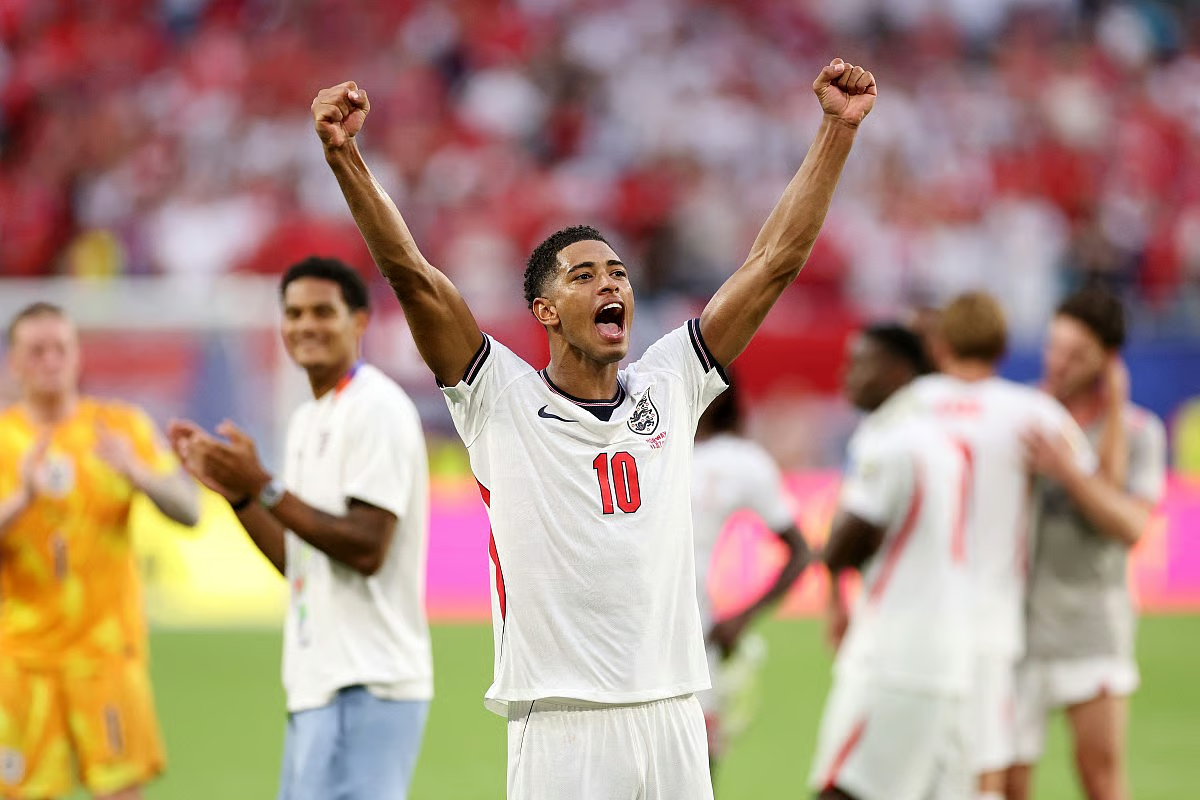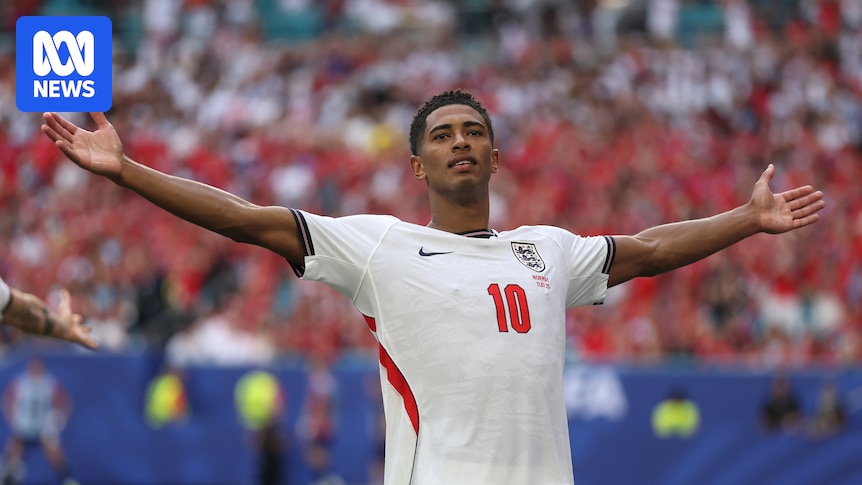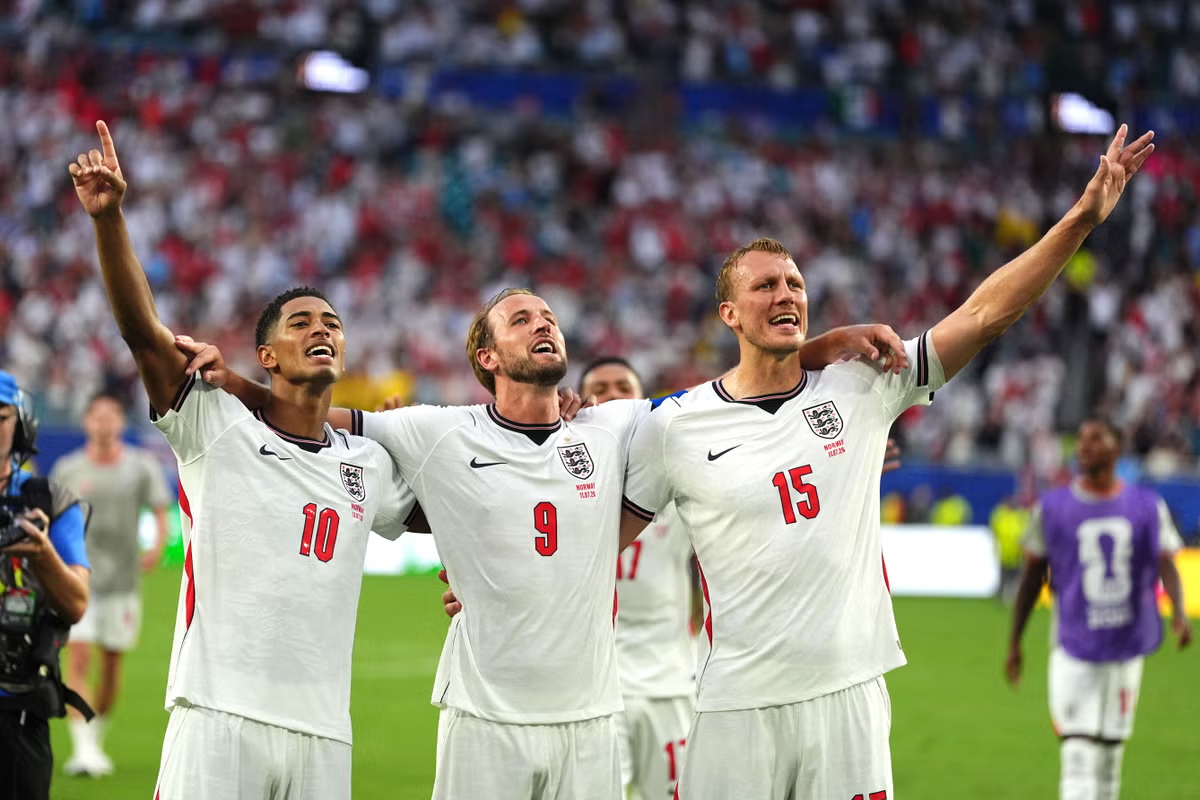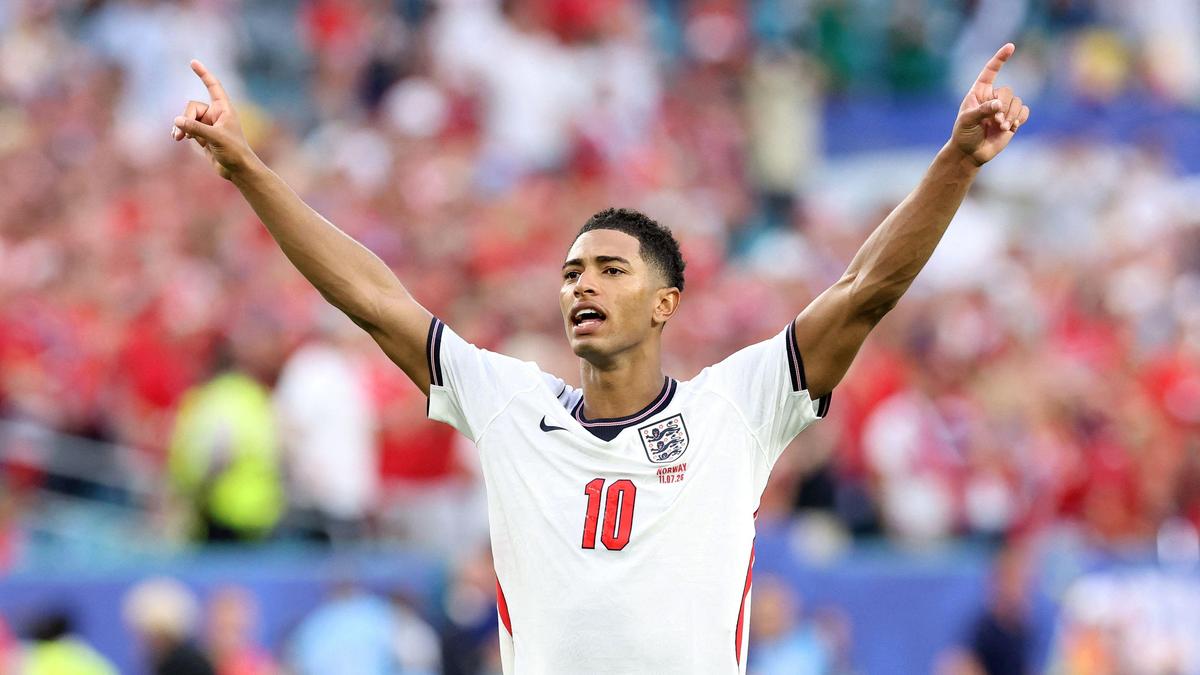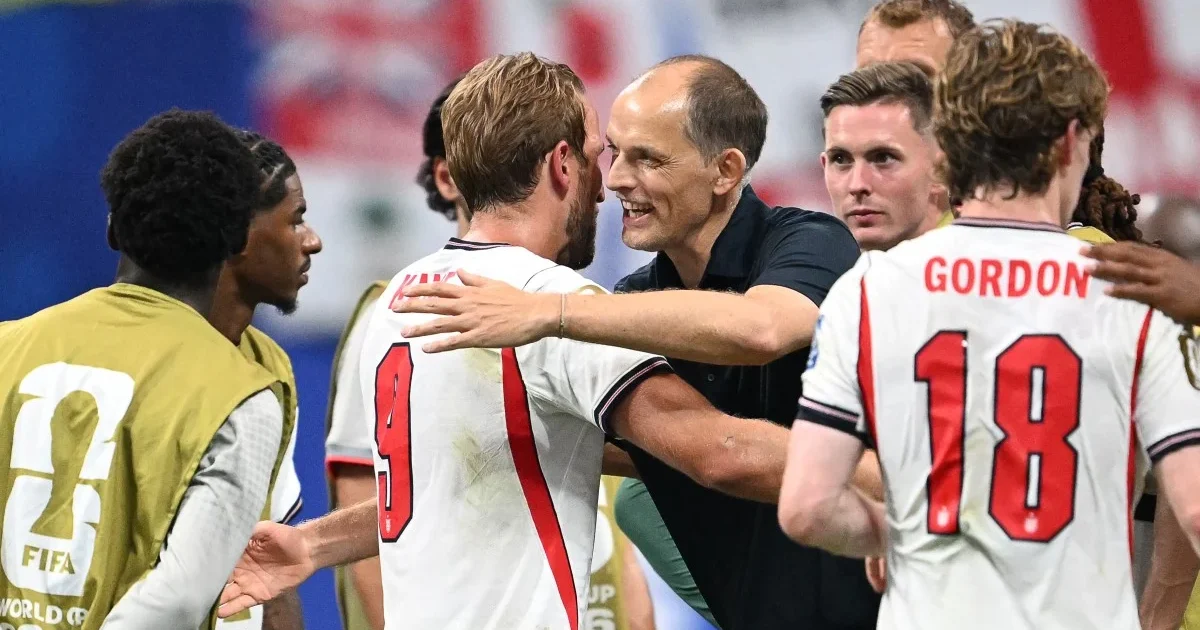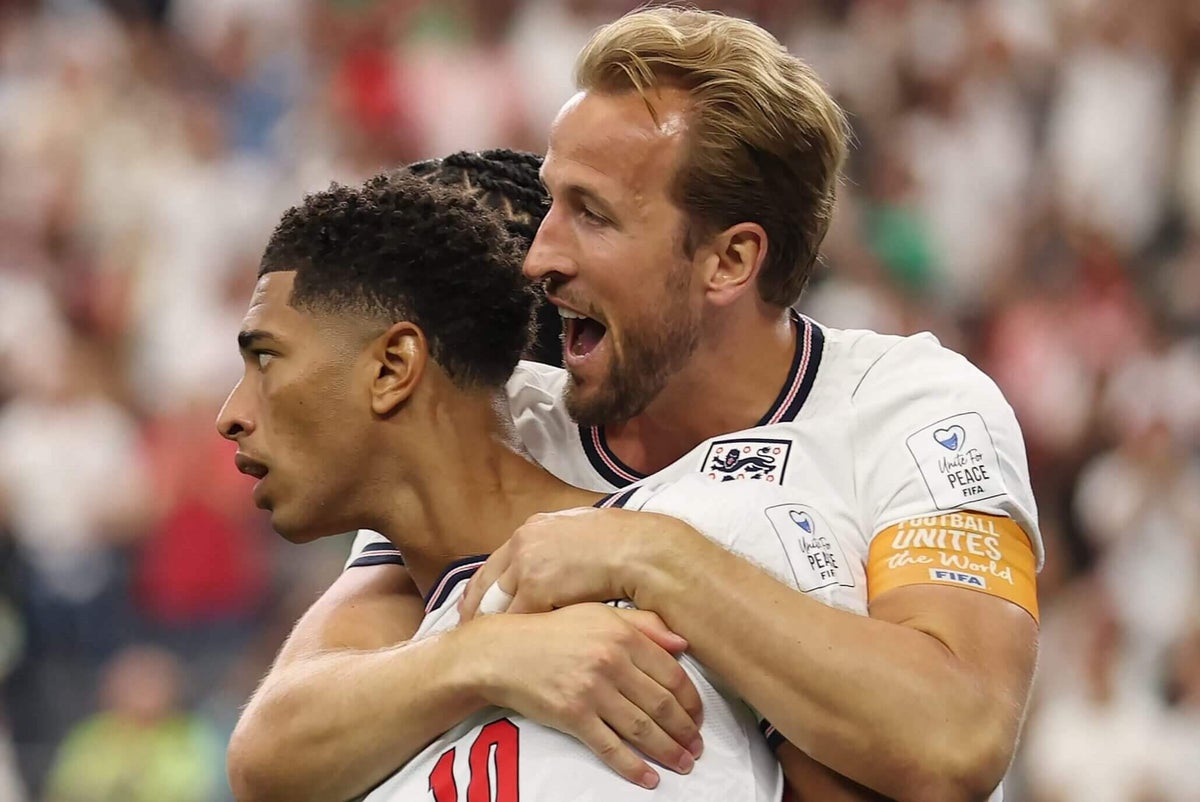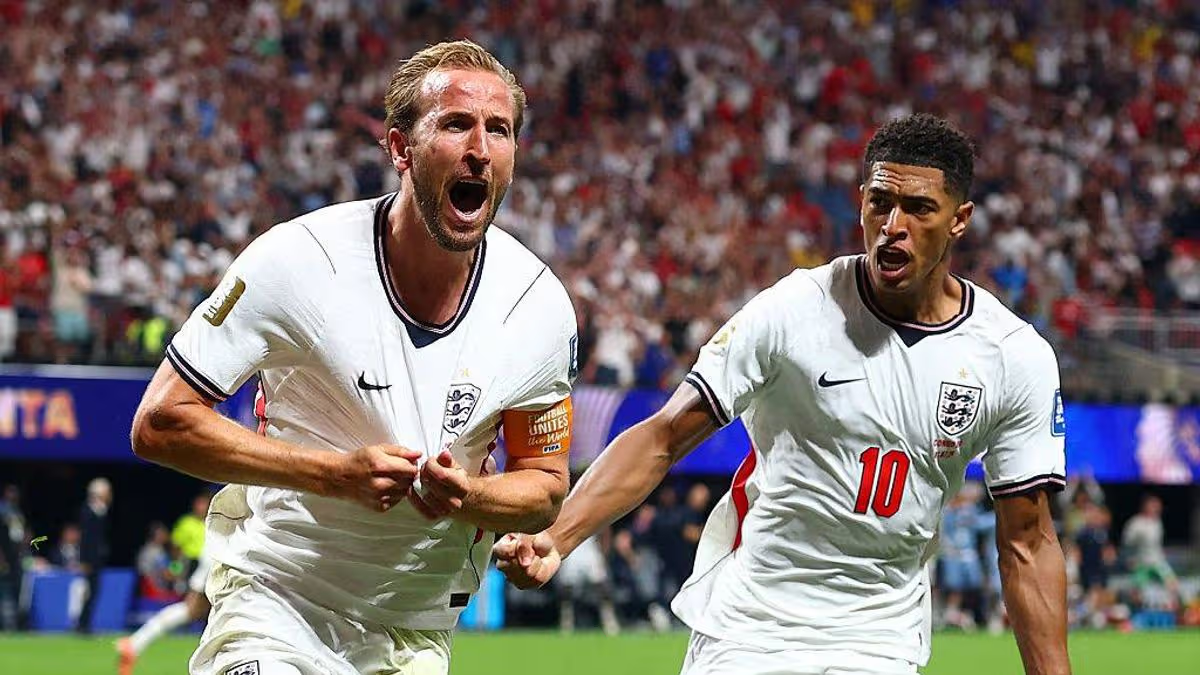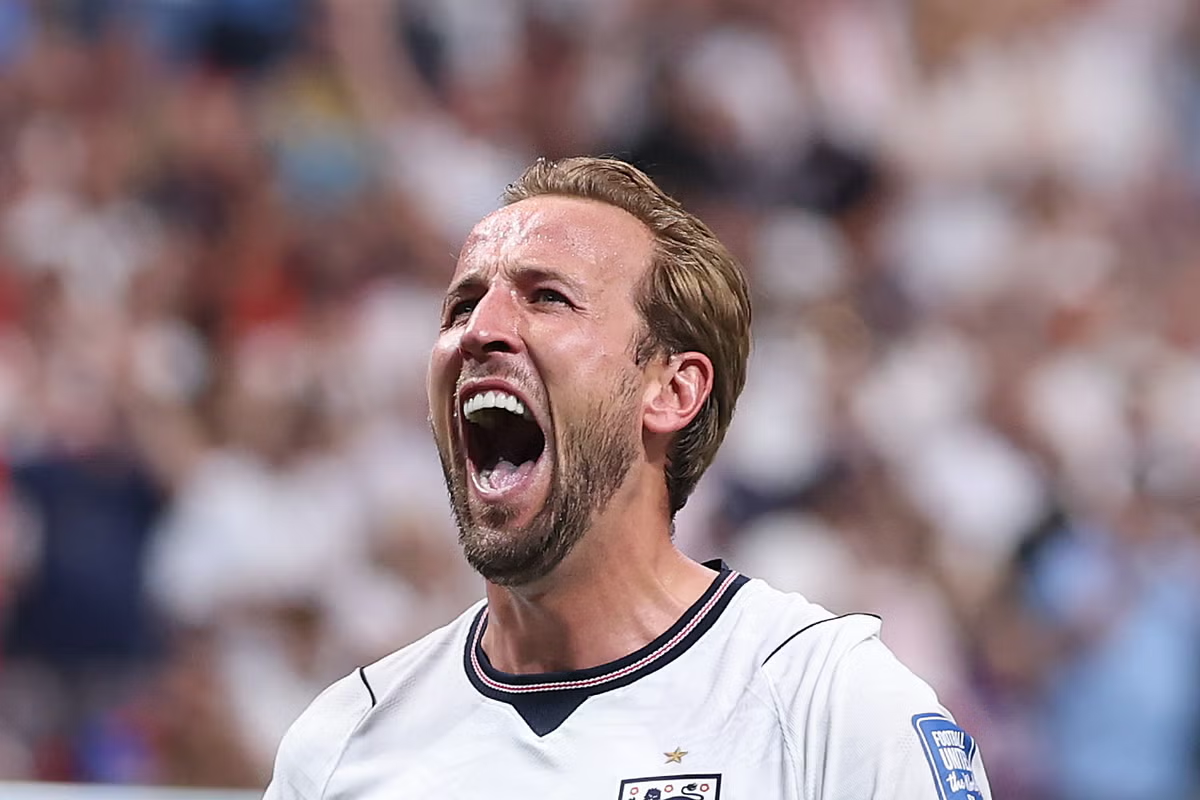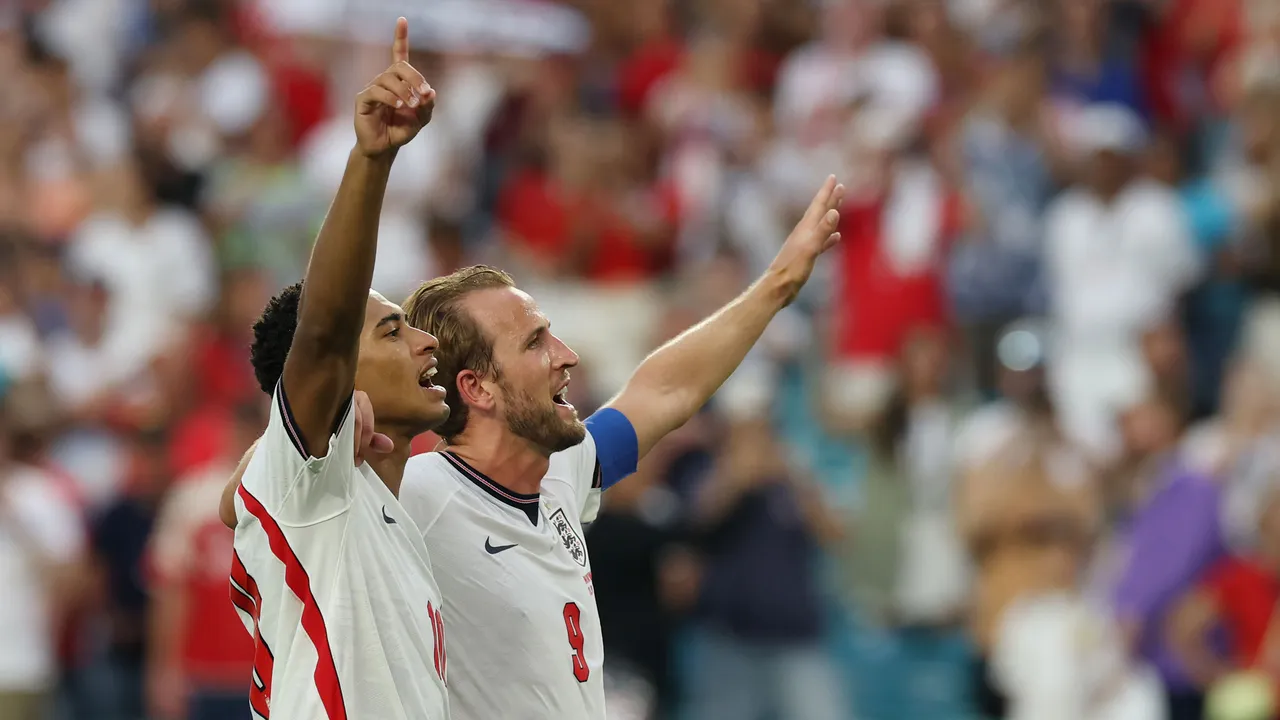
In England, one of the great joys of the World Cup—right up there with filling in sticker books, reviving old pop songs, and watching Germany lose—is the tournament wall chart. After every game this summer, I’ve documented the victor’s progression through the competition—the results converging, from either side of the bracket, on the grand final in the middle of the page—using a thick black Sharpie. (This is a satisfying act in itself; Donald Trump was right about something.) Since the end of the group stage, I’ve had the good fortune to have scrawled the word “ENGLAND” four times, and counting, most recently to ink in a semifinal against Argentina, which will take place tomorrow, in Atlanta. This is, in no small part, thanks to the exploits of Harry Kane, the team’s captain and attacking talisman, and this is appropriate. The wall chart I’m using (which came free with the Guardian newspaper) has a Kane cartoon in the top-right corner. And my girlfriend and I already had his likeness on our wall—a few years ago, we bought an unofficial poster for the movie “La La Land,” as a joke, because its illustration of Ryan Gosling looked much more like Kane.With all of the remaining games in the tournament being played in the U.S., Kane might be the most American player left standing. He seems to love the country’s culture, from Nashville’s music scene to the N.F.L., in which he harbors (apparently serious) ambitions of playing as a kicker once he retires from the English variant of “football”; in recent weeks, he has attended an Ella Langley gig in Independence, Missouri (and gifted her an England shirt), had a coffee with his idol turned friend Tom Brady, and golfed with Brooks Koepka. After that news became public, I began to suspect that a round with Trump might be in Kane’s future. I was wrong, but only because it was in his past: last week, Trump claimed to have played with Kane, and Kane confirmed that this happened around eighteen months ago, calling the experience “unique,” and praising Trump’s form. After Kane scored twice against the Democratic Republic of the Congo, in the round of thirty-two, Trump posted on Truth Social that “Harry Kane of England is a GREAT player!!!” Right again.In other ways, Kane is a supremely English kind of guy. His aura—harmless, soft-spoken, unassuming to the point of blandness—is liable to remind most Brits of someone they went to school with; I can easily imagine having gone to his house to eat fish sticks and play the soccer game FIFA on PlayStation 2. After victories at this World Cup, Kane has joined his teammates in belting out “Wonderwall,” by Oasis, which has become the de facto England anthem of the summer. This makes sense. Harry Kane is very “Wonderwall.”Whatever his cultural coding, Kane’s two goals against Congo were also very him, in a sporting sense. His team was trailing deep into the second half when Kane decided, as he has many times before, to grab the game by the scruff of the neck, first peeling away from a defender to power in a header, then shuffling into space just inside the penalty area before spanking an unstoppable shot into the roof of the net. Those goals were his fourth and fifth of the tournament, following group-stage strikes against Croatia (twice) and Panama; he has since scored a sixth, sinking what turned out to be a decisive penalty kick against the co-hosting nation Mexico at a raucous Estadio Azteca in the round of sixteen. My colleague Louisa Thomas described that win, by three goals to two, as “mythic and elemental,” and it certainly felt that way in London, where I was one of millions who stayed up through the night to watch. The Azteca had been the location, in 1986, of England’s most painful World Cup infamy: a loss to Argentina in which Diego Maradona scored two goals, one historically brilliant, the other punched in—illegally but, apparently, imperceptibly to the officials—with the help of what he would later call “the hand of God.” It was no surprise that Kane was central to the exorcism of this demon. (Tomorrow, against Argentina, he will have the chance to exorcise it a second time.) In all, he has eighty-five goals for England, by far the most anyone has ever scored. “We speak every match about him because he decides all the matches for us,” Thomas Tuchel, England’s German head coach, said, when asked about Kane at a recent press conference. “He’s in the shape of his life, and on the highest peak of his career.”Since the tournament began, however, Kane hasn’t had to carry the burden alone. If his penalty won the game at the Azteca, then it was Jude Bellingham, an attacking midfielder nearly a decade Kane’s junior, who set the team on its way by scoring twice in two minutes shortly before halftime. (I missed his second goal after foolishly deciding that the aftermath of his first was a safe moment to go to the restroom.) Those were Bellingham’s third and fourth goals of the tournament, and he has since equalled Kane’s tally of six by notching twice in England’s quarterfinal win against Norway, last weekend. Indeed, this time, it was Bellingham who did the scruff-grabbing—many of his teammates, including Kane, were comparatively sluggish in the hellishly close Miami heat—and his strike to tie the game was Kane-esque: a fierce, angled shot after a determined burst toward goal. In the process, he became the first player to register back-to-back doubles in World Cup knockout games since Maradona, in ’86—and Bellingham used legitimate body parts to score all four.The Athletic once wrote that Kane and Bellingham “contrast in nearly every conceivable way,” and there’s some truth to the observation. Kane spent more than a decade plugging away, loyally, at his first club, Tottenham Hotspur, a perpetual Premier League bridesmaid (or worse) whose name has become a byword for snatching defeat from the jaws of victory. (Recently, a Swedish opposition politician dismissed the government’s faltering economic record as “Spurs-y.”) By contrast, Bellingham moved quickly from his local club Birmingham City to Borussia Dortmund, in Germany, before signing, while still a teen-ager, for Real Madrid, the decorated Spanish team whose glamorous players were known, while I was growing up, as galácticos. Bellingham has often been accused of having the requisite ego. If Kane harbors dreams of the N.F.L. once he quits soccer, Bellingham suggested recently that he’d like to be a movie star. Since Tuchel came in as coach, last year, his relationship with Bellingham has, at times, appeared stormy. Tuchel said that his mother finds some of Bellingham’s on-field behavior to be “repulsive”; he apologized, but later left Bellingham out of one of his squads; after Bellingham returned, he reacted petulantly to being substituted in a qualifying game. As of a few weeks ago, Bellingham was still not guaranteed to be a starting player.Kane and Bellingham, for their part, initially struggled to establish an on-field rapport. At the European Championship, in 2024, England tied two of its group-stage games against lesser teams and the pair exchanged a cumulative two passes, a lack of cohesion so alarming that the Times of London highlighted it as a front-page splash in its sports section. Prior to this World Cup, in nearly forty appearances together for the national team, Bellingham had directly created only one goal for Kane, and Kane none for Bellingham. Since the start of the tournament, however, he and Kane have clearly clicked. Bellingham assisted Kane’s goal against Panama; Kane returned the favor against Mexico. In both of those games, the pair celebrated in unison; in Mexico, they stood side by side, and stretched their arms wide, as if to order the crowd to behold their power. Afterward, Kane, who had lost his voice in the fray, gave an instantly memed interview in which he kept slipping into a squeaky register; asked for his message to fans back home, Bellingham suggested that they “have another shot and text your bosses to say you’re not coming in tomorrow.” The vibes seemed impeccable.They seemed less good after the Norway game. A visibly unhappy Tuchel praised England’s mentality, but called the team’s performance “sloppy,” and its victory “lucky.” Asked to respond, Bellingham told one reporter, “Yeah, well, whatever,” and suggested to another that Tuchel must not know how hard it is to play in sapping conditions against world-class talent, a remark that some observers interpreted as a snide reference to Tuchel’s relatively undistinguished playing career. Kane, predictably, was more diplomatic: Tuchel, he said, knows that England are capable of better, and is just “trying to drag it out of us.”The exchange occasioned some mandatory conniptions, among the media and in my WhatsApp groups, but I found the notion of a conflict overblown. Throughout my childhood, England were, for the most part, pathetic, often parochial losers—Spurs-y, if you like—but the team of today is led by an élite coach and élite players with a hard-edged mentality born of winning major honors at the highest levels of the global game. Even Kane has now been touched by the glamour of continental soccer: a few years ago, he left Tottenham and joined the perennial German champions Bayern Munich, where he played under Tuchel and has, more recently, forced himself into the conversation for the Ballon d’Or, the award given annually to the best-performing player in the world. In the aftermath of the Norway game, it wasn’t any interview that stuck with me but rather the sight of Kane and Bellingham, out in front with their arms around each other, leading their teammates over to, once again, sing “Wonderwall” in front of a bank of rapturous fans. Djed Spence, a defender for Tottenham, pushed himself in between them, but Kane and Bellingham soon broke away, a few steps ahead of the rest of the group, to gee up the crowd. England needs them to stay together. Lionel Messi, and the ghosts of the past, await. My Sharpie is poised. ♦
England’s Dynamic, Divergent, Deadly Duo
Harry Kane and Jude Bellingham are very different off the soccer pitch. On it, they’ve given their country its best chance of glory in sixty years.
1,677 words~8 min read