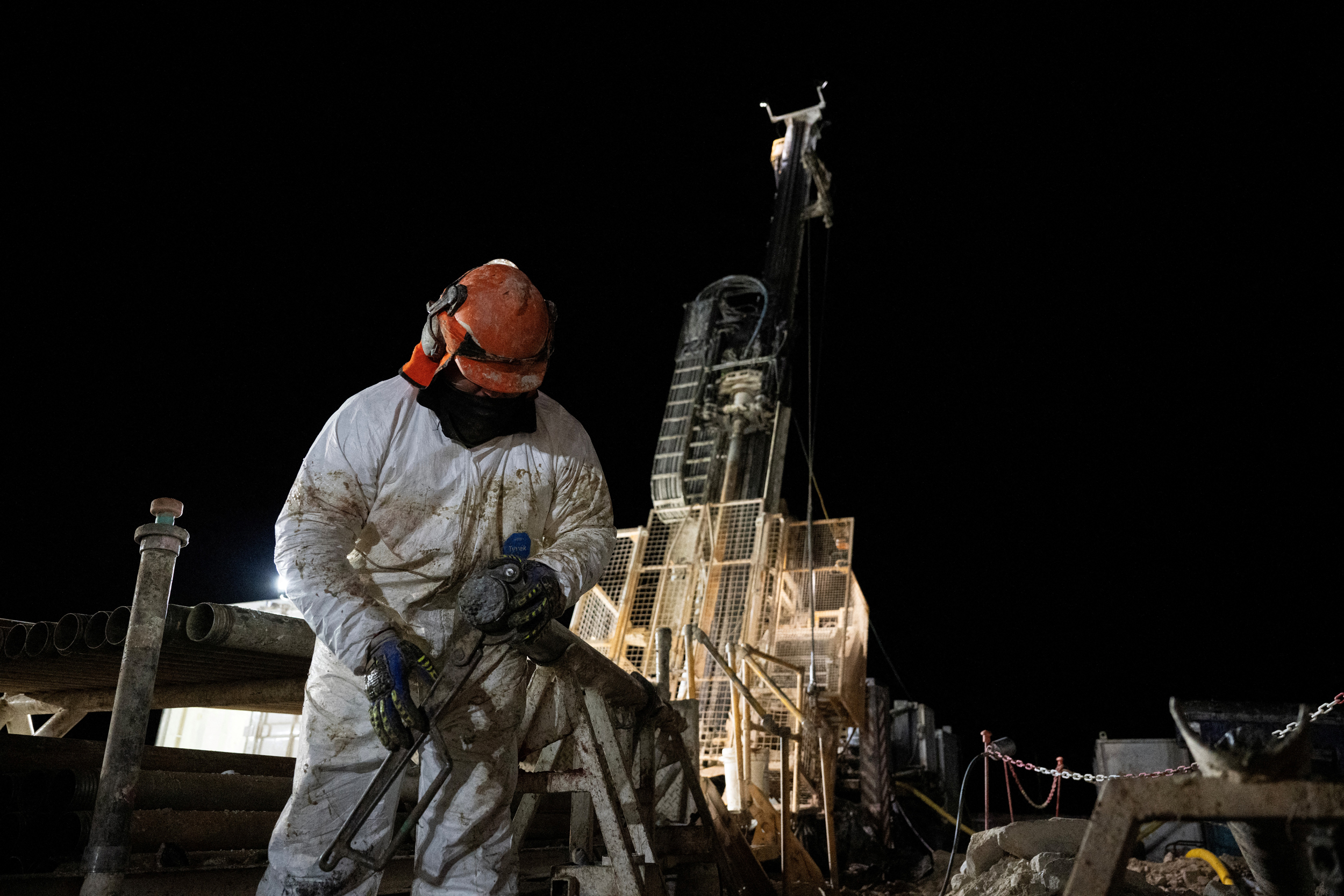
The global rush to mine copper, lithium, cobalt and other so-called critical minerals has been framed by the mining industry as essential for addressing climate change. But a report released Tuesday says that much of the demand fueling today’s mining boom comes from elsewhere.
The report, by the Oakland Institute, a progressive think tank, estimates that more than 70 percent of current demand for critical minerals comes from conventional industries, power grid expansion not dedicated to renewables, consumer goods and—increasingly—the artificial intelligence and defense sectors.
That could leave renewable energy developers competing with other industries for limited mineral supplies, or increase pressure to open new mines despite ruinous environmental and social costs, the group said.
“Rather than saying new mining for renewables will come on top of existing demand, we should demilitarize the global economy and stop this rush for all kinds of industries, and focus whatever mining is already there on renewables,” said Frédéric Mousseau, policy director at the Oakland Institute and report co-author.
The Oakland Institute has spent the past two decades documenting land conflicts around the world and has increasingly focused on mining, studying its impacts on communities.