Audio By Vocalize
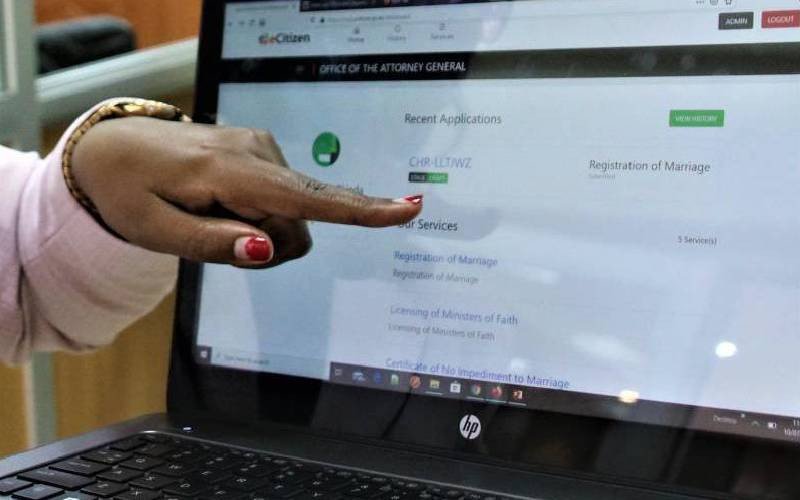
The government's online marriage services platform. [File, Standard]
Across Africa, governments are digitizing almost everything. From welfare payments and health records to national identity systems, technology is steadily becoming part of how citizens access public services. Kenya is no exception. Mobile money has transformed financial inclusion, digital IDs continue to shape public debate and more government services are moving online. Yet amid all this excitement, one question receives far less attention. What happens to the people who fall through the digital cracks?
That is the question at the heart of Digital Social Work Across Africa and Asia, a new book by Siddhartha Paul Tiwari, Adi Fahrudin and Fentiny Nugroho. Rather than focusing on technology companies or government policy, the authors place social workers at the centre of the conversation. These are the people working every day with families facing poverty, displacement, disability and other forms of vulnerability. As governments digitise welfare systems, they are often the first to witness both the promise and the shortcomings of technology.
The book arrives at a time when many countries across the Global South are embracing digital transformation as a pathway to more efficient public services. Governments are investing in online platforms, digital payments and biometric identification systems with the hope of reaching more citizens at lower cost.