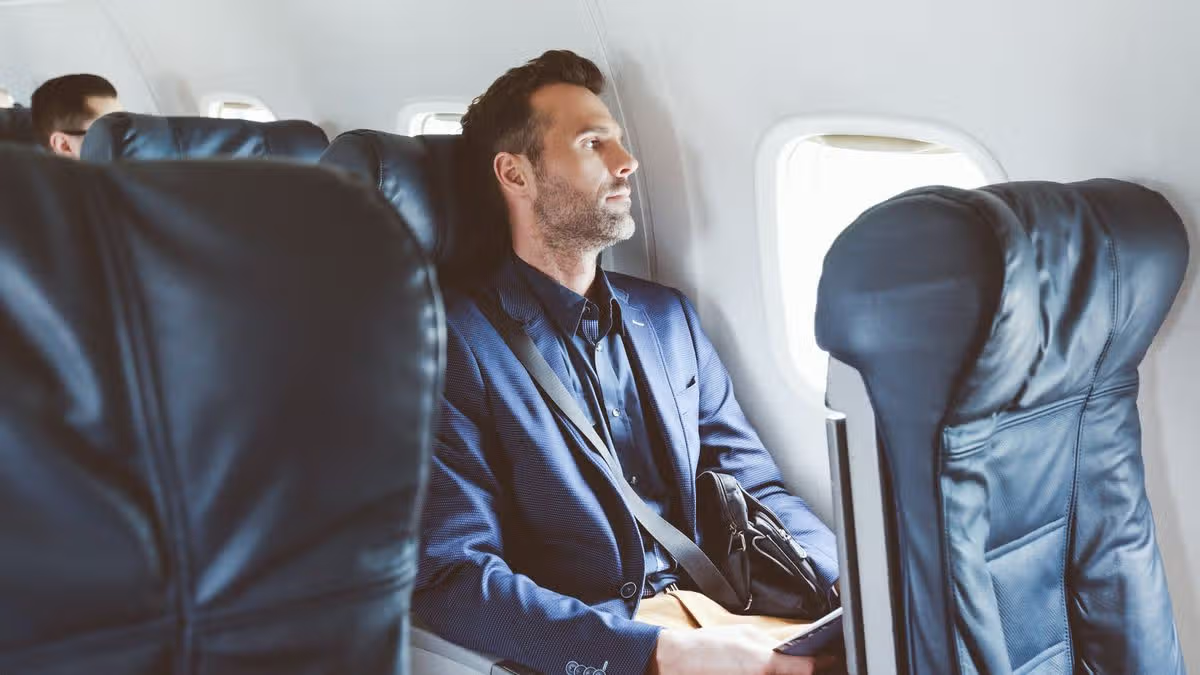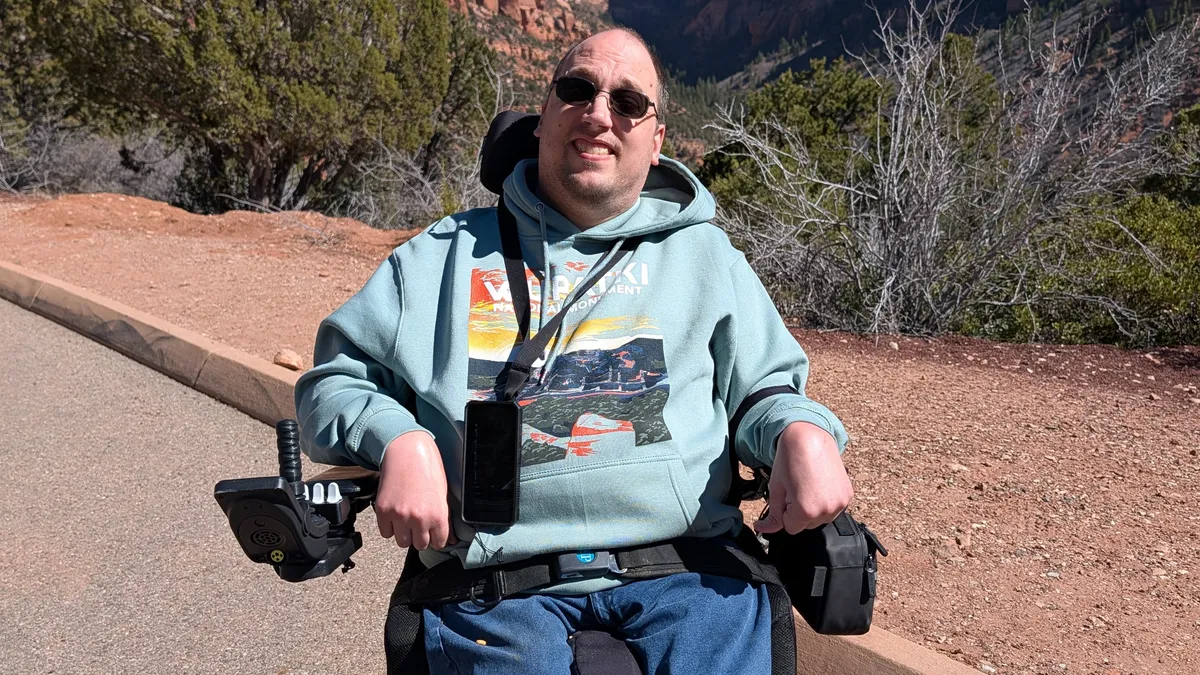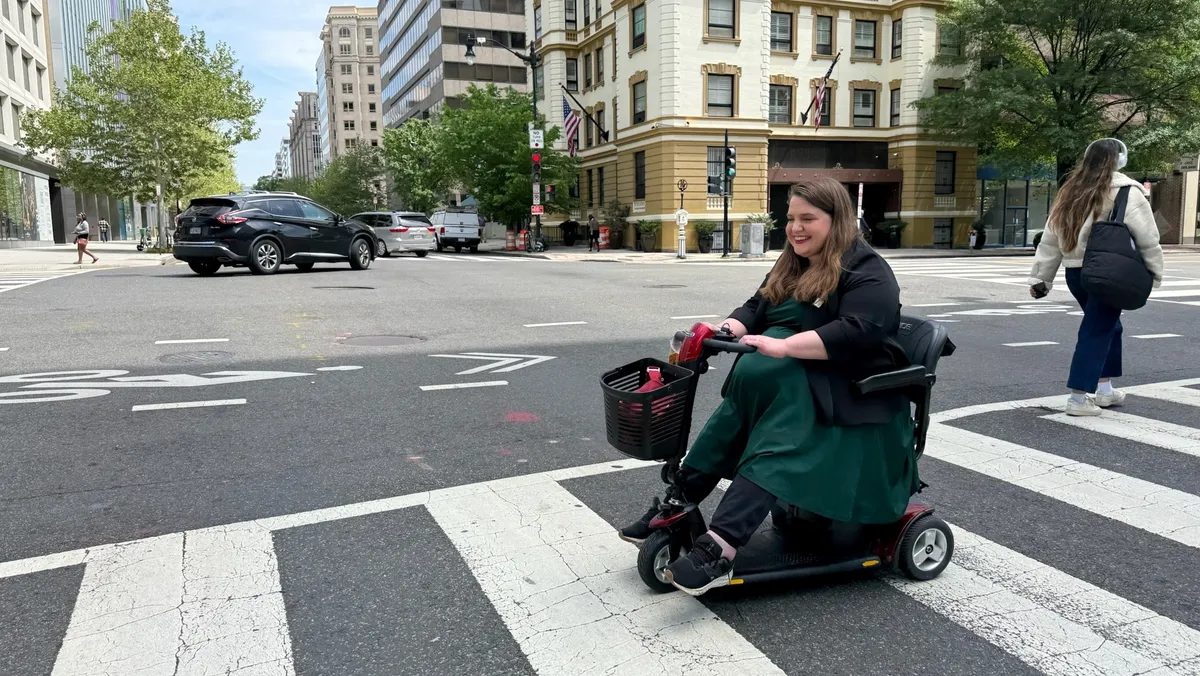
A damaged wheelchair turned one family's Caribbean vacation into a lesson about the challenges travelers with disabilities face.Show Caption
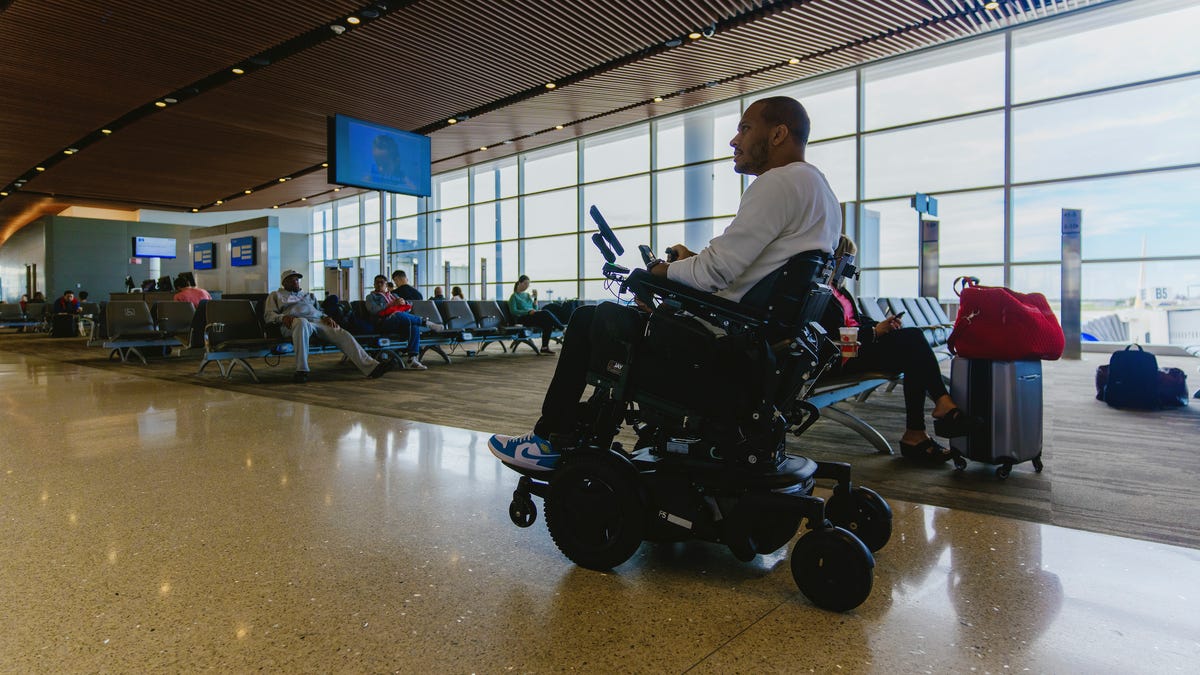
A traveler's new electric wheelchair was damaged by an airline before he reached his final destination.The damage significantly reduced the traveler's independence and impacted his family vacation.The airline apologized and eventually provided a replacement chair about a month after the incident.Justin Schuch was trying to make his trip as easy for himself and his family as possible. He has a mobility impairment that can make it difficult to get around, so when he was planning a trip to Curaçao for his son’s 9th birthday, he decided to buy an electric wheelchair specifically for the journey. “We bought it for the sole purpose of going to Curaçao to navigate through the hotel. We didn’t use it prior to the trip,” he told USA TODAY.Schuch was traveling on JetBlue from Hartford to Curaçao via John F. Kennedy International Airport in New York on May 2. His chair was functioning when he boarded the first flight, but it was broken by the time he arrived at JFK.He said he had taken it apart but was unable to get it to work between flights, meaning his wife or son had to push him through the airport. “At that point my chair became just like a normal wheelchair,” he said. After landing in Curaçao, Schuch still wasn’t able to get the chair to function, which reduced his independence throughout the vacation. Global Repair Group is the contractor that handles mobility device damage claims for JetBlue. “When we did touch down in Curaçao, I used it as a regular chair, we got to the hotel and started communicating with them pretty actively,” Schuch said about the contractor. “It put a dark cloud of trying to work on this while being on vacation at the same time."JetBlue acknowledged the incident in a statement to USA TODAY. “We know how important wheelchairs and assistive devices are to our customers, and we apologize that we did not meet expectations in this situation. We worked directly with the customer to provide a loaner wheelchair while evaluating their device,” the airline’s statement said. “After attempting repairs, it was determined that replacement was the best solution, and we have since resolved the matter with the customer. We remain committed to supporting customers who travel with mobility devices.” Schuch said he got a replacement chair about a month after the initial damage occurred, and that he was frustrated with the process and nervous about flying with the device again. “I had to rely on someone to push me the whole freakin’ time,” Schuch said. “I do think it’s rather insulting that (JetBlue) gave me a $100 credit and I have to use it by November. It’s giving me a pause to fly with them in the future.” Schuch said in the future he hopes airlines learn to treat mobility devices with more care. “I don’t think anybody really understands the impact or realizes the situation that you get put in when you don’t have the tools you need to get around. It’s like: Imagine if you didn’t have shoes to wear to get around and you’re walking on gravel or glass,” he said. “God forbid I was traveling for work, and this happened, it’s not like it has wheels where I can push myself, I would be 100% reliant on somebody else.” How common is airline wheelchair damage? U.S. airlines actually showed significant improvement in 2025 compared with 2024 in terms of wheelchair damage rates, but there’s still work to be done. According to the Department of Transportation, the 10 largest U.S. airlines and their subsidiaries carried 907,259 wheelchairs and other mobility devices in 2025, and the DOT received 9,910 reports of mishandling – a rate of 1.09%. For comparison, carriers mishandled 1.26% of the mobility devices they transported in 2024. Zach Wichter is a travel reporter and writes the Cruising Altitude column for USA TODAY. He is based in New York and you can reach him at zwichter@usatoday.com.