If you have written more than a couple of scrapers, you already know the pattern. The first few hundred requests fly through. Then responses slow down, you start seeing 429 Too Many Requests, a captcha wall appears, and finally the target just returns empty pages or a hard 403. Your code did not change. Your IP did.
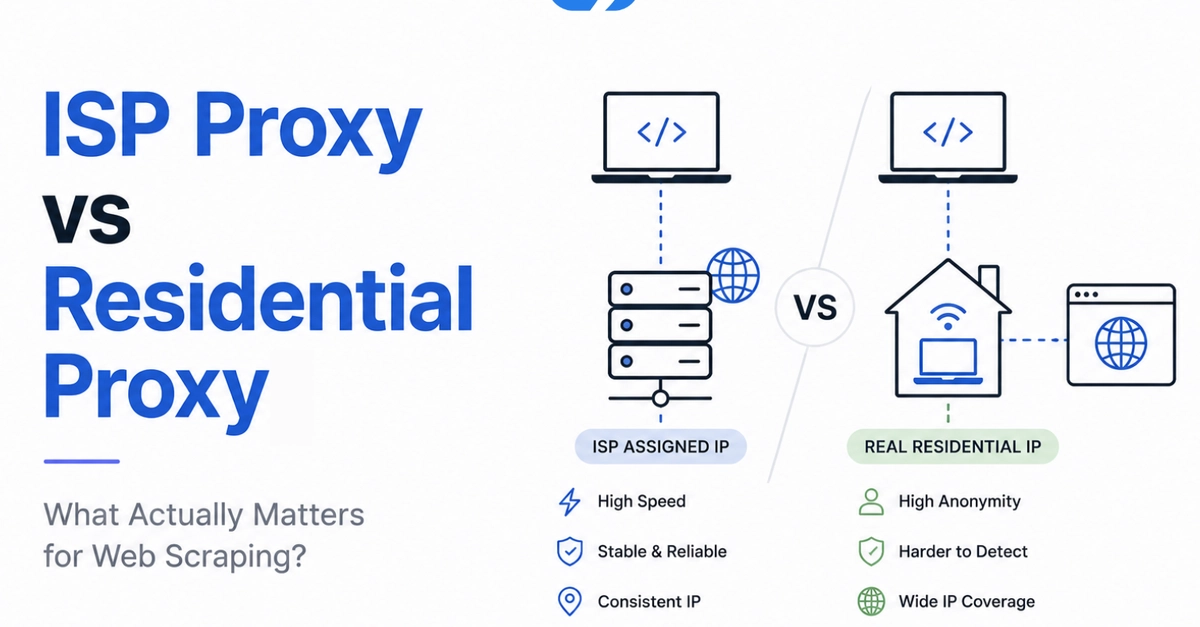
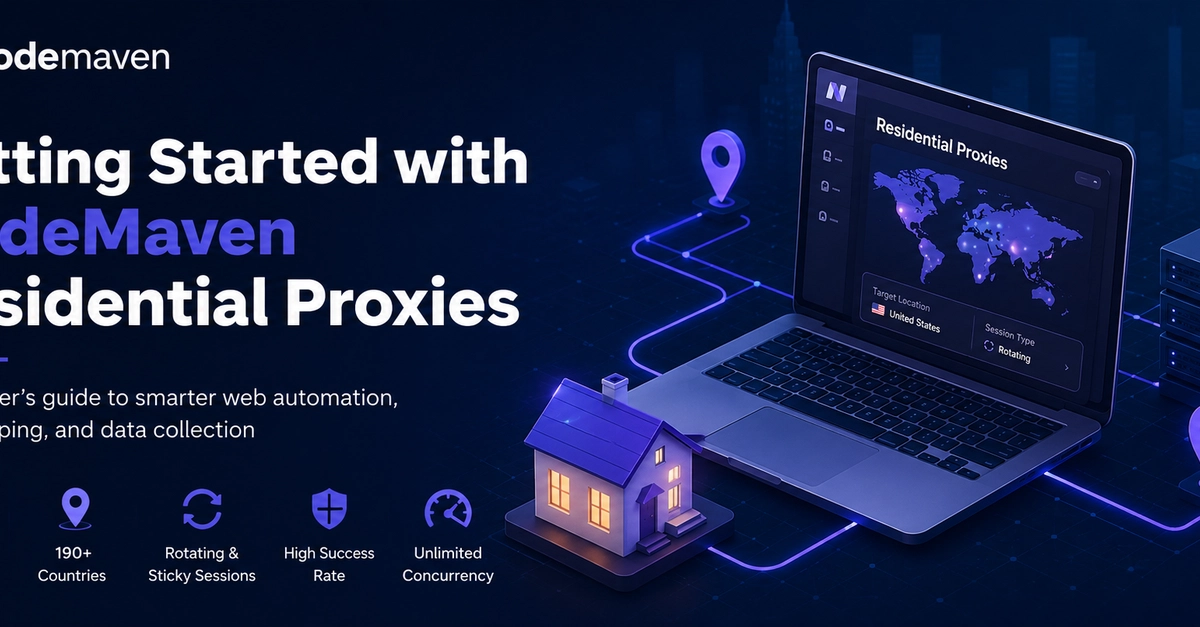
Scraping at any real volume is less about parsing HTML and more about managing where your requests come from. This post is a practical walk-through of how proxies fit into a scraping pipeline: why a single IP fails, what proxy types actually matter, how rotation works, and how to wire it all up in Python with requests, aiohttp, and Scrapy. There is code you can copy, plus the mistakes that cost me the most time.
Why one IP is never enough
Every site you scrape sees the same thing: a stream of requests from one address, arriving faster and more regularly than a human ever would. Anti-bot systems are built to spot exactly that. The signals they use are boring but effective:
Request rate per IP. Too many hits in a short window trips a rate limiter.