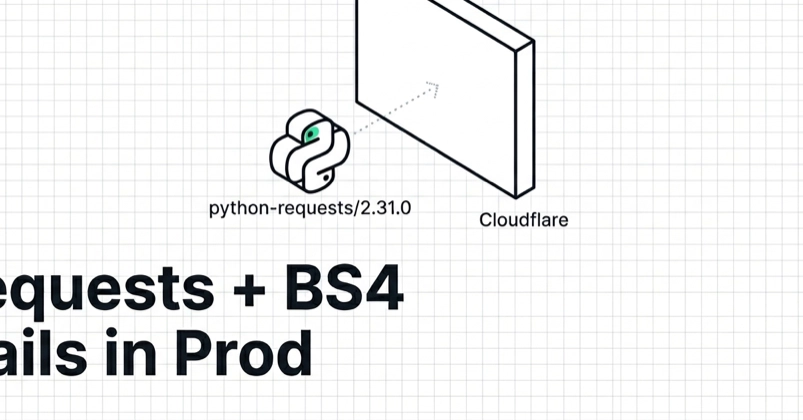
When a requests.get() call returns a 403, or a 200 with an "Access Denied" body, the first instinct is usually to blame the site. But the more likely explanation is that the server received a request that doesn't look anything like what a browser sends — and responded accordingly.
HTTP servers see every header your client sends. A bare requests call sends four. Chrome sends around fifteen, and the values are specific enough that the gap is obvious server-side. This post covers what that gap looks like, why it matters, and how to close it.
What requests actually sends by default
Start a fresh Python session and inspect what requests puts on the wire:
import requests