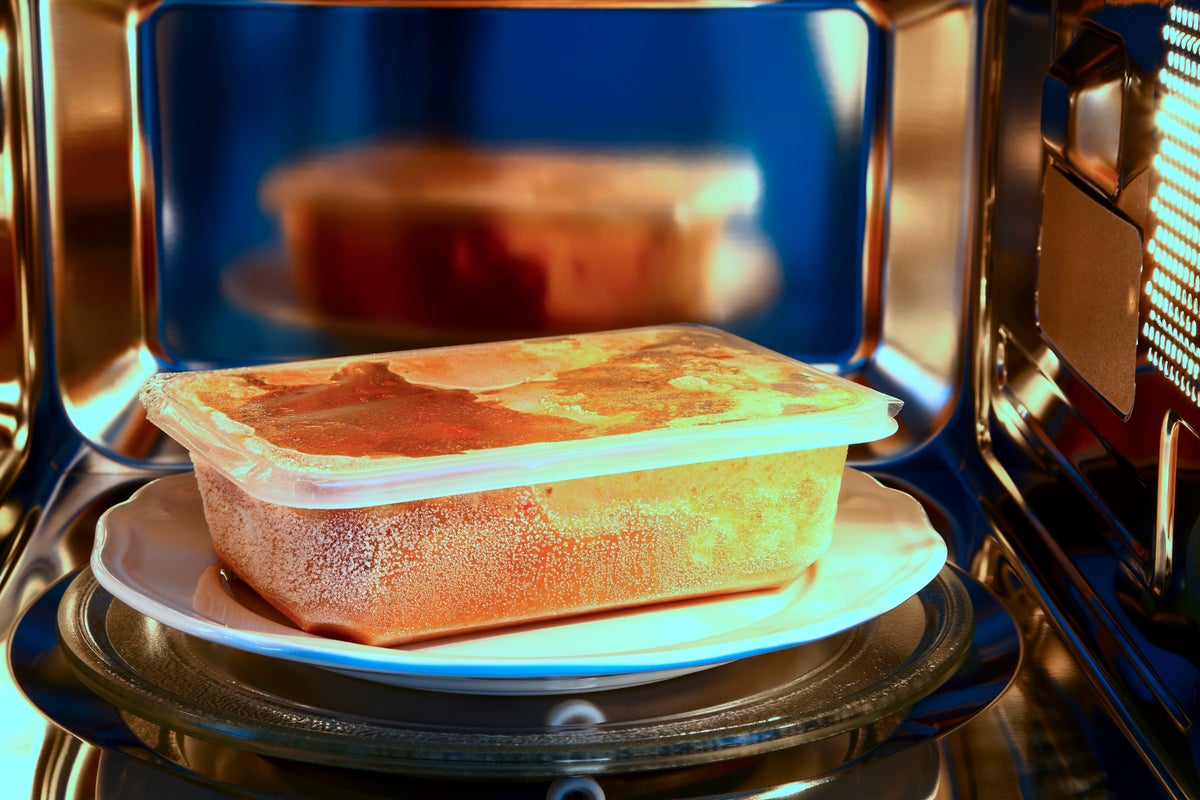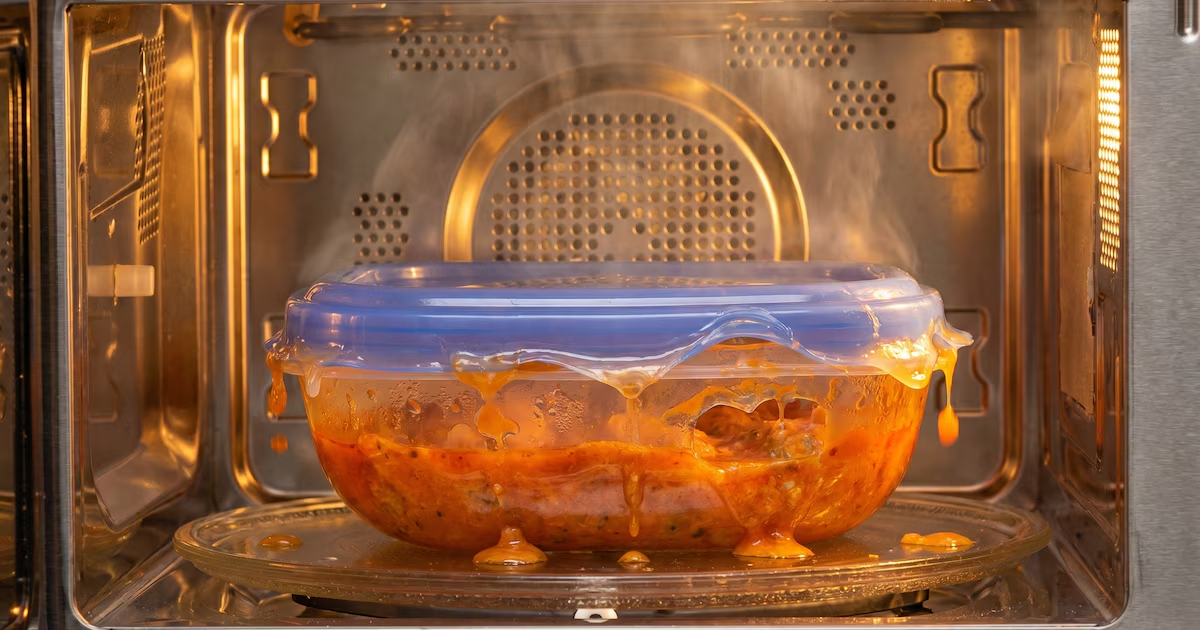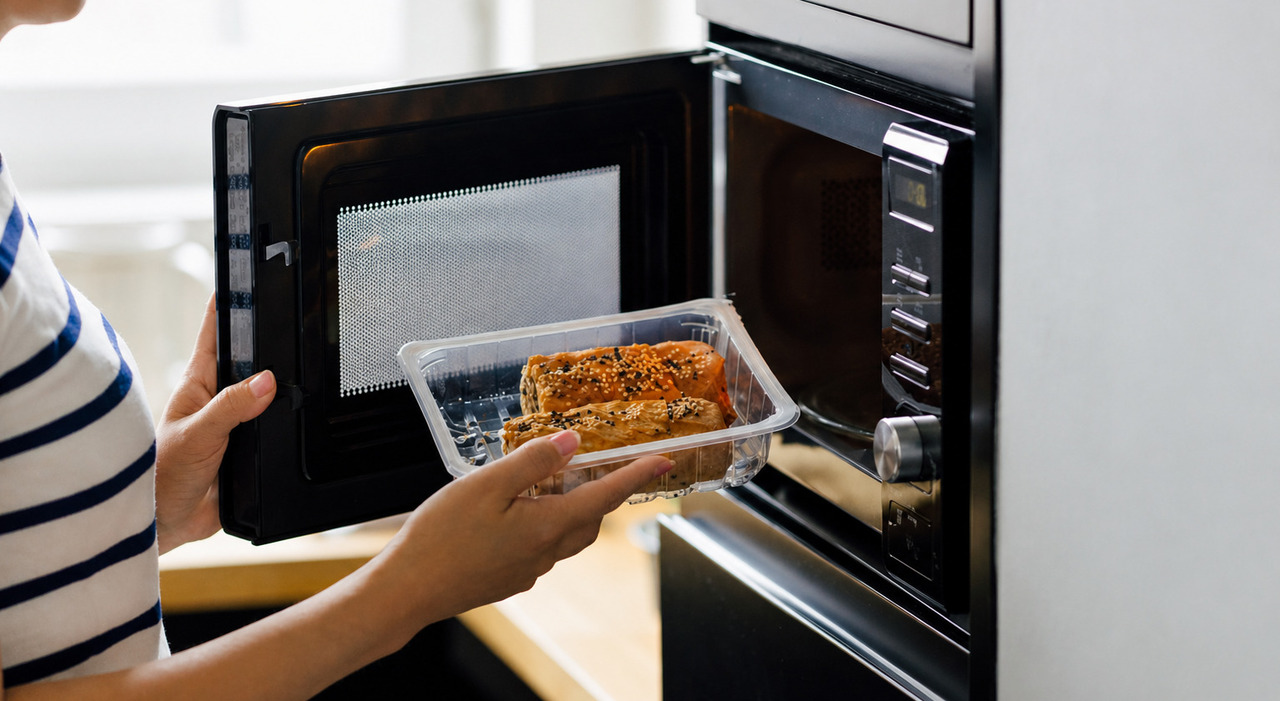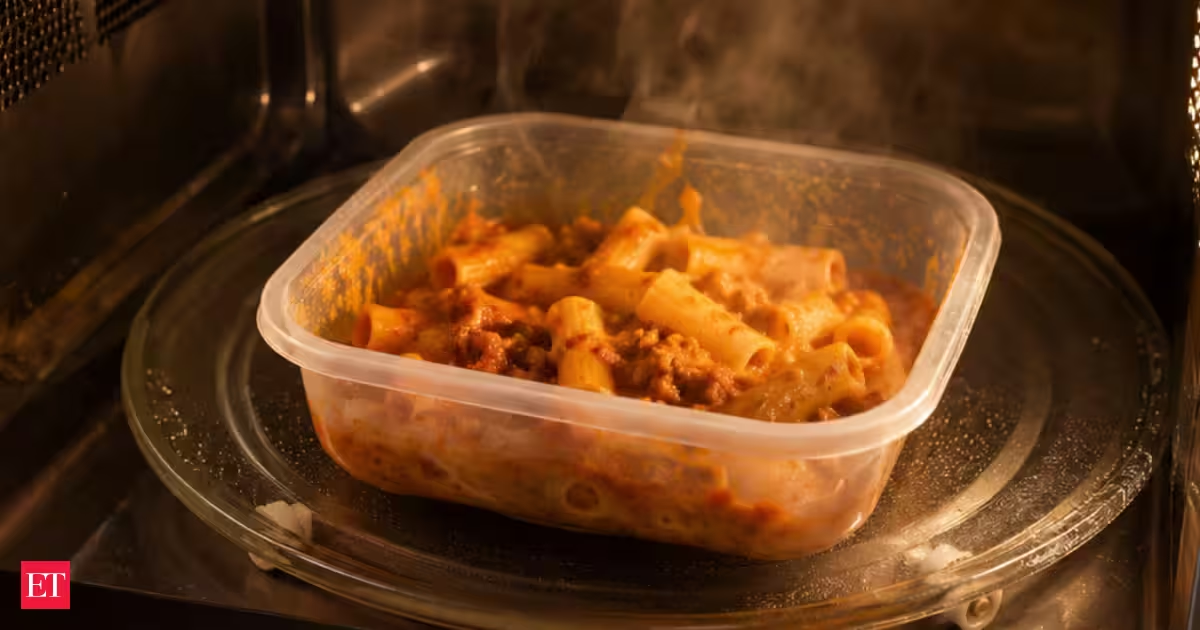
Popping last night's leftovers into a plastic container and microwaving them for a couple of minutes is a habit many Americans repeat several times a week. According to a 2023 study published in Environmental Science & Technology, the quick reheat does more than warm up your food. It can also load the food with plastic particles that are too small to see.The study was conducted by a team at the University of Nebraska-Lincoln, led by Kazi Albab Hussain and Dr. Yusong Li. The researchers filled two polypropylene baby food containers and one polyethylene-based reusable food pouch with either deionized water or a 3% acetic acid solution to mimic aqueous and acidic foods, and exposed them to home-use conditions including refrigeration, room-temperature storage, and microwaving at full power for three minutes.Microwaving released the most particles by farThe same study found that heating for three minutes caused one of the polypropylene containers to shed 4.22 million microplastic particles and 1.21 billion nanoplastic particles from one square centimeter of plastic alone. The second container released 425,000 particles of microplastic and 169 million particles of nanoplastic under the same conditions. In all cases, nanoplastics were about a thousand times more abundant than microplastics, with up to 2.11 billion nanoplastic particles per square centimeter in prolonged high-temperature storage.Refrigeration and room-temperature storage weren't harmless either. Even after being stored for the equivalent of six to 12 months, the containers and pouch continued to emit millions to billions of particles, but at a slower rate than when microwaved, the study found.Worn or scratched containers may release more plastic over time. Image Credits: ChatGPTWhy does heat make it worseHydrolysis is a chemical process where water molecules attack the polymer chains in plastic, breaking them into smaller and smaller fragments. Heat speeds up this process. The researchers say that this combination of microwave heating both the plastic and the food inside caused a faster release of particles than any other condition they tested. In several cases, acidic foods further increased the release. Raman spectroscopy showed that the particles released from both containers were polypropylene, while the pouch was polythene. In general, more particles were released in total.Babies and toddlers face the highest exposureResearchers calculated estimated daily intakes for infants and toddlers aged six to twelve months and twelve to twenty-four months based on typical amounts of water, dairy, fruit, and vegetables consumed at those ages. The highest exposure for infants was 20.3 nanograms per kilogram of body weight per day from drinking microwaved water stored in one of the containers, the study found. Toddlers who had microwaved dairy products in the same container had 22.1 nanograms per kilogram per day.This isn’t the first time polypropylene has been flagged around infant feeding. A 2020 study, ‘Microplastic release from the degradation of polypropylene feeding bottles during infant formula preparation,’ published in Nature Food, found that babies can consume between 14,600 and 4.55 million microplastic particles by the time they reach their first birthday, from just the polypropylene feeding bottles used to make infant formula.It isn't only a baby-bottle problemAdults are not immune either. A study, ‘Human Consumption of Microplastics,’ published in Environmental Science & Technology in 2019, estimated that a person on a typical American diet consumes between 39,000 and 52,000 microplastic particles a year in food and drink alone. Reheating leftovers in plastic is just one of many contributors, but an easier one to change.Babies face higher microplastic exposure from formula and dairy. Image Credits: ChatGPTWhat happened when these particles met human cellsThe Nebraska team didn’t stop at counting particles. They collected the actual fragments leached from one container during microwaving, freeze-dried them, and exposed human embryonic kidney cells to different concentrations in the lab. The study showed that 76.7% of cells died after 48 hours and 77.18% of cells died after 72 hours at the highest concentration of 1,000 micrograms per milliliter. At the lowest concentration tested, about 1 microgram per milliliter, cell survival was close to normal.It's worth reading this carefully. The concentrations used were far higher than a container would realistically leach into a single meal, and cells in a dish don’t behave exactly like cells inside the human body. The researchers point out that the experiment doesn’t establish what a safe level of exposure would look like in the real world, as that dose-response data doesn’t yet exist for humans.A simple takeaway for your kitchenThat does not mean plastic containers should be thrown out. But one simple solution that is worth considering, in light of the findings of this research, is to move food into glass or ceramic before microwaving it, especially anything acidic. Parents can easily adopt easy habits like letting formula or milk cool before pouring it into a plastic bottle and not microwaving anything a baby will eat or drink. Plastic isn’t going away from American kitchens anytime soon, but this study provides real, measured evidence that heat and plastic don’t always mix well, and the microwave may be doing more than just warming up dinner.
Millions of Americans reheat leftovers in plastic containers, but researchers found that three minutes in the microwave released billions of nanoplastic particles per square centimeter
A new study reveals that reheating food in plastic containers can release billions of harmful nanoplastic particles. Researchers highlight the risks especially for infants and toddlers while suggesting safer alternatives for storing food.
833 words~4 min read