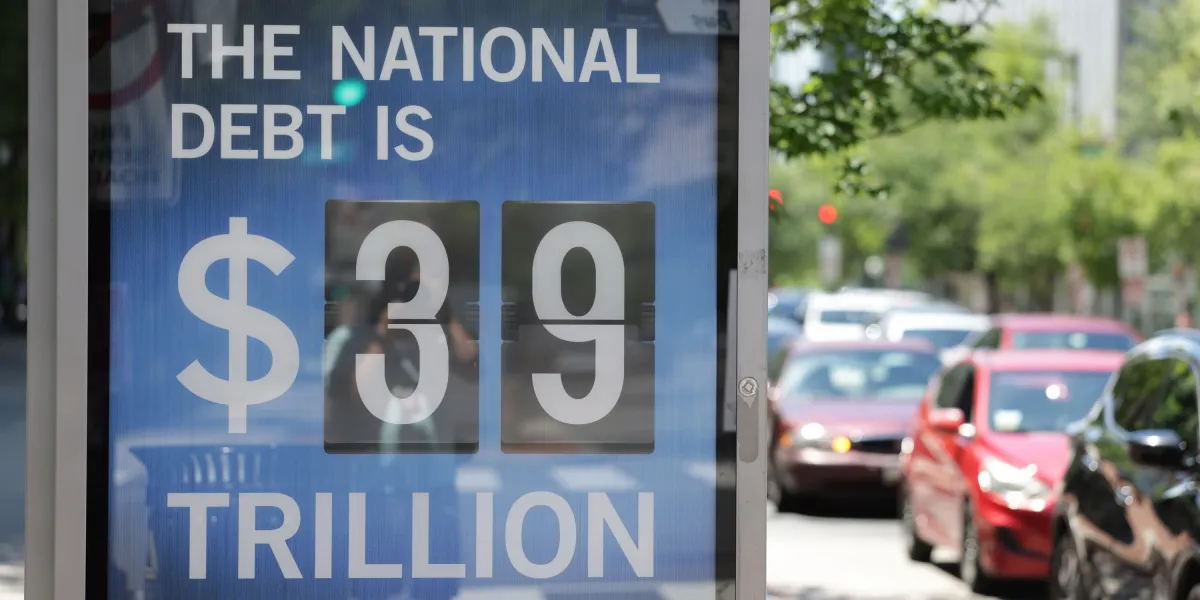
In the debate about the level of threat the U.S. national debt poses to the economy, most people can agree that any crisis will be felt most sharply by the youngest people in the economy.For example, Citadel CEO Ken Griffin has previously warned that surging debt is an issue the government cannot afford to ignore, writing in his 2023 letter to shareholders that “It is irresponsible for the U.S. government to incur a deficit of 6.4% when unemployment is hovering around 3.75%. We must stop borrowing at the expense of future generations.”A report published yesterday by the Peter G Peterson Foundation suggests that Gen Z, in particular, will face a smaller job market with lower wages if the fiscal trajectory of the country continues to persist.“Rising interest costs not only crowd out resources for public investments within the budget, but also deter private investment in businesses, which slows economic growth and negatively impacts the labor market,” the report says.
One might argue that the Peter G Peterson Foundation would issue such a warning—after all, the organization was founded to find solutions to get America on a more sustainable fiscal path.
However, the think tank has outsourced some of its data analysis—most notably to EY’s Quantitative Economics and Statistics (QUEST) practice, which found this spring that the rising debt path will reduce the number of jobs in the U.S. by 1.2 million by 2035, compared to a scenario in which lawmakers stabilize the debt.