Bitcoin’s latest governance skirmish isn’t about price. It’s about power. BIP-110, a proposal designed to limit non-monetary data stuffed into Bitcoin transactions, has sparked one of the most contentious debates since the block size wars. And like that earlier conflict, the real question underneath it all is deceptively simple: who gets to decide what Bitcoin becomes?
The proposal, formally known as the “Reduced Data Temporary Softfork,” was introduced on December 3, 2025, by developer Dathon Ohm. Its goal was to curtail what proponents consider spam, things like large witness data blobs, oversized OP_RETURN outputs, and certain Taproot features being used to embed arbitrary data onto the blockchain.
What BIP-110 actually does
The proposal adds seven temporary rules that restrict various data fields within Bitcoin transactions for approximately one year, or roughly 52,416 blocks. Specifically, it targets large scriptPubKeys, witness data exceeding 256 bytes, and OP_RETURN outputs larger than 83 bytes.
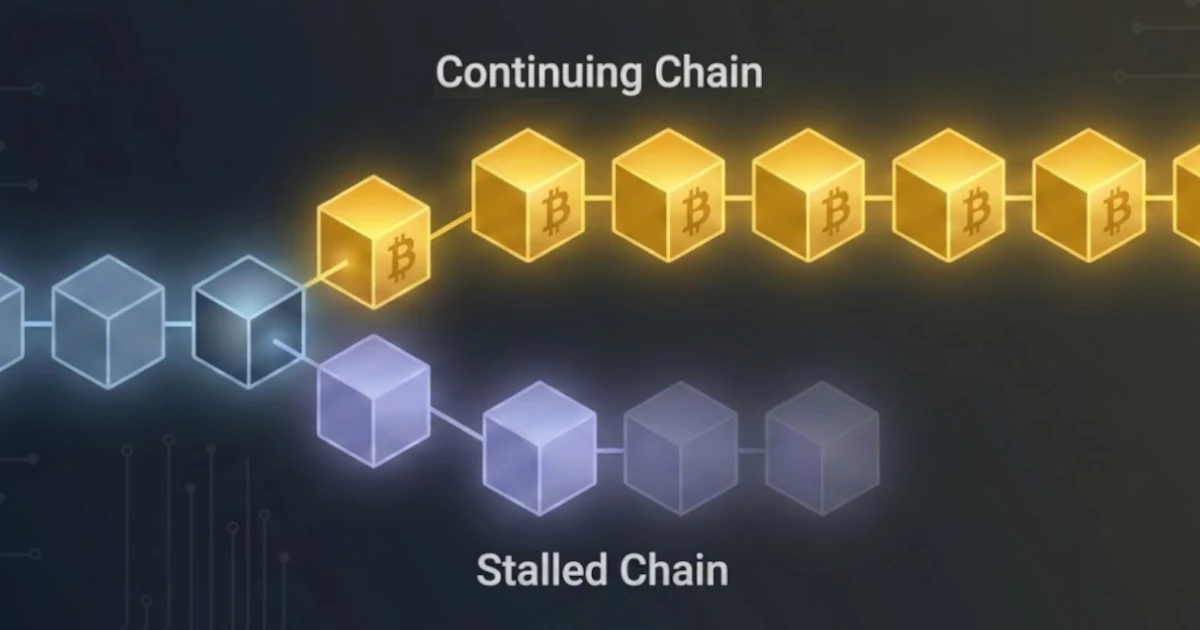
BIP-110 was designed to activate through miner signaling, using version bit 4 with a relatively low 55% threshold for early lock-in. The activation window was targeted for around August to September 2026. Ocean pool, the mining operation closely associated with Bitcoin developer Luke Dashjr, mined the first signaling block in early March 2026.