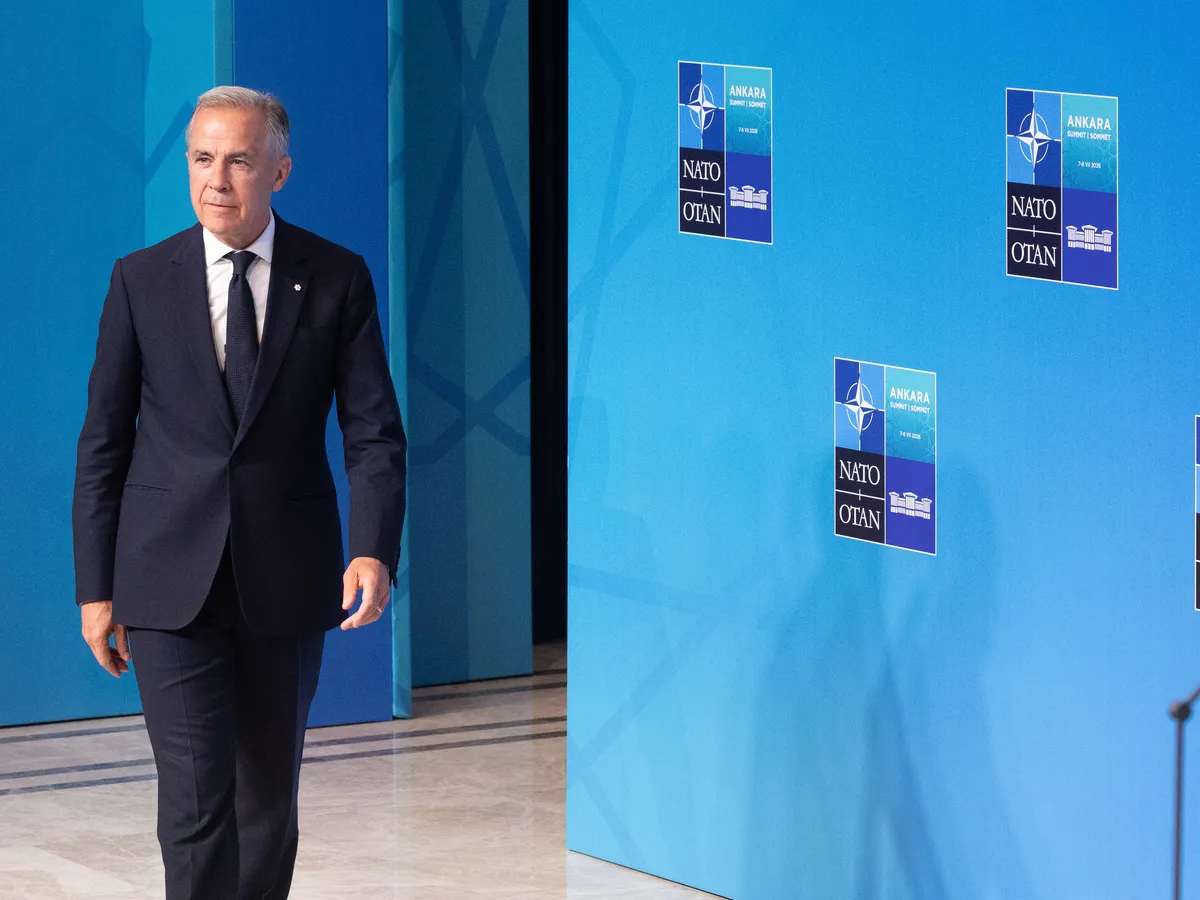
Skip to Content News Archives Economy Energy Oil & Gas Renewables Electric Vehicles Mining Commodities Agriculture Real Estate Mortgages Mortgage Rates Finance Banking Insurance Fintech Cryptocurrency Work Wealth Smart Money Wealth Management Investor Personal Finance Family Finance Retirement Taxes High Net Worth FP Comment Executive Women Puzzmo Newsletters Financial Times Business Essentials More Innovation Information Technology FP500 Podcasts Small Business Lives Told Tails Told Shopping Financial Post Store Obituaries Place a Notice Advertising Advertising With Us Advertising Solutions Postmedia Ad Manager Sponsorship Requests Classifieds Place a Classifieds ad Working Profile Settings My Subscriptions Saved Articles My Offers Newsletters Customer Service FAQ News Economy Energy Mining Real Estate Finance Work Wealth Investor FP Comment Executive Women Puzzmo Newsletters Financial Times Business Essentials HomeFP CommentMatthew Lau: Europhile Carney should cut licensing to European levelsThe more a country requires occupational licenses, the slower it grows. Surprisingly, a new study suggests Europe outsmarts us that wayLast updated 1 hour ago You can save this article by registering for free here. Or sign-in if you have an account.Prime Minister Mark Carney at the 2026 NATO Leaders Summit on July 8 in Ankara, Turkey. Photo by Serdar Ozsoy/Getty Images filesMark Carney has called Canada “the most European of non-European countries.” Is being more European good or bad? A new study suggests at least one area — occupational licensing — where Canadian politicians should learn from Europe and not require so many workers to get government permission to practice their professions. The study, published by Jonathan S. Hartley of Stanford University and Morris M. Kleiner of the University of Minnesota, shows occupational licensing is heavier in Canada than in much of Europe and that licensing is associated with a wide range of negative outcomes.Subscribe now to read the latest news in your city and across Canada.Exclusive articles from Barbara Shecter, Joe O'Connor, Gabriel Friedman, and others.Daily content from Financial Times, the world's leading global business publication.Unlimited online access to read articles from Financial Post, National Post and 15 news sites across Canada with one account.National Post ePaper, an electronic replica of the print edition to view on any device, share and comment on.Daily puzzles, including the New York Times Crossword.Subscribe now to read the latest news in your city and across Canada.Exclusive articles from Barbara Shecter, Joe O'Connor, Gabriel Friedman and others.Daily content from Financial Times, the world's leading global business publication.Unlimited online access to read articles from Financial Post, National Post and 15 news sites across Canada with one account.National Post ePaper, an electronic replica of the print edition to view on any device, share and comment on.Daily puzzles, including the New York Times Crossword.Create an account or sign in to continue with your reading experience.Access articles from across Canada with one account.Share your thoughts and join the conversation in the comments.Enjoy additional articles per month.Get email updates from your favourite authors.Create an account or sign in to continue with your reading experience.Access articles from across Canada with one accountShare your thoughts and join the conversation in the commentsEnjoy additional articles per monthGet email updates from your favourite authorsSign In or Create an AccountorOf the 44 countries in the study, Canada has the 18th most occupational licensing, with 25.1 per cent of the labour force requiring a license. The most restrictive countries in the study are India (42.5 per cent) and South Africa (40.2 per cent), and only two European countries are in the top 10. Conversely, Denmark (14.0 per cent) and Sweden (15.3 per cent) have the least licensing, and nine of the 10 least restrictive countries are in Europe.Get the latest headlines, breaking news and columns.By signing up you consent to receive the above newsletter from Postmedia Network Inc.A welcome email is on its way. If you don't see it, please check your junk folder.The next issue of Top Stories will soon be in your inbox.We encountered an issue signing you up. Please try againComparing the rate of licensing with GDP statistics, governance indicators from the World Bank and other metrics, Hartley and Kleiner conclude that “countries with higher occupational licensing prevalence tend to exhibit lower levels of GDP per capita, larger informal sectors, and weaker governance outcomes, including lower regulatory quality, weaker rule of law, and reduced control of corruption.” Correlation is not causation, but the authors say their findings suggest occupational licensing may affect labour market and economic outcomes by reducing labour mobility, inflating prices, reducing economic dynamism and misallocating resources.Consistent with basic economic theory, the study found licensing, by restricting supply, increases wages for the licensed workers by six to 19 per cent compared to unlicensed workers. Unfortunately, less supply and higher wages for licensed workers are equivalent to less choice and higher prices for consumers. Licensing also means less freedom of choice and lower incomes for workers, who are prohibited from practicing their chosen professions.In fact, despite the wage premium they enjoy, even the licensed workers themselves do not necessarily benefit. Obtaining licenses takes time and is often costly. It also restricts their mobility. In Canada, licensed practical nurses, dental hygienists, and paramedics trained in one province are often forced to undergo retraining before the government will let them practice in another province. Do these professionals benefit from the heavy licensing requirements? Do taxpayers? And what about patients denied access to health care because of workforce shortages?The harms of occupational licensing are clear: higher costs, barriers to entry that reduce competition and innovation, less freedom for workers and less choice for consumers. What are the benefits? The standard argument for licensing is that government regulation of certain professions is needed to protect consumers. But this claim that consumers need government protection does not pass the smell test.Today in Canada, government proposes to regulate nearly out of existence the cars consumers want to buy and subsidize the cars they do not want to buy, operates a health care system with a median 48.6-week wait time for orthopaedic surgery, enforces $49.2-billion worth of artificial monopoly rights for agricultural products, and has outlawed plastic straws so that everyone is drinking out of paper straws that dissolve in their drinks. So, what is it that government actually knows about protecting consumers? Judging from its policies, nothing whatsoever.The consumer protection argument also fails given how wide-ranging licensing is. In Nova Scotia, Ontario, Manitoba, Saskatchewan and Alberta, hairstylists are required to obtain a trade certification. In New Brunswick, anyone calling themselves a “hairstylist” or “hairdresser” must be licensed by the Cosmetology Association of New Brunswick. Do consumers really need government to protect them from incompetent hairstylists? And why on earth should government — as opposed to consumers themselves — decide who is a competent or incompetent hairstylist?Even in other professions, the consumer protection argument fails. Milton Friedman famously argued in his 1962 book Capitalism and Freedom that occupational licensing for doctors: discouraged technological innovation in health care, encouraged organizational inefficiency, established incentives for people to get around licensing, reduced access to competent medical care, expanded practice by unlicensed suppliers who had no qualifications whatsoever, restricted competition and protected bad licensed doctors from being expelled from the profession. He concluded that “licensure has both reduced the quantity and quality of medical practice” and “forced the public to pay more for less satisfactory medical service.”Occupational licensing hurts workers and consumers in a wide range of industries. For better health care, better hairstyles and higher GDP, Carney and other Canadian politicians should learn from Europe and Milton Friedman. We would all benefit from less government and less licensing.Financial Post Join the Conversation This website uses cookies to personalize your content (including ads), and allows us to analyze our traffic. Read more about cookies here. By continuing to use our site, you agree to our Terms of Use and Privacy Policy.
Matthew Lau: Europhile Carney should cut licensing to European levels
The more a country requires occupational licenses, the slower it grows. A new study suggests Europe outsmarts Canada that way. Read more.
1,291 words~6 min read