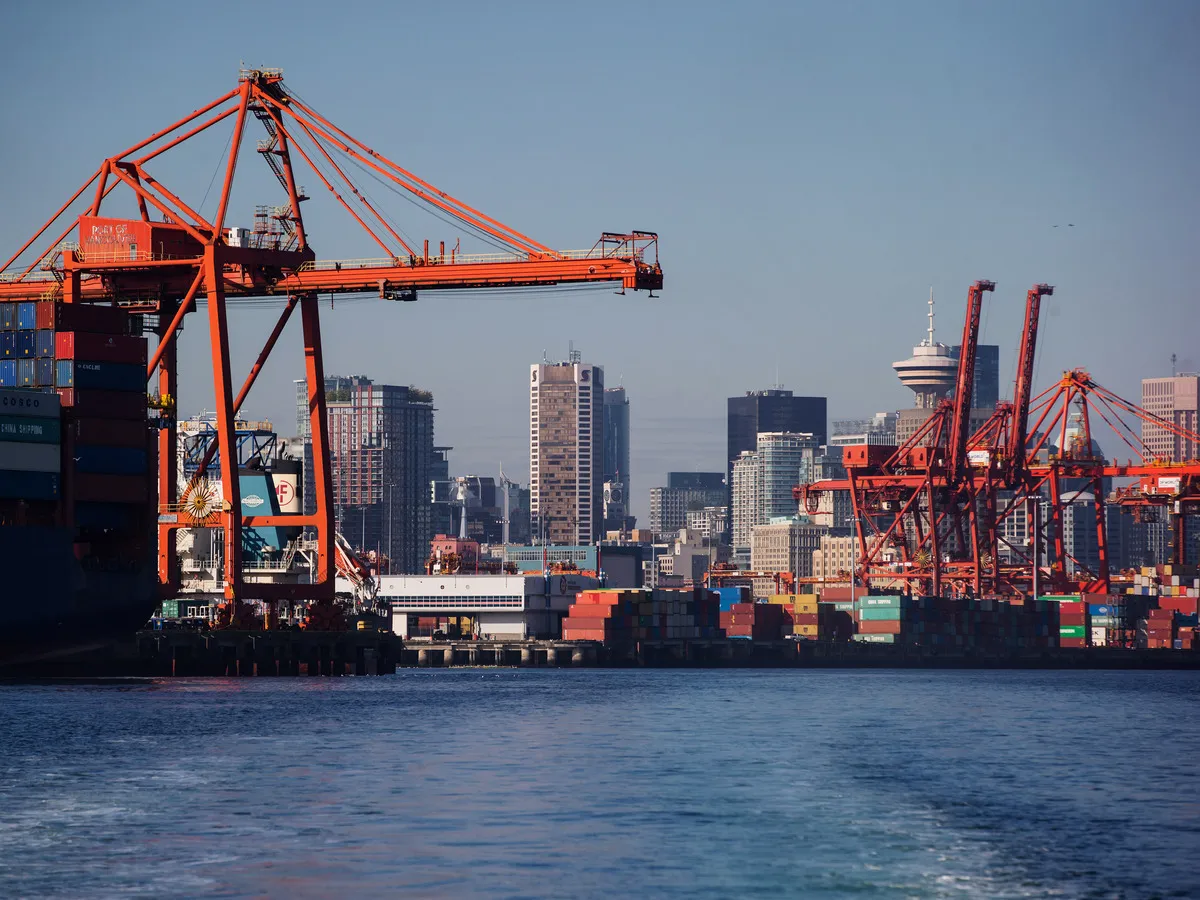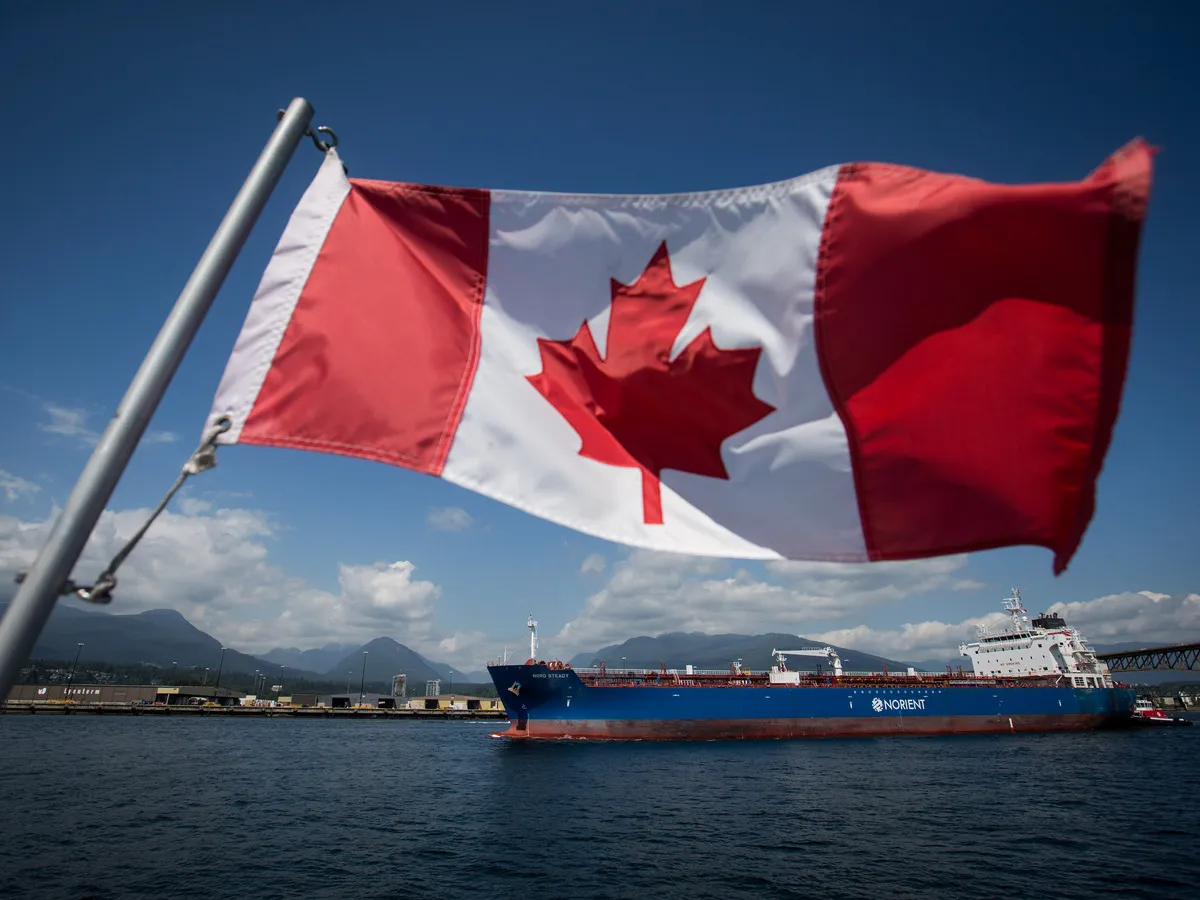
Skip to Content News Archives Economy Energy Oil & Gas Renewables Electric Vehicles Mining Commodities Agriculture Real Estate Mortgages Mortgage Rates Finance Banking Insurance Fintech Cryptocurrency Work Wealth Smart Money Wealth Management Investor Personal Finance Family Finance Retirement Taxes High Net Worth FP Comment Executive Women Puzzmo Newsletters Financial Times Business Essentials More Innovation Information Technology FP500 Podcasts Small Business Lives Told Tails Told Shopping Financial Post Store Obituaries Place a Notice Advertising Advertising With Us Advertising Solutions Postmedia Ad Manager Sponsorship Requests Classifieds Place a Classifieds ad Working Profile Settings My Subscriptions Saved Articles My Offers Newsletters Customer Service FAQ News Economy Energy Mining Real Estate Finance Work Wealth Investor FP Comment Executive Women Puzzmo Newsletters Financial Times Business Essentials HomeFP CommentPhilip Cross: We ignore slow economic growth at our perilCanadians think a lot of ourselves but our self-images are put in doubt by incomes falling farther and farther behind those in the U.S.Last updated 1 hour ago You can save this article by registering for free here. Or sign-in if you have an account.A Canadian flag flies from a Harbour Authority patrol boat as the Nord Steady oil and chemical tanker is guided by tugboats out of the Port of Vancouver in Vancouver, B.C. Photo by Darryl Dyck/Bloomberg filesI recently attended a screening by the Montreal Economic Institute of the film “L’Illusion tranquille” — or “The Quiet Illusion,” word-play on the “Quiet Revolution,” the usual term for the transformation of Quebec’s governance in the 1960s. What’s the illusion? Though Quebec views itself as not just distinct but also a model for others to emulate, the reality is its average income lags that of most other states and provinces. Some model!Subscribe now to read the latest news in your city and across Canada.Exclusive articles from Barbara Shecter, Joe O'Connor, Gabriel Friedman, and others.Daily content from Financial Times, the world's leading global business publication.Unlimited online access to read articles from Financial Post, National Post and 15 news sites across Canada with one account.National Post ePaper, an electronic replica of the print edition to view on any device, share and comment on.Daily puzzles, including the New York Times Crossword.Subscribe now to read the latest news in your city and across Canada.Exclusive articles from Barbara Shecter, Joe O'Connor, Gabriel Friedman and others.Daily content from Financial Times, the world's leading global business publication.Unlimited online access to read articles from Financial Post, National Post and 15 news sites across Canada with one account.National Post ePaper, an electronic replica of the print edition to view on any device, share and comment on.Daily puzzles, including the New York Times Crossword.Create an account or sign in to continue with your reading experience.Access articles from across Canada with one account.Share your thoughts and join the conversation in the comments.Enjoy additional articles per month.Get email updates from your favourite authors.Create an account or sign in to continue with your reading experience.Access articles from across Canada with one accountShare your thoughts and join the conversation in the commentsEnjoy additional articles per monthGet email updates from your favourite authorsSign In or Create an AccountorA particularly striking statistic cited in the documentary is Quebec’s ranking near the bottom of GDP per capita among the 60 states and provinces of North America. This is reflected in UQAM Professor Pierre Fortin’s calculation that GDP per capita in neighbouring New York state — $87,000 in 2018 — was almost twice as high as Quebec’s $48,000. (Both numbers are in U.S. dollars at “purchasing power parity.”)Get the latest headlines, breaking news and columns.By signing up you consent to receive the above newsletter from Postmedia Network Inc.A welcome email is on its way. If you don't see it, please check your junk folder.The next issue of Top Stories will soon be in your inbox.We encountered an issue signing you up. Please try againWhen the film’s audience was asked for its post-screening reaction, one comment was that it seemed overly pessimistic. On the contrary, the documentary arguably does not capture the speed at which the U.S. has been pulling away from Canada over the past couple of years in the race to develop and deploy innovative new technologies, particularly artificial intelligence.The U.S. economy is experiencing a surge in spending by its technology behemoths. Its four leading tech companies — Alphabet, Meta, Apple and Microsoft — are together planning $650 billion of spending on AI infrastructure. Total U.S. spending on AI this year will reach nearly $1 trillion, a sum that exceeds the entire defence budget.Driven by rising business investment, American real GDP grew 2.7 per cent in the past year. Since the fourth quarter of 2024, investment is up 8.2 per cent — this despite the Trump administration’s genius for misgovernment by raising tariffs and meddling in industrial policy, both of which have stoked inflation and swollen the government’s budget deficit. Though Trump promised tariffs would lead firms to shift production to the U.S., manufacturing investment declined 15 per cent over the past year, according to the Census Bureau. Instead, investment was concentrated in a 27.6 per cent gain for information-processing equipment and software.Meanwhile, though Canada did manage to eke out a 0.7 per cent gain in real GDP over the past year, business investment fell 1.2 per cent, continuing its decade-long slump. Statcan’s annual survey of business investment intentions foretells no improvement over the rest of 2026. Consumer and government spending were the only sectors where demand expanded.Canada’s shrinking stature on the international stage was epitomized by recent comments by Bloomberg Surveillance’s co-hosts Jonathan Ferro and Lisa Abramowitz. Their recent interview with Invesco’s Matt Brill (about 90 minutes into the program) focused on Alphabet’s raising funds on European and Canadian markets after tapping the U.S. market three times earlier this year in its apparently insatiable need to fund its investments. Ferro laughingly derided Alphabet’s raising $8.5 billion in the Canadian market as the corporate equivalent of looking for nickels and dimes “under the couch cushions.” Ridicule of Canada’s trivial role in the financial world must be particularly galling for Prime Minister Mark Carney, a former investment banker at Goldman Sachs, which specializes in corporate deals.The contrast between the United States and Canada couldn’t be more striking. South of the border, technology firms are spending every dollar they can raise. Here firms remain reluctant to invest even with soaring prices for commodities such as minerals and oil. Given the widening gap in investment trends between the two countries, the difference in per capita incomes will only continue to grow. The resulting incentive for our most talented young people to move to the U.S. threatens our future prosperity and sovereignty. In the words of Evsey Domar, author of a seminal 1946 paper on economic growth, “When an aggressive part of the world is strong and quite successfully committed to rapid growth, the other can disregard this objective only if it is tired of its own existence as a society.”Both Quebec and Canada need to pay attention to Domar’s observation. However highly we think of ourselves, we ignore our slow growth at our peril.Philip Cross is a senior fellow at the Macdonald-Laurier Institute. Join the Conversation This website uses cookies to personalize your content (including ads), and allows us to analyze our traffic. Read more about cookies here. By continuing to use our site, you agree to our Terms of Use and Privacy Policy.
Philip Cross: We ignore slow economic growth at our peril
Canadians think a lot of ourselves but our self-images are put in doubt by incomes falling farther and farther behind the U.S. Read more.
1,224 words~6 min read