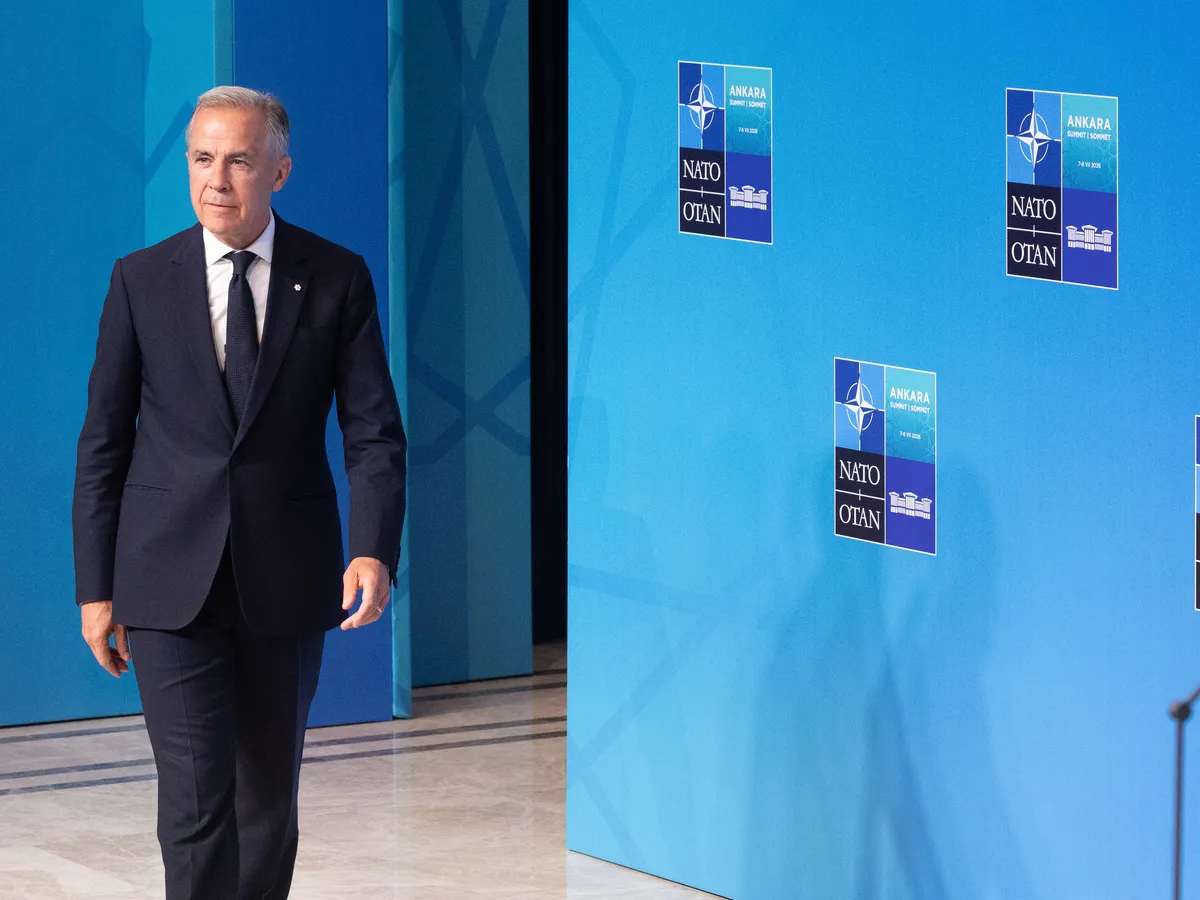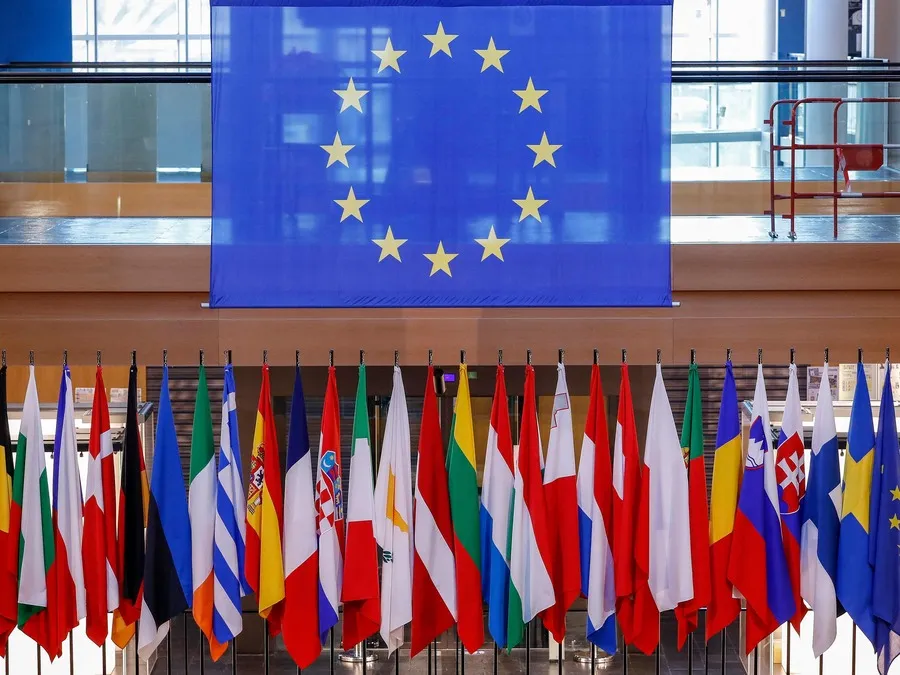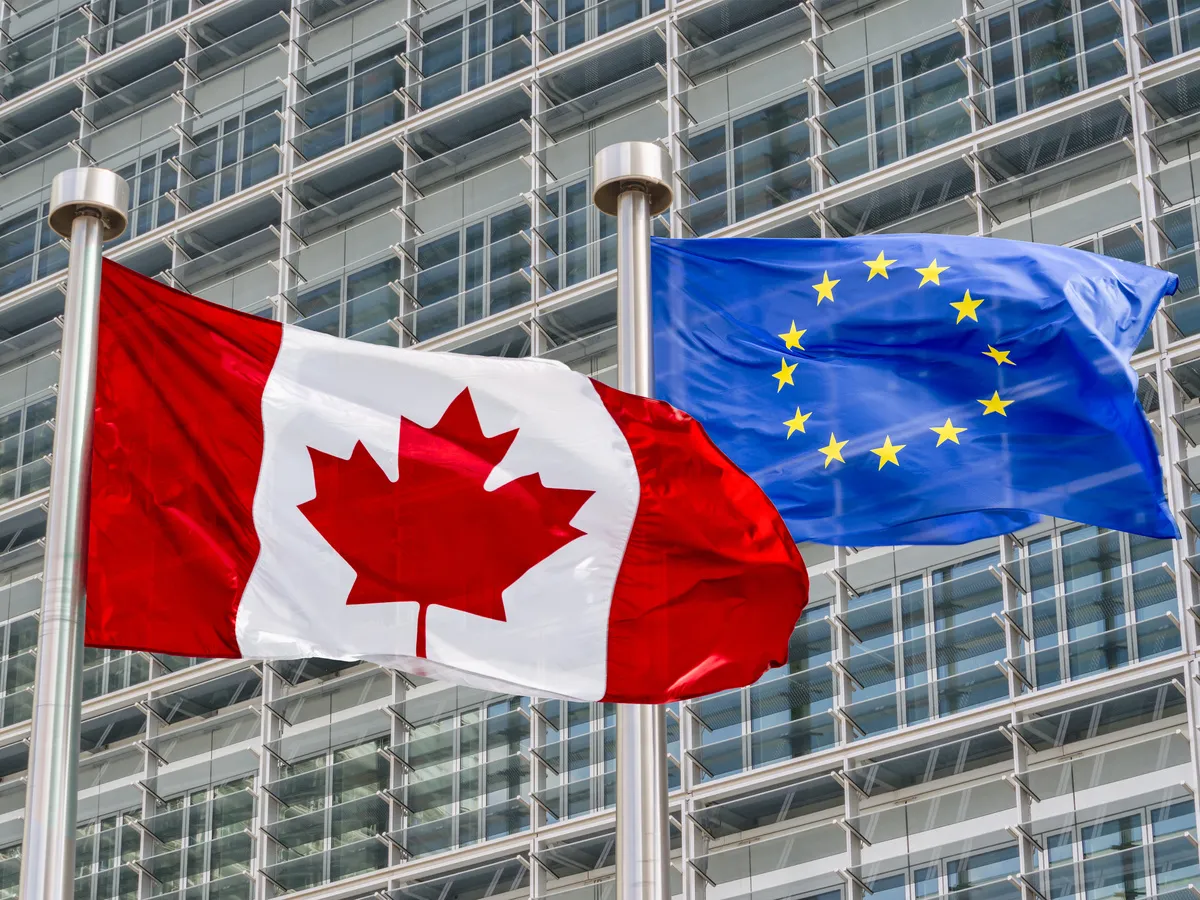
Skip to Content News Archives Economy Energy Oil & Gas Renewables Electric Vehicles Mining Commodities Agriculture Real Estate Mortgages Mortgage Rates Finance Banking Insurance Fintech Cryptocurrency Work Wealth Smart Money Wealth Management Investor Personal Finance Family Finance Retirement Taxes High Net Worth FP Comment Executive Women Puzzmo Newsletters Financial Times Business Essentials More Innovation Information Technology FP500 Podcasts Small Business Lives Told Tails Told Shopping Financial Post Store Obituaries Place a Notice Advertising Advertising With Us Advertising Solutions Postmedia Ad Manager Sponsorship Requests Classifieds Place a Classifieds ad Working Profile Settings My Subscriptions Saved Articles My Offers Newsletters Customer Service FAQ News Economy Energy Mining Real Estate Finance Work Wealth Investor FP Comment Executive Women Puzzmo Newsletters Financial Times Business Essentials HomeFP CommentOpinion: Why would anyone want to join the EU?Submitting to the Brussels bureaucracy would be a high price to pay for a mainly symbolic independence from the U.S.Last updated 1 day ago You can save this article by registering for free here. Or sign-in if you have an account.Canada’s economic strength has always been its flexibility as a middle power, not its willingness to be an adjunct to Europe. Photo by Mbruxelle/ShutterstockAs prime minister, Mark Carney claims to be guided by pragmatism, albeit “principled pragmatism.” But his enthusiastic pursuit of deeper alignment with the European Union risks selling out Canadian sovereignty for romantic symbolism and a mountain of red tape.Subscribe now to read the latest news in your city and across Canada.Exclusive articles from Barbara Shecter, Joe O'Connor, Gabriel Friedman, and others.Daily content from Financial Times, the world's leading global business publication.Unlimited online access to read articles from Financial Post, National Post and 15 news sites across Canada with one account.National Post ePaper, an electronic replica of the print edition to view on any device, share and comment on.Daily puzzles, including the New York Times Crossword.Subscribe now to read the latest news in your city and across Canada.Exclusive articles from Barbara Shecter, Joe O'Connor, Gabriel Friedman and others.Daily content from Financial Times, the world's leading global business publication.Unlimited online access to read articles from Financial Post, National Post and 15 news sites across Canada with one account.National Post ePaper, an electronic replica of the print edition to view on any device, share and comment on.Daily puzzles, including the New York Times Crossword.Create an account or sign in to continue with your reading experience.Access articles from across Canada with one account.Share your thoughts and join the conversation in the comments.Enjoy additional articles per month.Get email updates from your favourite authors.Create an account or sign in to continue with your reading experience.Access articles from across Canada with one accountShare your thoughts and join the conversation in the commentsEnjoy additional articles per monthGet email updates from your favourite authorsSign In or Create an AccountorIn his now-famous speech in Davos, Carney said that “nostalgia isn’t a strategy.” Yet his approach to the EU reveals a deeply nostalgic view of Europe as a vibrant counterweight to North American realities. But the numbers say Europe’s economy, far from being vibrant, is in decline. Forecasts for this year project growth of one per cent or less. The EU is beset by stagnation, demographic decline, high energy costs and chronically poor competitiveness. Why would Canada seek even tighter alignment with a bloc that’s in decline when it already enjoys comprehensive trade access through the Canada-EU Comprehensive Economic and Trade Agreement (CETA) and other multilateral channels?Recent polls suggesting there is support in Canada for becoming a full EU member mainly reflect public naivety about closer ties to the EU. Anxiety over U.S. relations and ignorance of the practical downsides of deeper integration are a dangerous combination. For most Canadians, Europe means picturesque cities, good food and beautiful architecture, not the economy-crushing regulation that would come with deeper integration.Get the latest headlines, breaking news and columns.By signing up you consent to receive the above newsletter from Postmedia Network Inc.A welcome email is on its way. If you don't see it, please check your junk folder.The next issue of Top Stories will soon be in your inbox.We encountered an issue signing you up. Please try againThe European Parliament is also supporting closer ties with Canada and in March adopted a recommendation for enhanced EU-Canada co-operation, including regulatory alignment in trade, energy, environment and other sectors.That sounds nice but in practice it would mean importing the full apparatus of the EU’s notorious model. Full membership would require Canada to accept the entire corpus of EU law — all 170,000 pages of it, as Andrew Coyne recently reminded us. And there would be no opt-outs from core climate policies, including the European Green Deal and Fit for 55, which legally binds member states to a 55 per cent net GHG reduction from 1990 levels by 2030 and then full climate neutrality by 2050. For Canada, this would mean binding national targets on emissions, energy, transport, buildings, agriculture and land use that overrode domestic priorities.Deeper regulatory alignment with the EU would come at a steep cost to Canadian agriculture. To meet the EU’s Green Deal and Farm to Fork targets, Canadian farmers would face mandatory reductions of 50 per cent in pesticide use and 20 per cent in fertilizer application, as well as a mandated shift to organic production, from under 2.2 per cent today all the way to 25 per cent by 2030. To satisfy the EU’s precautionary restrictions, genetically-modified canola, which dominates Prairie fields, would require costly segregation or outright phase-outs. Studies of similar policies project declines in yields of 10-20 per cent, sharply higher production costs and major economic hits to export-oriented operations.The oil and gas sector would fare no better. Fit for 55’s expanded emissions trading system, carbon pricing, methane rules, upstream caps and Carbon Border Adjustment Mechanism would pressure aligned countries to adopt equivalent standards. Alberta’s oilsands, with their higher upstream emissions intensity, would face extra scrutiny, tougher compliance rules and de facto market barriers under the EU’s precautionary philosophy, which is often hostile to hydrocarbons.Outside of oil and gas, Canada would have to adopt sweeping ESG rules that impose full-scale “Scope 3” carbon tracking, human rights audits and liability risks that burden value chains with paperwork and legal exposure. If Canadians think government red tape is bad now, wait until they have to deal with EU-level bureaucracy. Even Europe’s own Draghi report conceded that excessive rules and administrative burdens are strangling economic growth. Yet, like a 3-D printer, the Brussels bureaucracy machine keeps adding layers. Canadian businesses would face ever-increasing compliance costs, slower innovation and declines in competitive agility that would far outweigh the gains from any further market access.Mark Carney bristles at flippant American talk of Canada as the “51st state,” yet he seems content to steer us toward becoming Europe’s 28th province — turning Canada back into a colony regulated by bureaucrats across the sea. Canadians deserve better than imported stagnation dressed up as sophistication. Canada’s economic strength has always been its flexibility as a middle power, not its willingness to be an adjunct to Europe. Trading away that flexibility for nostalgia and symbolism would not be in our national interest.Tammy Nemeth is an energy analyst based in the U.K. Join the Conversation This website uses cookies to personalize your content (including ads), and allows us to analyze our traffic. Read more about cookies here. By continuing to use our site, you agree to our Terms of Use and Privacy Policy.
Opinion: Why would anyone want to join the EU?
Submitting to the Brussels bureaucracy would be a high price to pay for a mainly symbolic increase in independence from the U.S. Read on
1,237 words~6 min read